A Minnesota Couple Uses 3D Printing to Create Incredible Ice Structures

The last time it was this cold in the Midwest during February? Ulysses S. Grant was president. The February 2015 average temperature here in my home state, Michigan, was 14.5 degrees Fahrenheit, and according to the National Weather Service, that’s the coldest it’s been around here since 1875.
As winter drags on, we here in the Icy North begin to suffer from what we call “cabin fever.” It’s a term first used in 1838 to describe a claustrophobic, slothful syndrome that sets in from prolonged isolation indoors with nothing to do but hide from the horrific low temperatures and snot-freezing winds.
 The best therapies for cabin fever come in the form of heading outdoors to commune with nature, or drinking copious amounts of beer and hard liquor in outdoor tents or building enormous bonfires from any available material from old couches to scrap lumber.
It’s been a nasty, icy winter. And it’s been bad in Minnesota as well.

Ann and Ben Bednarz
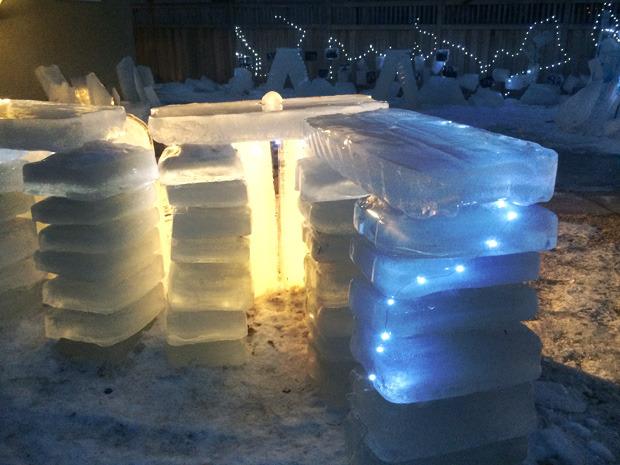
Ann Bednarz, the Assistant Managing Editor of Features for NetworkWorld, says the slow grind of weeks of below-zero temperatures have led her family to create one of their standard winter diversions, an outdoor bar made entirely of chunks of ice.
Bednarz writes feature stories aimed at enterprise IT pros on subjects from hiring trends, salary data, and in-demand skills to staffing strategies. She’s also interested in stories about buildings and architectural design, hence the ice bar structure.
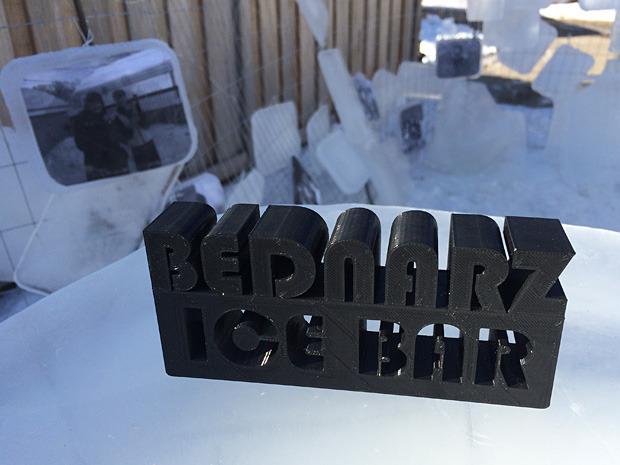
As she was wrapping up the construction of the bar last weekend and putting together a guest list of friends and neighbors to invite to opening night, she and her husband, Ben, decided to add a bit of a 3D printed twist to the proceedings.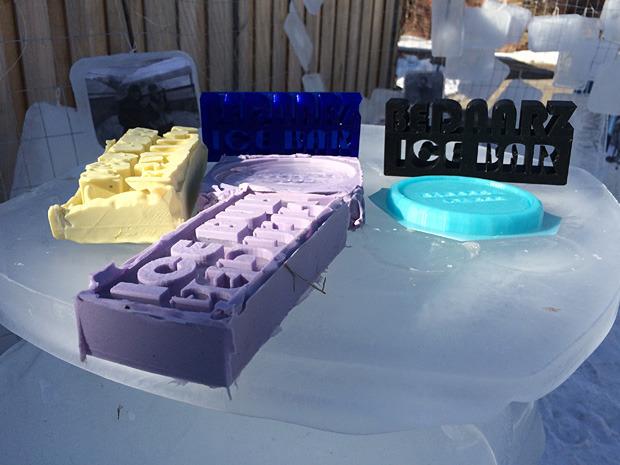
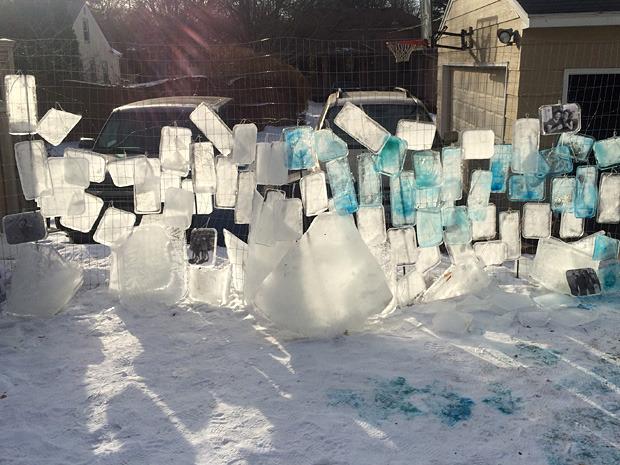
“The process is pretty simple,” Ann Bednarz wrote. “We fill storage bins with water and freeze blocks. This year we moved ice production to the garage, to avoid having to shovel snow off the blocks in the weeks leading up to the bar’s debut.”
That’s where the process got mighty cool – and cold.
The hard plastic forms were turned into ice molds using silicone, and after about 24 hours for each to settle, the deal was nearly done…but they thought they’d snazz it up a bit more.
With a little help from some pals, the couples were able to expand on their longstanding ice bar concept using 3D printing. Ben Bednarz used SketchUp to create esigns for coasters and signs to use as ice molds. Thanks to a friend at Steve Wilmes Consulting, who allowed Ben to use their MakerBot Replicator 2 3D printer, the forms for the coasters took about two hours to print.
And they’re not the only ones 3D printing ice-inspired creations.
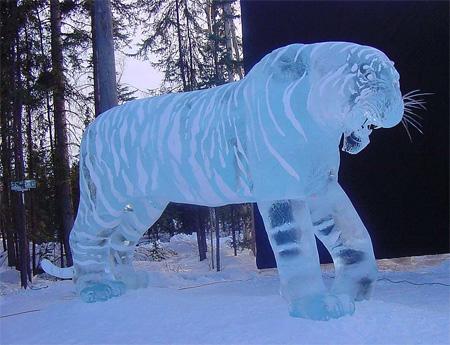
Pieter Sijpkes’ 3D Printed Ice Tiger
Sijpkes made small ice models, and they’re intricate 3D models of architectural objects like buildings by putting together a device that prints objects with ultra-thin layers of ice. At the time, they printed a statue, an egg carton, and even a martini glass. The printer used a robot arm and an agglomeration of parts at the business end like valves, nozzles, and wiring. The water, mixed with methyl ester, was deposited in 0.25mm-thick layers, and the methyl ester acted as scaffolding which softened at a lower temp than ice to allow it to be scraped away to reveal the finished structure.
After every five layers were deposited, a laser system measured the geometry of the outer layer and adjusted the control mechanism to correct errors. Sijpkes said it took anywhere from just a few hours to days to create the finished products.
All these icy projects are pretty inspiring.
And the goods news is, all that hard work by Team Bednarz is expected to be cool, flowing water once again within the next couple of weeks, and winter will finally be waning into a bad memory.
Have you ever used 3D printing to fight off the horrors of winter? Let us know in the 3D Printing to Fight Off Icy Temps forum thread on 3DPB.com. Below are more photos of the Bednarz’s ice bar.
Subscribe to Our Email Newsletter
Stay up-to-date on all the latest news from the 3D printing industry and receive information and offers from third party vendors.
Print Services
Upload your 3D Models and get them printed quickly and efficiently.











You May Also Like
Additive Manufacturing’s Next Chapter: From Prototype Tool to Operating Model
Additive manufacturing is shedding its legacy reputation. While it remains the go-to for prototyping, its potential now extends beyond. Today, it’s increasingly used to support real production requirements, helping teams...
Targeted Applications, Expanded Platform: XJet’s Strategic Vision for AM’s Next Chapter
The additive manufacturing sector has undergone a period of “creative destruction” over the past months, moving beyond a “growth at all costs” mentality into an era of consolidation and strategic...
3D Printing News Briefs: February 19, 2026: Market Data, Africa, Metal Parts for Defense, & More
We’re starting with some business news for you in today’s 3D Printing News Briefs! The Wohlers Report 2026 is now available, Carbon announced its new Chief Technology Officer, and Farsoon...
From “Magic” to Metal: How Intrepid Automation Wants to Make 3D Printing Matter at Scale
Ben Wynne still talks about 3D printing the way people do when they’ve felt that “wow” moment up close. Back in the early 2000s, he was working at HP’s advanced...