Scientists Use 3D Printing to Create A Patch of Beating Heart Cells

Over the last few months we have seen several breaking 3D printing stories related to the human heart. As 3D bioprinting technologies advance we are seeing more and more applications for it within the cardiac field of medicine.
 Yesterday, Harvard researchers announced yet another amazing accomplishment centered around the 3D printing of human tissue at the 247th National Meeting & Exposition of the American Chemical Society (ACS). The research was conducted by Nasim Annabi, and Ali Khademhosseini from the Harvard Medical School, along with a team led by Anthony Weiss, from the University of Sydney in Australia.
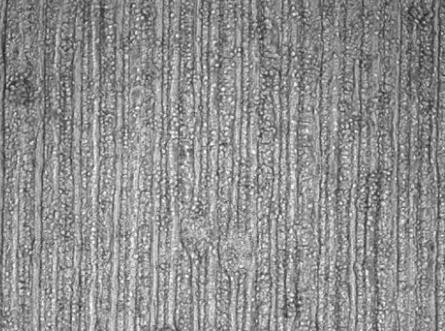
Aligned Beating Heart Cells
The scientists used a more durable hydrogel they created call MeTro gel. MeTro gel, which is made up of a protein called tropoelastin, found in all elastic human tissue, is much more durable than typical hydrogels which are frequently used in bioprinting. This gives it the ability to extend to 4 times it’s length without breaking. Scientists can grow heart cells on this gel, and the cells are able to maintain all the properties they should possess, including elasticity. What they did was use a 3D printer to etch the MeTro gel so that all the heart cells align perfectly. From there they were able to grow a layer of human heart tissue that could beat on its own.
The next area that this technology is head, may be its enabling of doctors to patch the human heart with live beating cells. This could one day replace the need for many heart transplants.
Khademhosseini said:
“A further goal is not only to make tissues that are strong and stretchy, but to modify them further to have additional properties, such as making them like stem cells that receive information from other cells to learn how to differentiate themselves.”
Annabi added,
“It might even be possible to grow new brain cells, something to which I can already hear many a college student give a hearty “hooray!”
Where ever this technology is headed, this is certainly a big step for the field of regenerative medicine. Discuss this research at 3D Print Board. Ali Khademhosseini, explains the technology in the video below.
Subscribe to Our Email Newsletter
Stay up-to-date on all the latest news from the 3D printing industry and receive information and offers from third party vendors.
Print Services
Upload your 3D Models and get them printed quickly and efficiently.











You May Also Like
Scaling 3D Printing Takes More Than You Think; HP’s Webinar Looks at Making It Work Long Term
3D printing is no longer new. In fact, most manufacturers already know what it is, where it fits, and what it can do. But knowing the technology and actually scaling...
How AtomForm’s 12-Nozzle System Cuts Multi-Color FDM Transition Waste by Up to 90%
Pull up the print stats on multi-color FDM jobs. The number that stings isn’t time; it’s material efficiency. On six-color models, single-nozzle systems consume significant filament during transition flushing, expelling...
RAPID 2026: Democratizing Metal Laser Powder Bed Fusion 3D Printing with Mastrex
Aside from a quick mention in an episode of our Printing Money podcast, I didn’t know much about Mastrex. But when I heard that the company had developed a $39,000...
3D Printing News Briefs, April 25, 2026: Competition Winners, AI Platform, X2D Printer, & More
In this weekend’s 3D Printing News Briefs, AMUG announced the winners of its Technical Competition, and Authentise launched AI platform Whisper at RAPID. Bambu Lab wasn’t at RAPID, but launched...