Stratasys Part of New CYBER Team for 3D Printed Orthotic Devices Targeting Veterans


 Orthotics are devices used to support weakened body parts due to a variety of medical conditions. These conditions include foot drop, osteoarthritis, nerve damage from a stroke, joint deformity, Multiple Sclerosis, peripheral nerve damage and other diseases and conditions. Because of the aging population of the baby boomer generation, it is estimated that within the next four years, by 2020, around 7.3 million people in the US will use some kind of orthotic device. While traditional orthotic devices continue to improve health and provide more comfort and mobility to their users, 3D printing’s intersection with orthotic manufacturing proves to be a very positive overall improvement when it comes to creating custom-designed and better fitting devices.
Recently, Stratasys has emerged to become one of the latest established 3D printing companies to address the growing need for better quality orthotic devices. A partnership with Altair Engineering and the University of Michigan Orthotics and Prosthetics Center has led to formation of the CYBER team; this team, funded by America Makes, will “work together on a solution that will leverage 3D printing and Industry 4.0 to transform the design, comfort, utility and customization of Ankle Foot Orthotics (AFO).” The goal is to merge digital design with additive manufacturing, while also including industry leaders in a strategy that addresses emerging Industry 4.0 trends.
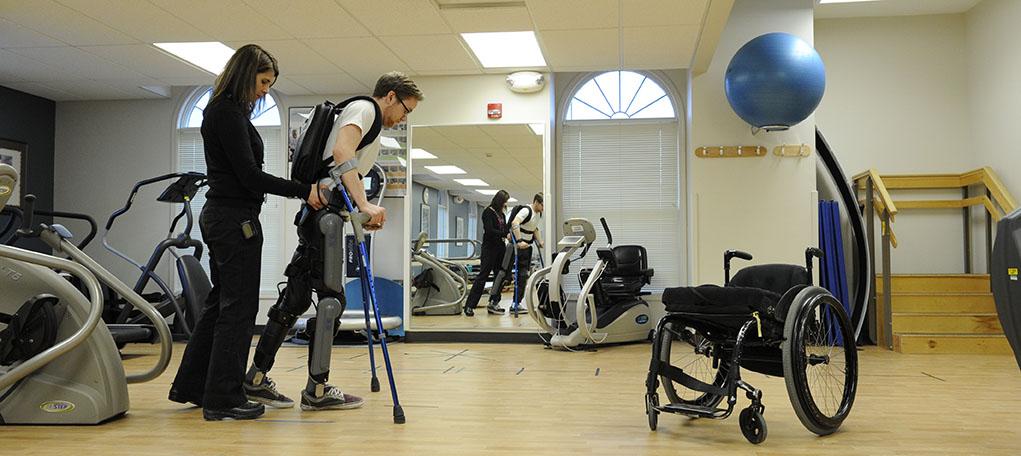
AFOs have always been customized for patients through a complex process using fiber glass cast tape, liquid plaster, padding, straps, and other materials. Jeff Wensman, the Clinical/Technical Director of the University of Michigan Orthotics and Prosthetics Center, describes here how additive manufacturing techniques create better quality and more flexible AFOs:.
“While custom AFOs have always been created with a patient’s custom shape, additive manufacturing provides improved possibilities to truly customize the manufacturing of an AFO. The ability to adjust trim lines and alter the type or thickness of plastic has provided some basic options for tuning the flexibility of an AFO. But, additive manufacturing, and specifically the CYBER team, is creating a process to actually ‘engineer’ and ‘design’ an AFO for a specific patient. Different amounts or
types of material can be printed to provide a specified stiffness and allow areas of flexibility, based on the patient presentation. This exciting technology opens up an entirely new tool box that the clinician can use to enhance patient outcomes.”
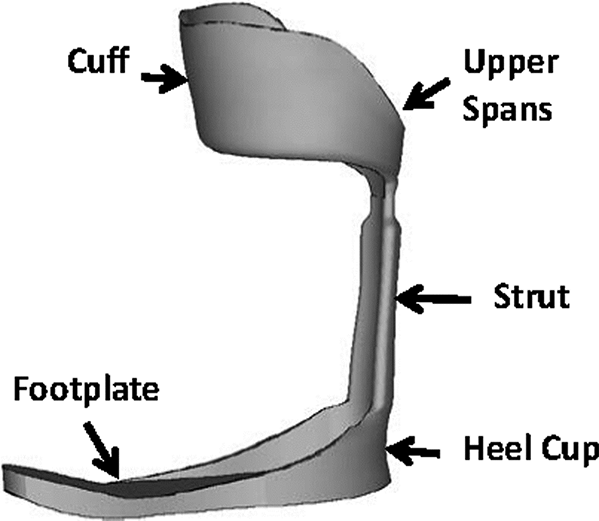
Like many other 3D printing/additive manufacturing applications, the CYBER team hopes to accomplish four goals. Reduce delivery time of AFOs from 2-4 weeks to 1 day; enhance the level of an orthotics’ accurate fit by eliminating the use of plaster; eliminate multiple visits for fitting; enhance design freedom.
The CYBER team acknowledges that it will take the specialized skills of Stratasys and Altair Engineering to streamline additive manufacturing workflow and address drawbacks. The goal is to connect “the digital thread in a cloud-based cyber physical system which will connect fused deposition modeling (FDM®) additive manufacturing technology and Altair® OptiStruct® software” to produce customized AFOs.
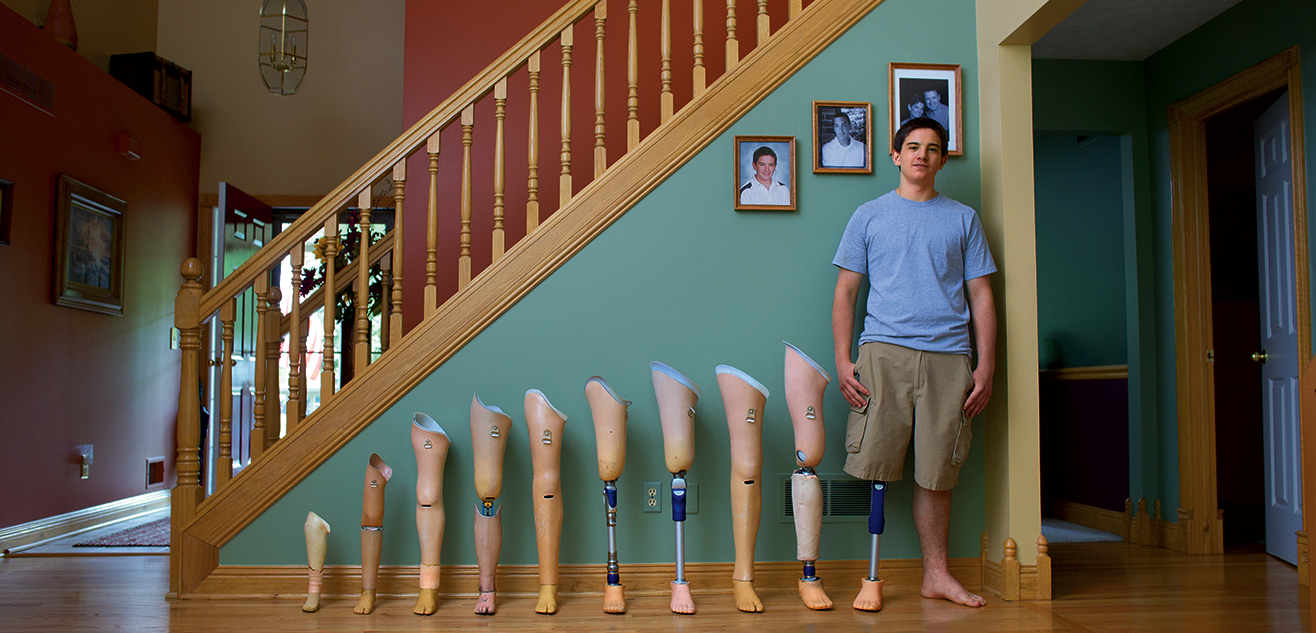
The team is working with Ann Arbor, Michigan’s US Veterans’ Administration (VA) to address the orthotics needs of veterans. A recent American Orthotic Prosthetic Association (AOPA) study indicates that Medicare savings “could be $1.3B per year by 2020 after full deployment of this solution to the VA network.”
That is some serious savings for the worthy cause of better made orthotics for veterans and civilians alike. Discuss in the 3D Printed Orthotics forum over at 3DPB.com.
Subscribe to Our Email Newsletter
Stay up-to-date on all the latest news from the 3D printing industry and receive information and offers from third party vendors.
Print Services
Upload your 3D Models and get them printed quickly and efficiently.












You May Also Like
How the World’s Most Advanced Tech Companies Are Using 3D Printing
3D printing has been around for decades. For most of that time, it was a prototyping tool. Engineers used it to check if a design looked right before spending money...
The New Dental Lab: “Three Technicians Can Handle a Hundred Arches,” Says Digital Dentistry Expert Josh Jakson
Josh Jakson’s path into digital dentistry started long before he had a job title. He grew up around it. His father, a Polish immigrant, started the family’s dental laboratory in...
Why Beam Control Could Redefine the Future of EB-PBF
In Part 1, Ulf Lindhe examined how advances in beam control, point melting strategies, and process monitoring are changing the way engineers think about electron beam powder bed fusion (EB-PBF)....
Additive Manufacturing at a Crossroads
Additive manufacturing is at a crossroads. Simultaneously, we find ourselves between certain very different modalities, applications, and industries. Rather than being able to explore them all, companies will now have...