3D Printed Anatomy Kits Reduce Need to Study Human Cadavers

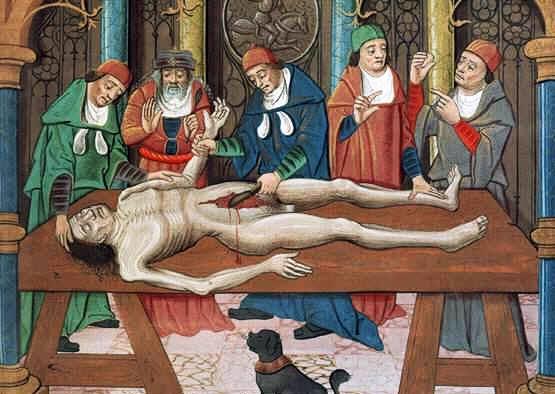
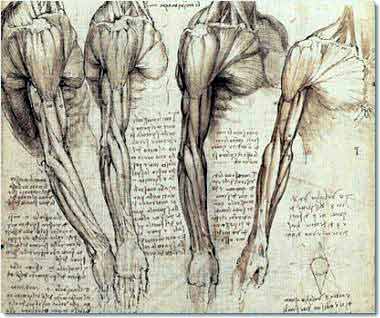 When Leonardo da Vinci wanted to study anatomy of the human body, he had to go straight to the source because very little was actually known about the inner workings of human beings. His incredibly detailed drawings were made from whatever cadaver he was able to dissect, often the bodies of executed criminals. It is now no longer necessary that a body be hauled from a site of execution in order to gain a rudimentary understanding of anatomy. However, for a more in depth study, medical schools have still been reliant on the donation of bodies.
Researchers at Monash University’s Centre for Human Anatomy Education have produced an alternative to the biological cadaver: a 3D printed anatomy kit. The Director of the Centre, Dr. Paul McMenamin described the reasoning behind the kit’s creation:
“For centuries cadavers bequested [sic] to medical schools have been used to teach students about human anatomy, a practice that continues today. However many medical schools report either a shortage of cadavers, or find their handling and storage too expensive as a result of strict regulations governing where cadavers can be dissected.”
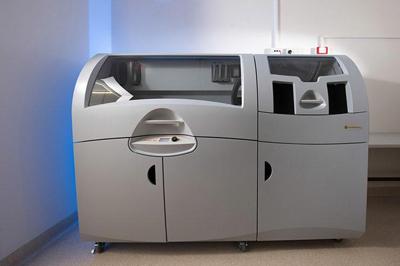
Printer used to create pieces for the Anatomy Kit
Not surprisingly, cadavers can’t be stored in a simple manner, and require not only expensive facilities but also are costly to maintain until ready to be used. In addition, after all of that investment, they can only be used for a relatively brief period of time and then must be properly disposed of.
Despite the fact that use of cadavers is legal and the public is aware of the existence of such dissection as part of medical study, the taboos associated with death and the human body further complicate all aspects of human cadaver usage. There are countries where their usage is either prohibited by law, or cultural convention and kits such as this one would provide medical students with a valuable tool for studying human anatomy, that would not necessarily put them at a disadvantage to doctors in other locations. Dr. McMenamin elaborated:
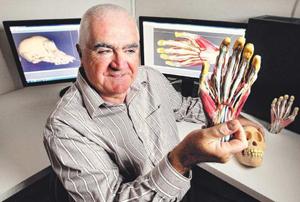
Dr. McMenamin displays a 3D printed hand (credit: Materialise)
“Even when cadavers are available, they’re often in short supply, are expensive and they can smell a bit unpleasant because of the embalming process. As a result some people don’t feel that comfortable working with them. Our 3D printed series can be produced quickly and easily, and unlike cadavers they won’t deteriorate – so they are a cost-effective option too.”
The pieces in the kit were created using a combination of CT and surface laser scans and then printed in either plastic or a plaster-like powder. The results were accurately colored, high definition print reproductions of the head, neck, chest, abdomen, and limbs, with all of their component parts.
While this will significantly reduce the impacts of medical school cadaver based pranks, it will mean that medical students have on demand access to the materials necessary for detailed study of human anatomy.
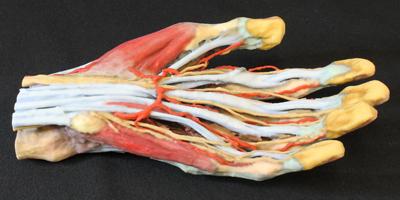
(credit: Materialise)
It would not be surprising to find that these kits gain popularity outside of medical school anatomy study as well. There are many high school and grade school students around the world who would be perfectly satisfied to substitute their vacuum packed frog for a 3D printed anatomy kit. In addition, there are a number of artists whose work might be supported through the availability to these synthetic alternatives.
This will not eliminate any need for the use of human cadavers, at least not for now, but it does build an important tool to provide wider access to anatomical study and, interestingly, in the tradition of Leonardo da Vinci does so by bridging science, advanced technology, and art.
What do you think? Will these 3D printed anatomy kits one day replace the need for cadavers? Discuss in the 3D printed anatomy kit forum thread on 3DPB.com.
Subscribe to Our Email Newsletter
Stay up-to-date on all the latest news from the 3D printing industry and receive information and offers from third party vendors.
Print Services
Upload your 3D Models and get them printed quickly and efficiently.











You May Also Like
Artemis II Launches With 3D Printing Onboard, and a Much Bigger Role Ahead
A new chapter in human spaceflight began today as NASA launched Artemis II from Kennedy Space Center, sending astronauts on a journey around the Moon for the first time in...
EOS to Spotlight AI, Robotics, and Industrial Tooling at Hannover Messe
The US-Israel war on Iran is already catalyzing the sorts of major shifts to global supply chains that will effectively amount to permanent economic changes. In this context, the nations...
3D Printing News Briefs, March 26, 2026: AMUK, IP Dispute, Asbestos, & More
We’re kicking off today’s 3D Printing News Briefs with an America Makes Project Call, and then moving on to additive manufacturing in the UK. Then we’ve got some legal news...
3D Printing Financials: Velo3D Sees Rising Demand and Defense Growth, but Losses Persist
Velo3D (Nasdaq: VELO) is moving further into production-focused 3D printing, with growing demand from defense and aerospace customers shaping its strategy. The company is shifting beyond selling machines toward producing...