Teknor Apex Announces New High-Impact, High-Heat PLA Filament


PLA, or polylactic acid, is by far the most popular material to use with your 3D printer. And while it is generally considered one of the easier materials to use, especially compared to its finicky cousin ABS, it is not without its drawbacks and limitations.
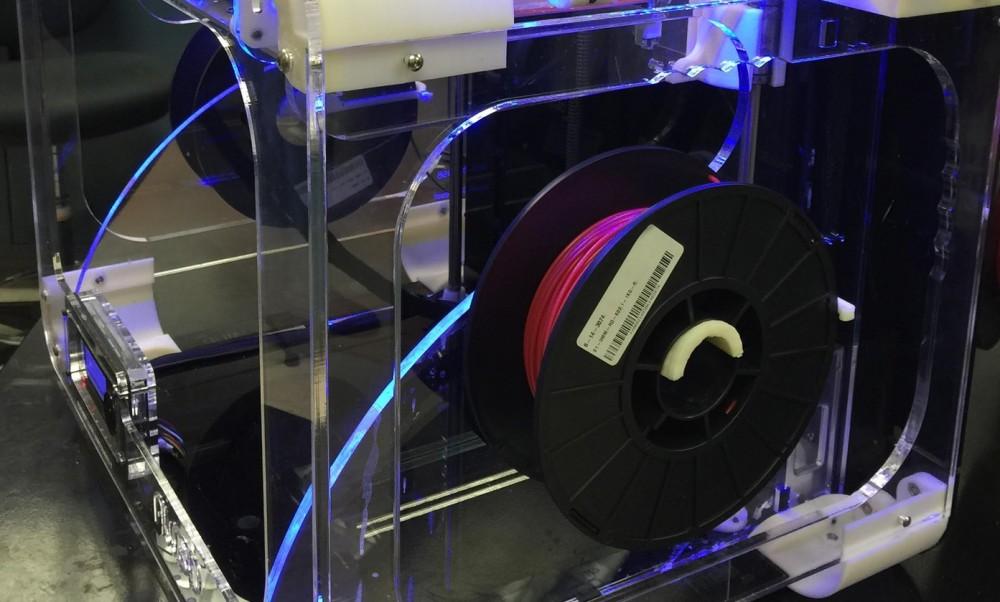 Because PLA is derived from natural, organic materials it is susceptible to absorbing moisture from the atmosphere. This can cause extrusion problems during 3D printing due to the water turning into steam and interrupting the flow of plastic. That can lead to printing errors, and in extreme cases can cause the extruder to jam. There is also the issue of durability; while PLA is not an especially fragile plastic material, it can shatter and crack pretty easily under the right circumstances.
Dozens of plastic and 3D printing material manufacturers have created countless variations of the basic PLA formula from materials as diverse as corn starch, sugars, and even tapioca root. And while several companies have managed to create PLA materials that absorb less water or are stronger than standard PLA, no one has managed to do both with the same material.
 But plastic material development company Teknor Apex says that they have created a new high-impact, high-heat polylactic acid range of products that have enhanced material strength in addition to being tolerant enough for any excess moisture to be removed with oven drying. The new Terraloy materials have already won several awards, including the “Innovation in Bioplastics Award” from the Plastics Industry Trade Association and “Bioproduct Innovation of the Year Award” from the OBIC Bioproducts Innovation Center at Ohio State University.
The Teknor Apex bioplastics division introduced the Terraloy 3D-40040 Series of plastic compounds at last month’s NPE2015 International Plastics Showcase in Orlando, Florida. The manager of new strategic initiatives at Teknor Apex also submitted a technical paper about the plastic compounds at the Society of Plastics Engineers (SPE) ANTEC Orlando 2015, which was running concurrent to NPE2015. The technical presentation was called High Heat and High Impact Poly(Lactic Acid) Compounds for Additive Manufacturing/3D Printing and it details the high durability and temperature tolerance of the new materials.
“Our new Terraloy compound combines two technologies in which today’s plastics industry has an intense interest—3D printing and bioplastics. Teknor Apex has developed formulation and compounding methods that enhance the toughness and heat-resistance of PLA by eliminating certain property tradeoffs normally encountered with standard grades of this resin,” explained the technical paper’s author, Edwin Tam.
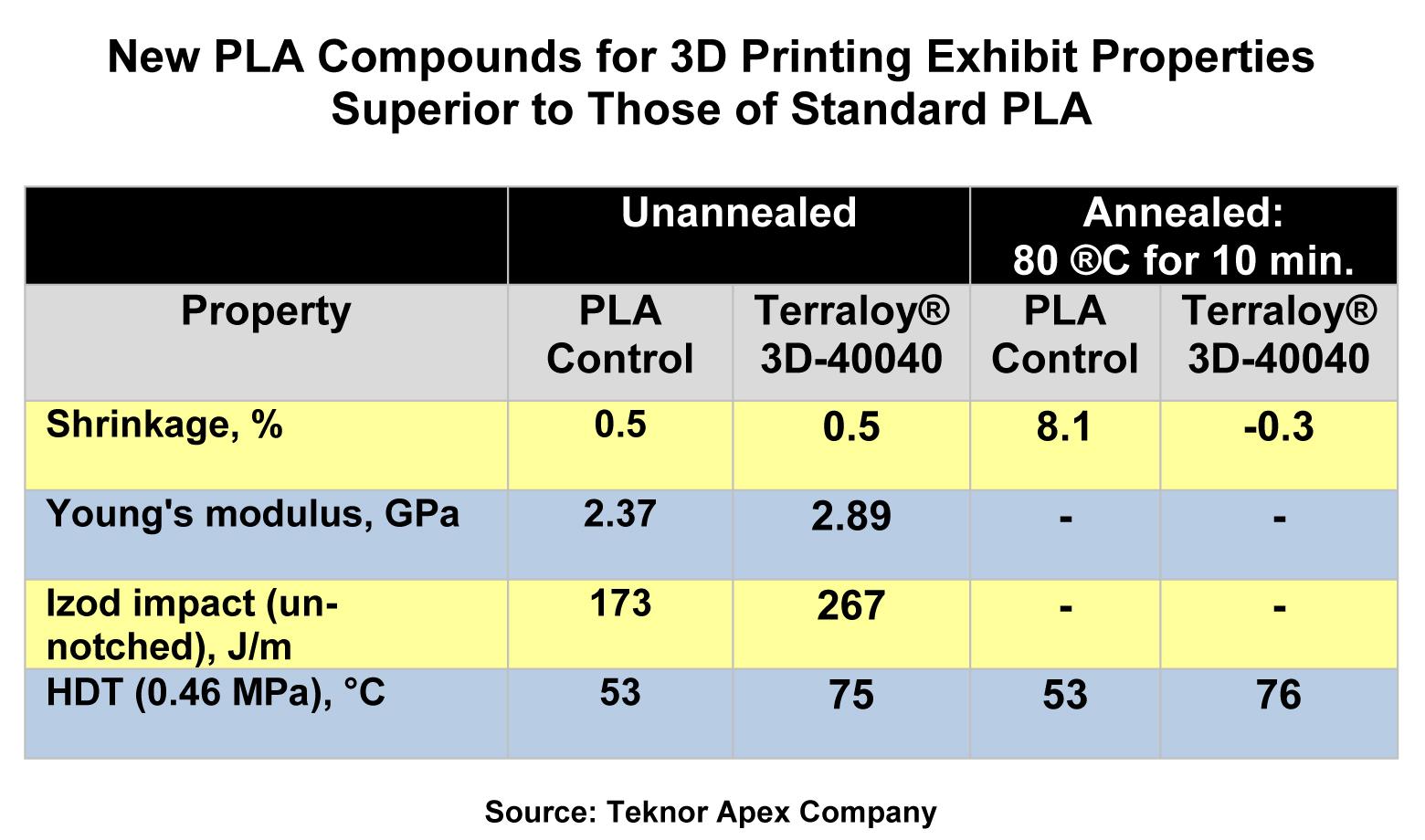
 Because the Terraloy 3D-40040 materials have a higher heat tolerance than standard PLA formulas, they can be oven dried longer without sacrificing the final material strength. According to Teknor Apex, the materials have a heat distortion temperature (HDT) twice as high and up to four times the impact strength of other PLA materials.
Obviously a PLA material with a higher impact strength and heat resistance will enhance the already versatile 3D printing material and expand its uses within the industry. Have you noticed any moisture issues with your 3D printing materials? Tell us about them and discuss this new material over on the New Teknor Apex High-Impact, High-Heat PLA Filament forum thread at 3DPB.com.
Subscribe to Our Email Newsletter
Stay up-to-date on all the latest news from the 3D printing industry and receive information and offers from third party vendors.
Print Services
Upload your 3D Models and get them printed quickly and efficiently.












You May Also Like
3D Printing News Briefs, August 22, 2026: Polymers for CubeSats, Animal Mobility Devices, & More
We’re starting with defense news in this weekend’s 3D Printing News Briefs, before moving on to polymers for CubeSats and 3D printed prosthetics. We’ll end with a story about engineering...
Nikon Advanced Manufacturing Looks to the Next Frontier for AM: Space
Every kilogram sent into space comes at a cost. So engineers have spent decades finding ways to make spacecraft lighter. The next frontier will be producing some of the parts...
Amaero Builds U.S. Metal Powder Capacity for Additive Manufacturing
For metal additive manufacturing (AM) to grow in the United States, companies need more than printers. They also need a reliable supply of the powders that go into those machines....
AMPulse Asia: 6,500-Printer Farm Leads APAC Manufacturing Expansion
The first half of August brought a wave of factory plans, plant openings, and qualification work across the Asia-Pacific additive manufacturing market. Highlights include a RMB 200 million print farm...