3D Lab Awarded US Patent on Ultrasonic Atomizer for Metal 3D Printing Powders

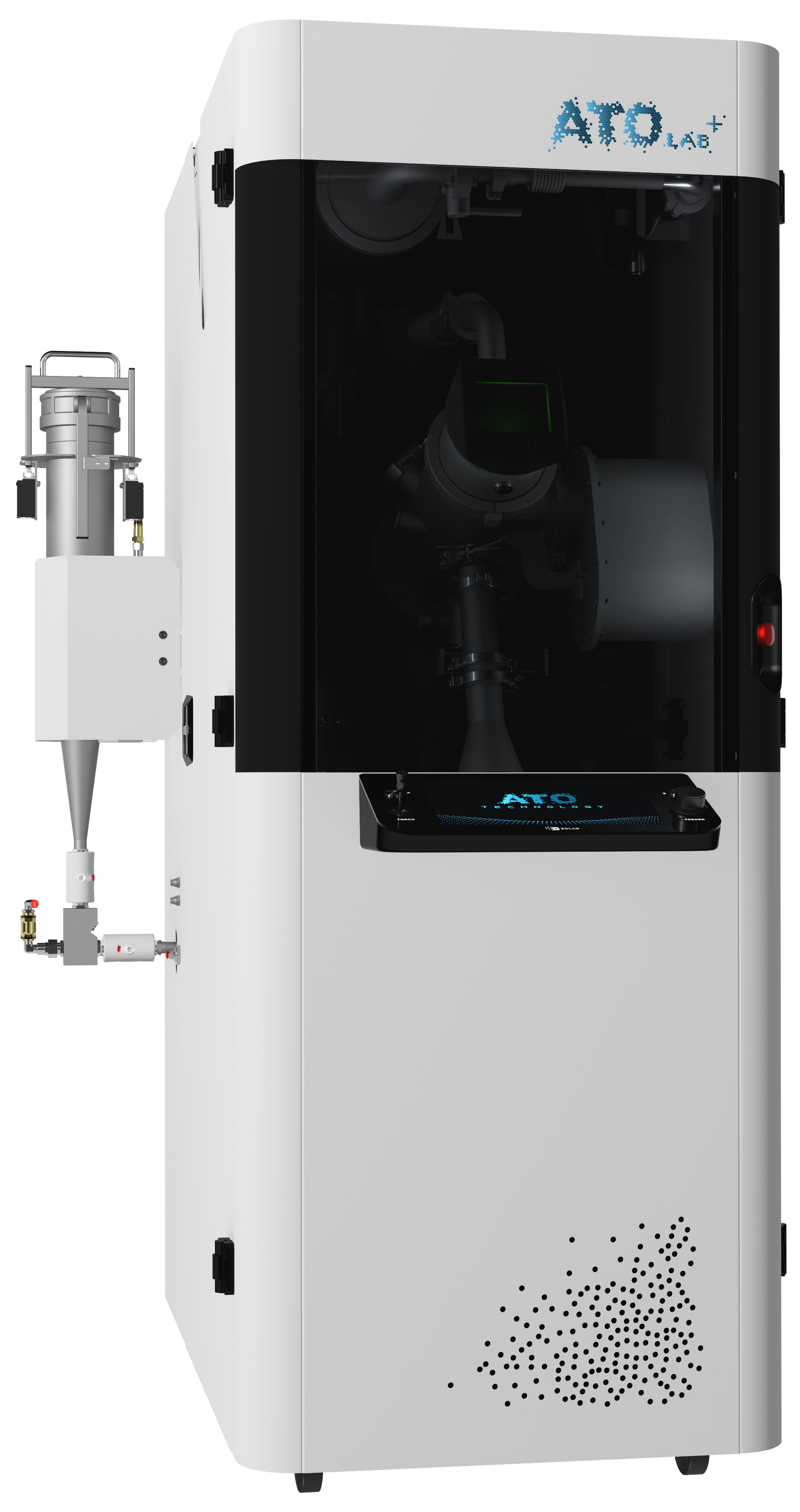
3D Lab is a Polish firm that manufactures the ATO line of compact sonic atomizers. The company began with a lab-sized machine and has since expanded its range of equipment. These atomizers can be used in R&D labs for developing new powders or customizing powder for specific parts, for example. Universities could utilize them, or companies could produce their own powders for production. This capability could offer advantages in terms of cost or help avoid supply issues that can arise when purchasing powder, particularly when lead times for certain grades of powder are excessive. Additionally, creating the ideal powder for a specific machine, part, settings, and specifications could provide a lasting competitive edge. With the growing demand for new alloys, ATO is likely to see increased interest in the coming years.
The company has now received a U.S. patent for a “Method and Device for Producing Heavy Metal Powders by Ultrasonic Atomization.” In addition to this, they hold various patents worldwide, including a core patent for their sonotrode technology. This is positive news for the company and its progress in Ultrasonic Metal Atomization. The company claims that with its compact 3D printers, it can achieve spheroidization, produce powder with low oxygen content, and control particle size. They also state that their technology can create powders with excellent flowability, which enhances part properties. Essentially, they assert that their technology can deliver all the critical properties of larger atomization units, but in a much smaller package—potentially a key advantage in the long term.
“We are proud to add this USA patent to our rapidly growing portfolio of global intellectual property. Our patented technologies drive our mission to provide advanced and versatile solutions for metal powder production, ensuring superior material quality and accelerate material innovations. This patent is a significant milestone in our journey, reflecting the dedication and innovative spirit of our team,” said 3D Lab CEO Jakub Rozpendowski.
The company’s ATO Lab Plus Ultrasonic metal atomizer seems like an ideal solution for national labs or powder producers. However, with the introduction of modular systems, it’s clear they are also targeting more industrial applications. The growing demand for materials like GrCop, Inconel, titanium, and other specialty metals has caused significant backlogs, with wait times for powder sometimes exceeding six months. Increased production volumes have made timely powder delivery crucial. Some companies have even stockpiled powder to avoid delays, further aggravating the issue. Industry players, driven by unrealistic deadlines, have contributed to supply chain uncertainty, leading to frustration and inefficiency.
For manufacturers with high-value production pipelines—such as those building rocket engines—this situation is especially problematic. A company with a $300,000-per-engine pipeline, producing one engine per month, can’t afford powder supply delays, even if they have all the necessary machines and workforce in place. Despite the availability of copper, titanium, steel, and aluminum, powder supply has been a persistent challenge.
For years, manufacturers dismissed the idea of purchasing atomizers, seeing it as a distraction from their core business of making parts. However, the industry’s recent supply chain disruptions and erratic behavior have changed their perspective. Now, companies view powder production not only as a potential cost advantage but also as a way to reduce supply chain headaches. By securing their own powder supply, more manufacturers are likely to consider 3D Lab atomizers, not just for research, but for production as well.
Subscribe to Our Email Newsletter
Stay up-to-date on all the latest news from the 3D printing industry and receive information and offers from third party vendors.
Print Services
Upload your 3D Models and get them printed quickly and efficiently.













You May Also Like
Why the AM Industry Should Pay Attention to Schneider Electric’s $22.6B PTC Acquisition
By late 2024, there was already enough signaling of the additive manufacturing (AM) industry opportunity in the data center infrastructure market for AM Research to write a report on the...
How Does Nike’s 3D Printing Approach Fit Into Its Restructuring Plan?
Shares of Nike stock hit all-time highs in late 2021 but have cratered in the years following, with the company losing nearly 80 percent of its market cap since peaking....
3D Printing News Briefs, October 1, 2026: Defense, Enclosures, & More
In today’s 3D Printing News Briefs, we’re starting with defense news, first from Massivit and then from AML3D. Then we’ll move on to U.S. manufacturing of a new large-format LPBF...
South Korea’s Lincsolution Lands Hanwha Defense Deal as Hanwha Invests Billions in US
I recently wrote about how the South Korean additive manufacturing (AM) firm Lincsolution is building an aerospace and defense hub, part of the company’s construction of “the largest AM facility in...