Toyota Cuts Costs at Polish Factories with Zortrax 3D Printers

Zortrax, a 3D printing original equipment manufacturer (OEM) based in Poland, has released a brief case study of Toyota’s incorporation of Zortrax printers into its Polish auto manufacturing operations. Notably, according to Łukasz Kondek, an additive manufacturing (AM) engineer at Toyota’s engine plant in Jelcz, Poland, the Japanese auto giant’s purchase of Zortrax machines has already paid for itself within just one year.

Toyota deploys Zortrax’s layer plastic deposition (LPD) M300 Plus platform to produce a variety of prototypes, jigs and assembly tools critical to the production of automotive engines. The company then prints end-use components based on the prototypes using the M300 Plus, along with other industrial AM machines for the largest parts.
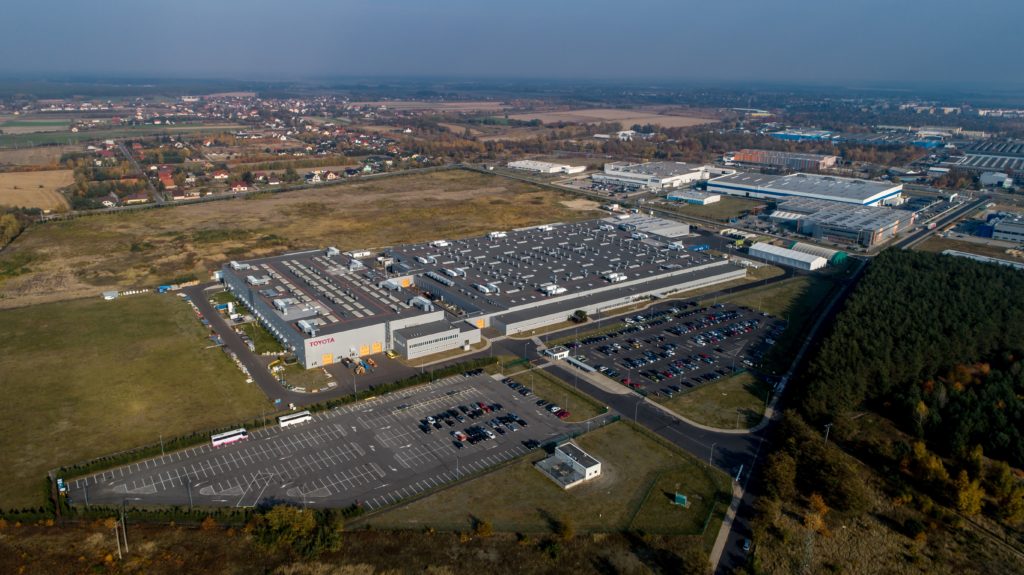
Regarding Toyota’s leveraging of Zortrax technology in its auto manufacturing supply chains, Kondek explained, “3D printing is not as much about speed of fabrication, as this is not the fastest technology out there. But it is certainly the most agile. We don’t need to stock up on spare parts as they can be 3D printed on demand. We can optimize designs however we want, …[and, finally,] we can start printing right away. We don’t need to wait until a tooling division, or an external subcontractor, has available resources to work on our assignments. Our lead times dropped from weeks to days and in some cases hours.”
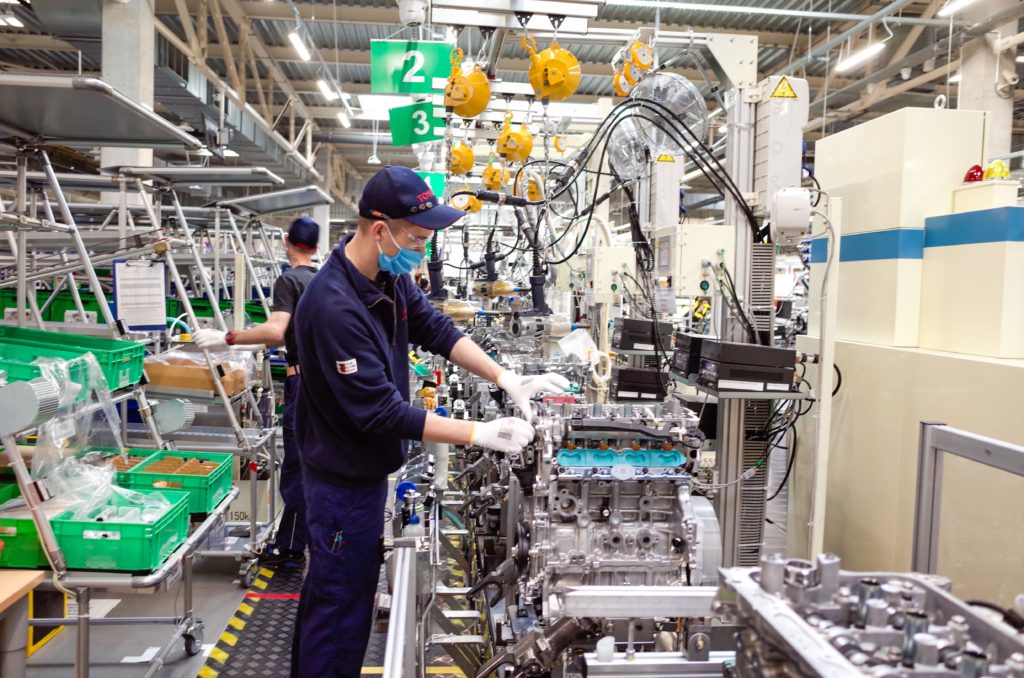
Kondek also pointed out that, although Toyota was already using 3D printing when he started working there about four years ago, the company’s in-house fabrication capabilities have improved dramatically since adopting Zortrax’s technology. The engineer says that LPD-based systems now supply over 95 percent of the Jelcz engine plant’s 3D printed jigs: tools that Toyota, until recently, mostly had to order from subcontractors.

Thus, in addition to reducing costs by shifting to in-house production, Zortrax’s printers have also allowed Toyota to manage its supply chains more effectively, while also giving the latter more direct control over its design process. That last consideration is especially crucial, given that the accelerated innovation that will be required as the EV/hybrid market evolves will surely involve increased trial and error, on the path to blueprint finalization.
Toyota just announced that, in 2022, the company’s European sales increased, as automotive sales in Europe across the board shrank by 11 percent. Resultantly, Toyota’s share of the European auto market grew to 7.3 percent in 2022, which is a record high for the company. That included a 14 percent year-on-year increase in Toyota’s European EV sales.
As the European market continues to become more integral to Toyota’s global brand, the company will likely continue to ramp up its production there. In turn, its familiarity and proven success with Zortrax gives the company a definite leg up, in Poland and elsewhere across Europe.
Moreover, the applicability of engine production to other sectors means that, with its Toyota connection, Zortrax already has a potential foothold in the many industries set to expand carbon-reduction efforts. Finally, Poland’s membership in NATO, as well as its being the terminus for the Baltic Pipe, gives both Polish industry in general, and Zortrax specifically, an advantage over larger European manufacturing hubs.
Images courtesy of Zortrax
Subscribe to Our Email Newsletter
Stay up-to-date on all the latest news from the 3D printing industry and receive information and offers from third party vendors.
Print Services
Upload your 3D Models and get them printed quickly and efficiently.











You May Also Like
America’s Manufacturing Crossroads: 2026 Is The Year Excuses Run Out
Authored by Seurat’s CEO, Co-Founder & Co-Inventor, James DeMuth As 2026 begins, one truth is impossible to dismiss: manufacturing is not an industrial legacy. It’s national infrastructure, and the United...
Will the FCC New Drone Ban Be a Boon for 3D Printing?
The US FCC (Federal Communications Commission) has said that it will not certify any new foreign-made drones for use in the US. Models currently on offer in the US can...
3D Printing News Briefs, October 15, 2025: Thermal Simulation, Ceramic Fuel Cells, & More
In today’s 3D Printing News Briefs, Dyndrite and Ansys are collaborating on reducing risk in metal AM, and researchers from the Technical University of Denmark are 3D printing ceramic, coral-inspired...
Breezm 3D Printed Eyewear Arrives in the U.S.
Last month, 3DPrint.com received an invite to test out Breezm’s personalized 3D printed eyewear experience. We accepted with eyes wide open and came away with eyes comfortably shaded, clad in...