CITD Uses 3D Printing to Improve Success Rates of Scoliosis Surgery


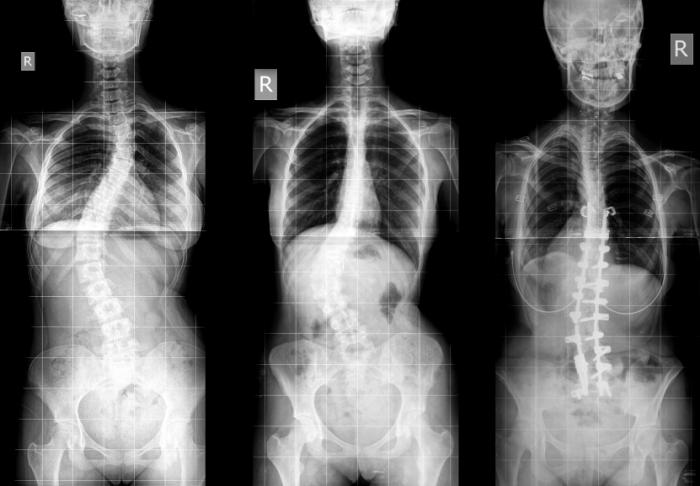
Scoliosis is a disease with varying degrees of severity. Sometimes it doesn’t need to be treated at all, while sometimes a brace is required and sometimes it’s serious enough to require surgery. 3D printing has changed the way scoliosis braces are made – in the past, they were bulky, uncomfortable contraptions, but 3D printing has allowed them to be made much more lightweight and form-fitting. Meanwhile, surgical treatments are also being changed for the better by 3D printing, as the technology allows for personalized surgical guides.
The PAMIS project is working to improve scoliosis surgery through the development of 3D printed implants.Typically, scoliosis surgery involves the implantation of standard straight and flat metallic straps that are screwed to the spine. The standard sizes and shapes of these implants can be problematic, as no one’s anatomy is exactly the same, and can result in complications or even the need for revision surgery in the future. With 3D printing, however, personalized implants can be made.
Using 3D scans of the patient’s spine, medical professionals could take advantage of finite element modeling and design optimization techniques to create the best possible implants for each patient’s unique anatomy. Those implants can be 3D printed, using lightweight, biocompatible materials.

“It is as well an opportunity to take advantage of the ‘digital twin’ concept to prepare scoliosis surgery and implants,” the PAMIS project leaders state. “This pairing of the virtual and physical worlds allows heading off problems before they even occur in the surgery. The virtual human model concept and new definition of bio-inspired 3D printed parts for scoliosis could open the way to the definition of other lines of orthopedic implants and the application of materials better suited to the specific stress to correct in each case.”
 PAMIS is being undertaken by Spanish company CITD, an engineering company that was originally formed in 2000 to develop an aircraft electrical system. Since then, the company has gone on to work closely with Airbus on several projects, and has made a name for itself in the aerospace industry. CITD uses additive manufacturing and other digital technologies to deliver high quality aircraft components, and is now applying its expertise in these technologies to healthcare with the PAMIS project.
Scoliosis is a surprisingly common condition; about three out of every 100 people suffer from it. While many of those cases are mild enough to not require treatment, some of them are so severe that the sufferer’s ability to walk and even to sit up can be impaired. These are the cases that often require surgery, and for some, this can be a lifelong burden rather than a quick fix, if revision surgeries are required. 3D printing and digital design can eliminate the need for revision surgery so that even those with the most serious cases of scoliosis can go on to lead normal, healthy lives.
Discuss this and other 3D printing topics at 3DPrintBoard.com or share your thoughts below.
Subscribe to Our Email Newsletter
Stay up-to-date on all the latest news from the 3D printing industry and receive information and offers from third party vendors.
Print Services
Upload your 3D Models and get them printed quickly and efficiently.













You May Also Like
Metal 3D Printers for the Desktop Are Finally Starting to Feel Like Desktop Products
FDM 3D printing is becoming increasingly accessible, yet metal 3D printers designed for everyday desktop use remain rare on an ordinary workbench. The real challenge is not making a metal...
What 3D2GO Says About 3D Printing’s Growth in Southeast Asia
The Philippines offers an interesting case study in how 3D printing can develop in Southeast Asia, and Manila-based 3D2GO helps illustrate it. 3D printing in Southeast Asia doesn’t have to...
The Frankenservice Part 2: Have Your Cake and Eat it Too
This series of articles delves into a thought experiment. What if we let go of using a few machines very optimally, but instead use lots of different machines to meet...
Silencer Market Set to Test Metal Additive’s Readiness for Production Prime Time With Enormous Market Expansion
Throughout the history of additive manufacturing (AM) technologies, there are only a couple of really interesting case studies in which we see a market significantly disrupted and revolutionized by AM....