3D Print a Ghost Trap Inspired by the Original 1984 “Ghostbusters” Movie


There are two kinds of people in this world: those who believe in ghosts and those who don’t. People who believe in ghosts usually do so because they claim they have encountered one. Conversely, people who don’t believe in ghosts have probably never experienced one. It’s as simple as that. If you are into horror films, you know how prevalent the idea of haunting spirits is: from Poltergeist’s “go towards the light” to The Sixth Sense’s “I see dead people,” Hollywood has played a huge role in popularizing the idea of ghosts.
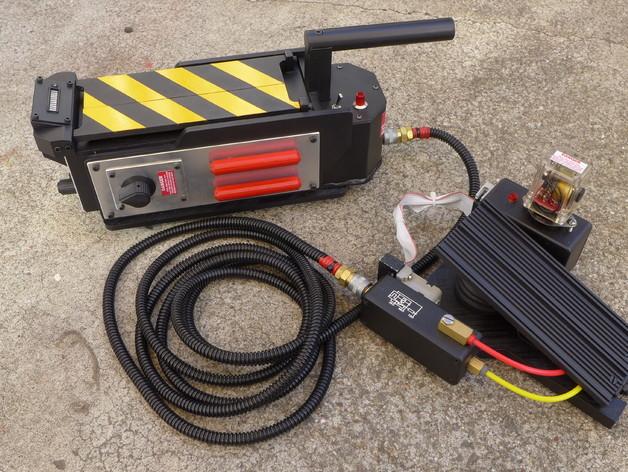
 Perhaps the most popular ghost-themed Hollywood film of all times is Ghostbusters, starring Bill Murray, Dan Akroyd, and Sigourney Weaver. This 1984 movie was a huge box office success, and they made a sequel too. (It has been remade for release soon starring an all female lineup for a new spin on the old classic.) Since the idea of ghostbusting clearly isn’t going anywhere, you may be interested in this 3D printed ghostbusters trap for all of your cosplay ghostbusting needs (don’t forget to bring your handy-dandy Proton Pack and Giga Meter!).
To get started, we need to establish that, yes, in order to really ghostbust you’d need special equipment. This equipment includes analog and digital audio recorders and video cameras with infrared night-vision capabilities; hand-held camcorders; 35-mm film still cameras and digital cameras; Geiger counters; motion detectors; and seismograph and thermal-imaging cameras. Of course, if you are not really going to ghostbust but you just want a trap that looks like it can do the job, a 3D printed replica of the one in the original Ghostbusters movie will do the trick, right?
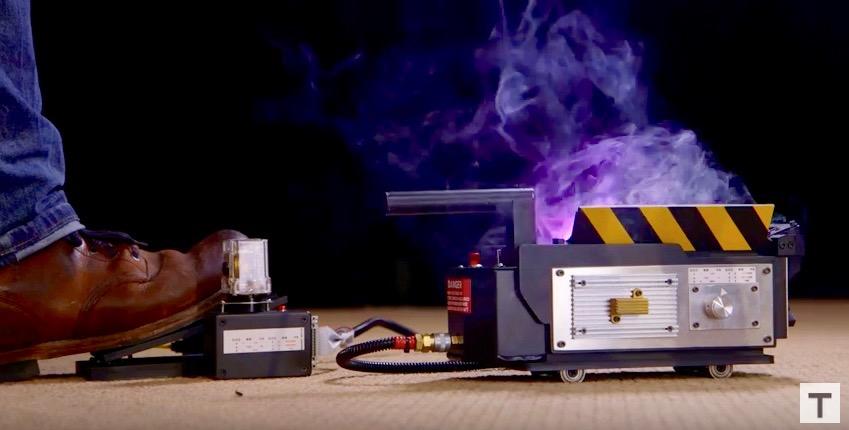
Norman Chan and Tested’s Sean Charlesworth partnered up to design and 3D print this contraption, which is based on reference materials from the Ghostbusters and Ghostbusters II movies. A pedal that looks like the kind used with an electric guitar is used to activate the trap’s doors, sounds, and lights. In a video, Charlesworth explained that he wanted a trap that was “self-contained, repeatable, and easy to use,” and the final trap’s parts were mostly printed by a Dremel 3D printer.
As you can tell by watching the below video, the source components for the trap are taken directly from the original movie and are discussed at length on the preeminent Ghostbusters fan website: GBfans.com. These parts include a resister, vector plate, relay, skirted knobs, lens shades, toggle switches… and more that are all 3D printed. In fact, there are so many parts to the trap that Charlesworth reports he spent a whole week simply researching them. GBfans.com makes some of these original parts immediately available for purchase. But, of course, the idea here is that you can 3D print them — making them yourself for the sheer fun of it all.
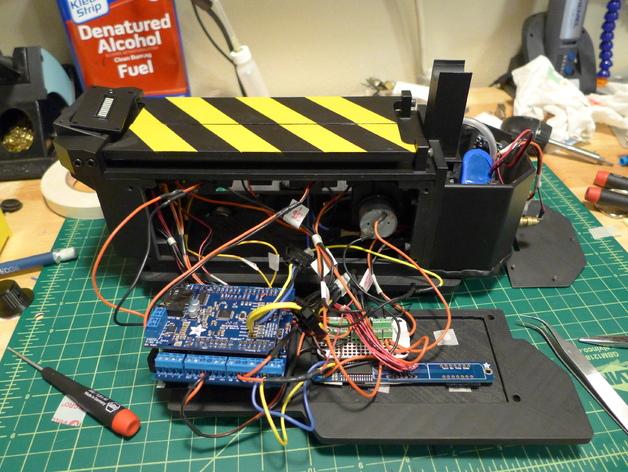
In the end, the trap is not merely an empty shell of a Hollywood film prop, but it is a working trap in the sense that its lights, sounds, and doors can be moved by the pedal. You can see how it is put together and how it works in the below video, and you can access files to print one yourself from Thingiverse. Happy Ghostbusting! Is something you’d like to have? Discuss in the 3D Printed Ghostbusting Trap forum over at 3DPB.com.
Subscribe to Our Email Newsletter
Stay up-to-date on all the latest news from the 3D printing industry and receive information and offers from third party vendors.
Print Services
Upload your 3D Models and get them printed quickly and efficiently.













You May Also Like
3DPOD 310: Metal LPBF Under $10k with Tom Bakker, Metal-Base
Tom Bakker is a talented engineer who has worked in LPBF, custom machine building, and on semiconductor equipment. Now he wants to make LPBF metal printing cheap. With Metal Base,...
3D Printing News Briefs, August 8, 2026: Seawall Funding, Defense Capabilities, Supports, & More
We’re starting with business in this weekend’s 3D Printing News Briefs, then moving on to defense. We’ll move on to young 3D printing entrepreneurs, and finish with some research out...
3DPOD 309: 3D Printed Aquarium Pumps and a Lot More with Kristian Cleven
Kris Kleven has spent decades in engineering. First, he did demanding engineering projects for Schlumberger, Emerson, and others in the oil and gas industry. Later, he worked at NBC Universal...
3DPOD 308: Engineering Design with Matthew Shomper, Not a Robot and F13LD
Matthew Shomper has worked on 3D printed medical devices for many years. There, he specialized in new geometries, cutting-edge designs, designing implants, FEA optimization, approval processes, 510(k) submissions, textures, and...