

The rapid rise of drones is creating one of the biggest opportunities for additive manufacturing (AM). Whether they’re used on battlefields, inspecting bridges or crops, or delivering supplies, drones need to be lighter, easier to customize, and quicker to produce. This is partially why drones have become one of the biggest opportunities for 3D printing.
That’s one of the main conclusions of a new Additive Manufacturing Research (AM Research) report, Additive Manufacturing Opportunities in Unmanned Aerial Systems 2026: Drones Market Analysis and Forecast, which explores how 3D printing is moving into drone production. Rather than simply identifying a fast-growing market, the report argues that drones have become one of the clearest examples of where AM creates real value.
AM Research explored many of those findings during its recent UAS Additive Strategies online event, where industry leaders discussed how to scale drone production. Scott Dunham, Executive Vice President of Research at AM Research, explained why more companies are turning to additive manufacturing.
“In UAS, we have the recipe for both a significant market opportunity and one that could change the dynamics of additive manufacturing. Geopolitical urgency, supply chain fragility, and regulatory uncertainty have all come together to make additive manufacturing a much more attractive solution than it was just a few years ago,” said Dunham. “Military adoption is fast-tracking additive manufacturing into the core of the drone market, but that’s important for the commercial sector as well because it establishes additive manufacturing in a new way.”
Unlike traditional manufacturing, 3D printing doesn’t require expensive tooling or high production volumes. That makes it a natural fit for drones, where designs change quickly, and aircraft are often built for specific missions or customers. Instead of using 3D printing only for prototypes, manufacturers are now producing end-use parts, including airframes, housings, brackets, ducts, sensor mounts, RF components, and lightweight structural components. According to AM Research, drones have become the largest production application for low-cost 3D printers worldwide.

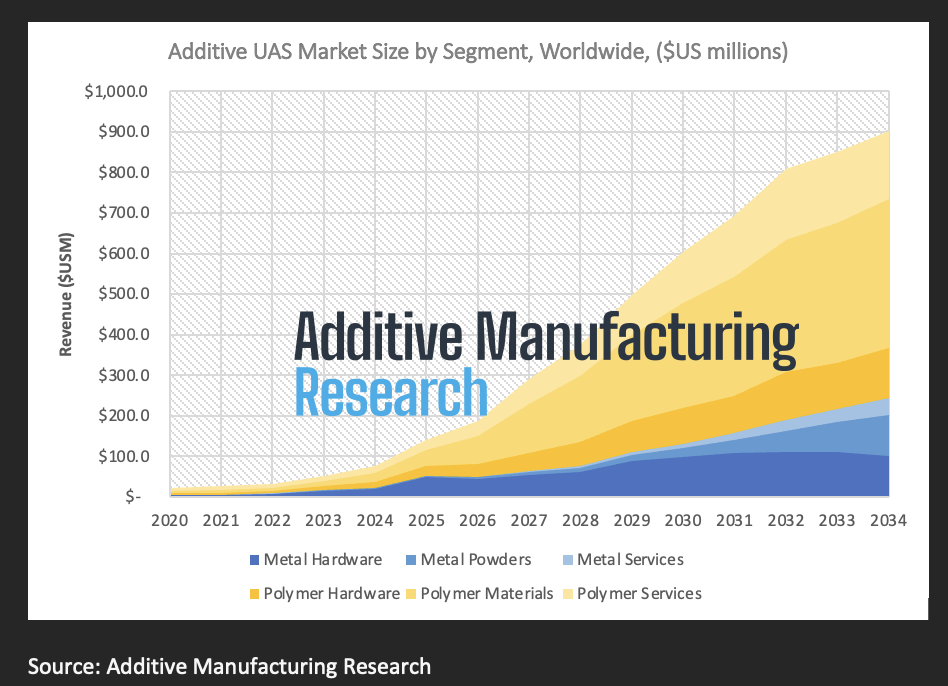
Additive UAS market. Image courtesy of AM Research.
Defense has become one of the biggest drivers behind that shift
Modern conflicts have shown how quickly drones can change. New equipment, changing missions, and constant design updates put pressure on manufacturers to build and improve drones faster. In many cases, waiting weeks or months for new tooling is just not practical. Instead, manufacturers can update a digital design, print new parts, test them, and move into production much faster than with traditional manufacturing.
Speaking during the UAS Additive Strategies event, David Krzeminski, Business Development Manager for Polymer at EOS, said the industry’s biggest challenge is no longer designing better drones but figuring out how to manufacture them at scale.
“The next drone race will be won in manufacturing. You could argue that the bottleneck isn’t drone design. It’s the manufacturing side. Every talk you go to, every industry leader you hear speaks about scaling up. That’s the challenge, and it includes every part of the manufacturing process.”

Joris Peels, 3DPrint.com & AM Research during the UAS Additive Strategies online event. Image courtesy of 3DPrint.com.
Joris Peels, Executive Editor & VP of Consulting at 3DPrint.com and AM Research, took that idea a step further, arguing that the future opportunity isn’t simply building more drones, but giving countries the ability to manufacture them quickly themselves.
“What we should be doing is not necessarily selling drones. We should be selling drone factories,” Peels said. “We should be selling these factories so that the military can, at scale, produce the drones it needs and designs. We should be thinking more like a YouTube of drones—a way to really quickly update these designs and these technologies.”
The same advantages extend well beyond defense
Commercial drone manufacturers serving industries such as energy, agriculture, construction, mining, logistics, and infrastructure inspection also face frequent design changes and relatively low production volumes. Rather than building millions of identical aircraft, many produce specialized platforms optimized for specific applications, making flexible manufacturing an important competitive advantage.
As drones become more sophisticated, manufacturers also need to update designs more often. New sensors, AI-enabled capabilities, communications equipment, and mission-specific payloads often require rapid hardware updates that traditional manufacturing processes struggle to support.

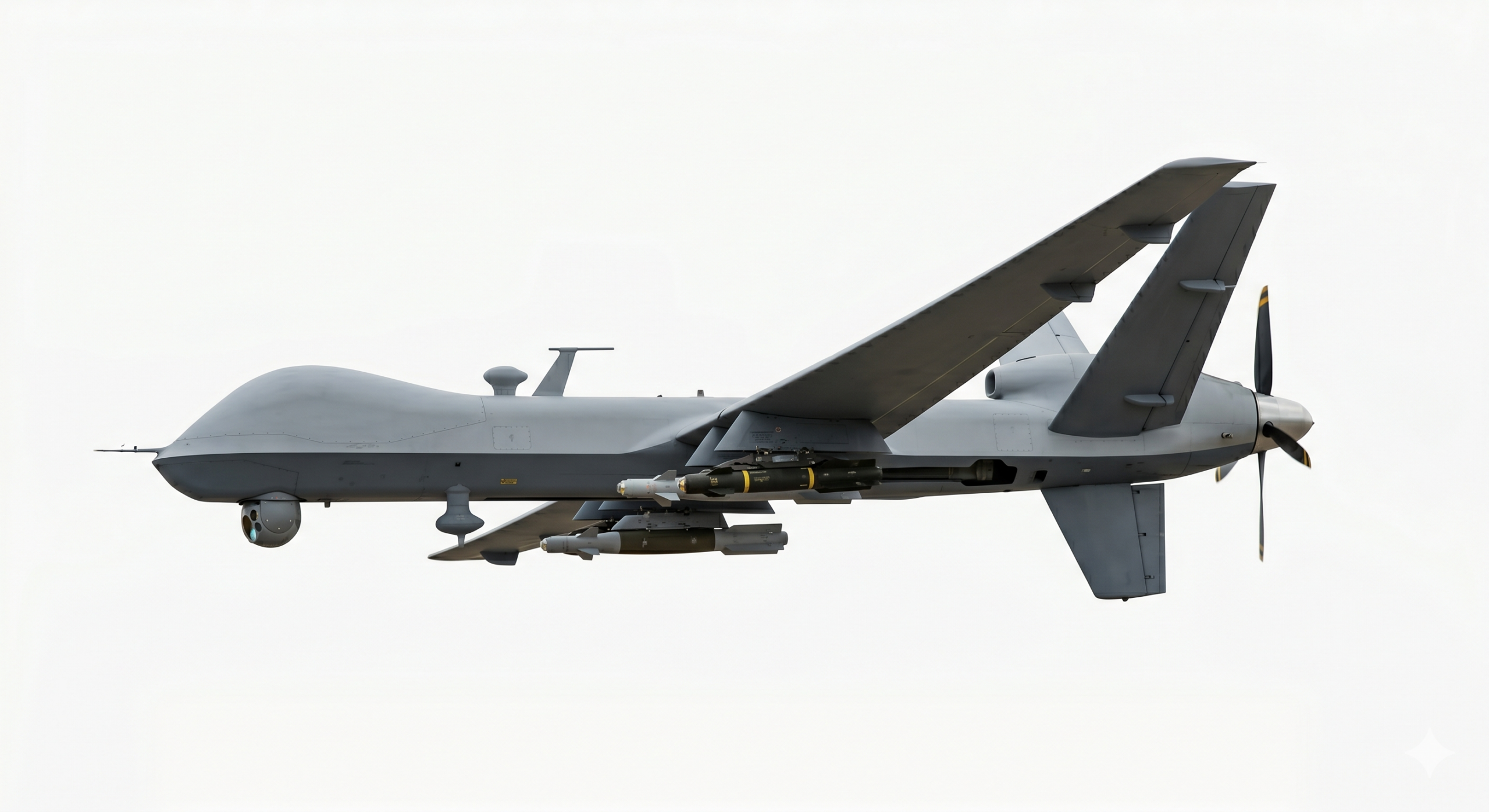
UAS report. Image courtesy of AM Research.
According to AM Research, the market for additive manufacturing in drones reached approximately $140 million in 2025 and could approach $900 million by 2034. While that growth is significant, the report suggests the bigger story may be what drones reveal about additive manufacturing itself.
That long-term opportunity was also a recurring theme during the UAS Additive Strategies event. Krzeminski said that scaling drone manufacturing won’t depend on a single technology, but on combining the strengths of different production methods.
“The next drone factory will be a blend of automotive efficiency, additive flexibility, and aerospace reliability. We also need to redefine what scale means. It’s not only about high-volume production. Scale also means mission assurance, reducing risk, and giving manufacturers confidence that they can produce the parts they need when they need them.”
Few industries combine so many of technology’s strengths in one application. Drones are a natural fit for AM and may prove to be one of its biggest opportunities yet.
The full report is available from AM Research and examines AM adoption across drone hardware, materials, applications, regions, and vendors, and includes market forecasts through 2034.