
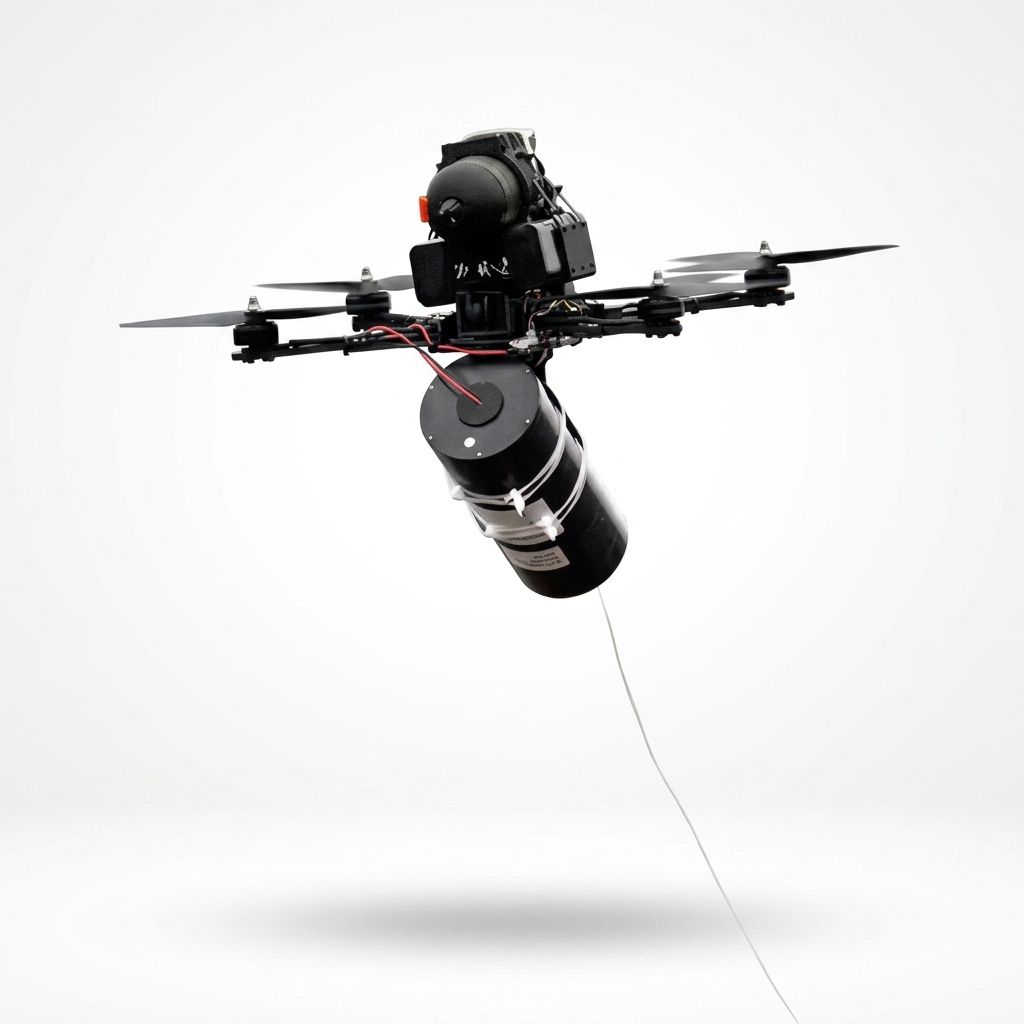
Ukraine was saved by Turkish-made Baykar Bayraktar drones and many brave soldiers in the first stages of the conflict. Then hobbyists and their DJI Mavics showed how drones could be spotters for artillery and take out tanks. Then 3D printed Ukrainian drones did much to stop Russia’s advances in their tracks. Currently, Russia is incurring 1,298 casualties per square kilometer gained, with 176 square kilometers gained in 2026 now stalling. Indeed, net, Russia has lost territory for the year. Russia is also effectively not advancing at the moment. But it sends soldiers in groups of three to hide amidst Ukrainian positions. Some of these soldiers survive and are then joined by others; sometimes a new village is captured, giving the semblance of progress, and this is enough for their lives. Dead for PR. These soldiers last up to one hour on average, and 75% are killed getting to the frontline. The sky above them is saturated by drones, making movement in the dead zone costly.
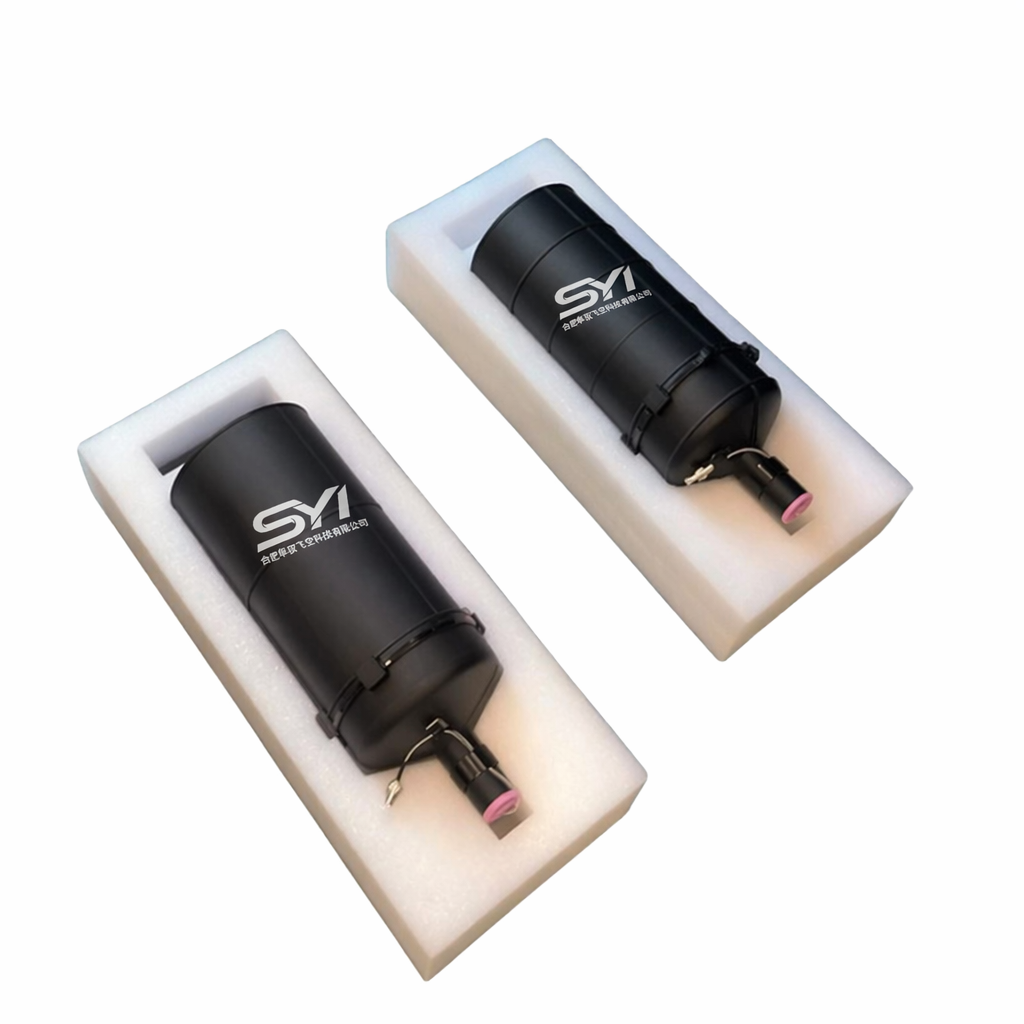
Drone components. Image courtesy of SYI.
3D printing, Ukrainian gumption, and innovation have made this possible. Meanwhile, Ukrainian drones accurately target oil installations and manufacturing plants thousands of kilometers away. Shahed interception rates are up to 95%, while ballistic missiles still overwhelmingly get through. Russia has suffered 1.4 million casualties, and its future as a military power is in grave doubt. Over 500,000 Russian soldiers are dead. Worldwide, we see a real focus on mass manufacturing of 3D printed drones for Shahed interception specifically, but also on large-scale production of low-cost drones more broadly. Many countries want to produce thousands of drones at scale. Smart countries already know that, like Ukraine, they will need to make millions to deter any future conflict. So everyone marches forward producing drones locally. But what of the Chinese?
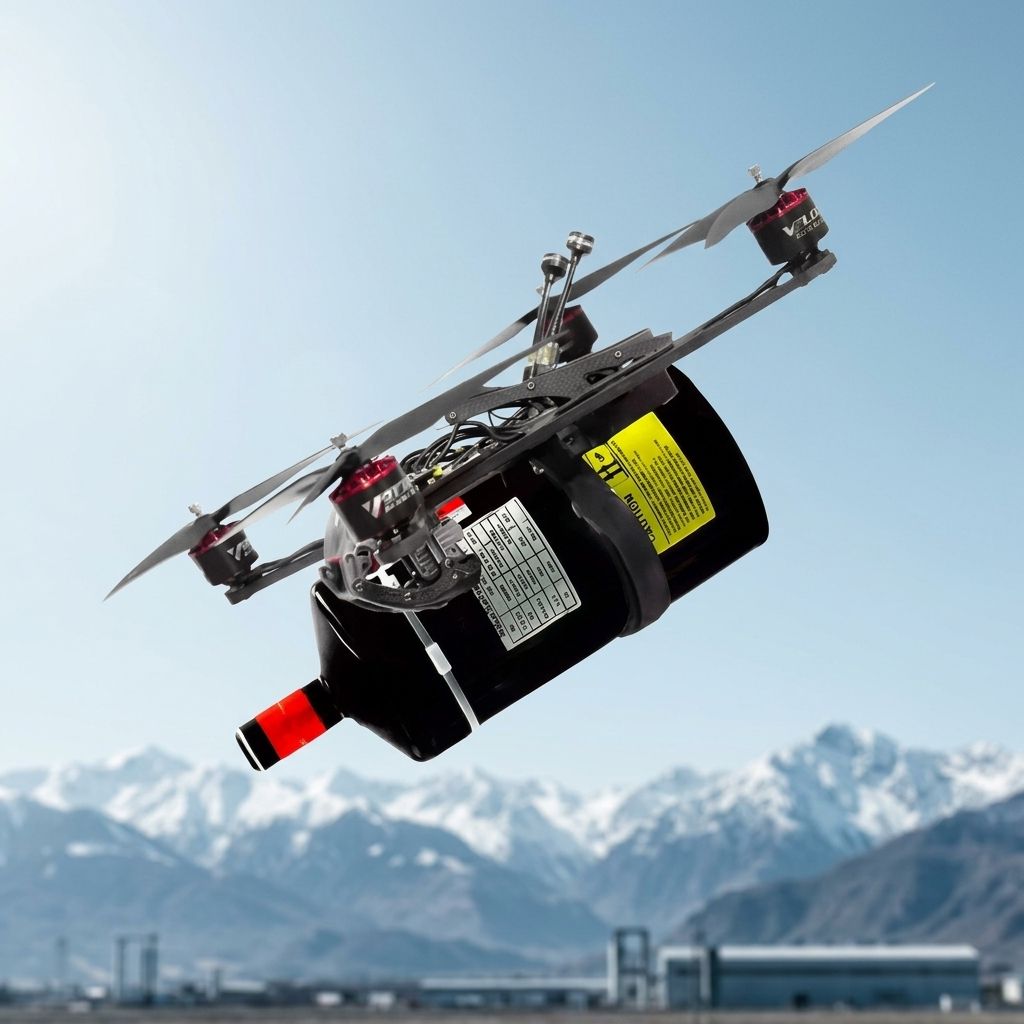
Fiber-optic FPV drone. Image courtesy of Hefei Sunyu Feikong Technology.
Many of the 3D printers used to make drones in Ukraine and Russia are Chinese, as is much of the filament. A lot of the batteries and electronics are Chinese too. It is still DJI, and its Mavic platform is one of the largest drone suppliers to the conflict. On the Russian side, at the very least, most of the drone electronics, motors, and batteries are made in China. China would probably manufacture around 3 million drones per year for Russia. And DJI is still the predominant drone manufacturer worldwide. In a desperate search to counter the Russian threat, we must also take China into account. If nations oppose China, the only way to counter that country is to somehow, in quality, quantity, or efficacy, outproduce it. But, if we’re being realistic, then probably no one will be able to do that.

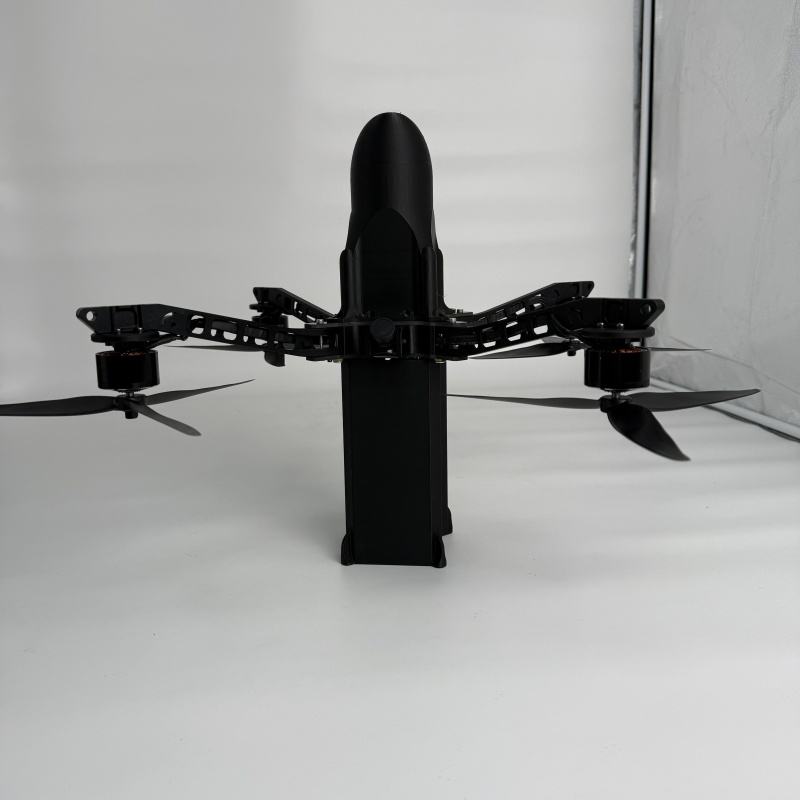
3D printed interceptor drone
Recently, a rush of new Chinese interceptor drone makers have entered the market. They claim to make $1,500 to $3,000 interceptors with 300-kilometer speeds and autonomous capabilities. China has a massive lead in manufacturing generally, especially in integrated electronics and mechanical assemblies that require machining, injection molding, and assembly. Not only could China defeat the world in drone warfare, but Shenzhen could also probably defeat the world in drone warfare. Furthermore, the company is less concerned about personal data than others, so it leads in facial recognition, many aspects of video surveillance, and computer vision. So the AI targeting thing seems like it could be theirs for the taking as well. It’s unclear to what extent the Chinese government would like this industry to continue in an unregulated frenzy. It presumably would not like many people to use drones inside China for crime or for anti-government agitation.
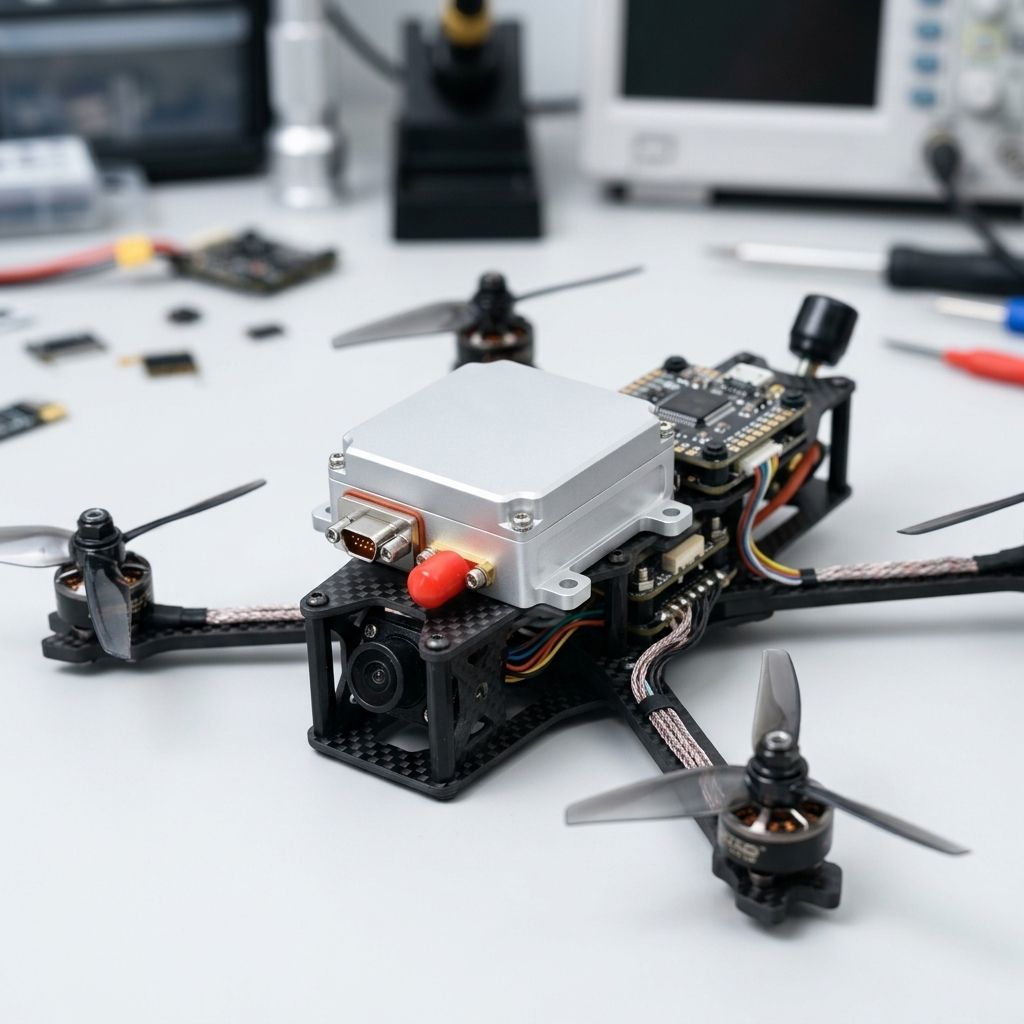
FPV drone with onboard electronics and camera system
Imagine a few drones around Beijing propagating an open mesh network, for example. Terrorist groups are sure to use drones as well. Besides the US Predator program, direct action and assassinations with drones have been limited, but it seems like the easiest way, really. If someone somewhere were to want to assassinate a national leader, a drone would be the simplest way and have the highest chance of escape. Sure, they’d probably jam it, but how could they find you?

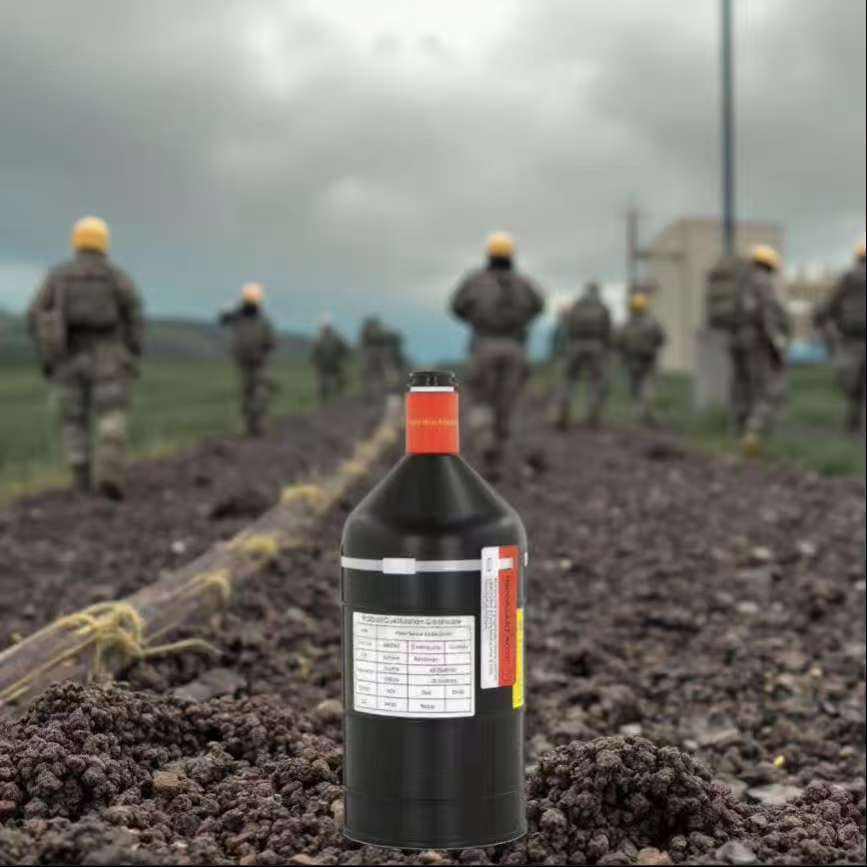
Fiber-optic cable spool for FPV drones. Image courtesy of Jiangxi Guangbo Optoelectronic Technology.
And for those worried about electronic interference, Hefei Sunyu Feikong Technology Co., Ltd. has just the answer for you. That firm ships the “Custom Jam-Proof 13 Inch Fiber-Optic FPV Drones Complete Anti-RF Interference Fiber Tethered UAV Kit Industrial Operations” drone. Whereas Alibaba and other platforms are littered with dual-use drones and those that could be appropriated for military use, and many components and drones clearly aimed at being sold to Russia, this is a clear example of a military drone. There is no reason whatsoever to have a tethered fiber-optic drone outside the battlefield. There are other drones with a short tether to wash windows, but we’re talking about canisters of fiber-optic cable with 20 kilometers of cable on them. We see this in one place in the world: Ukraine. This is a clear example, and there are many more B2B platforms being used to sell weaponry. The only reason to use fiber-optic cable is to evade jamming, and on Alibaba you can now buy this drone for as little as $200. The idea of using this to wash windows or fly around to take pictures of your building is ludicrous, and it would leave fiber-optic cable everywhere in its wake, too. It ships to Russia. This kind of drone would be impervious to jamming systems. Jiangxi Guangbo Optoelectronic Technology Co., Ltd. sells fiber-optic canisters at low cost. With military-themed photos, Shenzhen Chaoyue Guangtong Technology sells 10 or 30 kilometers of fiber-optic cable in a canister, as does Shenzhen Ih Optics Co., Ltd. Shenzhen Aixton Cables Co., Ltd. also sells a fiber-optic drone system. Shenzhen Yunding Communication Electronics sells an Anti-Jamming GNSS drone that works well with Russia’s GLONASS GPS alternative.

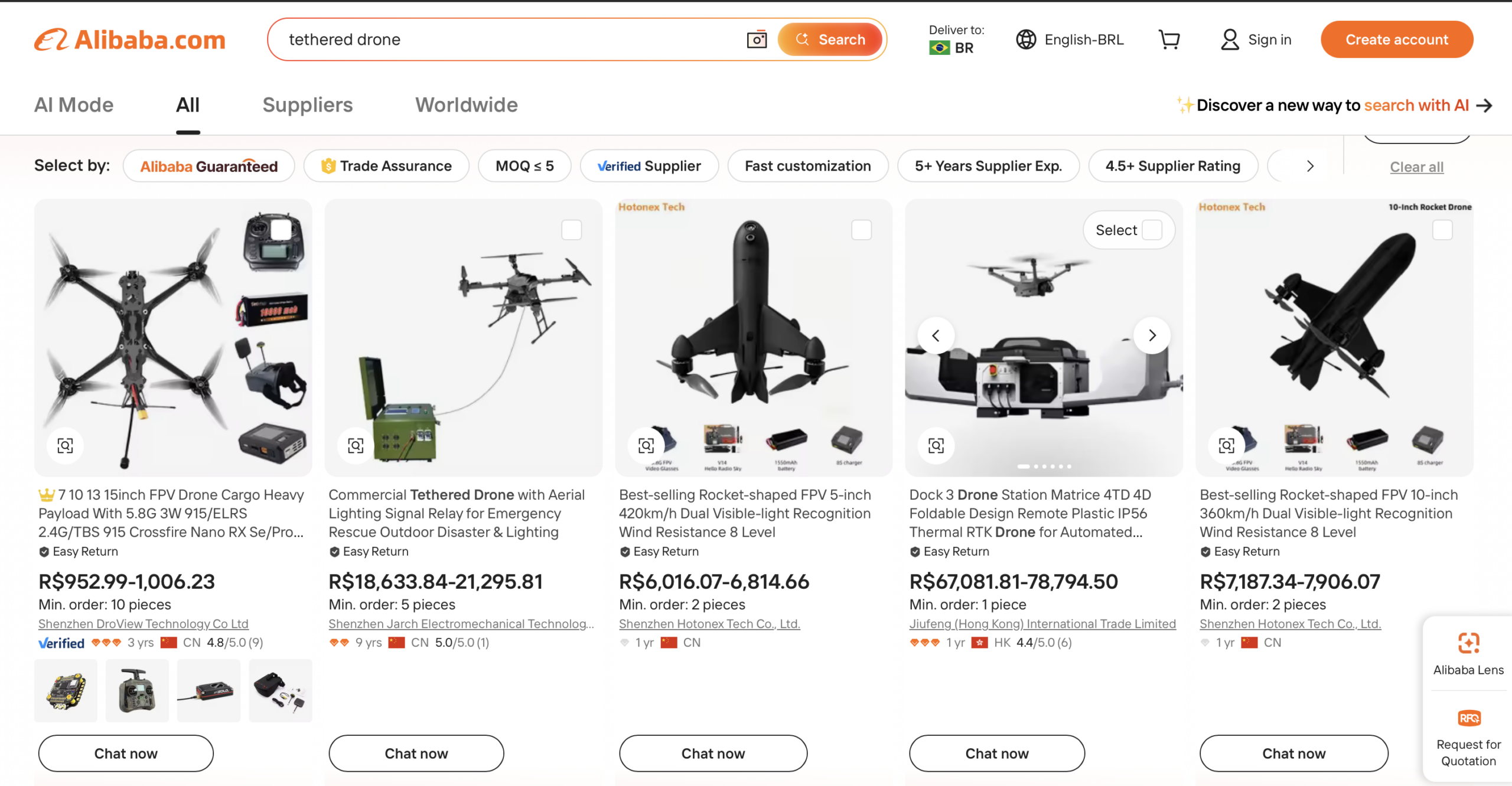
Drone listings on Alibaba, including rocket-shaped FPV drones and tethered drones. Screenshot courtesy of Alibaba.
Chongqing Zhengcai Partner Trading Co., Ltd has drones for around $200. And these are 3D printed. They’re copies of the P1-SUN JetKiller. That drone is meant to shoot down Shaheds. The Chinese version ships to Germany for $500-$700. It does not ship to the US. The drone is advertised as a “5/10/15 Inch High Speed 100m/S FPV Drone 360KM/H Device Aircraft Rocket Crossing Aircraft Rocket Drones Wind Resistant.” Xinglun Rope Cable has nets for drone interception systems. That sounds positively benign compared to the other ones.

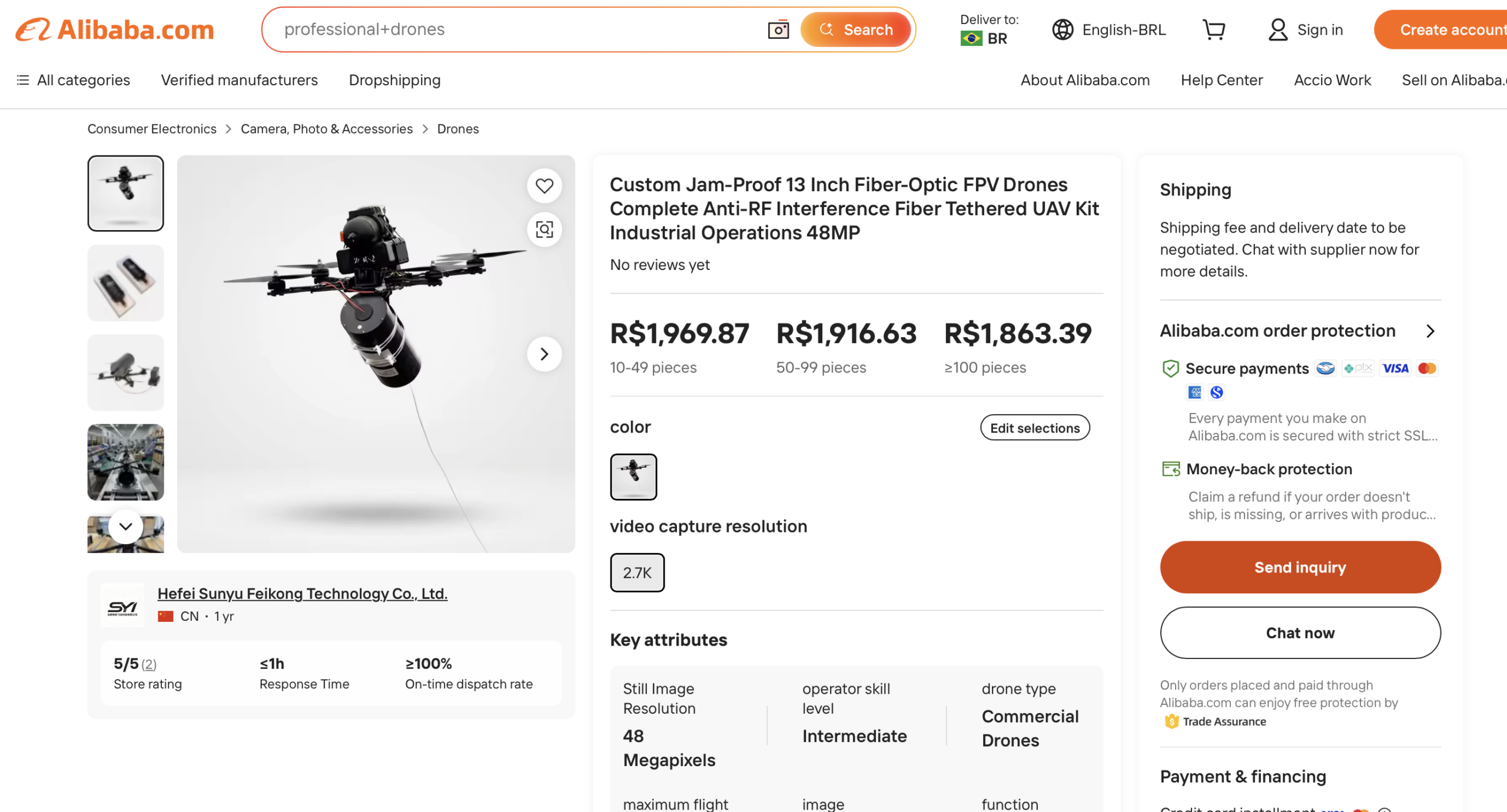
Fiber-optic FPV drone offered by Hefei Sunyu Feikong Technology on Alibaba. Image courtesy of Alibaba.
Alibaba openly selling equipment and drones that can only be used for military purposes is, of course, scandalous. Alibaba’s Singles Day probably refers to the people left behind when these things kill them. But secretly, we all knew that they were doing this. And secretly, we know they won’t stop. When you take any ethics out of a business and just focus on raw capitalism without any consideration for human life, that’s what’s on display here at Alibaba. It’s difficult to think of another business that would let anyone, anywhere on earth, sell a military drone that could take out a head of state or an aircraft. Does Alibaba not realize how dangerous these things are? Are the 40 thieves too deep in their cave to watch the news? I’m disgusted by this and am saddened too. This shows a complete lack of ethics, human decency, and rationality.