
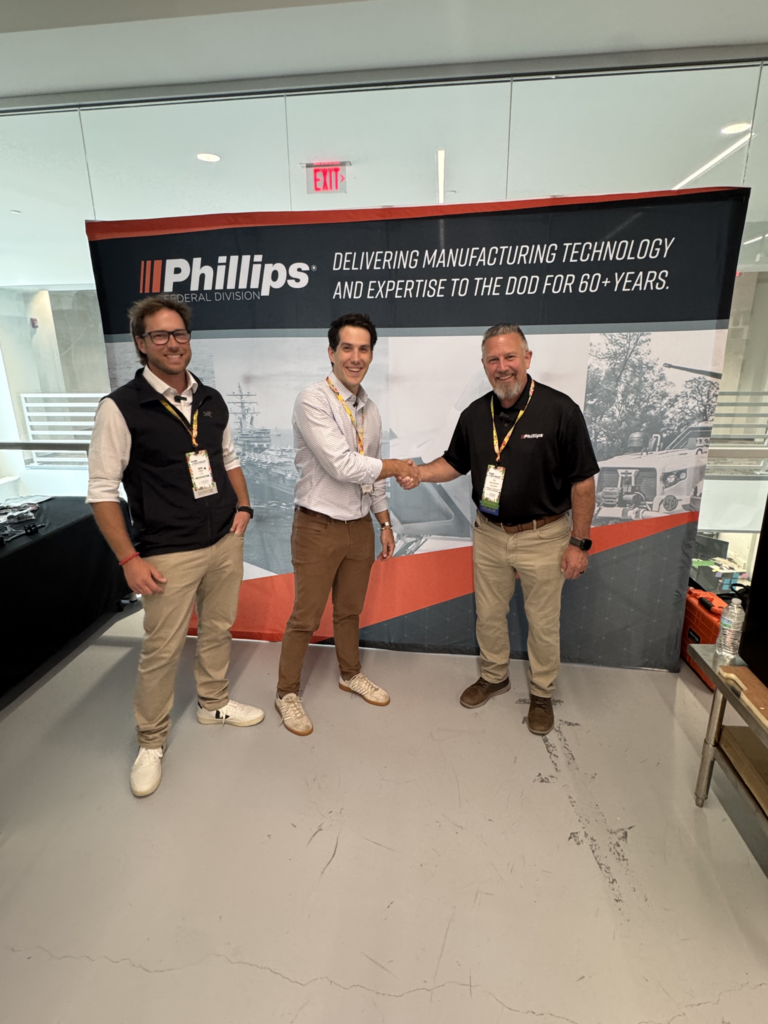
Phase3D is demonstrating a unique combination of technical maturation via intensive R&D, and commercialization through broadening its accessibility to potential users. Just last week, the company received an Air Force contract to explore use of its in-situ monitoring (ISM) hardware for ceramic composites. Now, it’s announcing a deal with Phillips Federal, whereby the latter will be the exclusive reseller of Phase3D products to the North American defense market.
These announcements come after more than a year of multi-tasking, during which Phase3D has set up a relationship with a Japanese reseller and started selling its software directly through its own website, while continuing to regularly land contracts with R&D-heavy US government agencies. A relationship with Phillips Federal is an especially important milestone, and indeed linking up with Phillips is something of a rite of passage for those aspiring to enter the US AM for defense market.
A key to the deal between Phase3D and Phillips Federal is the preexisting relationship between Phillips and EOS, given that there is a similarly extensive relationship between EOS and Phase3D. Additionally, as Phase3D notes in the press release about the new partnership, both Phillips and Phase3D have strong ties to the US Navy’s AM CoE in Danville, Virginia that’s operated by Austal USA.
While you wouldn’t immediately think of an ISM hardware maker and a reseller as businesses that are aiming to address quite similar challenges, the nature of the current metal AM buildup in the US has led to a situation where this is in fact the case. Albeit in completely different ways, both Phase3D and Phillips Federal are trying to broaden the potential user pool for the metal AM market by making the technology both cheaper and faster to adopt, which is to say, more accessible.
Probably because it is a commercial data-point rather than a technical one, the growth of reseller networks is under-appreciated as an indicator of a machine industry’s technological evolution. But, in a market for complex industrial machinery, it typically takes a long time before reseller networks become commonplace.
CNC machining existed for decades before the technology was standardized enough, and the machines compact enough, for resellers to become the normal channel through with OEMs reached customers. Once that happened, in the ’70s and ’80s, a feedback loop was established between faster adoption growth and increasing machine reliability, a process by which Japan became the global leader in the CNC market.
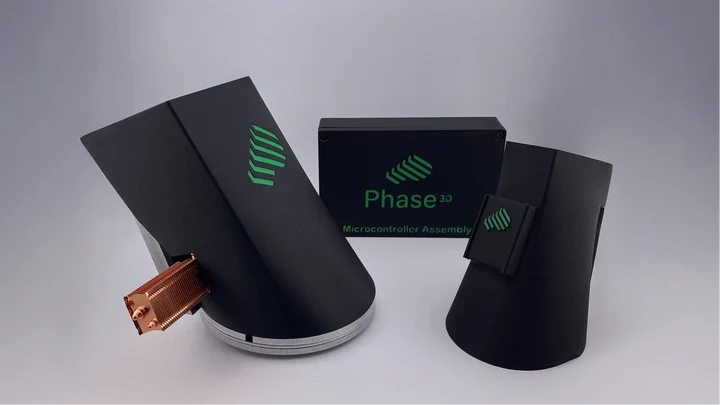
It is still far more common for metal AM users to buy machines directly from manufacturers rather than through resellers, but Phillips’ foothold in the US market represents an exception to that. If the metal AM market follows a similar path to the experience of the CNC market, then along with getting cheaper and more reliable, metal AM may also need to see greater expansion outside of defense before resellers become the norm.
In that sense, Phase3D and Phillips again display an interesting overlap of goals. If Phase3D does its job, then metal 3D printing processes will become more standardized and less expensive for a user base that’s growing more quickly, which would indirectly pave the way for resellers to gain greater traction.
As I discussed the other day in a completely different context, the way that industry observers choose to define the AM industry — which has been shaped more by the historical circumstances of how the industry has unfolded, than by considerations of how to best understand what the AM industry is — leads to widely different conceptions of the overall state of the industry at a given time. Understandably, printer OEMs still tend to draw more attention than all the other many companies involved in AM. But quality control specialists and reseller networks are no less a part of the industry than are printer brands.
Images courtesy of Phase3D