
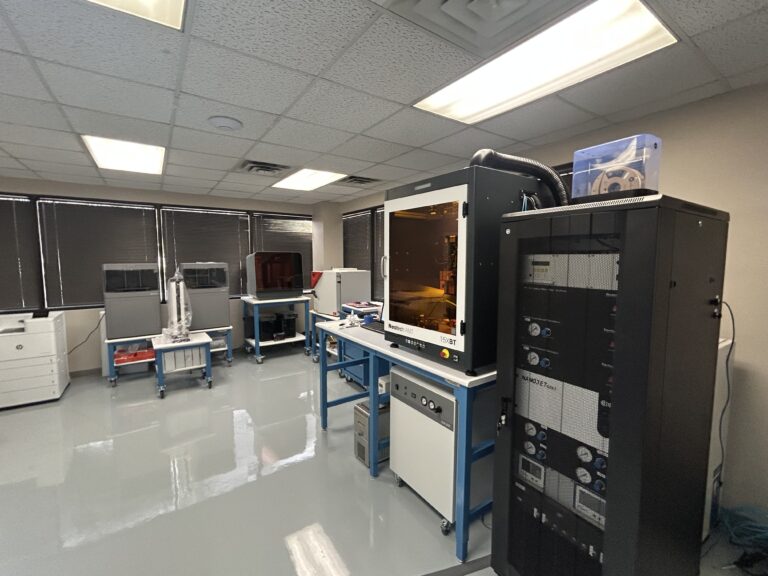
Since Great Lakes Semiconductor (GLS) and Advanced Printed Electronic Solutions (APES) announced a strategic partnership earlier this year, I’ve been looking forward to hearing more about the collaboration, which the two companies announced would rev up in Q3. The work appears to be right on schedule, with GLS now announcing that it has launched the first project on its Great American ChipForge platform, a project that APES will be an integral part of.
The earlier announcement stated that this is when GLS and APES would begin co-locating operations in Fishkill, NY, and that they’d start with a project focused on the automotive market. The first project will indeed address the auto market, specifically AI-enabled vehicle sensors. In addition to GLS and APES, five other companies will be participating: two Japanese companies, including the world’s largest HVAC company by sales, Daikin, and NEITAS, an agile semiconductor fab startup; BlueDot Ventures, which makes low-energy vehicle sensors under the FleetHD brand; FMC, a maker of ferroelectric memory chips; and AltaScient, an Atlanta-based predictive-intelligence firm.
The Great American ChipForge platform is part of a broader initiative from GLS, the Innovation Funnel, specifically aiming to accelerate the path from prototypes built in universities and other R&D institutions to the commercial market (essentially, addressing the “Valley of Death” problem). APES, leveraging the 3D printing capabilities of its Matrix6D system, will be providing the chip packaging capabilities for the collaboration.
Essentially, it looks like chips from GLS and FMC will be packaged together with an APES substrate, along with “multiple sensors” from BlueDot. Based on their respective specialties, the other partners will presumably fill the gaps in the remaining workflow software and hardware requirements. As Dr. Rich Neill, CEO and founder of APES, explains in the press release, qualifying the initial process will enable future projects to swap out materials, designs, and processes without starting the entire production method from scratch.

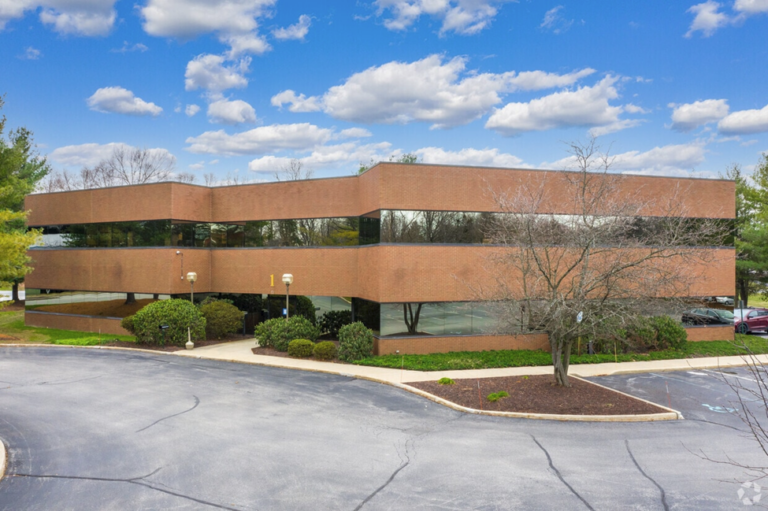
Great Lakes Semiconductor’s Fishkill, New York, location. Image courtesy of GLS.
That would fulfill the promise of the new philosophy embodied by emerging semiconductor capital equipment (semicap) technologies. The GLS and APES partnership was one of the developments I discussed in a post I wrote back in March, which referred to the changes in the semiconductor market collectively as “the semicap insurrection.” That was only 6 months ago, but even at that time I didn’t yet anticipate how quickly these changes would start to take hold at the industrial level, an emergence that probably has a lot to do with China’s achievement of domestic DUV manufacturing capabilities that made news over the summer.
If non-Chinese semiconductor manufacturers are going to keep up with the pace of innovation in China, their efforts are going to look a lot like what GLS, APES, et al. are doing: a great number of flexible, horizontal ecosystems that come together for varying lengths of time to deliver solutions tailored to specific verticals. In this context, much is riding on these early collaborations, for precisely the reasons alluded to above in the reference to Dr. Neill’s comments. Each collaboration is far more important than whatever is the near-term outcome of the project itself, because the sort of success achieved with each collaboration will determine just how easy (or difficult) the immediately subsequent project is. This is something I’ve written about frequently with regard to another 3D printed electronics firm, Poland’s XTPL.
Although the AM industry is still largely ignoring this segment of the market, it’s perhaps the most exciting thing happening in 3D printing, even if other, more mature segments currently represent larger portions of the AM industry as a whole. But if projects like this one can genuinely demonstrate the ability to speed up semiconductor innovation, that could start to shake up perception of the relative importance of 3D printed electronics.
Images courtesy of GLS