
If critical minerals processing were easy, then countries other than China would still be good at it. Amongst all industries, miners and processors of critical minerals face extraordinary opposition in the form of Not in My Backyard (NIMBY) sentiments, particularly in nations where political officials have to concern themselves with getting re-elected.
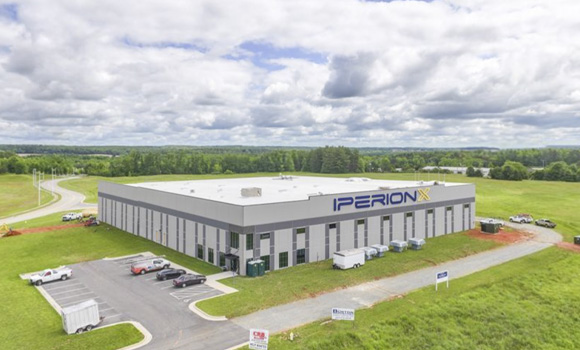
But rather than making investors wholly dismiss the potential for non-Chinese suppliers of critical minerals, the context described above has instead bolstered interest in the handful of companies that have demonstrated realistic paths to scaling supply chains that are domestically located in nations other than China. This includes those Western nations where NIMBY and other challenges present the biggest obstacle. One of the most ambitious companies aiming to address the need for domestic Western critical minerals supplies is IperionX, a titanium specialist that just announced it has validated its GenX process for producing additive manufacturing (AM) powders, a continuous version of its proprietary HAMR technique that previously has been validated for batch production.
Above all, this is a big deal because it accentuates all the advantages that already set apart the HAMR process from the field, most notably lower power consumption compared to the conventional Kroll method. The batch HAMR process is already significantly less power-intensive than the Kroll method: HAMR requires at least 25 percent less power than the Kroll process, and may use more than 50 percent less power. The GenX process, however, reduces power consumption by more than 75 percent compared to IperionX’s own batch method for HAMR. This suggests an overall power consumption reduction of up to 90 percent compared to Kroll.
The company got an $11.5 million order for titanium fasteners from the US Army a few weeks ago as part of a $99 million SBIR III contract, and the order could potentially be worth more than double that. Obsolescence-related shortages are plaguing supplies for aerospace fasteners, and the Army recently signaled that vehicle fasteners are facing similar shortages, in the context of Bradley tanks used by Ukraine. So IperionX is targeting a much-needed application category and is proving it can scale up production in step with the military’s demonstration of a willingness to ramp up its procurement rate.

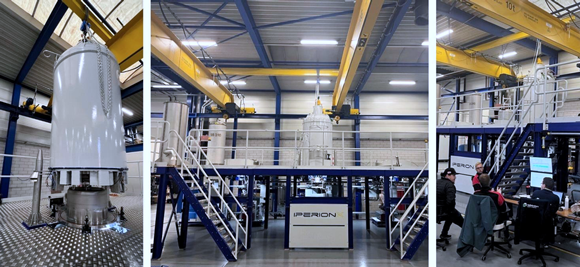
IperionX’s GenX™ next-generation continuous HAMR™ titanium production platform.
This makes the timing of the GenX process validation particularly valuable, and IperionX plans “to integrate the continuous furnace into a full titanium powder production line” by Q4 of this year, while simultaneously optimizing the process ahead of commercialization. Perhaps the most important angle to watch for here is confirmation from IperionX with regard to the lower unit cost they say they’re anticipating as a result of GenX production at scale. The company is targeting a production goal of 1400 tons per year by next year and has claimed it can ultimately lower costs to $30 per kilogram, a fraction of what users generally pay for AM titanium feedstock produced with the Kroll method.
Something else to watch for, in that case, is expansion of market penetration beyond defense. Apple is just one of the users of titanium 3D printing that is demonstrating some willingness to reshore production to the US. Increasing production and lowering unit costs are obvious first steps towards capitalizing on potential titanium supply chain diversification into domestic US production capacity, for the likes of Apple and whoever may choose to emulate them.
In fact, lowering the unit cost to that extent could be a first step towards unlocking unprecedented interest from new titanium users outside the traditional market in the US, where around 80 percent of processed material is consumed by aerospace and defense. Titanium has already found its way into enough products in verticals like automotive and medical that some substantial growth beyond aerospace and defense seems ensured as prices come down. But many other industries are just starting to explore the metal’s potential.
Energy applications, for instance, are a market that appears likely to increase titanium utilization under the right conditions. If IperionX can meet its production and unit-cost targets, the company would be well-positioned to attract customers from industries serving power grid operators.
Images courtesy of IperionX