
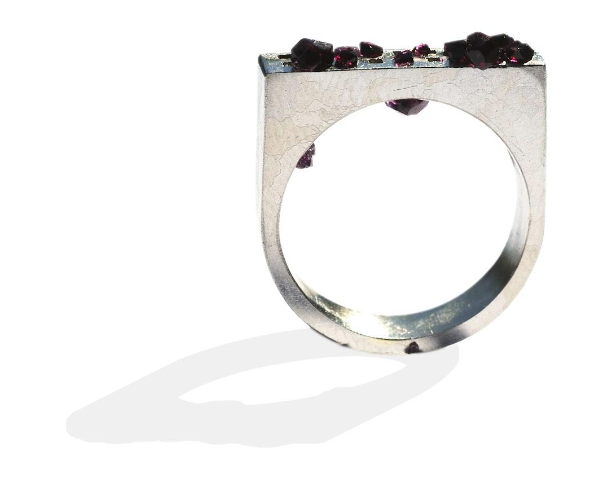
At the University of the West of England (UWE Bristol), the Centre for Print Research (CFPR) is using metal 3D printing to help grow gemstones directly inside platinum structures. The team is using a Meltio Engine integrated with a 5-axis HAAS CNC machine to build structures from platinum wire.
With this hybrid system, the researchers can stop the build, place a tiny crystal seed inside the partially finished structure, and then continue printing around it. That seed can later be used to grow a ruby or sapphire directly inside the piece.
Growing a gem inside platinum sounds almost like giving raw materials a superpower, but the idea could go far beyond jewelry. Being able to pause a metal build, place something inside it, and then continue printing could eventually help embed sensors, markers, inserts, or other materials inside metal parts. It also shows how additive manufacturing can open up a metal part during production, rather than leaving the inside inaccessible until the build is finished.
Growing the Gem Instead of Setting It
The work is part of the Neo-Gemstones research led by Dr. Sofie Boons, Associate Professor of Craft and Design at UWE Bristol. A jeweler turned researcher, Boons has spent several years developing a different approach to lab-grown gemstones. Her method starts with tiny pieces of discarded gemstones or gemstone waste, which are reused as seeds for new crystals.
In 2024, that work produced a ruby grown directly inside a platinum ring. Instead of mining a new stone, cutting it and eventually setting it into jewelry, Boons used waste ruby material as a seed and grew the new crystal in place. UWE described the result as a world first. The resulting ruby has the same crystal structure as a mined ruby; what changes is where and how it was made.

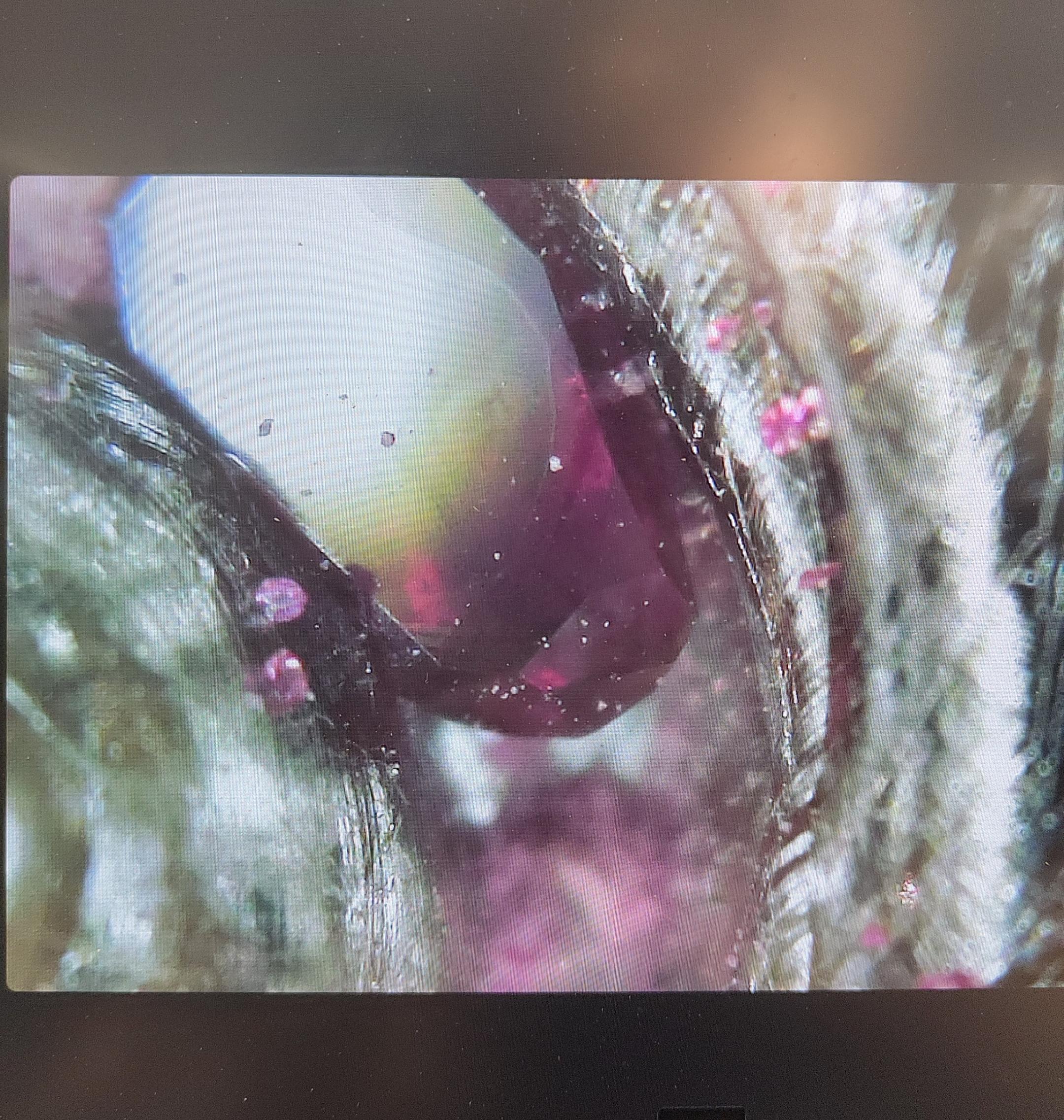
A ruby growing inside a metal structure during the Neo-Gemstones project. Image courtesy of Meltio.
That growth happens after the structure is made. The small ruby seed is positioned inside the platinum structure, which is then placed in a furnace with a flux solution containing the material needed to form more ruby. Over several days at high temperatures, new crystal material grows onto the seed, gradually forming the ruby inside the structure.
Boons refers to the idea of recovering and reusing existing gemstone material as “urban mining.” The research has since continued, and one of the challenges is creating metal structures that can hold those tiny seeds exactly where they need to be. That’s where additive manufacturing comes in.
Why Hybrid Manufacturing Works Here
The challenge is getting the crystal seed inside the platinum structure without moving or damaging it. Casting makes that difficult because molten metal flows around the seed, while powder bed fusion keeps the part buried in powder during the build.
Meltio’s wire-laser deposition process gives the researchers another option. The Meltio Engine is integrated into a HAAS 5-axis CNC machine and uses platinum wire to build the structure. Because the build remains accessible, the team can stop at the desired point, place the seed, and then continue depositing metal around it.
The same machine can also switch to CNC machining to finish the part. That means the structure doesn’t have to be moved to another machine and repositioned, which helps keep the tiny seed in the right place.

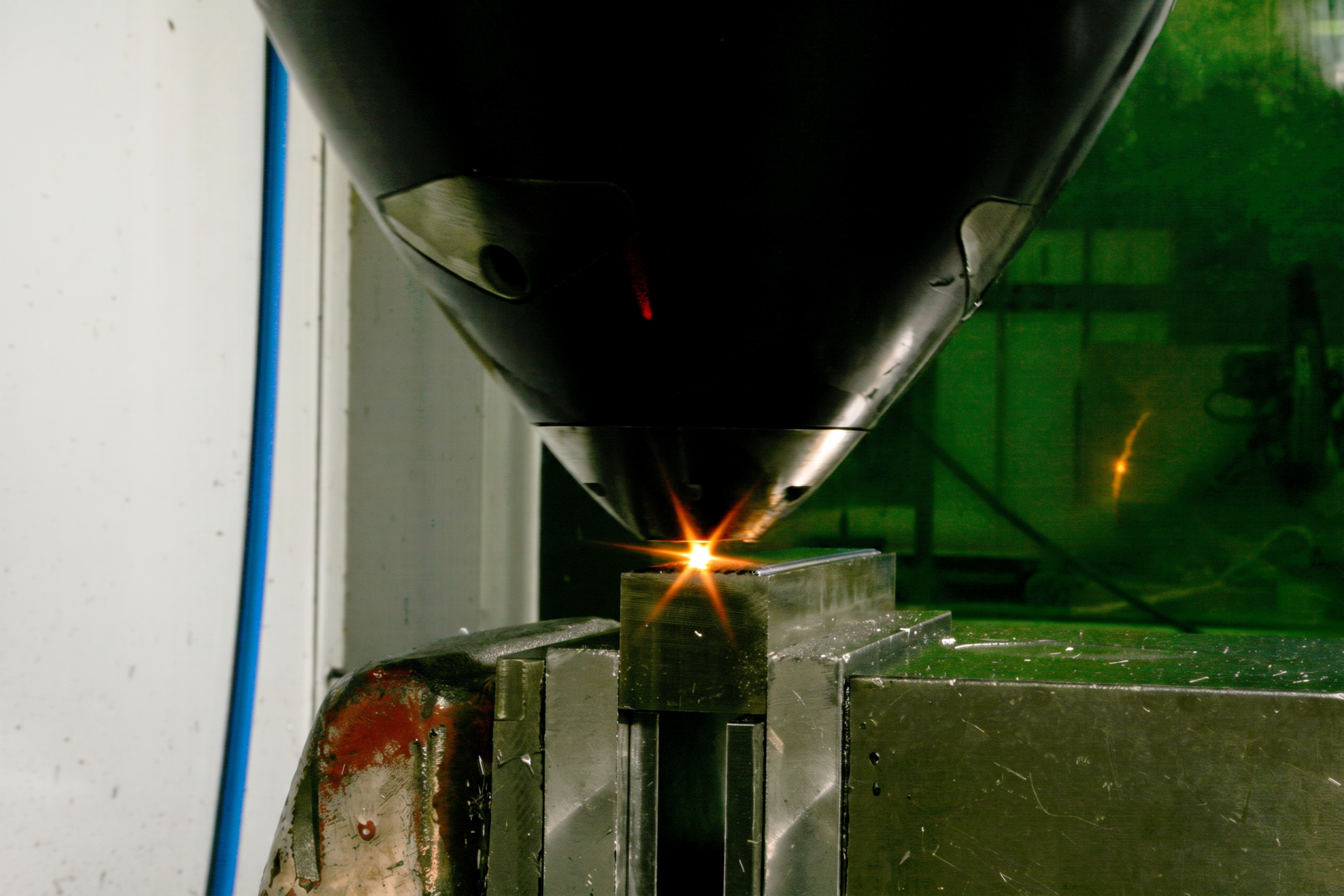
The Meltio Engine deposits metal during the hybrid manufacturing process at UWE Bristol. Image courtesy of Meltio.
Recovering the Platinum
Platinum has an added challenge, namely, waste. It is such a valuable material that the team wants to recover as much of it as possible during production. To that end, CFPR researcher Michael White developed an extraction system that collects the platinum removed during CNC machining. Instead of being lost as machining waste, the material is captured so it can be reprocessed and used again.
Recovering the platinum is especially important in this project. It reduces material loss and gives researchers a clearer picture of where the platinum goes from the start of the build to the finished part.

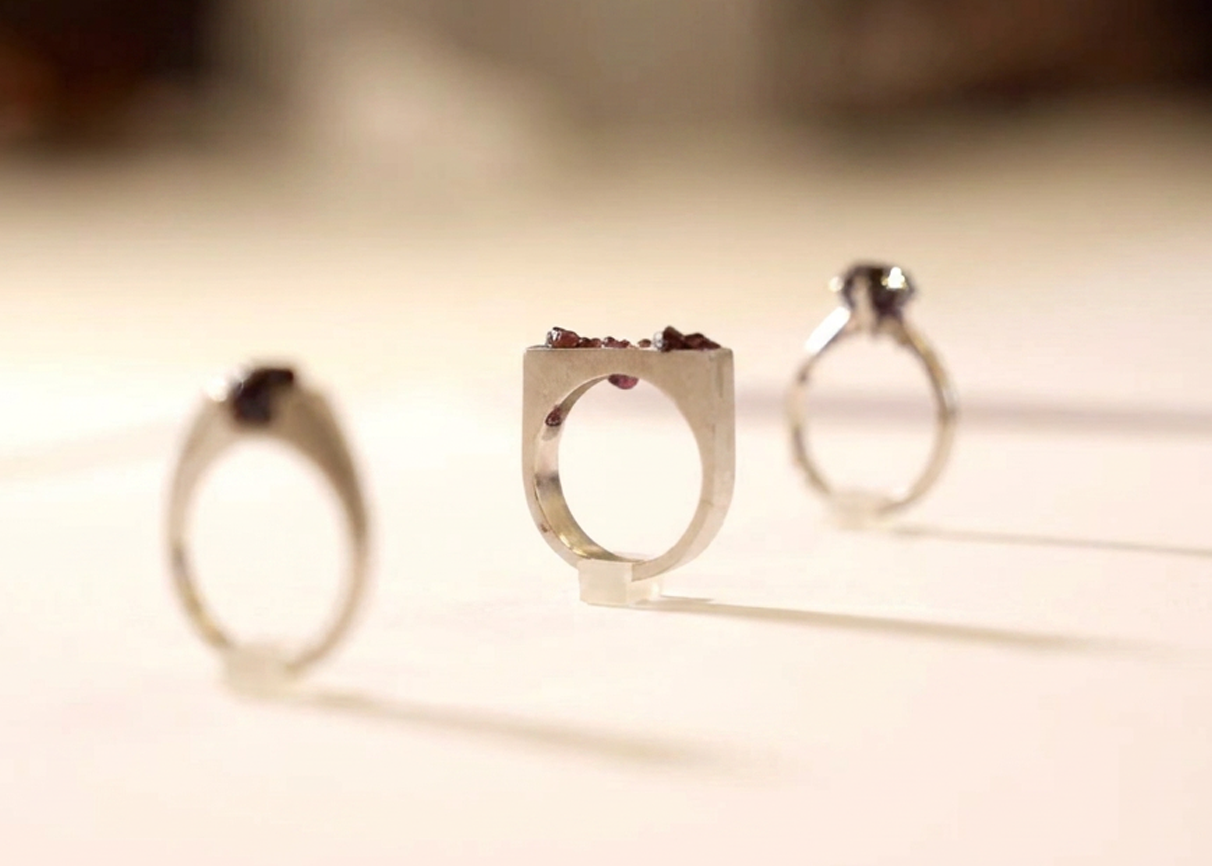
Platinum jewelry rings developed as part of UWE Bristol’s Neo-Gemstones research. Image courtesy of Meltio.
This is an unusual use of Meltio technology, which is more often found in industrial manufacturing and repair. Here, instead of making or repairing a large metal part, the system is building a small platinum structure around a tiny crystal seed. There is still more to test. The researchers are looking at stainless steel and other precious metal alloys, including platinum-palladium, which they believe could be better suited to the furnace process used to grow the gemstones.
The work remains a research project, but the idea could go beyond jewelry. Being able to stop a metal build, place something inside it, and then continue printing could eventually be useful for adding sensors, inserts, or other materials to metal parts.