
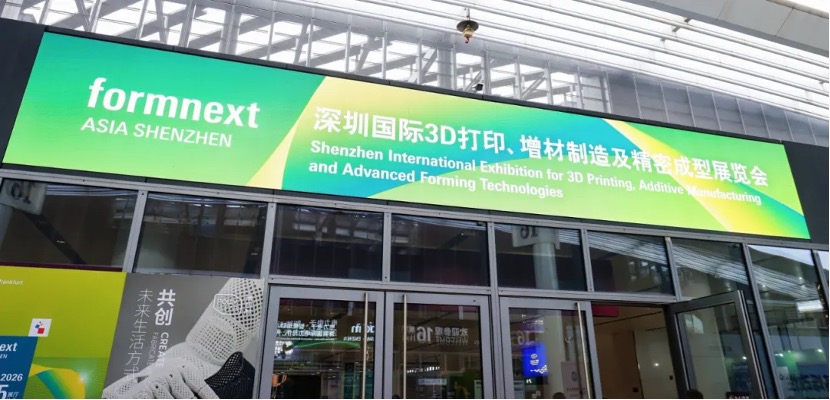
Coming away from Formnext Asia Shenzhen 2026, my biggest takeaway wasn’t “how many new printers were unveiled”; after all, quite a few established traditional 3D printing brands didn’t show up. Instead, it was that 3D printing is gradually seeping into industries that previously paid it little attention. Looking at the exhibitor list alongside the technologies we saw on the floor, several shifts stand out clearly.
AI 3D Has Truly Entered the 3D Printing Space
The official AI track this time featured Meshy AI, Tripo AI, Hi3D, DreamTech, The show brought together a growing group of AI 3D companies, including Meshy AI, Tripo AI, Hi3D, DreamTech, Deep-Mesh, and Hyper3D. Their tools showed how AI is moving further into 3D modeling and the workflows around it.
What I think is truly worth watching isn’t “can AI make a 3D model?” but rather how much traditional design work will still be needed from concept to print. This could directly reshape the design entry point – the very front end – of 3D printing. And if the entry point is king, then who will dominate the future of 3D printing?

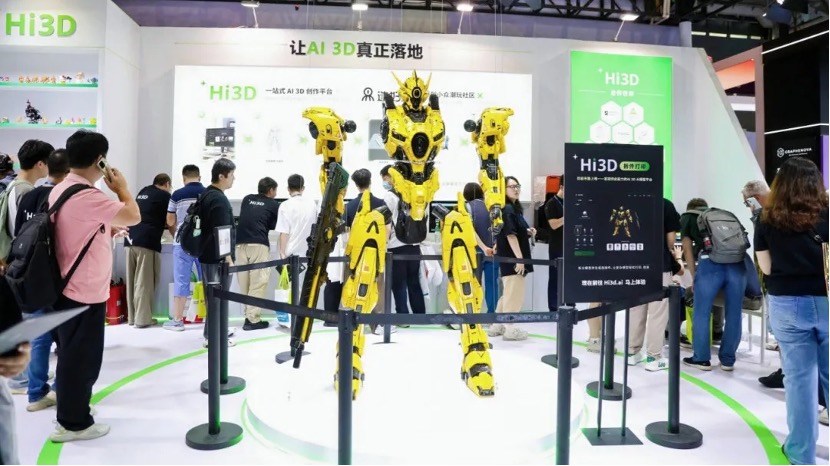
Hi3D booth at Formnext Asia 2026.
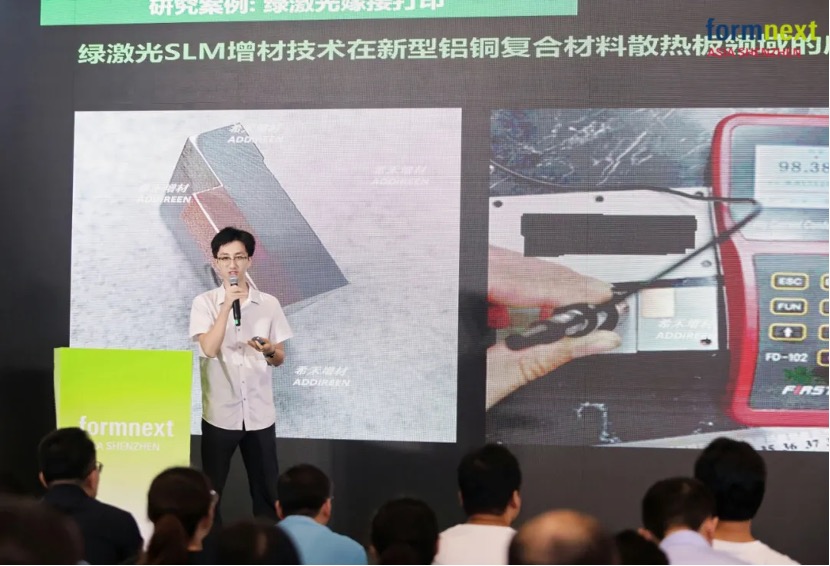
3D Printing Is Entering AI Server Thermal Management
In this year’s exhibitor list, we saw companies like Xihe Additive, Han’s Prowave, Baochenxin, Meiguang Quick Print, Nanfang Additive, Zhongzhi Laser, and Youyan Additive.

3D Printing Moves Into Consumer Electronics
This point is especially noteworthy given the Shenzhen location. Shenzhen is a global hub for the 3C (computer, communication, consumer electronics) supply chain, so it’s no surprise that the convergence between 3D printing and mobile/consumer electronics was increasingly visible at this show. In particular, binder jetting (BJ) stood out.
Compared to traditional metal laser printing, BJ is better suited for batch manufacturing. The official program also highlighted mobile and 3C electronics as a key application area, noting that BLT’s 3D printed hinge shaft covers and folding-wing plates have already entered products like OPPO’s Find N5 foldable smartphone. This signals that metal 3D printing is moving from “prototyping” to a true entry into the consumer electronics supply chain.

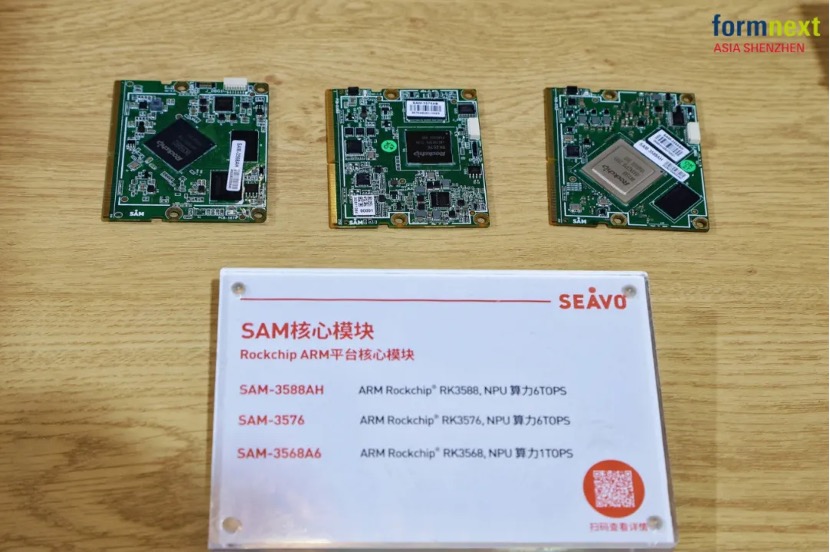
ARM Rockchip SAM by Seavo.
3D Printed Shoes Are Starting to Look Like a Real Industry
Materials like thermoplastic polyurethane (TPU), polyether block amide (PEBA), and foaming materials are becoming key focus areas, alongside high-speed printing, elastic structures, and personalization.
About 17 companies featured printed shoes as a primary or core offering. Among them, HP, BLT, Farsoon, Polylite, and Synbotron stood out. HP leans toward digital manufacturing and scaling for footwear; BLT focuses on metal shoe molds; Farsoon has long been involved in metal 3D printed shoe molds and has developed automated production lines and supporting processes. For elastomer materials and 3D printed shoes, there were even more players, mainly Bolide New Materials, Kongshi Tech, Lanxin 3D, Yongchanghe, Zhongyuan New Materials, Yanwu New Materials, Douchuan 3D, and Guangsu Yigou. All of which have reached or partially reached maturity in equipment, materials, and production capacity.
To me, this shows that 3D-printed shoes are moving from “concept products” to a full integration of: Materials + Design + Process + Commercialization. I’m relatively optimistic about this direction, but it’s getting crowded.

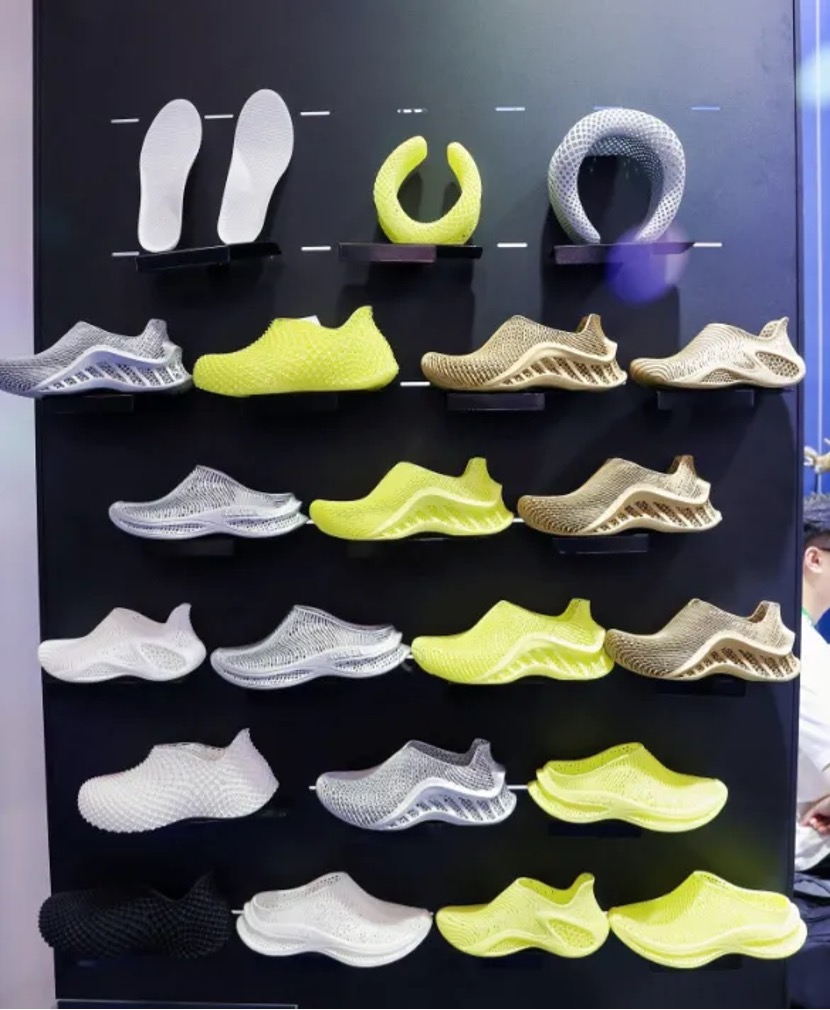
3D printed footwear at Formnext Asia 2026.
Materials Are Becoming Increasingly Important
When walking through a 3D printing exhibition, it’s easy to fixate on the machines. But looking at the full list of exhibitors this time, it’s clear that materials companies are gaining more prominence. Metal powders, engineering plastics, TPU, PEBA, resins, composites, and ceramics were all well represented.
People used to ask, “How fast can your printer go?” In the future, more may ask, “What materials can your machine handle?” And further down the line, “What problem can this material solve?” In the end, competition will circle back to materials, processes, equipment, software, and applications. At the same time, some materials companies are placing greater emphasis on branding and differentiation.

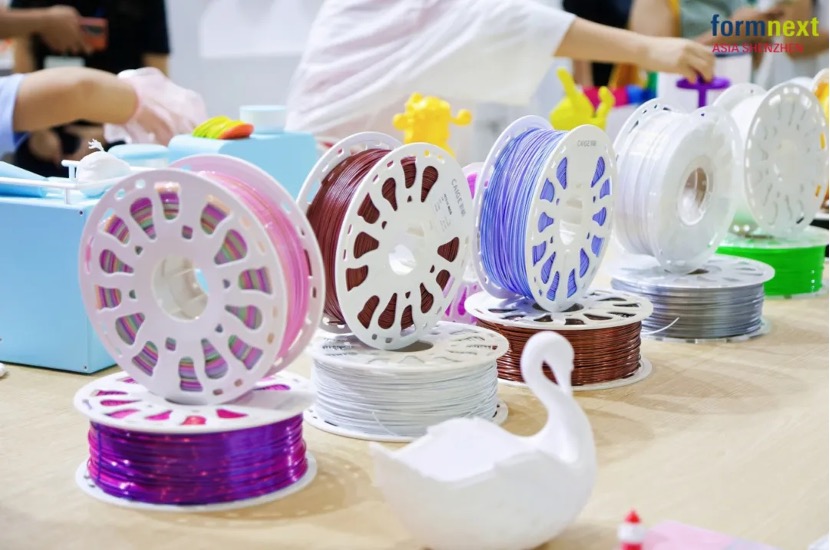
3D printed material at Formnext Asia 2026.
Drones and Commercial Space Are Emerging Application Vectors
Drones, commercial space, and electric vertical takeoff and landing (eVTOL) aircraft all share a common trait: They are extremely sensitive to weight. And 3D printing is ideally suited for topology optimization, lightweighting, complex geometries, and integrated designs. Shenzhen also boasts a highly complete drone and electronics supply chain. So I believe that, going forward, the more a product pursues lightweighting, the more opportunities it will find with 3D printing. This is another application thread worth keeping a close eye on.

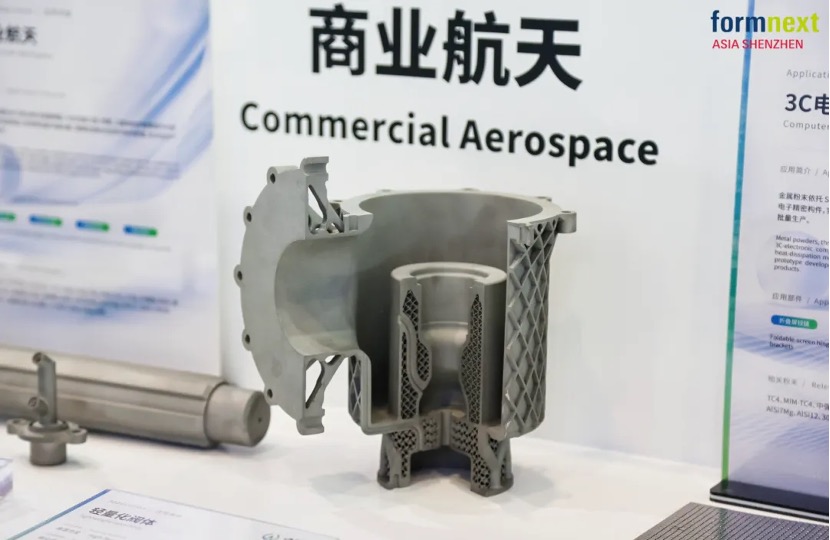
3D printed component displayed in the Commercial Aerospace section at Formnext Asia Shenzhen 2026.
Robotics Is Hot, but Let’s Not Overhype It Just Yet
Having just attended the World Robot Conference in Beijing’s E-Town, my impression from this Shenzhen Formnext wasn’t as intense. Looking at the overall composition of the 350 exhibitors, I believe robotics is now an important application direction, but it’s not yet the absolute star of a 3D printing exhibition. We need to stay objective on that point.

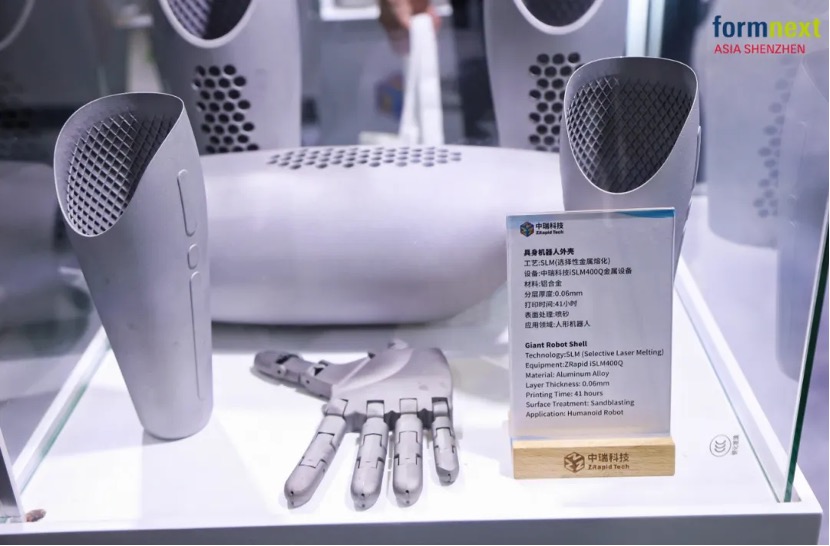
3D printed robotic components displayed at Formnext Asia Shenzhen 2026.
Finally, Going Global
There wasn’t much discussion about going global at this show, and not many objective summaries were offered. That said, the Going Global Forum featured a talk by David Huang, CEO of U.S.-based Yuanjing Supply Chain, who shared practical insights from print farming. The key takeaways: the trend is shifting from cross-border warehousing to on-demand production, with 48-hour local fulfillment as the goal. Real-world challenges abound – including three major pitfalls: electricity, intellectual property, and labor. The era of OEM arbitrage is over; what counts now is full-capacity utilization and original design capability.
The path to going global is to combine China’s supply chain with U.S. rapid-response capability, creating a model that can be replicated in other overseas markets.
All images courtesy of Formnext Asia, Shenzhen International 3D Printing & Additive Manufacturing Exhibition.