
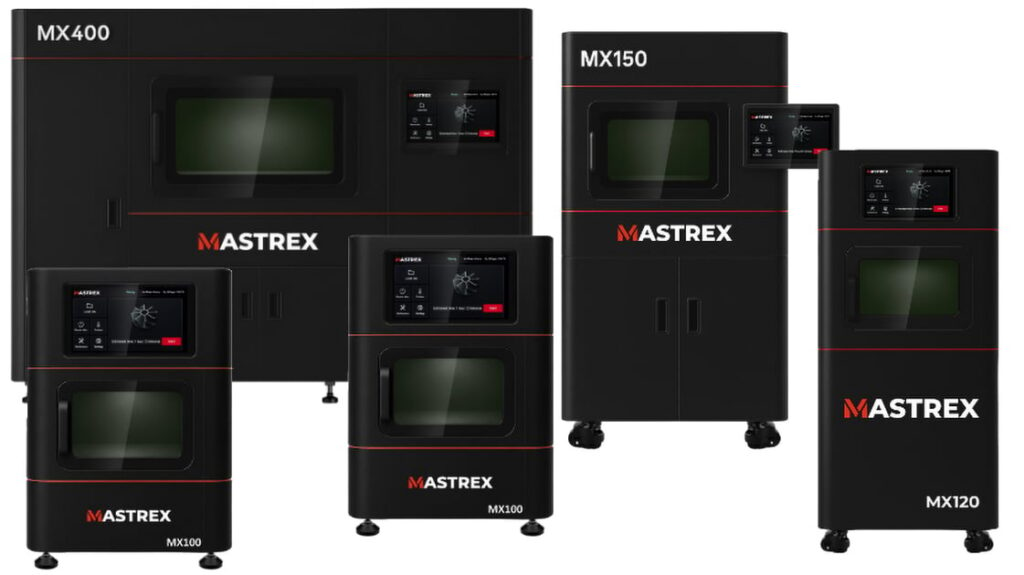
Mastrex has launched a line of six metal LPBF printers starting at $39,000. Recently, the firm partnered with Continuum Powders to validate its metal powders on Mastrex machines. But the systems it makes are eerily familiar to some Chinese ones, while some of the company’s claims deserve a closer look. So, to what extent is Mastrex made in the USA?
Pioneered by Xact Metal, low-cost LPBF could significantly grow the market. OneClick is quickly selling its machines in the US, while Metal Base and Scraplabs are making even more affordable machines. Many more people will be able to afford LPBF in the future, and the segment will grow as a result. So partnering with Mastrex is a good move; indeed, I would have expected more partnerships with the other players. The volume that they might one day sell may outstrip the rest of the industry.
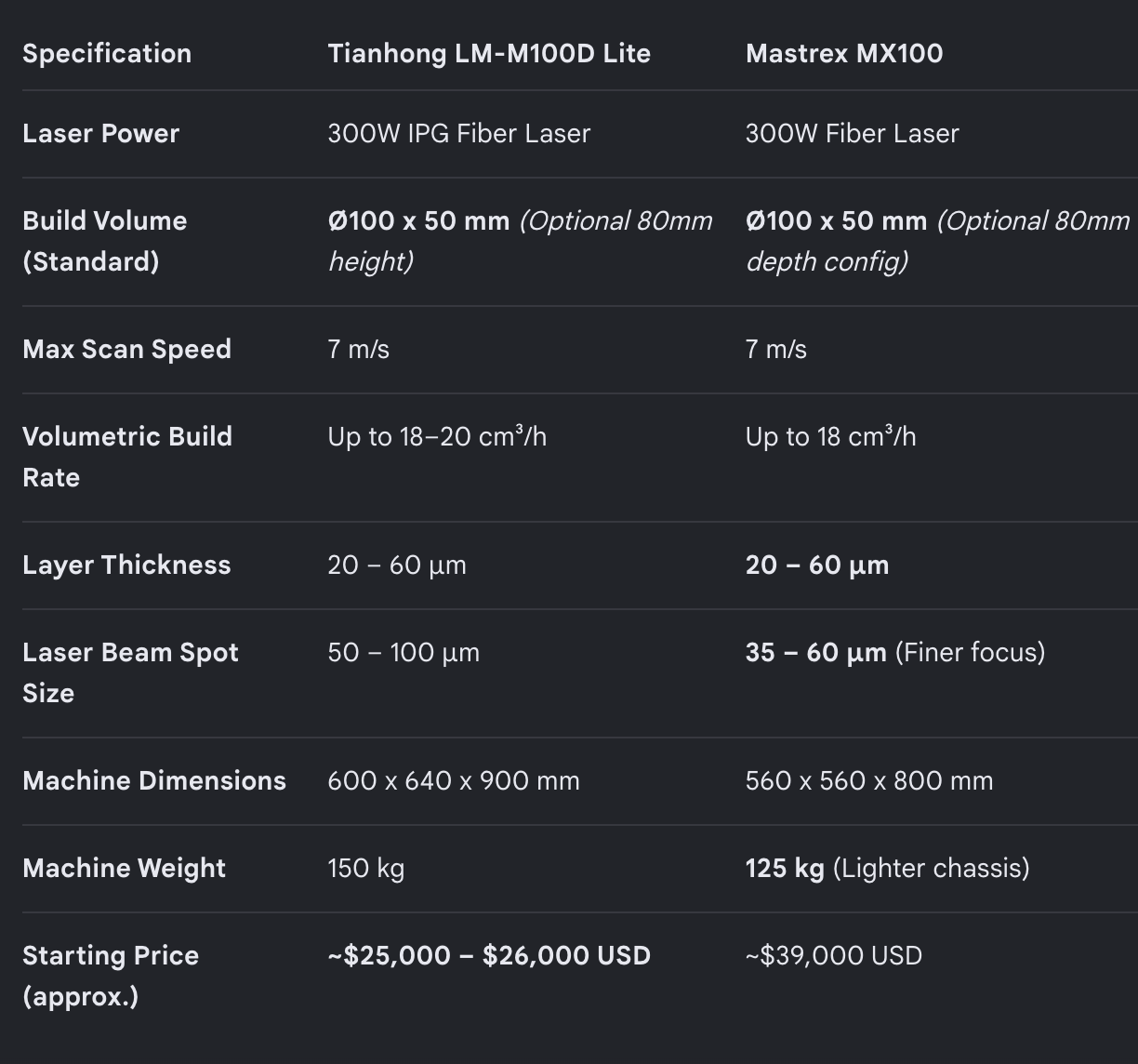
But, I myself am a bit skeptical about Mastrex. The company does its business from Axe offices, a shared office building in New Jersey. That raises questions about where its machines are actually developed and built, although I did hear that there may be another site in San Diego. From the get-go, there were similarities between several Mastrex machines and Chinese systems, raising questions about whether Mastrex is sourcing or adapting machines or designs from Chinese manufacturers. The Mastrex MX280 looks and has specs very similar to those of the Tianhong LM M280. The Mastrex MX100 looks very similar to the Tianhong LM110DLite. The MX400 has the same build speed and other specs, and looks a lot like the Tianhong LM L400.
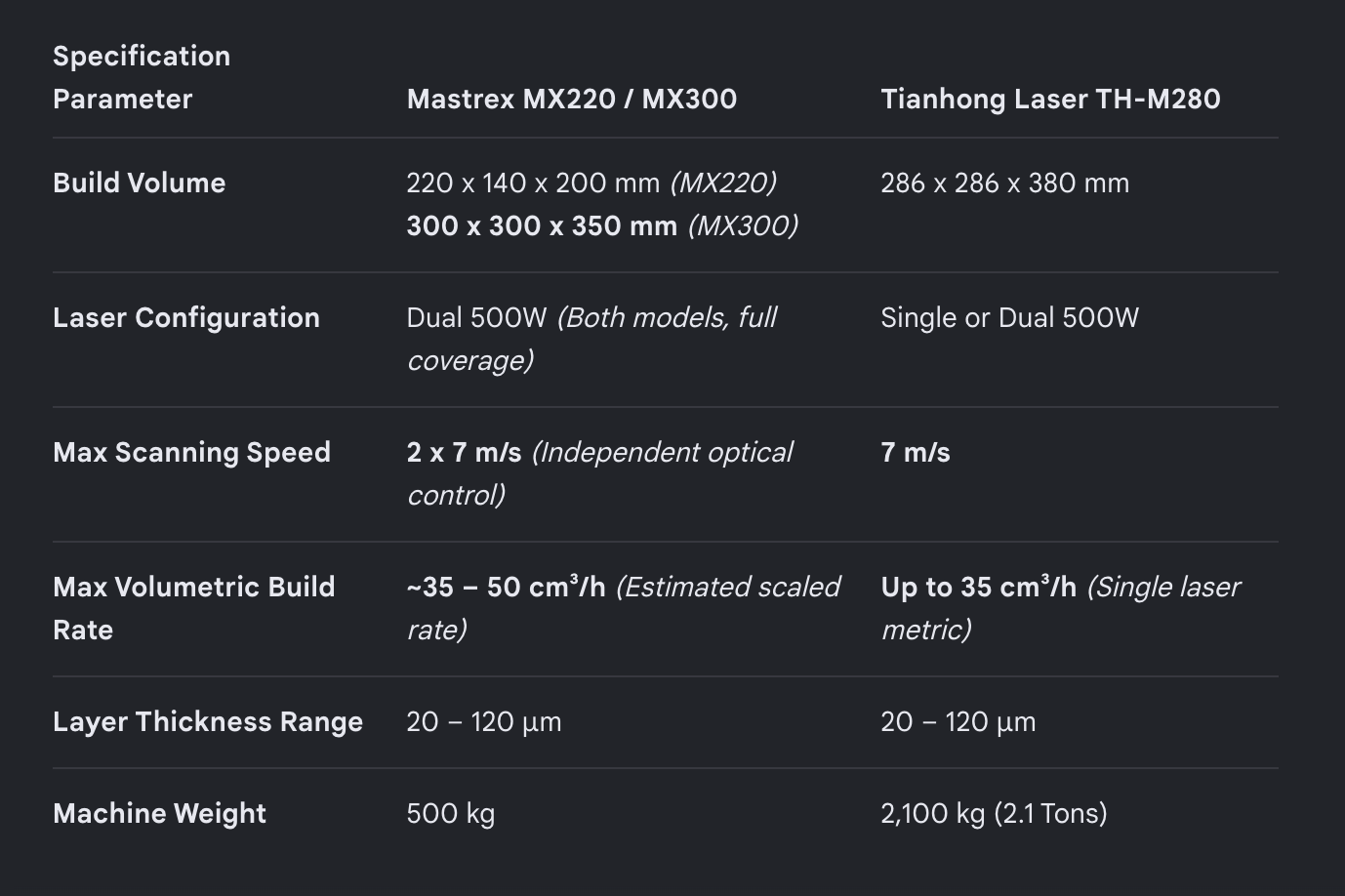
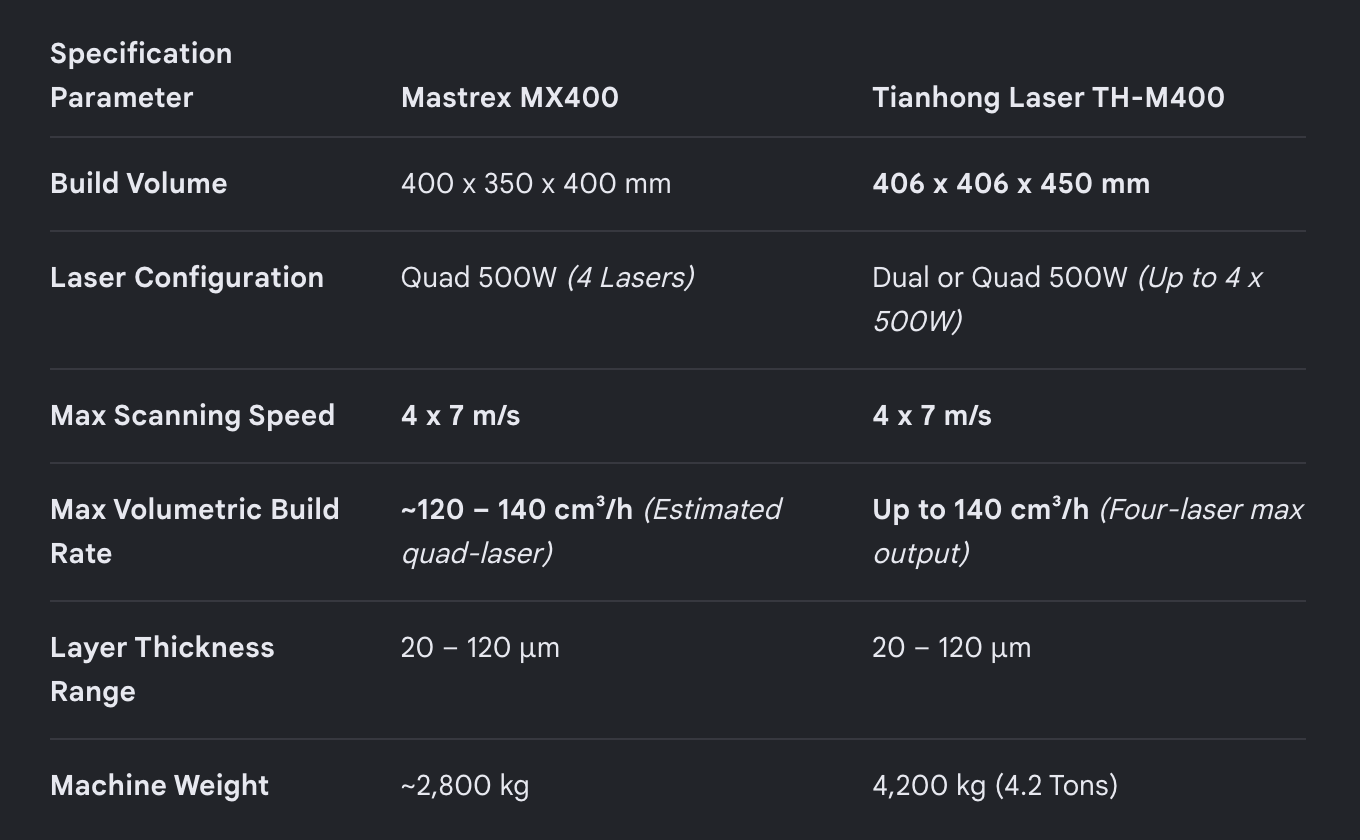
We can see that Mastrex systems are remarkably lighter than Tianhong ones. Both companies do use Scanlab and IPG a lot, which is standard for many. And I’m cognizant that some Avimetal, Fluidform, and Riton machines are similar as well. Indeed, many brands in China share system architectures, designs, and specifications. But it’s more than quite the coincidence that I could make out six systems that are all analogous. You’d expect some different design decisions. Also, if I were a small team and made six different systems ranging from a desktop dental system to an 800 × 600 × 900 mm behemoth, I’d be sure to put out a press release for every one. And if I were a one-year-old company that had designed, developed, tested, and manufactured six different LPBF systems in a year, I’d definitely tell everyone because Mastrex is, in fact, one year old. Now, they were merged from a defunct machine tool firm, a storied one at that: Burgmaster and Vulcan. But as far as I can tell, they’ve been making LPBF systems for a year and have developed and released six models in that time. And again, if Mastrex were sourcing or adapting existing systems from Chinese manufacturers, that could be a perfectly plausible and interesting business model. But that is not how the company describes what it does.
The company says that its printers are “designed, assembled and tested in the US.” Crucially, it doesn’t say made in the US. They also say, “Access our US-based technical support team anytime for expert assistance.”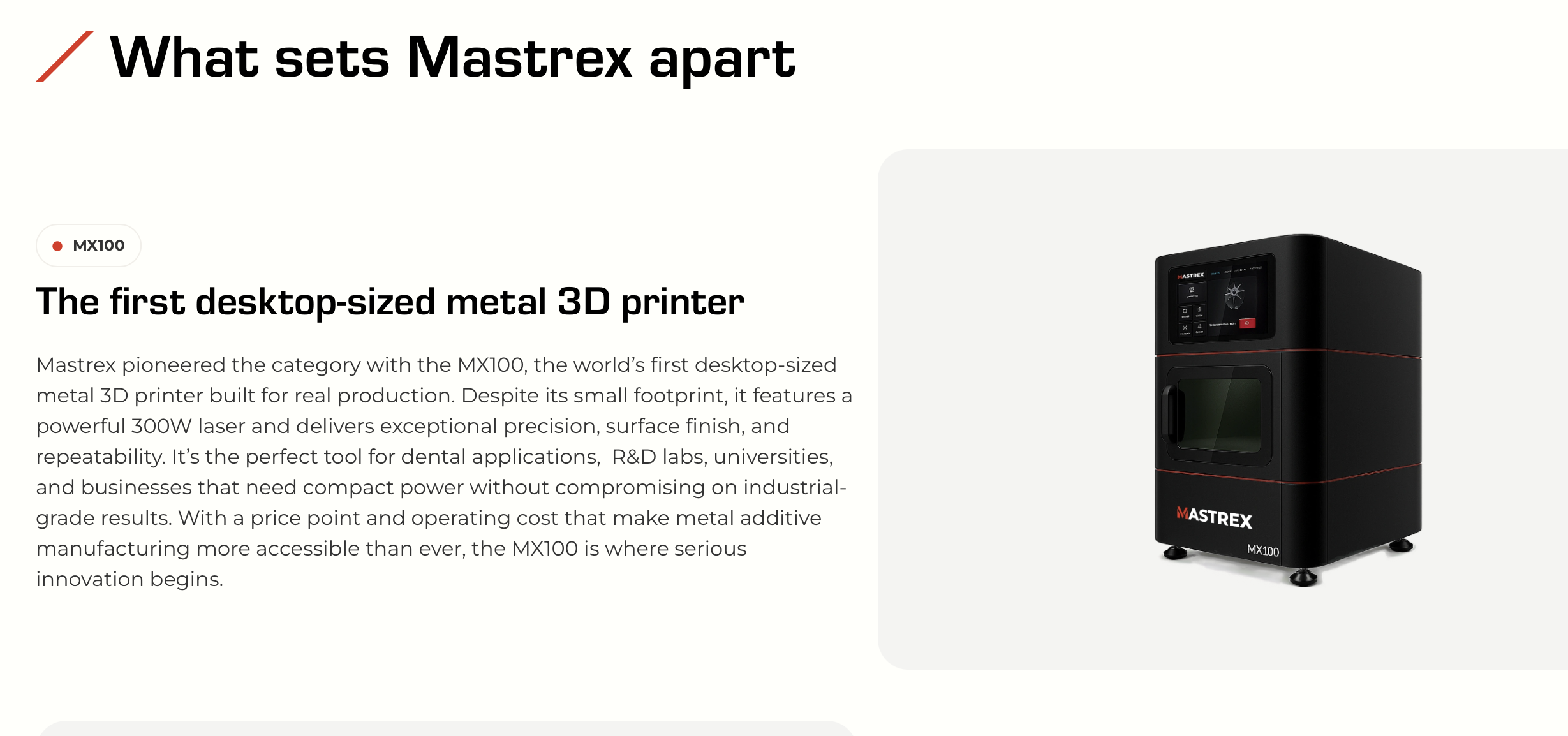
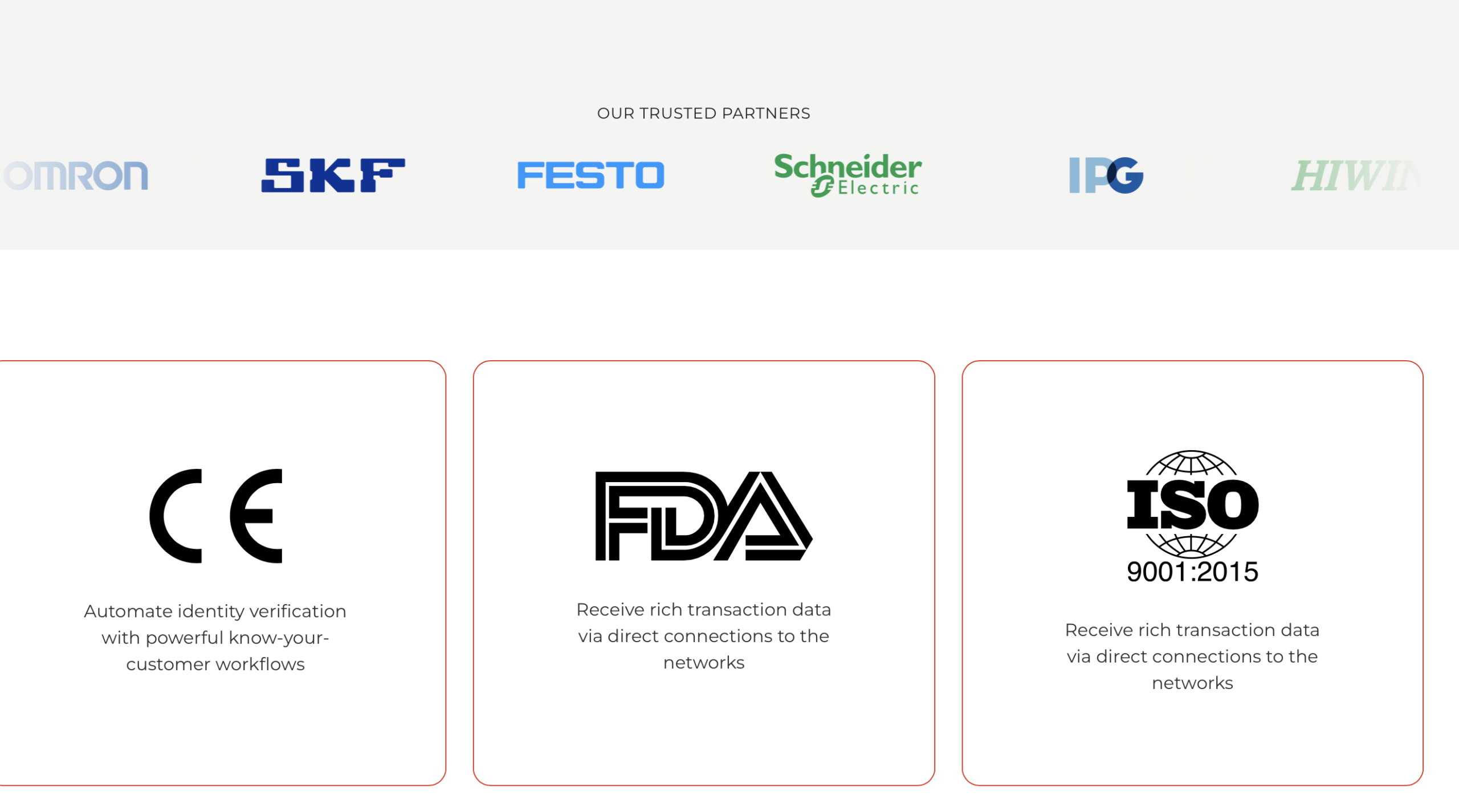
The company also has unclear information on its website, using logos such as ISO 9001:2015, CE, and FDA. The company also displays references to ISO 9001:2015, CE, and the FDA on its website. However, it isn’t clear from the site what these references apply to, whether they relate to Mastrex itself or particular products, or what certifications or regulatory status they are intended to represent. Mastrex could make this much clearer.

So we reached out to Mastrex to find out to what extent their systems are made in the USA. Mastrex founder Ilay Fridland replied that,
“We manufacture and source parts from the US and other countries, and assemble the machines in the US. The industrial systems use IPG lasers and Scanlab laser heads from Germany. Entry-level models, MX150 and smaller, use lasers from China as standard, with IPG and Scanlab optional. We are developing our own firmware/control software. For build preparation, we support 3rd-party solutions like Netfabb, Magics, Fusion 360, 3Dxpert, etc. You can use almost any LPBF software and material. We don’t lock users into only our solutions.
“We have suppliers from China, like any other OEM. But we’re increasingly using domestic components as we focus on critical applications and customers who need ITAR compliance. Our price point is possible because of the maturity of the technology, which reduces R&D costs significantly. And the reduction in the price of the components.
“We started by offering systems with similar performance to the options from the known manufacturers, but at a much more affordable price point. We will soon show exciting innovations in the technology itself, adding capabilities and improving performance in a way that no other OEM is offering. This will differentiate us from others, beyond the price.”