In this weekend’s 3D Printing News Briefs, we’re starting with relief efforts for the earthquakes that hit Venezuela last month. Then we’ll move on to a new white paper from PostProcess Technologies, and a new strategic guide from ASTM International’s Additive Manufacturing Center of Excellence (AM CoE). The LEGO Group opened its first dedicated manufacturing innovation center, which includes an AM center. We’ll end with a heartwarming story about Remote Area Medical, which provides 3D printed dentures to low-income patients.
Maker Community & Bambu Lab Supporting Venezuela Earthquake Relief
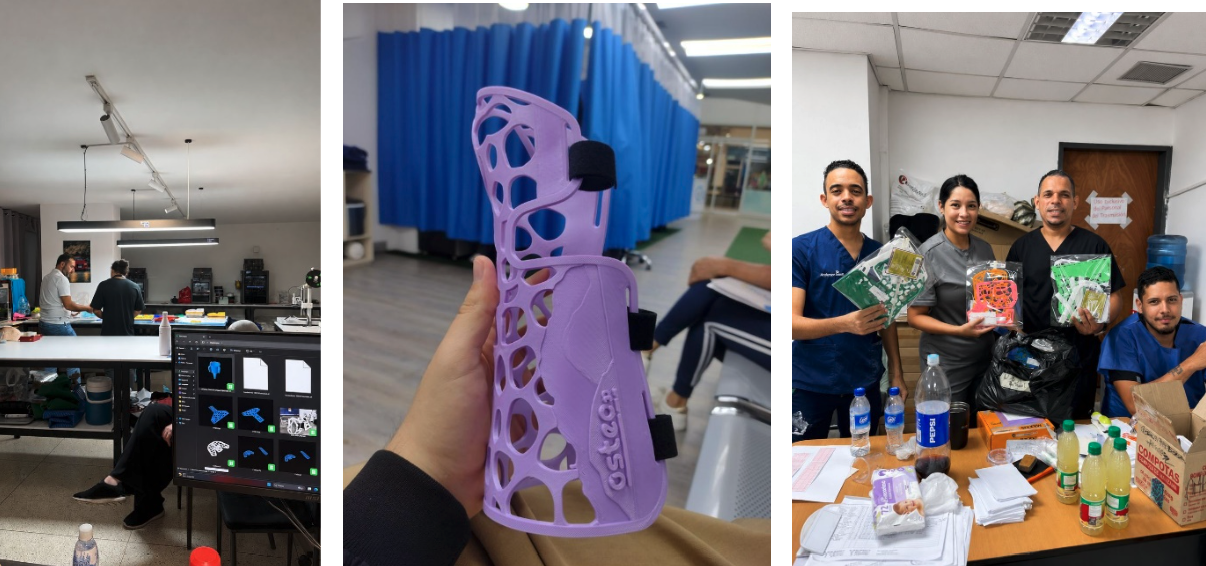
Photos courtesy of LayerLab and Ostec3D. © Carlos Javier Hernández Carrillo (LayerLab) and Nober Alejandro Peña Santos (Ostec3D).
On June 24th, 2026, Venezuela was hit with what the U.S. Geological Survey called “the strongest seismic event” the country’s seen in over a century: twin earthquakes, magnitudes 7.2 and 7.5. More than 3,500 people have died, over 16,000 have been injured, and over 17,000 residents are now homeless. But, just like during the COVID-19 pandemic, the maker community is stepping up to offer their support, 3D printing medical aids, open-sourcing helpful designs, and coordinating cross-border deliveries. Venezuelan entrepreneurship initiative Ostec3D, which is focused on 3D printed orthoses, released a full set of thermoplastic splint files through a public Google Drive archive. Then, connecting through communities like Reddit, other people started printing things like splints, cervical collars, and oxygen cone connectors. Bambu Lab LATAM committed to $50,000 in cash support, and official Venezuelan Bambu distributor LayerLab donated 3D printers and 160 kilograms of filament to teams and workshops helping with the relief efforts.
As Bambu said, “If you do print, print with intention: only the items that the people coordinating relief have actually asked for and approved.” But, if you’re looking for other ways to help, Bambu is offering you a chance through its new community initiative. Starting this Monday, July 13th, at 8 am Venezuela time (UTC−4), the company is launching a 48-hour fundraising campaign. Available exclusively on the Bambu Lab US and EU online stores, customers can buy PLA Basic Refill filament in the three colors of the Venezuelan flag: yellow (10400), blue (10601), and red (10200). Enter the promo code 4Venezuela at checkout, and Bambu will donate an amount equal to each product’s MSRP, and not the discount price. Once the campaign closes on July 15th, the company will publish the total amount raised, 100% of which will be donated to UN Crisis Relief. Stay tuned to Bambu Lab’s official channels for the full campaign details, including eligibility and how donations are handled for cancellations or returned. Way to go, makers!
PostProcess Releases White Paper on AM Environment, Health, & Safety Concerns
Image courtesy of PostProcess Technologies
At RAPID+TCT in Boston earlier this year, I spoke with Jeff Mize, CEO of PostProcess Technologies, about several topics. One of the most important was safety, which he told me was “driving probably 50% of our conversations today.” At the time, the company was working on a new white paper examining the environmental, health, and safety (EH&S) considerations in AM post-processing. Now, PostProcess has officially published the white paper, titled “Environment, Health & Safety Concerns in the Post-Processing of Additively Manufactured Parts.” As more additive companies move towards production, EH&S considerations are becoming ever more important, especially as traditional post-processing methods can come with risks that negatively affect facilities, operators, workflow efficiency, and regulatory compliance. The white paper focuses on the safety risks associated with those conventional methods, like flammable solvents and open chemical tanks, as well as emerging industry trends (limiting use of IPA in AM facilities) and best practices.
“This white paper explores the EH&S challenges facing today’s additive manufacturers and examines how enclosed, automated systems and safer detergents from PostProcess Technologies can help reduce workplace risk, improve sustainability, and support more consistent post-processing operations.”
You can download the new PostProcess Technologies white paper for free here.
ASTM International AM CoE Publishes Guide for Certifying 3D Printed Defense Parts
The ASTM International Additive Manufacturing Center of Excellence (AM CoE) recently published the “Strategic Guide to Certification of Additively Manufactured Parts in Defence Applications,” available to download for free. It offers support to defense organizations, suppliers, and manufacturers on qualifying and certifying 3D printed parts, giving them a criticality-based approach to parts qualification and certification over land, air, and sea. The guide, while also helping defense supply chains and allied partners around the globe, was actually developed to support the UK’s Ministry of Defence (MOD) and its Project TAMPA, an AM accelerator that determined one of the central barriers to scaling AM for defense applications was actually inconsistent part certification. Rather than a regulation or standard, the guide is a “signposting resource,” written to be both nation- and technology-agnostic. It lays out a four-tier part classification, two certification courses of action, evidence expectations across main certification activities, and more.
“Additive manufacturing earns a place in defense only when a part can be trusted in service, and that trust depends on qualification and certification that hold up consistently across organizations, domains, and borders. This guide gives manufacturers and authorities across the global defense community a shared, criticality-based reference point,” said Mohsen Seifi, Ph.D., ASTM International’s vice president of global advanced manufacturing.
The LEGO Group Opens Dedicated Manufacturing Innovation Campus
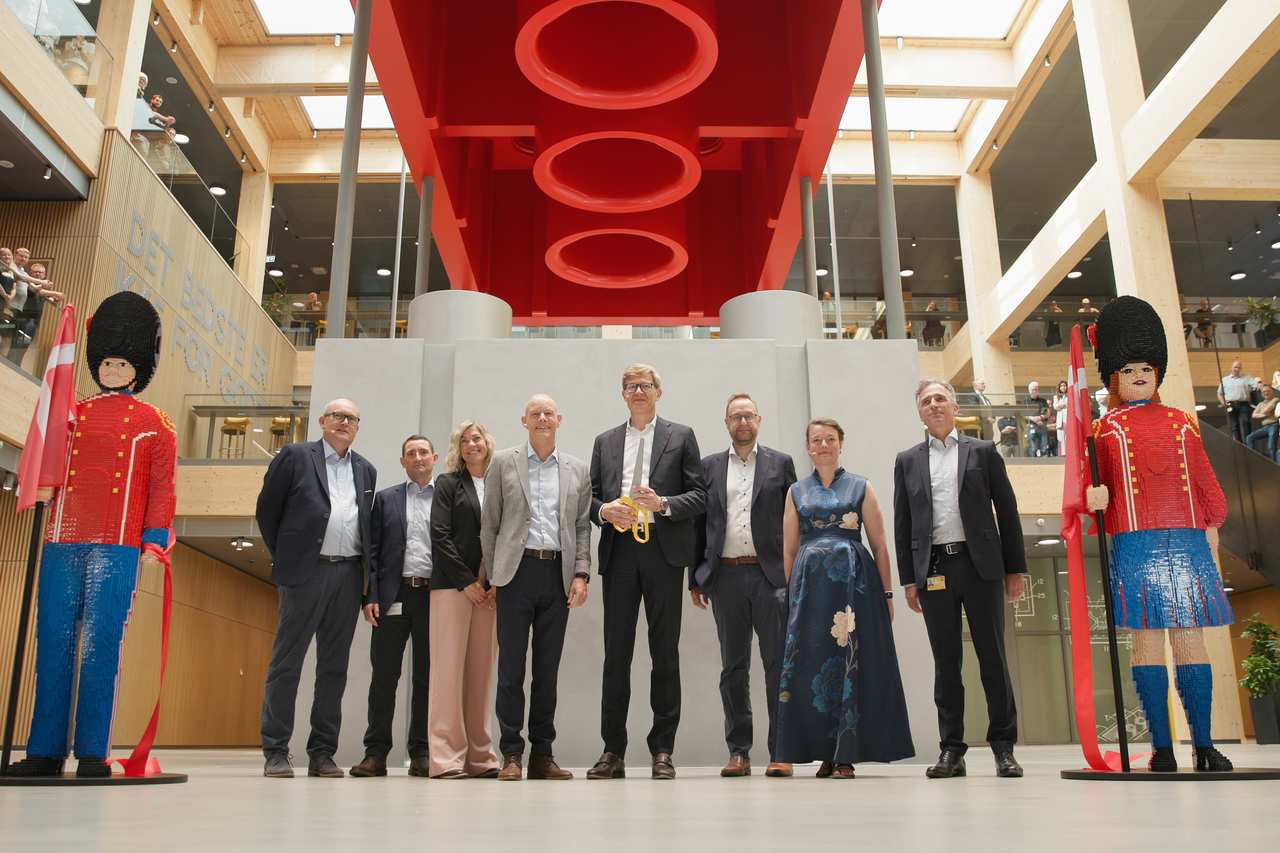
Founded in Billund, Denmark in 1932, the LEGO Group is one of the biggest names out there using 3D printing for consumer goods. Recently, it opened its first dedicated global manufacturing innovation center, the Kornmarken Campus. Just like its headquarters, the campus, partially powered by a nearby solar park, is located in Billund, and it’s part of the company’s investment in manufacturing technologies, as well as capabilities that drive product development and production. The 47,000 m² campus forms a 100,000 m² state-of-the-art facility, where about 1,800 LEGO employees from manufacturing, engineering, and quality will work to develop, test, and scale manufacturing technologies, and continue producing the iconic LEGO bricks. Features include a 25-tonne 2×4 LEGO brick installation, rainwater management, and energy-efficient systems. The key facilities at Kornmarken Campus include a materials lab, mold manufacturing space, training academy, test and innovation center, and, of course, an additive manufacturing center.
“The LEGO Group has among the most talented engineers and craftspeople in the world,” said Carsten Rasmussen, Chief Operations Officer for the LEGO Group. “This facility will provide them with the necessary tools and technologies to expand what’s possible for product development and production, both now and in the future.”
RAM Uses 3D Printed Dentures to Give Smiles to Low-Income Patients
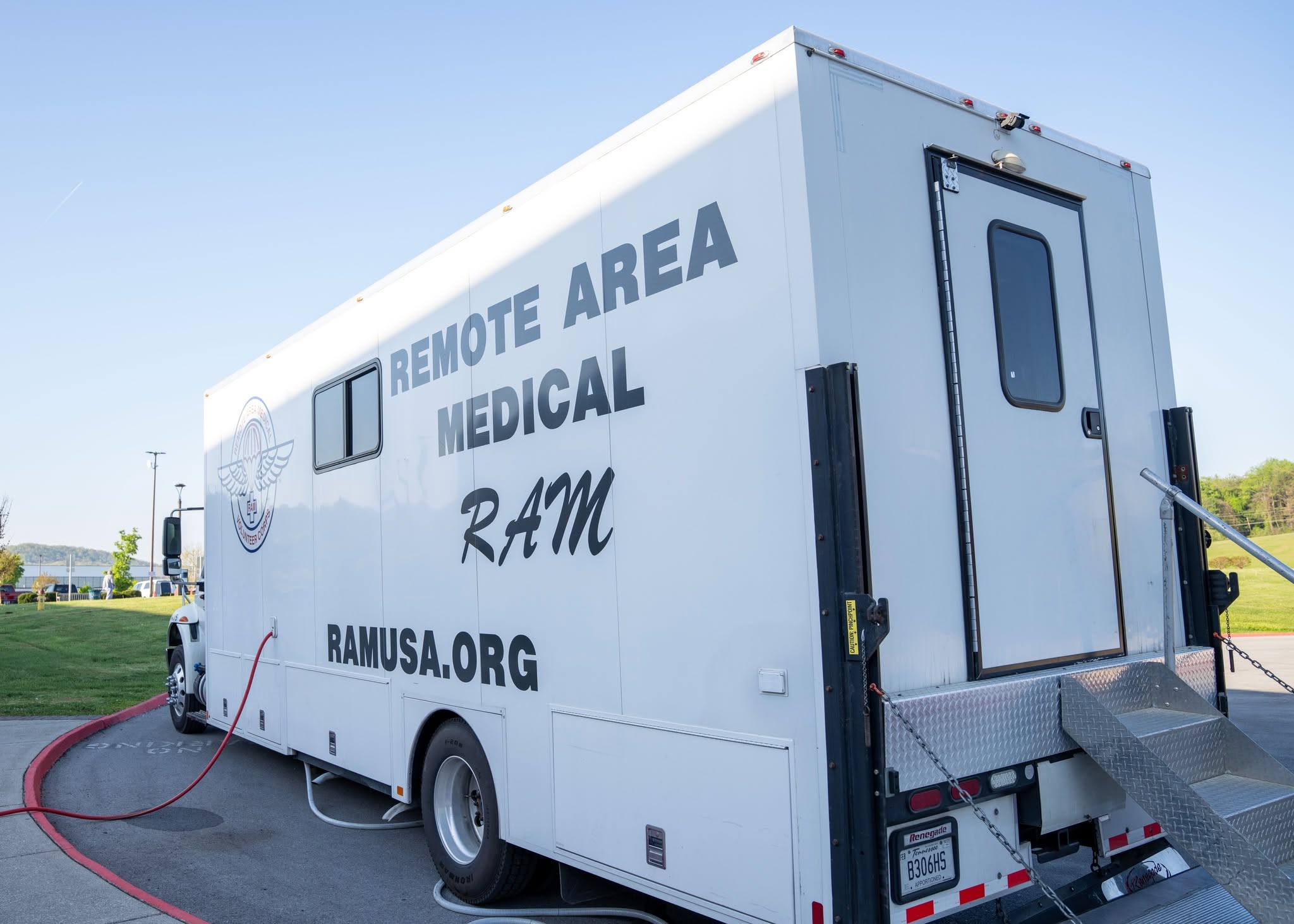
Image: Remote Area Medical via Facebook
About 72 million adults in the U.S. do not have dental insurance. These are the people that nonprofit organization Remote Area Medical (RAM) helps with its volunteer-powered, mobile care units. In 2023, Connor Gibson was an engineering student at Walter State Community College in Morristown, Tennessee, near RAM’s headquarters. Inspired by its mission to help the poor, he began volunteering with RAM, which also offers free vision and medical care to low-income people. The 22-year-old is now the nonprofit’s dental technology manager, using his engineering skills to 3D print dentures for the most vulnerable people in the country. Initially, he had no dental or 3D printing skills, but taught himself everything he needed to know, and eventually came up with RAM’s Mobile Digital Denture Lab, which enables the nonprofit to fit patients with free 3D printed dentures the same weekend they come in. Gibson used grants to secure the first 3D printers for RAM, and recently set a personal record of 35 dentures printed in a weekend. Since he began, he’s fitted thousands of people with dentures, both traditionally and additively manufactured, and he says their reactions to their new smiles humble him.
“Something that I was able to have a hand in makes a grown man burst into tears. To see that raw, human emotion and just know that I played a change in this person’s life…it’s very humbling, and I’m beyond blessed,” Gibson told CNN.
“You have people that are really down on their luck. The reality is we’re all one slip or one fall away from needing two teeth in the front…just to be able to smile again.”