
In today’s 3D Printing News Briefs, America Makes announced the winners of its JAQS-SQ Project Call. Axtra3D is partnering with Keystone Industries to expand its dental material ecosystem, while BigRep and Endless Industries have announced a strategic partnership to advance large-format AM with continuous fiber reinforcement. We’ll end with bioprinting research out of China.
America Makes Announces JAQS-SQ Group 1 Project Call Winners

America Makes and the National Center for Defense Manufacturing and Machining (NCDMM) announced the Group 1 winners of the $1.7 million Joint Additive Qualification for Sustainment – Supplier Qualification (JAQS-SQ) Project Call. Initially launched at MMX 2025, JAQS-SQ is funded through the Office of the Under Secretary of War, Manufacturing Technology Office (OSW ManTech). While the U.S. government is indeed very interested in AM adoption, the lack of training and audit programs that meet standards, and the technology’s restrictive qualification process, doesn’t instill much confidence in our elected officials. So this Project Call is meant to speed up integration of non-traditional additive manufacturing suppliers, as well as train and support manufacturers in meeting the required process control documents (PCDs) for qualified AM production in order to scale defense industrial base (DIB) capabilities. JAQS-SQ winners will work to develop training and audit programs for AM contract manufacturers, so the supply chain is better aligned with government acquisition requirements.
Submissions for JAQS-SQ Groups 2 and 3 are currently being reviewed. The winners of JAQS-SQ Group 1 are:
Axtra3D Partners with Keystone to Expand Dental Material Ecosystem
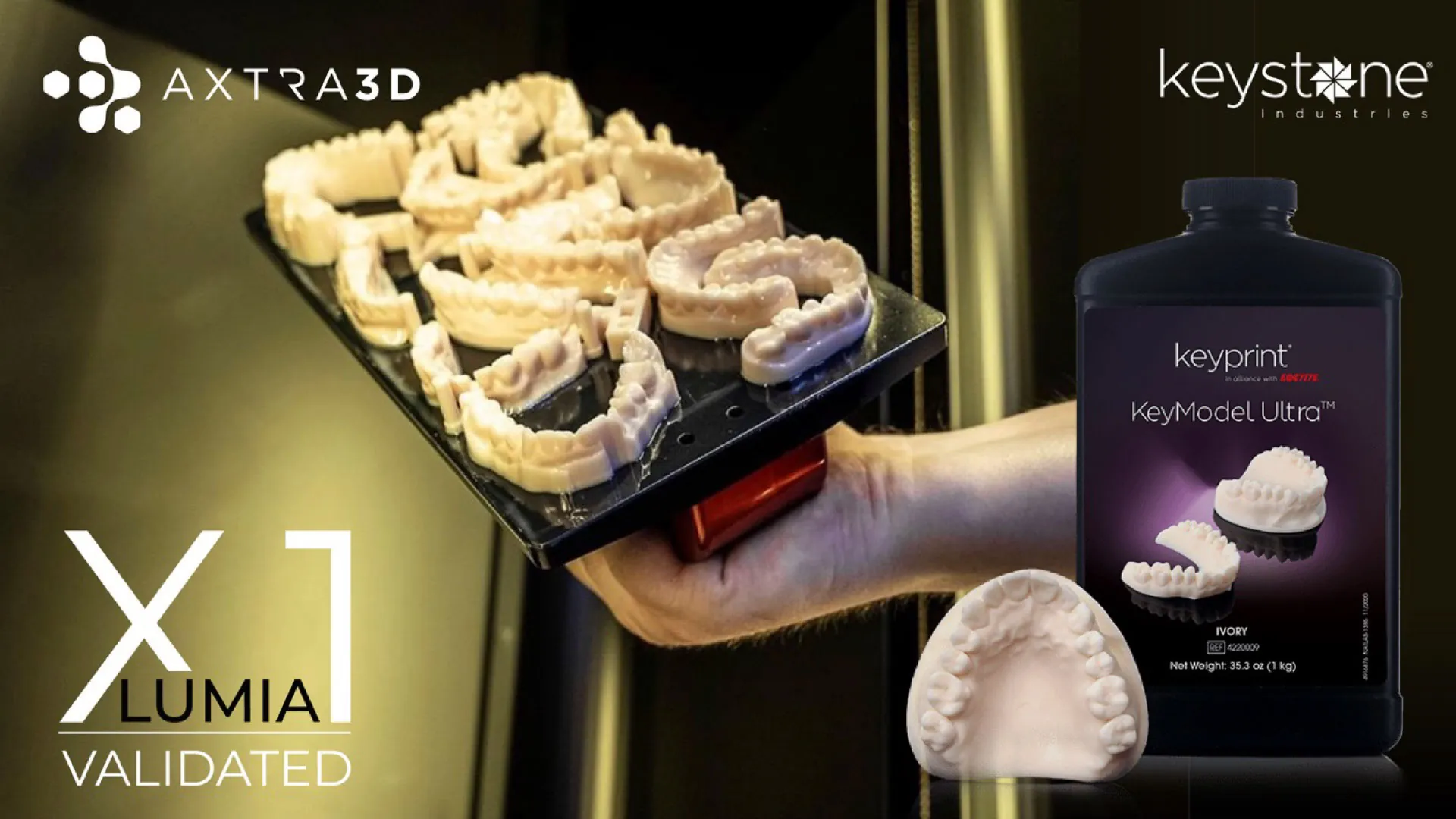
Hi-Speed SLA systems provider Axtra3D, Inc. announced that it’s expanding its dental materials ecosystem, in partnership with Keystone Industries, in order to strengthen its dental manufacturing leadership. The two are in the process of validating several keyprint materials for Axtra3D’s Lumia X1 platform, including KeyOrtho Model, KeyGuide, KeySplint Hard Clear, KeySplint Soft, and KeySplint Soft Clear. Additionally, the partners recently launched a high-precision material for printing next-generation dental and orthodontic models on the Lumia X1. KeyModel Ultra is an ultra-fast printing resin that’s been integrated with a proprietary thermoforming quick-release agent for easy mold forming. Once it’s cured, Axtra3D said the resin can be carved without chipping, and it also offers sharp detail and a smooth surface finish for reliable 3D printing. While Ivory is the only color that’s been validated on the Lumia X1 so far, KeyModel Ultra is also available in Sand and Light Gray.
“This material is designed to improve dental lab productivity, reduce cost per part, and minimize rework that drives waste and delays. By removing a key downstream failure point in carving and finishing, it helps increase throughput and operational efficiency,” said Axtra3D’s CSO Rajeev Kulkarni.
“It also streamlines thermoforming workflows, improving turnaround times for high-volume applications like clear aligners and restorations. The result is more predictable output at scale, with higher consistency and reduced operational variability.”
BigRep & Endless Industries Announce Long-Term Strategic Partnership
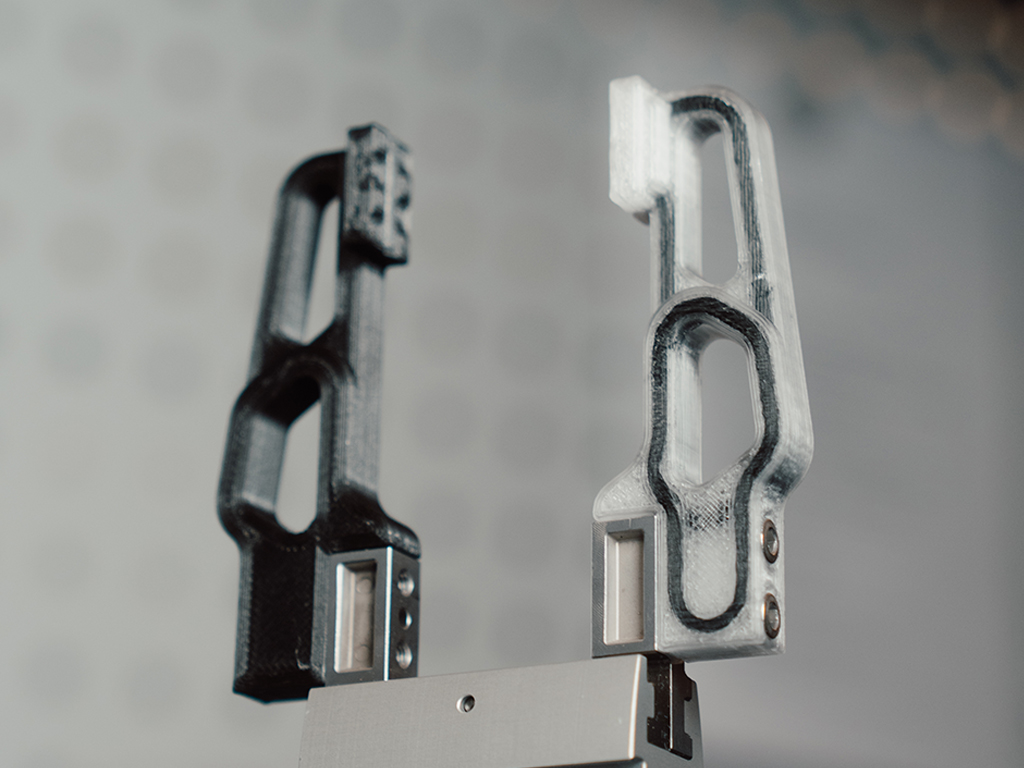
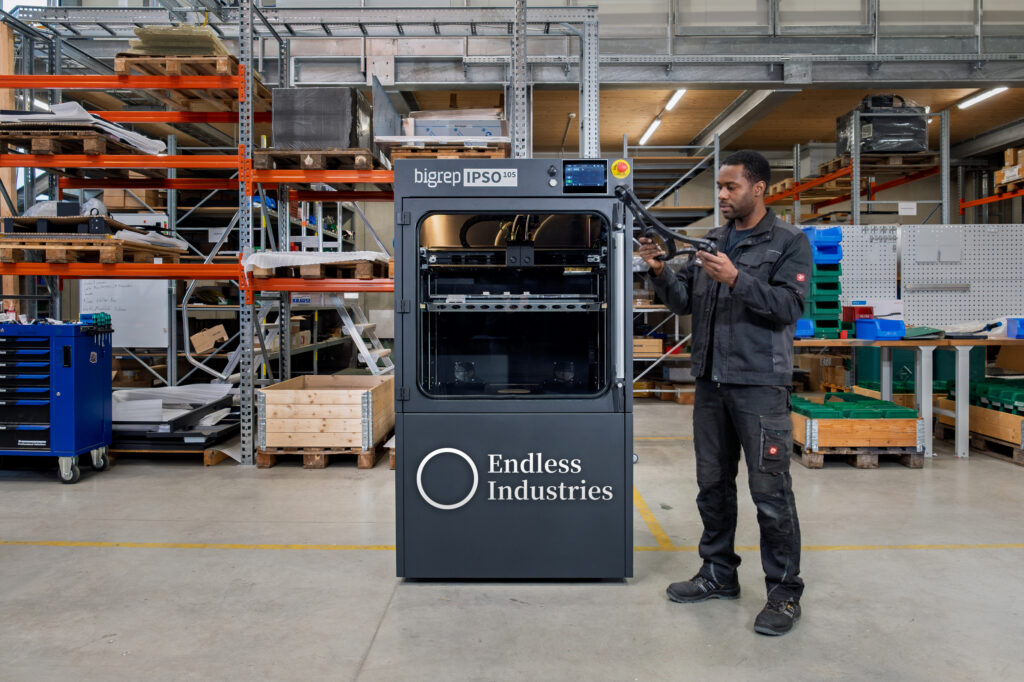
Large-format 3D printer OEM BigRep and deep-tech company Endless Industries have launched a global strategic technology partnership. The focus is on advancing large-format AM with continuous fiber reinforcement, with a major pillar being full system integration of Endless Industries’ continuous fiber system into the BigRep IPSO 105 3D printer. After two years of joint development between the two companies, this goal has now been achieved, resulting in an industrial, high-temperature solution that can print large, mechanically reinforced parts with continuous carbon fiber. Their integrated solution enables build chamber temperatures up to 100°C, optimized fiber architecture through the Endless Industries Akio software platform, printed components that offer up to 20 times higher strength in comparison to unreinforced thermoplastics, and reduced costs. This summer, the two will launch joint sales activities in Europe, initially focusing on the DACH region (Austria, Germany, and Switzerland), and then moving to an international expansion next summer.
“Large-format composite manufacturing has traditionally been craft-based or required multi-million-dollar investments. This partnership removes those constraints,” said Stephan Knopf, CEO of Endless Industries. “Customers now gain access to a production-ready system for high-strength parts without the traditional barriers to entry.”
Chinese Scientists Develop 3D Bioprinted, Biomimetic Artificial Trachea
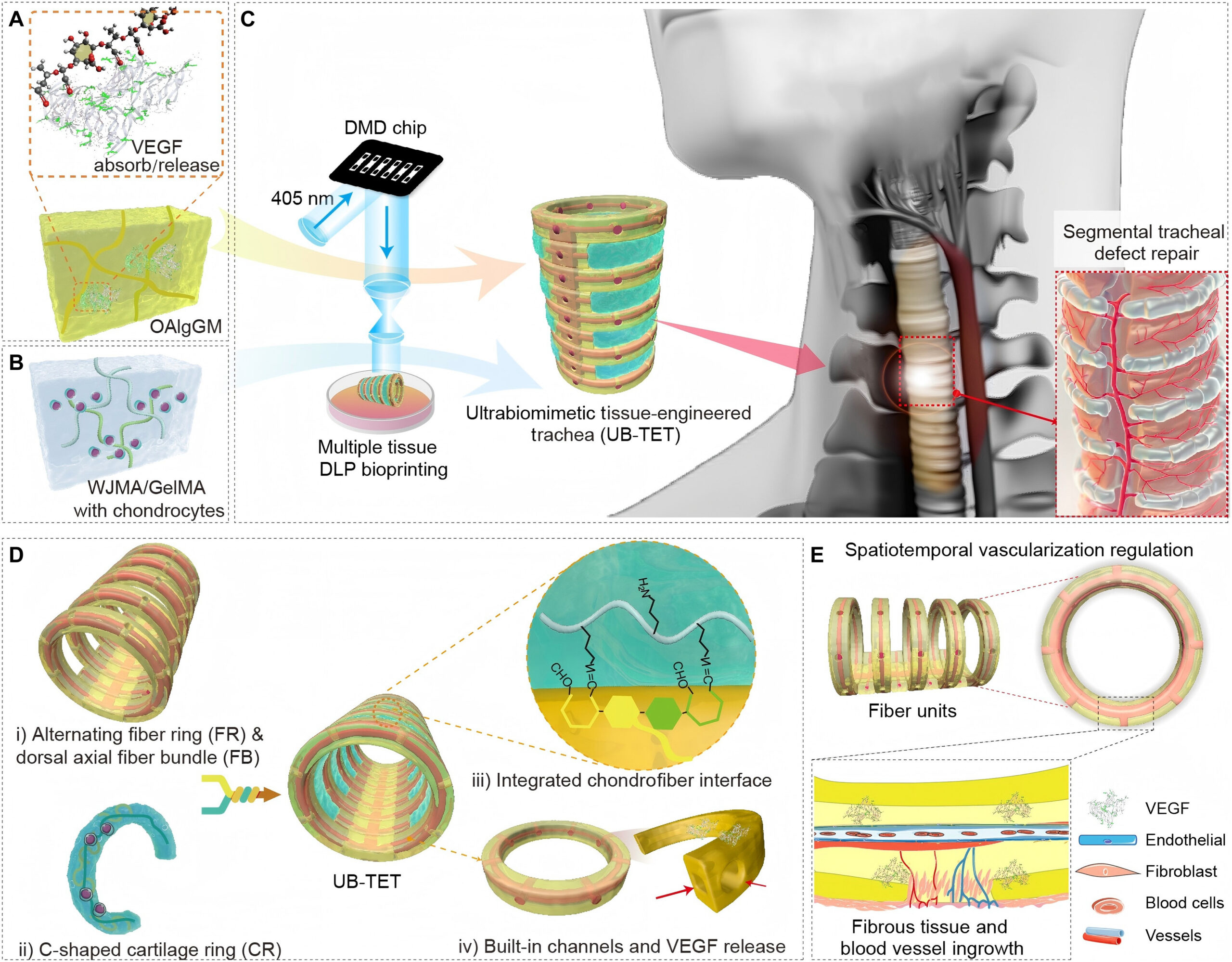
Fig. 1. Design and construction of the UB-TET. (A) The modified alginate hydrogel was used as bioinks for tracheal fibers, where the oxidized aldehyde groups facilitate sustained adsorption and release of VEGF, as the aldehyde groups dynamically bond to the lysine side chain of VEGF (highlighted in green). (B) WJMA and GelMA, enriched with chondrocytes, were used as the bioinks for tracheal cartilage. (C) Schematic diagram of the integrated UB-TET by DLP bioprinting for repairing segmental tracheal defects. DMD, digital micromirror device. (D) The biomimetic trachea is assembled by alternating fiber segments and C-shaped cartilage rings, and the complete biomimetic trachea is integrated through chemical bonding. (E) Schematic diagram of spatiotemporal vascularization regulation strategy promoting fibrous tissue and blood vessel growth.
A big challenge in thoracic surgery is repairing damaged sections of the airway in a procedure called segmental tracheal defect reconstruction. A tracheal graft needs to mimic the structure and biochemical functions of the actual trachea. But, most tracheal substitutes, like artificial prostheses and autologous tissue, are limited due to issues like insufficient biocompatibility or bad long-term integration. A team of scientists from China came up with a modular bioprinting strategy for building multitissue-integrated, ultrabiomimetic (UB), tissue-engineered trachea (TET). A native trachea is made up of alternating cartilage rings and fibrous segments—rigid cartilage supports the airway, and fibrous tissue helps achieve flexibility and vascularization. An OAlgGM [oxidized alginate grafted with glycidyl methacrylate (GM)] bioink made up the fibrous segments of the artificial trachea, while the cartilage rings were comprised of a dual-network hydrogel composed of methacrylate Wharton’s Jelly (WJMA) and methacrylate gelatin (GelMA). The scientists used digital light printing (DLP) and an integrated assembly strategy to achieve “ultrabiomimetic construction of TET.” They created a total of 361 layers to make up the UB-TET by slicing every 25 μm per layer, including the bottom one. The team found that their bioprinted trachea had “excellent resilience under cyclic compression.”
“To promote rapid neovascularization, we develop a stress-relaxing and degradable alginate-based hydrogel capable of dynamic vascular endothelial growth factor loading and sustained release, thereby facilitating endothelial cell migration and angiogenesis,” the researchers wrote in the abstract of their published paper. “Within the fibrous regions, pre-engineered vascular channels are incorporated to guide host vascular ingrowth, resulting in a 2.6-fold increase in neovascular density compared to no-channel scaffolds. This platform integrates spatial control through precise structural design with temporal bioactive signal modulation, enabling synchronized vascularization. When transplanted via end-to-end anastomosis with native tracheae, the vascularized grafts exhibit enhanced survival and functional integration, offering a robust strategy for tracheal tissue engineering and segmental airway reconstruction.”