In today’s 3D Printing News Briefs, we’ll start with Makelab’s new website, and move on to commercialization of support-free metal 3D printing in South Korea. We’ll end with drug delivery research and a metal 3D printed implant that supports healing. Read on for all the details!
Makelab Debuts New Website for Ninth Anniversary
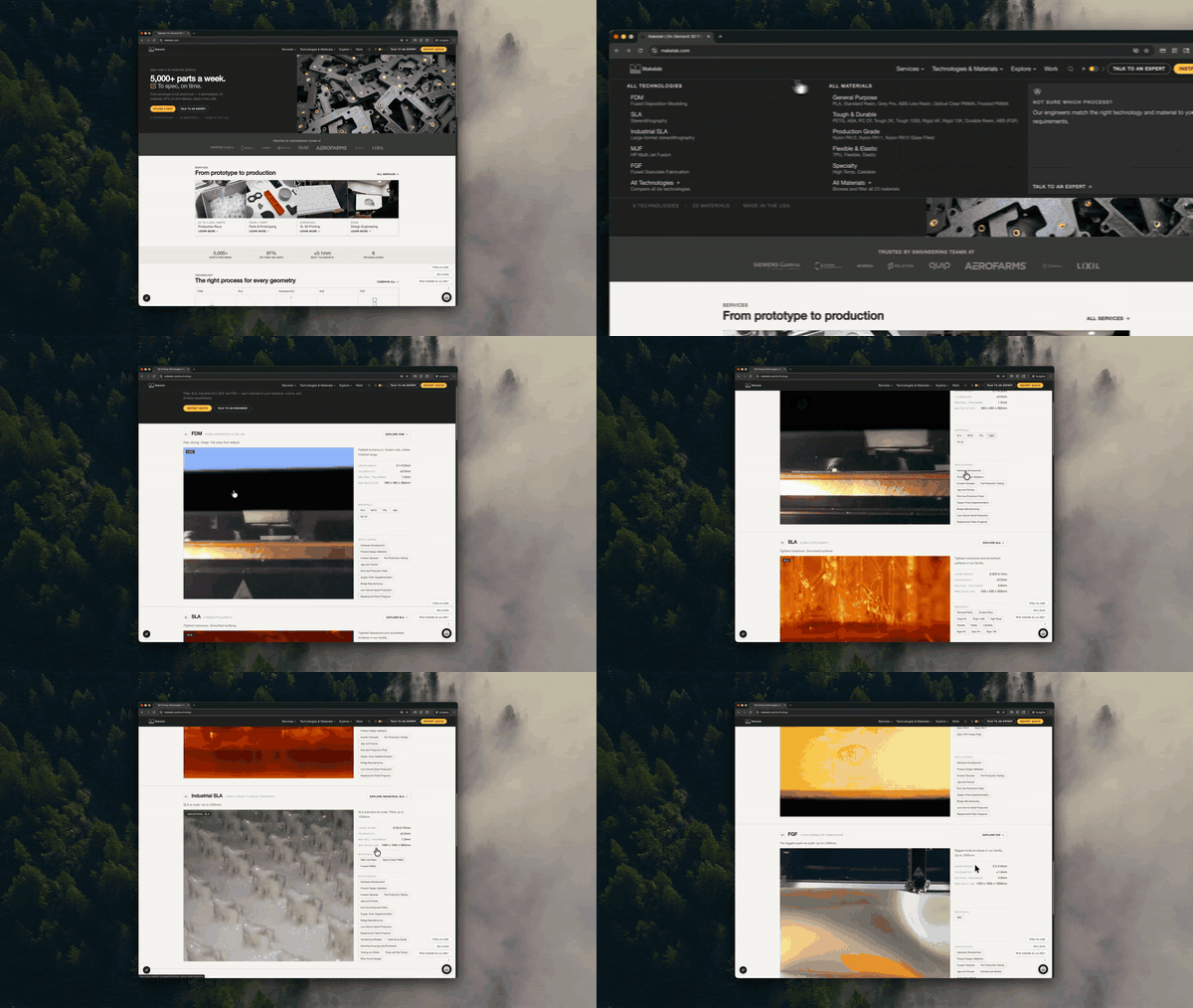
This month, Brooklyn-based 3D printing service bureau Makelab is celebrating its ninth anniversary in business. Co-founded by industrial designers Christina Perla and Manny Mota, the company offers six AM technologies and 23 materials, and produces over 5,000 parts a week in its New York factory; two years ago, Makelab opened a second location in San Francisco. To celebrate its ninth anniversary, they rebuilt the website from the ground up, adding seven new tools they think customers will actually use. Two of the tools are for calculations, three are for exploring Makelab’s options, and two are to improve the overall experience of the website. The Lead Time Calculator helps you calculate when your parts will be ready – just input the technology, quantity, the date you’ll be placing the order, and you’ll get the lead time, no quote required. With the Shipping Calculator, you can add your ZIP code and service level to see your estimated cost of shipping from Brooklyn.
The first of three new “Explore” tools on the Makelab website is the Materials Hub, which lists all of the 23 materials Makelab offers, “from general-purpose PLA to production-grade MJF nylon,” as the site states. It includes filters for finish, strength, temperature resistance, and use case, and you can see the properties for each material, plus the lead time for jobs completed with the materials. Tech Compare offers a side-by-side comparison of AM technologies and materials, like FDM vs SLA vs MJF. Makelab said this tool was really built for engineers who are “speccing a part.” The last “Explore” tool is Our Work, which is where you can see real projects that Makelab has completed and shipped. It’s updated every month, too! Finally, there’s a new Dark Mode for when you’re looking up part specs at 2 am; the toggle is at the top right of the screen, next to Talk to an Expert. There’s also an AI chatbot trained in Makelab’s process, FAQs, materials, and lead times; look for the robot icon on the bottom right corner of every page. Happy anniversary, Makelab!
Korea’s INNOSPACE Commercializes Support-Free Titanium AM
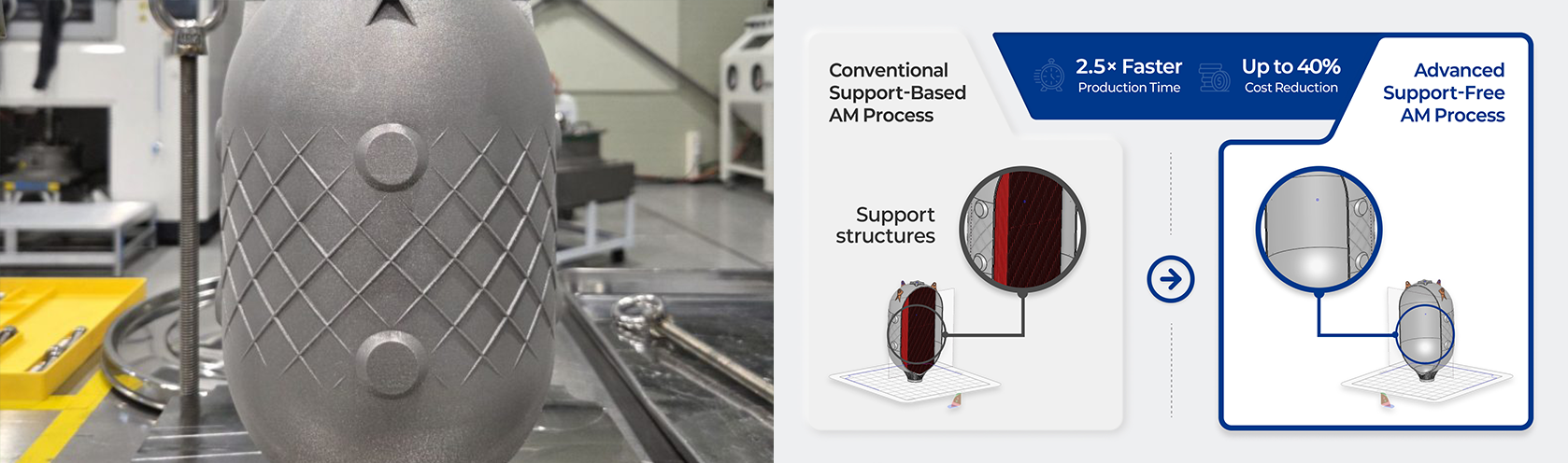
Dome-shaped titanium high-pressure tank produced using a support-free additive manufacturing (3D printing) process. Comparison of conventional additive manufacturing processes (left) and advanced support-free additive manufacturing processes (right).
South Korean aerospace/defense manufacturing and engineering service INNOSPACE says it’s the first in the country to commercialize an advanced metal AM process that doesn’t use support structures, and 3D printed titanium components with the technology. Internal supports are normally required to prevent deformation during conventional metal AM processes, but these cause lack of design freedom, longer production times, and more post-processing. INNOSPACE applied advanced process control technologies to achieve structural stability and product quality without having to rely on supports, which allows it to efficiently print complex curved structures, like dome-shaped and spherical components that would be used in satellite propellant tanks, for example. The company used its support-free metal AM process to make and supply high-reliability, high-precision titanium components to a domestic aerospace company, and reports that manufacturing time was reduced by 2.5 times, and costs by up to 40%, due to the fact that significantly less post-processing steps were required.
“The advanced metal manufacturing sector is characterized by high technological entry barriers and stringent quality verification standards, making it a strategically important field where securing core technologies directly impacts scalability and profitability. Building on our additive manufacturing capabilities developed through launch vehicle programs, we will accelerate expansion into high-value markets, including aerospace, defense, and satellite structures, and strengthen our competitive position in the global market,” said Soojong Kim, the Founder and CEO of INNOSPACE.
Ole Miss Researchers 3D Printed Elastic Nanoparticles for Cancer Treatment
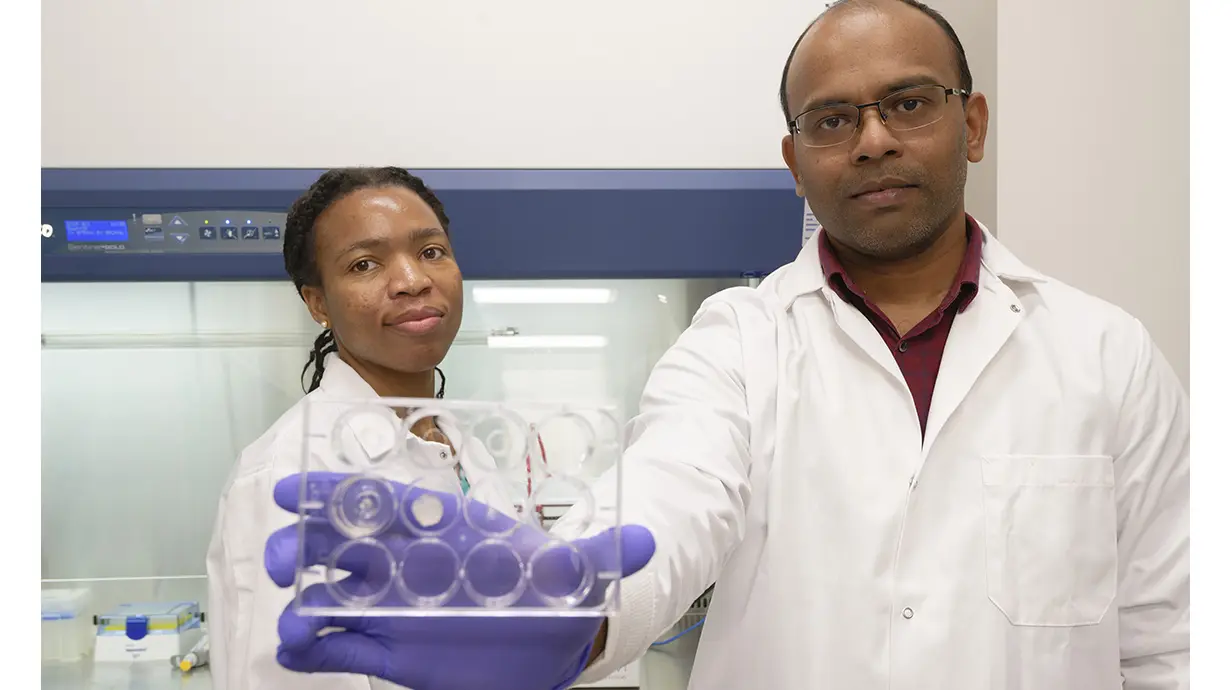
Elom Doe (left), a third-year doctoral student in pharmaceutical sciences from Accra, Ghana, and Jaidev Chakka, principal scientist in the School of Pharmacy, show off a 3D printed implant produced at the university’s Thad Cochran Research Center. Similar implants loaded with anticancer therapies may be used to deliver medication directly to tumors. Photo by Hunt Mercier/Ole Miss Digital Imaging Services
Chemotherapy is typically given orally, or injected into the bloodstream to be carried throughout the body. Unfortunately, because these therapies target cells that reproduce quickly, like cancer, they can also affect your skin, hair, and intestinal linings, resulting in unpleasant side effects. A team of researchers from the University of Mississippi are using 3D printing to deliver these drugs directly to tumors, which could reduce these side effects. As they explain in their study, they 3D printed spanlastics (elastic nanoparticles), which are tiny, hydrogel-based carriers filled with drugs to fight cancer that could be implanted right at the site of a tumor. Each capsule was just 200-300 nm in length, which allows them to pass through cell membranes and deliver a high dosage of medication to the affected cells. During in vitro studies, the team applied the 3D printed carriers to breast cancer cells and got “really promising data,” according to Mo Maniruzzaman, chair and professor of pharmaceutics and drug delivery at Ole Miss.
“Every drug for cancer has to act inside the cell, either on RNA or on DNA or inhibiting a cell pathway. If the drug is not able to penetrate the cell membrane or be taken up by the cell, the effect of the drug is none,” said Jaidev Chakka, principal scientist in the School of Pharmacy.
“But when we put that drug in a nanoparticle, we are also protecting the drug from degradation, so we are actually pushing a good amount of drug molecules into the cell in one go.”
3D Printed Orthopedic Metallic Implant Supports Healing While Degrading
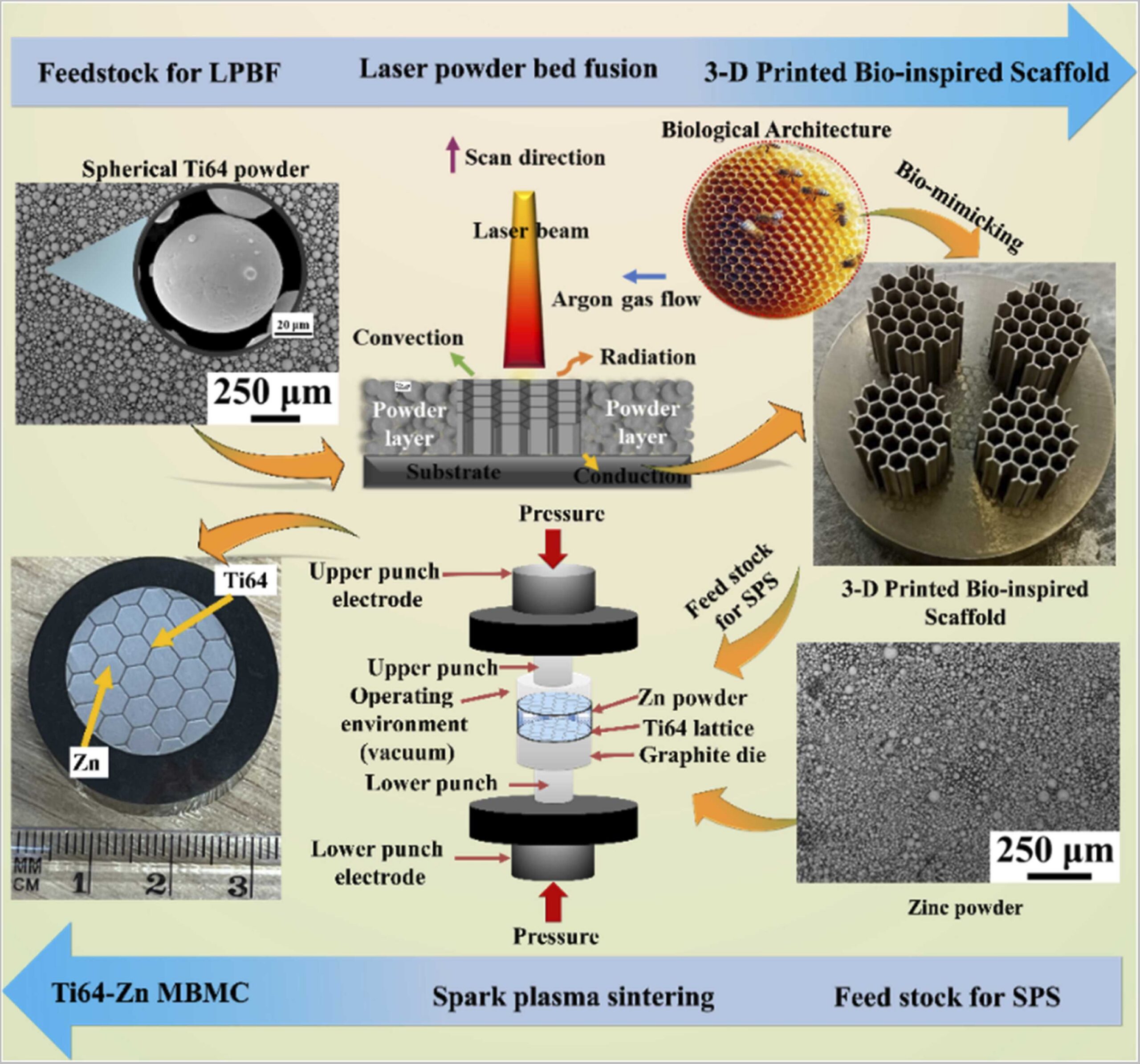
Schematic illustration of Ti6Al4V-zinc (Ti64-Zn) metallic bi-metal composite (MBMC) manufacturing process in two different steps. Step 1 involves the development of bio-inspired Ti64-based hexagonal lattice architecture using a laser powder bed fusion process. Step 2 involves addition of Zn powder to the hexagonal lattice within a graphite die, followed by spark plasma sintering at optimized temperature and pressure resulting in the development of Ti64-Zn MBMCs.
Finally, a team of scientists from universities around the world published a study on their work developing a hybrid metallic 3D printed orthopedic implant that supports healing while it slowly degrades within the body. Titanium alloys are often used for these implants because of how reliable and strong they are, but they’re much stiffer than human bone, so when they’re permanently implanted, the surrounding bone can weaken over time and cause complications or even implant failure. So the team paired two different metals with complementary properties to develop a hybrid metallic implant. Combining 3D printing and powder metallurgy, they created a titanium alloy lattice and filled it with zinc, which gradually dissolves in the body, under the right physiological conditions, with the help of pressure assisted sintering. The honeycomb structure of the lattice uses less material, but still offers high strength, and bone cells and body fluids are able to freely pass through the implant. The team reported that lab tests confirmed the bi-metal composite showed biocompatibility by supporting bone growth.
“The developed composite achieved a compressive strength of about 292 MPa, which is significantly higher than that of natural bone (230 MPa). The material demonstrated a controlled degradation rate of approximately 0.157 mm per year under simulated body conditions, which is close to the ideal degradation rate reported for biodegradable implant materials,” explained K.G. Prashanth, corresponding author of the team’s study.
“This research could help create smarter bone implants that provide strength during healing but also support natural bone regeneration. Such implants could reduce post implantations complications and extents of revision surgeries.”
Researchers from Tallinn University of Technology, the VSB-Technical University of Ostrava, Loughborough University, the Indian Institute of Science, Nanyang Technological University, Dalarna University, Karlstad University, the Saveetha Institute of Medical and Technical Sciences, and the South China University of Technology worked on this project.