
HP (NYSE: HPQ) had its best day in over a year this week, with shares jumping more than 7% on Tuesday. Interestingly, the move was quickly tied to 3D printing, especially after the company’s high-profile unveiling at RAPID + TCT 2026 in Boston, one of the most talked-about launches at the event.
The week opened with a drop for HP, with shares falling about 1.5% on Monday and lagging behind Apple and Dell Technologies. Then came the sudden jump on Tuesday. By Wednesday, HP shares dropped more than 3%.
One Day, One Strong Reaction
The spike came after a mix of news that involved shareholders approving an expanded stock incentive plan, adding over 70 million shares for compensation. Also, HP reinforced its growth strategy with updates across its industrial and 3D printing portfolio, leading to investor sentiment flipping positive, with traders suddenly turning bullish. That combination pushed the stock up roughly 7–8% in a single day, its biggest move in over a year.
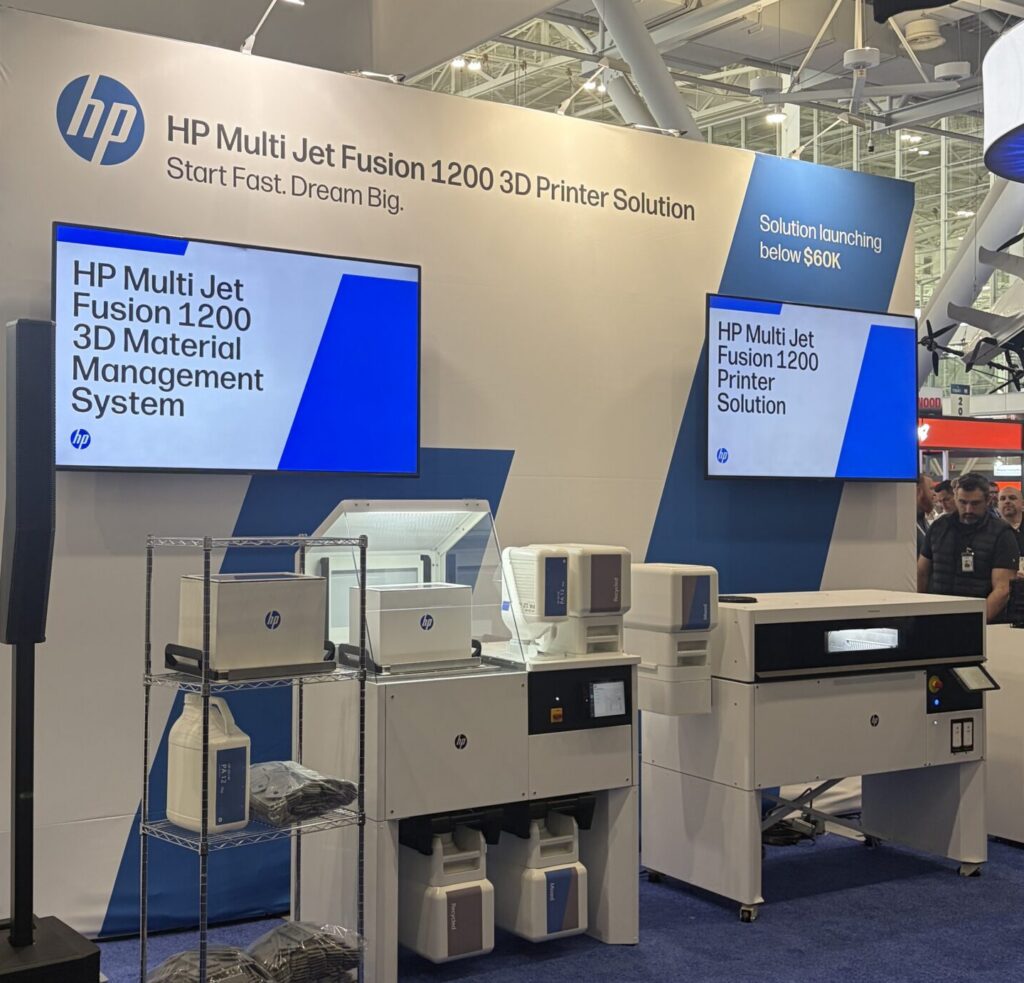
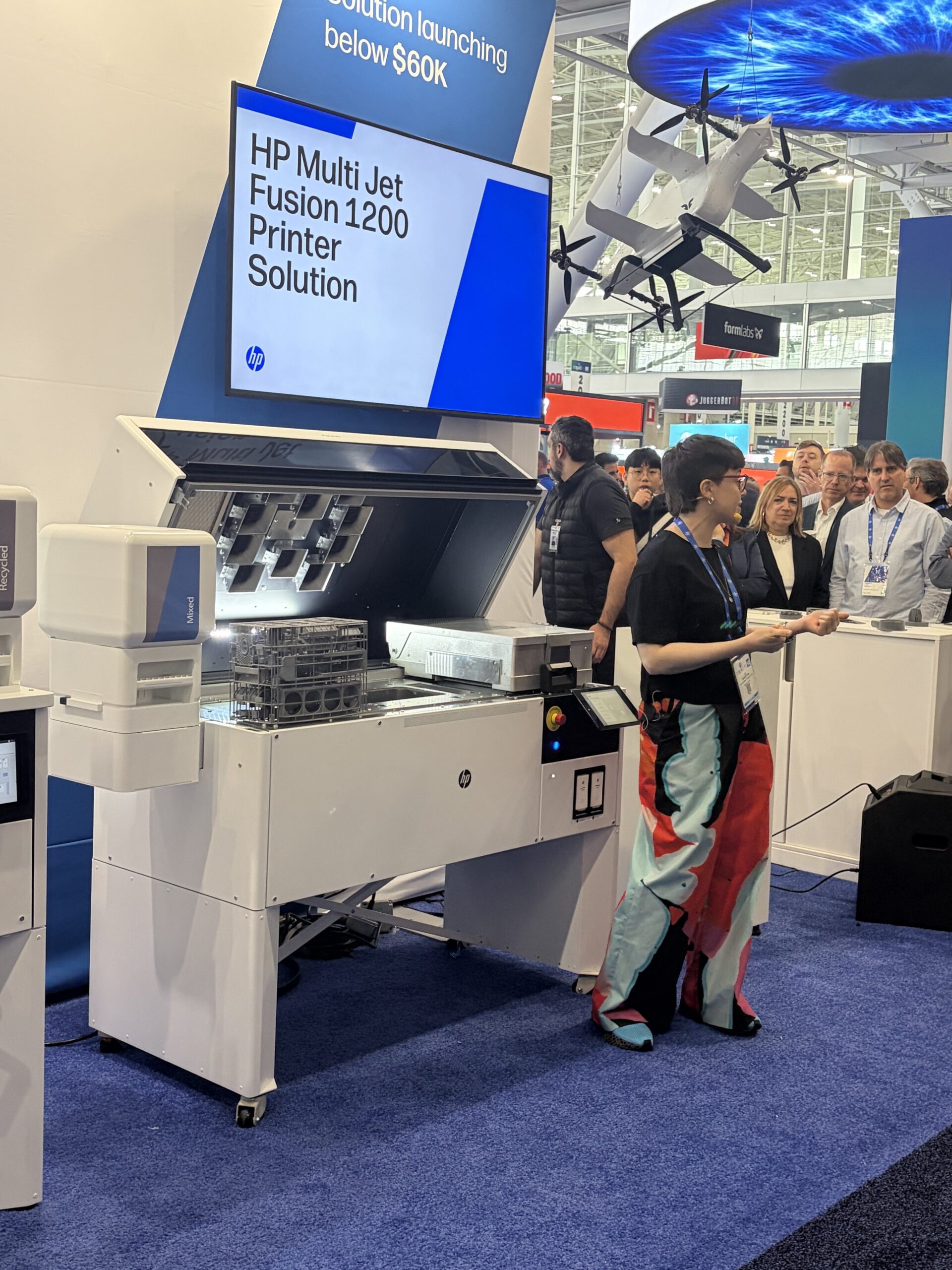
At the same time, HP’s presence at RAPID + TCT got a lot of attention. The company introduced its new Multi Jet Fusion 1200 platform, a smaller system designed to bring its industrial 3D printing into more workplaces, with automated workflows, easier operation, and faster turnaround times.

On the floor at RAPID + TCT 2026: HP reveals its latest 3D printing lineup. Image courtesy of Sarah Saunders/3DPrint.com.
3DPrint.com’s Sarah Saunders was at RAPID for the live unveiling, stressing how the system lowers the barrier to entry. Shortly after, Executive Editor Joris Peels wrote that this system could reshape the entry-level additive manufacturing market by making HP’s technology more accessible to a wider range of users.
So it is that combination, the corporate moves plus a strong message about 3D printing, that helped push the stock higher.
For years, HP has been building out its 3D printing business, but the real question has been adoption, especially knowing how far it can go beyond prototyping and into actual production. Now, HP is starting to answer that. The company isn’t just talking about 3D printing anymore; it’s showing how it can work in real production, right next to traditional methods.
This fits with HP’s broader strategy. In its latest earnings, the company showed steady performance in its core business, while also pointing to areas like industrial and digital manufacturing as future growth. That’s where 3D printing comes in.
But this push into 3D printing isn’t coming out of nowhere either. In its latest earnings, the company showed steady performance in its core business, but also continued to highlight growth areas tied to industrial and digital manufacturing. 3D printing fits directly into that.
In HP’s Q1 2026 earnings call in February, CFO Karen Parkhill pointed to clear momentum in the industry, stating:
“Strong demand in drones and robotics drove double-digit growth in 3D and industrial print revenue grew for the tenth consecutive quarter, driven by the continued transition from analog to digital.”
Also, a few months earlier, in the company’s Q4 2025 earnings call, CEO Enrique Lores pointed to a similar trend, stating:
“We also saw double-digit growth in 3D driven by applications in drone and robotics manufacturing.” He added that HP intends to “strengthen our leadership in 3D printing” as part of its broader print strategy.
Drones are quickly becoming one of the most important applications for 3D printing today. Companies like Blueflite are using HP’s Multi Jet Fusion to produce drones with dozens of printed parts, while startups like Vecros and Unusual Machines are relying on the same technology for UAV components and full systems. And if you’re interested in how this is playing out in the market, it’s something 3DPrint.com and Additive Manufacturing Strategies will explore in depth at the UAS Additive Strategies: The Present and Future of Drone Manufacturing event on June 30, 2026.


Live from RAPID + TCT 2026, HP’s booth. Image courtesy of Sarah Saunders/3DPrint.com.
The stock jump this week wasn’t driven by a single 3D printing breakthrough. It came from a mix of corporate moves and investor sentiment. But the timing matters. HP used RAPID + TCT to introduce new systems, including the more accessible Multi Jet Fusion 1200, and to reinforce its push toward real production with better output and lower cost per part. All of this helps explain the market’s reaction.
3D printing may not be the biggest part of HP’s business today, but it’s starting to move the needle, show momentum, and investors are noticing. It is definitely a market the company is continuing to build around.