I remember as a child, sitting on my living room floor building all sorts of things with my Legos. The majority of the time, I would construct miniature houses, and then assemble them into a small villages. Of course, these houses all pretty much looked the same, as Lego blocks are quite generic looking. I still had a blast though.
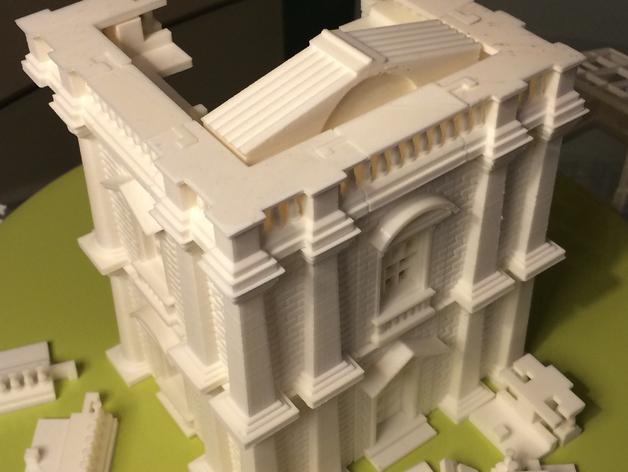
“I’ve always been interested in ‘Modular Architecture,'” Horsfall tells 3DPrint.com. “I come from an architectural background, and over the years I’ve been involved in a lot of architectural visualisation projects. I realised during this time that the fastest and most effective way to design certain buildings virtually, was to break them into modular parts and assemble these parts to create different design configurations. This method worked really well for us in meeting incredibly tight deadlines.”
So when Horsfall learned of 3D printing, he decided to utilize this technique in creating real-world, buildable models.
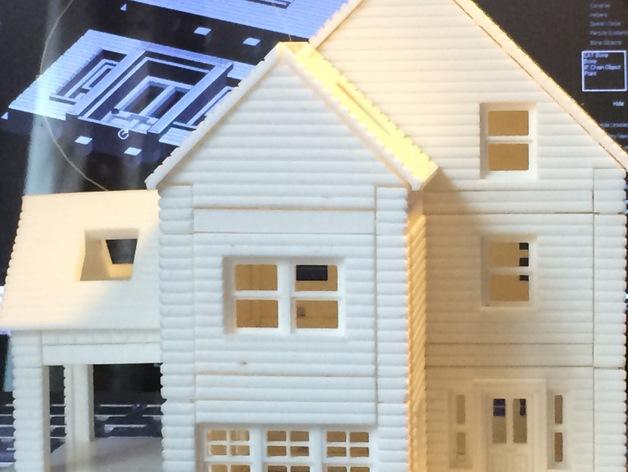
In designing the blocks he wanted to ensure that they would easily be 3D printable on FFF-based 3D printers. This meant that the designs would require no support material when printing.
“This was very challenging but so much fun to resolve,” Horsfall tells us. “I proceeded to add interlocking connectors for each block. The idea was that each block would connect seamlessly without the need for any adhesive or glue. Once I had the structural blocks (slabs, walls, columns) designed, the process became much easier. I was able [to] evolve new block types from the original structural blocks.”
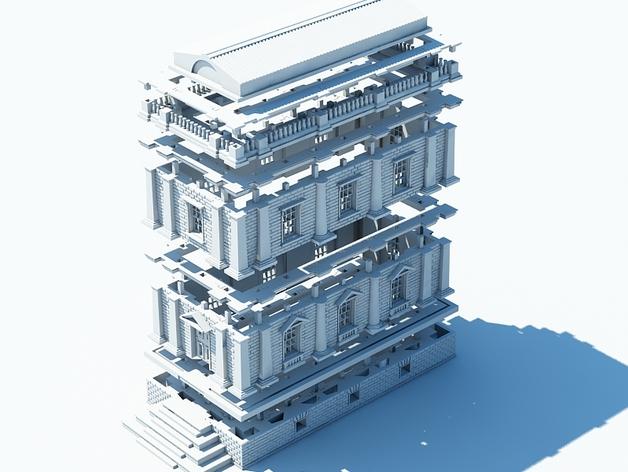
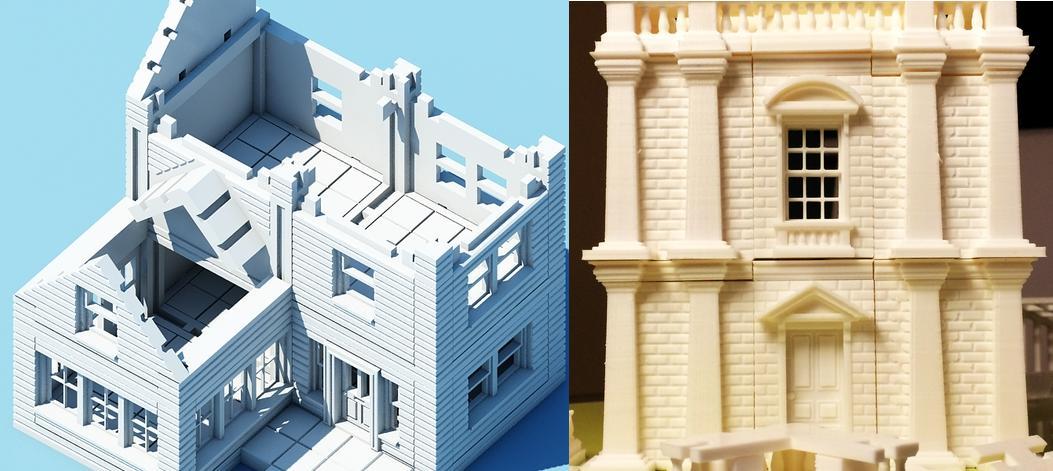
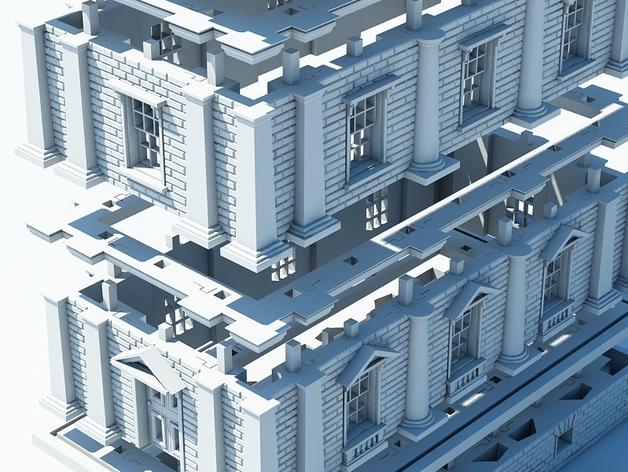
Horsfall, who is a digital designer by trade, currently works as a Senior Design Visualizer in the construction industry, specializing in commercial exteriors and interiors. He has so far made 2 different themed designs available for anyone to down for free and 3D print at home. They include the Victorian Town House Kit, which features 15 different STL files for different modular construction pieces, and the more traditional Original Architecture Kit, which contains 11 separate STL files for Beams, Columns, Floor Slabs, Stairs, Roofs, Walls, and Interior Partitions.
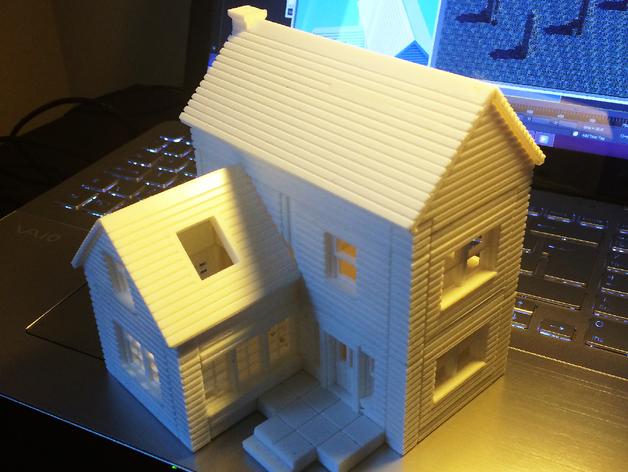
What I find extremely fascinating is that these kits are completely expandable, meaning that any quantity of multiples desired may be printed out and buildings of virtually any size can be created. You can also scale the blocks up and down in order to create larger, or smaller buildings.
“With a larger printer and enough time you can build a life size building,” explains Horsfall.
“I’m a Lego enthusiast, always have been,” he tells us. “I have a passion for architecture and the built environment. Buildings fascinate me. Especially large public spaces. I spend a lot of my time studying them, experiencing them, and creating generic, concept design ideas of my own.”
The models pictured here were printed on Horsfall’s Ultimaker 2 3D printer, but are compatible with virtually any FFF-based printer, include extremely large printers, enabling the right person with access to the right 3D printer to fabricate full sized buildings. Will that happen anytime soon? It certainly wouldn’t surprise me. What do you think about Horsfall’s modular 3D printed architecture construction kits? Discuss in the 3D Printed Architecture Kits forum thread on 3DPB.com.