
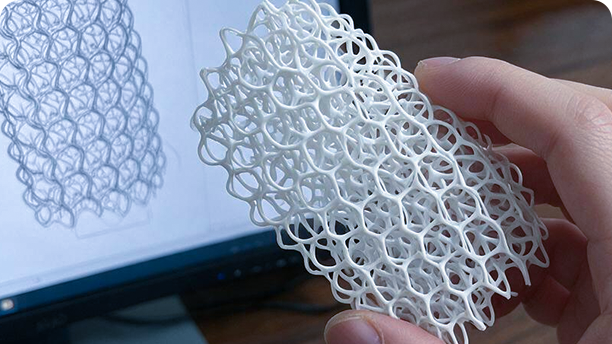
I recently wrote about how additive manufacturing (AM) for the robotics industry is among the market opportunities most likely to benefit from China’s latest Five-Year Plan. I also cautioned, not long after, that the AM for robotics opportunity needs to be executed very deliberately if China is to use it to turn weaknesses into strengths, rather than letting it exacerbate its existing challenges.

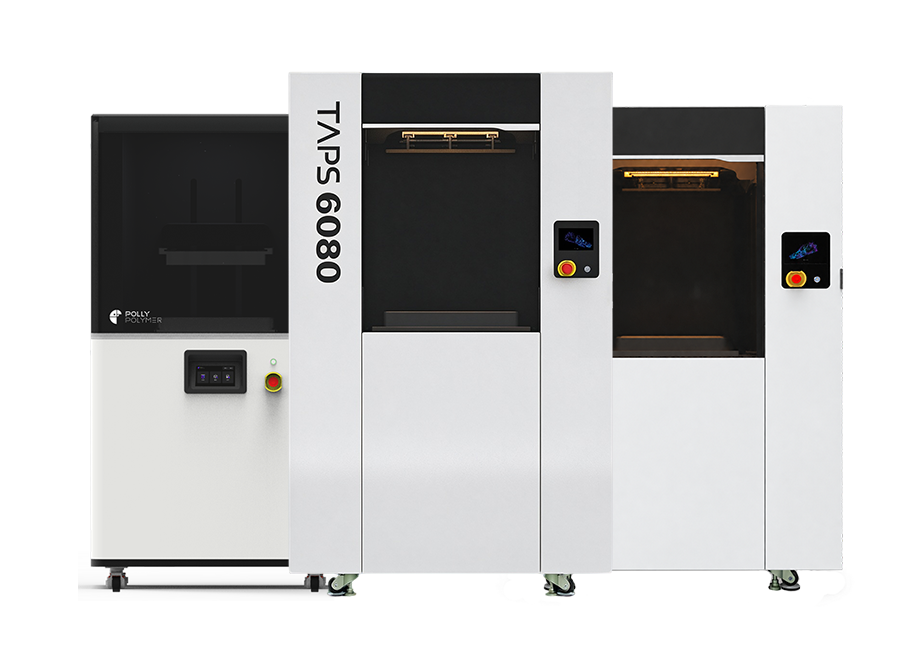
PollyPolymer’s TAPS 6080 large-format 3D printing system.
PollyPolymer, a Chinese company that both makes and sells its own line of 3D printers, and also uses those printers for its own AM services capacity, is an example of how China can do its robotics boom the right way. Investors just funded the company’s Series B round to the tune of $70 million, wagering that PollyPolymer’s proprietary Hindered Asynchronous Light Synthesis (HALS) technology is a good way to play China’s robotics craze.
Participating in the round were several Chinese venture funds, demonstrating perhaps that China would prefer to keep this investment “in-house”, so to speak. Now, as for the robotics applications, PollyPolymer offers capabilities tailored to three main categories of humanoid components: bionic muscles, flexible joint protection, and quiet soles and foot pads. Based on how the components look, as well as the HALS-related images on the company’s site, Fabbaloo looks to be correct (link in the previous paragraph) that HALS is a faster form of MSLA or DLP.

The reason I say this is an example of China doing a robotics boom the right way is because, as I noted in my post about signs of concern regarding how that boom is unfolding, the nation can’t really afford to do any more damage to its ability to grow its domestic consumption. In a vacuum, it wouldn’t be a bad thing at all that Chinese consumers have such relatively low interest in the sort of keeping up with the Joneses ideology that has progressively robbed Western nations of all their principles. This is not to mention that if the planet is already being crushed under the weight of our consumption habits now, what do we suppose will happen when over 2 billion people in China and India start depleting resources the way the affluent in OECD countries do?

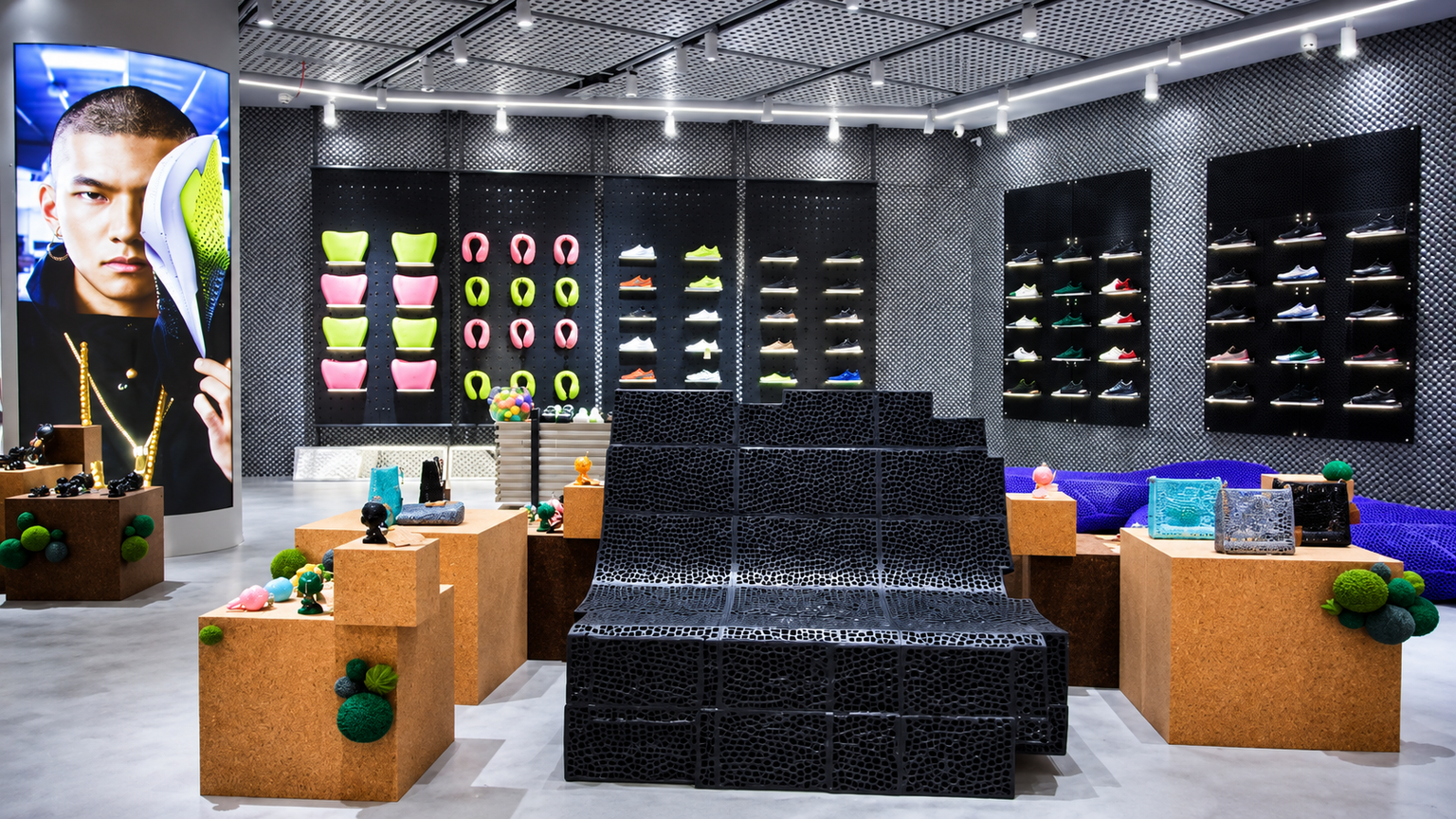
Footwear showroom.
But these quite terrifying considerations aren’t for us to trouble ourselves with! We care about the long-term sustainability of economic growth, and that’s what’s reassuring about PollyPolymer raising $70 million. The potential solutions I suggested in the aforementioned post were centered around the necessity of ensuring that humanoids and their less anthropomorphized robotic brethren don’t take too many jobs, too quickly, from China’s domestic labor pool, because that’s the biggest problem standing in the way of China’s ability to increase domestic consumption. For instance, training workers in China to use AM and positioning the humanoid market as the quintessential AM power-user is one way to align both objectives.
That’s also in PollyPolymer’s favor, because the company is far from just a robotics industry supplier. In fact, footwear is probably the most longstanding focus area for PollyPolymer, which, again, aligns with the need to keep more Chinese disposable income in China’s domestic economy. Aside from humanoids, all of PollyPolymer’s target markets seem to be within that same wheelhouse, with the company leaning heavily into the potential for personalized manufacturing.
As I said, in addition to operating as an OEM, PollyPolymer uses its TAPS line of 3D printers to support in-house production capacity of over two thousand printers, which should come in handy as the company plans to use much of the Series B funding for R&D. The rest will go towards headquarters construction and building out its worldwide footprint. If China’s Five-Year Plan unfolds as it’s been designed, though, PollyPolymer may do just fine by focusing on the domestic market.
Images courtesy of PollyPolymer