

Velo3D (Nasdaq: VELO) is showing signs of a stronger business, with increasing sales, better profit margins, and growing demand for its metal 3D printing technology. The company is also in a better financial position than it was before. But it’s still losing money; costs are going up as it expands production, and it’s going to take longer than expected to become profitable. So while business is picking up, Velo3D still has a lot of work ahead.
The California-based company reported Q3 2026 revenue of $20.5 million, up 50% from $13.6 million a year earlier. That is a big increase for a company that has spent the past several years dealing with financial difficulties, restructuring, and uncertainty about its future.
Most of that growth came from its 3D printer and parts business, which generated $18.8 million, up 57% from the same period last year. Velo3D said the improvement came from selling more machines, earning higher average selling prices, and generating more revenue from parts production.
Velo3D’s gross margin also rose to 26.5%, up from just 3.2% a year earlier. The company benefited from higher selling prices, stronger sales, and lower production costs. Some accounting changes also helped boost the number, so not all of the increase came from more efficient manufacturing.
Orders were also up. Velo3D recorded $28.9 million in new bookings during the quarter and ended September with a backlog of $40.1 million. So customers are still placing plenty of orders, even as Velo3D works to expand production. But even with stronger sales, the company is still losing money.
Velo3D reported a net loss of $16.7 million, compared with $11.2 million in the third quarter of 2025. Operating expenses more than doubled, rising from $10.4 million to $22.7 million. Its adjusted EBITDA loss also widened to $9.8 million, up from $7.3 million a year earlier.
Much of the spending points to Velo3D’s effort to build a larger manufacturing business, especially through its new Forge 1 production campus in Livermore, California. The facility opened in July and is being brought online in phases. It is expected to become the company’s main production center, supporting larger manufacturing programs for aerospace, defense, space, and energy customers. However, it is not yet operating at full scale.
CEO Arun Jeldi described the expansion as a “necessary investment” in Velo3D’s future: “These results reflect continued customer demand for our metal additive manufacturing technology and the progress we are making in executing our growth strategy.”
He also said operating expenses increased as the company invested in the people, technology, and manufacturing capabilities needed to bring Forge 1 online.

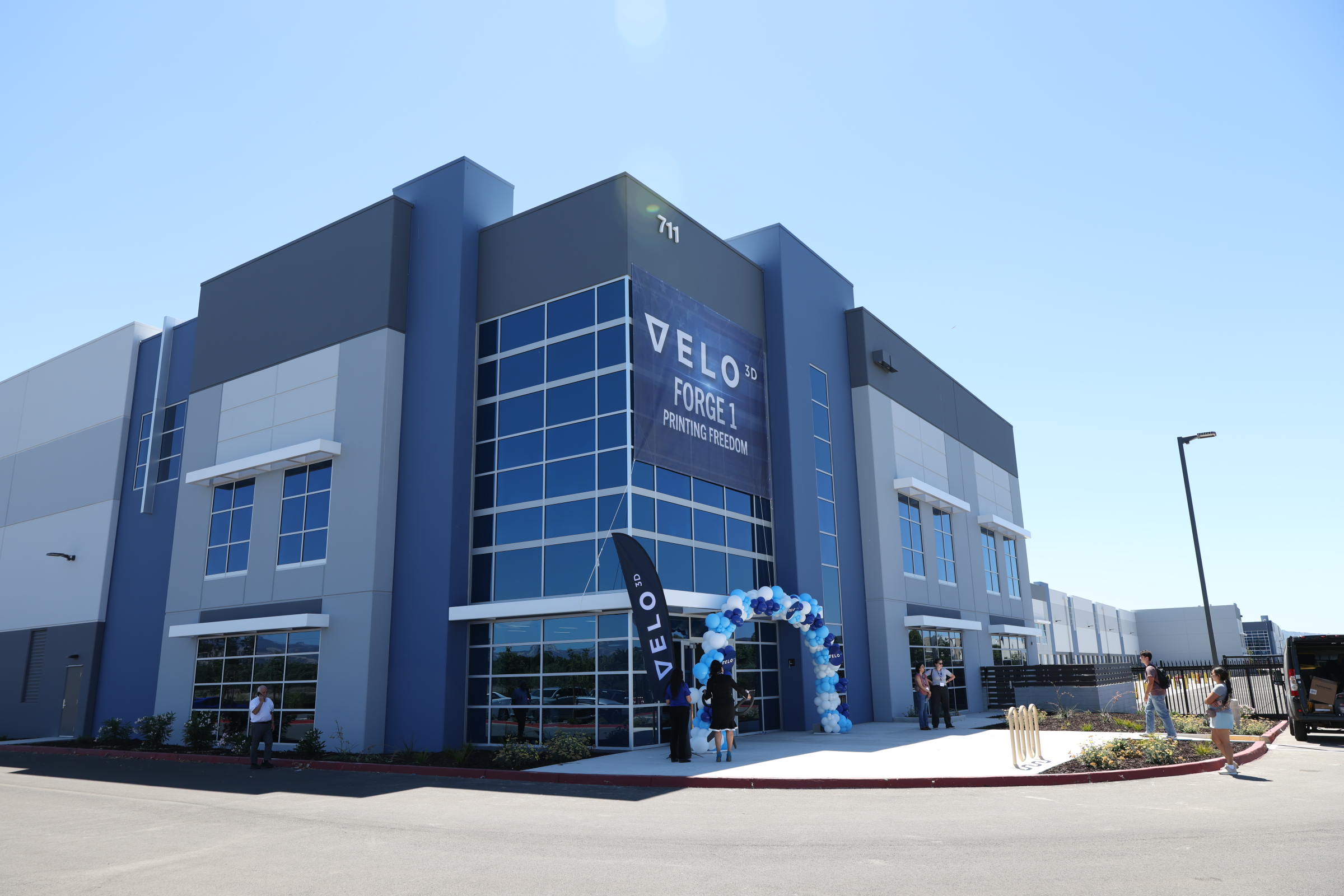
Ribbon cutting ceremony marks a new era of production. Image courtesy of Velo3D.
The strategy is important because Velo3D is looking beyond selling metal 3D printers. Through its Rapid Production Solutions (RPS) business, the company also wants to make parts for customers, not just sell printers. That means producing more parts, delivering them on time, and handling more of the manufacturing work itself. It also means spending money before those operations reach their full potential. And that brings us to perhaps the biggest problem in the earnings announcement. Velo3D now expects to achieve positive EBITDA and positive operating cash flow in 2028. Previously, the company had targeted positive EBITDA in the first half of 2026 before pushing that target to the second half of the year in March.
So while Velo3D is selling more, expanding production is costing more or taking longer to pay off than expected.
Also, Velo3D shares fell about 17% in after-hours trading on November 10, after the earnings announcement, and continued dropping the next day. By Wednesday afternoon, the stock was trading around $5, down roughly 18% from the previous close of $6.04.
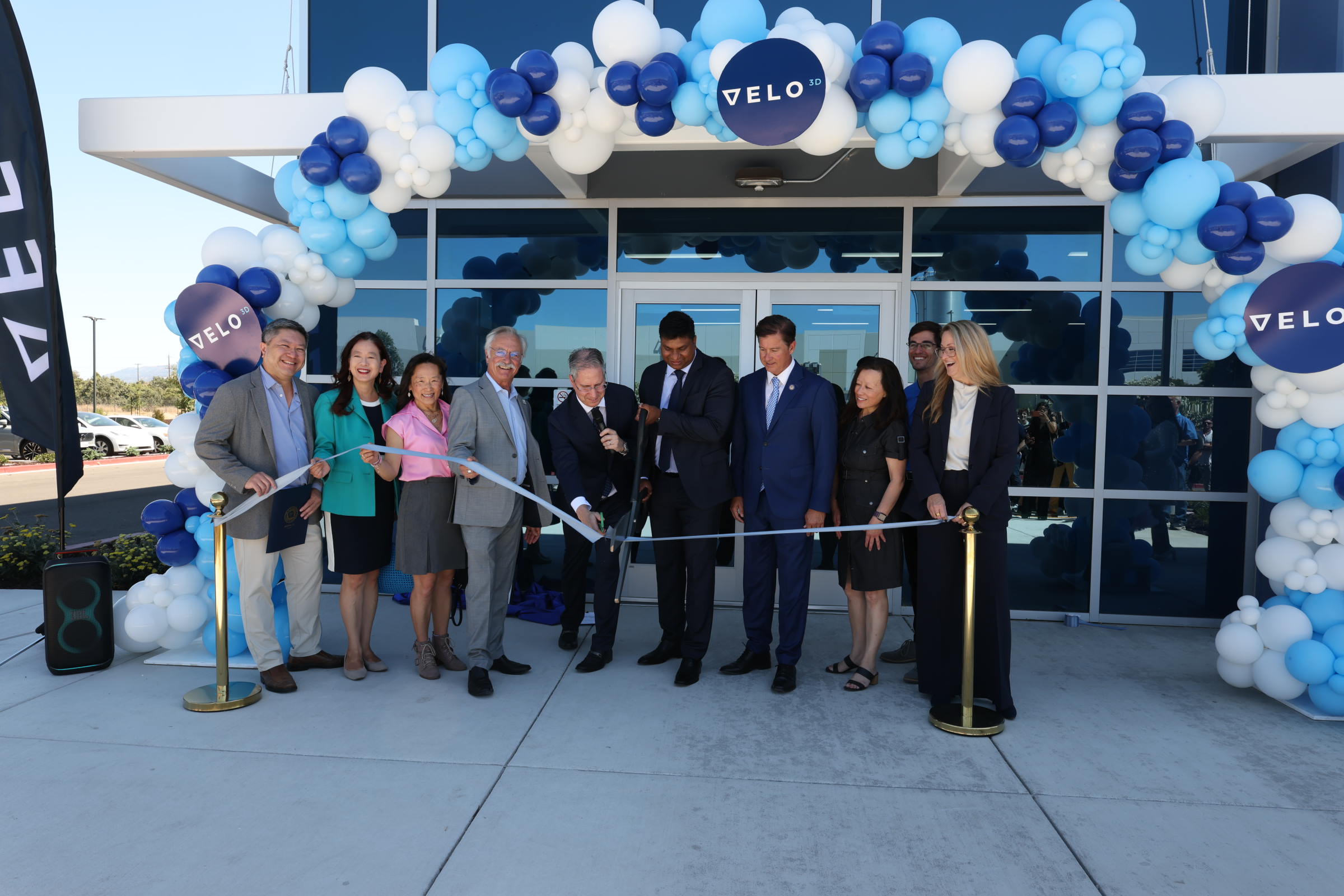
Ribbon cutting ceremony marks the opening of Forge 1. Image courtesy of Velo3D.
Velo3D also lowered its expectations for gross margin. It still expects margins to rise in the fourth quarter, but no longer thinks they will go above 30% this year. The company also cut its planned spending on equipment and facilities for 2026 from $40 million-$50 million to $ 10 million-$20 million, mainly because much of that spending has been pushed into 2027. It still expects full-year revenue of $65 million-$75 million.
On the positive side, Velo3D has more cash and less debt than before. It ended September with $75.7 million in cash, up from $39 million at the end of 2025. Its debt also dropped 76%, from $31 million to $7.4 million. Most of that extra cash came from investors, rather than from the business itself. During the first nine months of 2026, Velo3D raised about $98.6 million through financing, while spending around $52.2 million to run its operations. Still, having more cash and less debt puts Velo3D in a better financial position.
In its latest earnings announcement, Velo3D said it expects to have enough money to keep operating over the next 12 months without needing additional financing. That’s a big change for a company that has struggled financially in recent years.
Velo3D is also growing its business in defense and industrial manufacturing. During the quarter, the company expanded its relationship with Mears Machine, which ordered its sixth Sapphire XC printer to produce copper-nickel parts for ships and offshore equipment. Velo3D also joined the Government-Industry Data Exchange Program (GIDEP), which gives it access to information that helps defense manufacturers spot potential problems with parts and suppliers.
Both moves are part of Velo3D’s plan to sell more printers and make more finished parts for customers, especially in industries like aerospace and defense.
Velo3D’s latest results show higher sales, more orders, and a stronger cash position, but also continued losses and a longer wait for profitability. The company is now focused on expanding production at Forge 1, with plans to reach positive EBITDA and operating cash flow in 2028.