
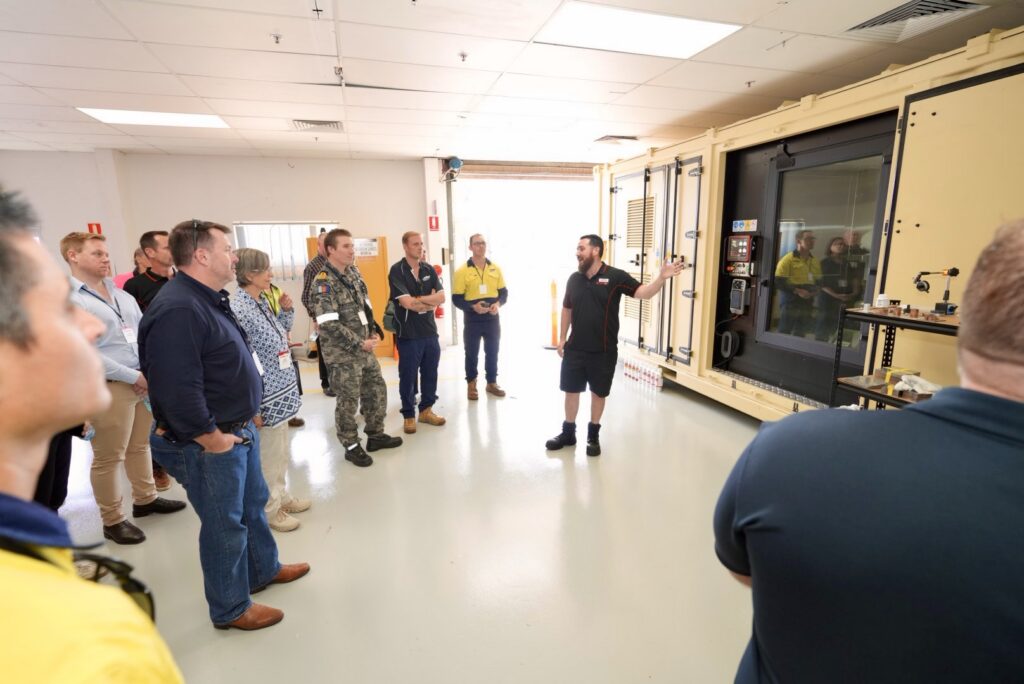
Earlier this year I wrote about SPEE3D‘s expeditionary manufacturing case study, in which it collaborated with the Tennessee Army National Guard. My take was that this was a perfect example of the company’s dominant metal additive manufacturing (AM) innovation strategy, which focuses on maximizing the value of every one of its manufacturing partnerships by meticulous crafting of the use cases in which it participates.
Essentially, that amounts to identifying applications that customers want, but sound too complicated to actually be accomplished, and then relentlessly pushing those applications into reality. In addition to the Tennessee Army National Guard case study, which involved printing a ground vehicle component in a live-fire exercise and then delivering it via drone, this is also how SPEE3D worked its way up to demonstrating successful prints on an operational, at-sea vessel this summer during RIMPAC, the world’s largest joint maritime exercise.
After all that, SPEE3D is now announcing what is arguably its most ambitious project yet: CriticalSPEE3D, a planned distributed manufacturing network across 50 sites in the Asia-Pacific region. The network has launched with what the company calls NodeZERO Phase One, in Darwin, located in Australia’s remote Northern Territory.
That site will serve a special role in the planned broader network, constituting a hub where all the other members can go for training. SPEE3D also plans to leverage the location’s proximity to Charles Darwin University (CDU) and the associated Technical and Further Education (TAFE) Northern Territory (NT). And, of course, SPEE3D’s expertise in defense manufacturing means that production capacity for the Royal Australian Navy (RAN) figures into the plans for NodeZERO as well.
While the task is, as I said, ambitious, many moves that SPEE3D has made over the last few years illustrate how the company is set up to succeed at its goal. Aside from the cumulative progress in distributed expeditionary manufacturing activities that SPEE3D has proven via the sorts of use cases I discussed above, they’ve also made inroads into Japan and have started to set their sights on India, which is becoming one of the most strategically important markets and locales in the Indo-Pacific. It’s also worth mentioning that, while it’s still not exactly “close,” Darwin is nonetheless much closer to Indonesia, a rapidly growing manufacturing economy, than it is to the largest cities in Australia.
Perhaps even more importantly, SPEE3D recently appointed a new global CEO, Bryan O’Connor, enabling the company’s co-founder Byron Kennedy to focus on the company’s US expansion. O’Connor’s longtime experience at Moog includes, most recently, a years-long expansion of its Asia-Pacific space and defense business. If you’re trying to succeed at something like CriticalSPEE3D, that’s the guy you want leading the charge.
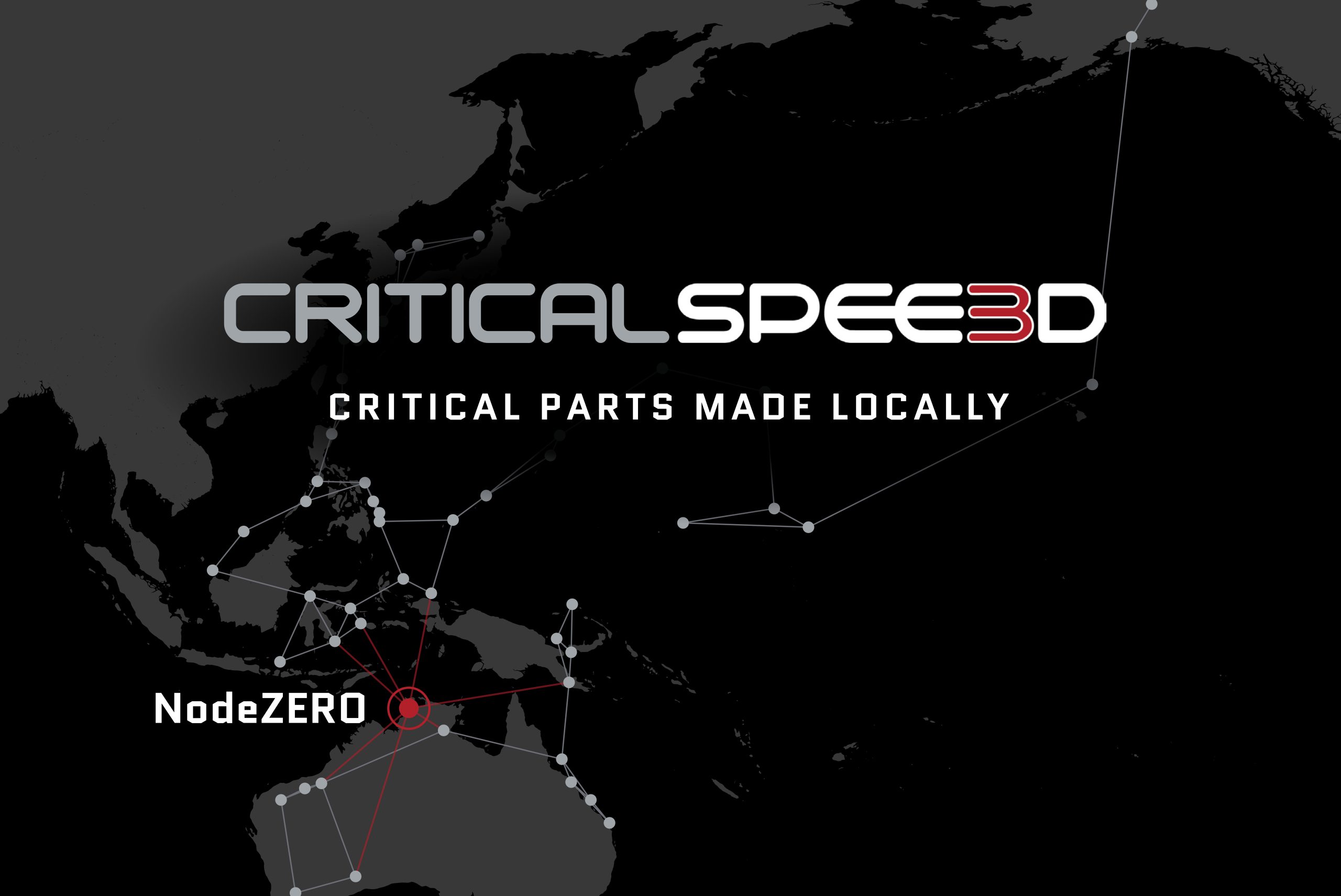
Companies that are interested in participating in the network should contact SPEE3D soon, as the company notes that the opportunities are currently open to “a small group of founding members.”
Aside from the fact that this is precisely the region where the US military is focusing its own advanced manufacturing efforts, the idea is a promising one. It takes a model that already has demonstrated success for SPEE3D, and the metal AM industry in general, and then uses that model as the basis upon which the company can scale its business for the long term. A primary reason why a company like EOS, for instance, through its Additive Minds consulting division, has a physical training hub in North America is because that helps the company’s own customers save money and time training their staff on EOS machines.
In a region like the Asia-Pacific, there’s over fifty nations to reach, which include something like 60 percent of the global population. So strategically planning your physical footprint becomes all the more important for cost optimization and customer support. Creating a distributed services hub structured around direct customer outreach is a way to ensure, to the extent it’s possible, that your supply aligns with future demand.
Images courtesy of SPEE3D