

We’re starting with the winners of two America Makes project calls in this first 3D Printing News Briefs of August! Then we’ll move on to AM quality control for aerospace, and research from the University of Waterloo. We’ll finish with some interesting 3D printed chairs. Read on for all the details!
America Makes Announces Winners of JAQS-SQ, PADAM Project Calls
America Makes and the National Center for Defense Manufacturing and Machining (NCDMM) have announced the winners of the $10.5 million Joint Additive Qualification for Sustainment – Supplier Qualification (JAQS-SQ – Groups 2 & 3), funded by the Office of the Under Secretary of War, Manufacturing Technology Office (OSW ManTech). It builds on the original JAQS-SQ project to expand defense industrial base (DIB) capabilities and strengthen manufacturing readiness, with a specific focus on unified training and requirements to qualify laser powder bed fusion (LPBF) and directed energy deposition (DED) suppliers. The practical training for production and engineering operations managers will be developed with Wichita State University – National Institute for Aviation Research (WSU‑NIAR), and teach them how to effectively implement process control documents and qualification principles. Once suppliers have completed this training, they will be audited to confirm their ability to operate as a qualified AM manufacturer for the DoW.
Here is the list of winners for JAQS-SQ – Groups 2 & 3:
- Additive Technologies, LLC (dba ADDiTEC)
- Alaris Defense, Inc. (dba Hyperscale Manufacturing)
- AML3D USA, Inc.
- American Prime Technologies
- Armadillo Additive, Inc.
- Baker Hughes Energy Transition, LLC
- Collins Aerospace
- Cumberland Additive, Inc.
- Eaton Corporation
- Elementum 3D
- EWI
- FASTECH, LLC
- FormAlloy Technologies, Inc.
- GKN Aerospace GTC, LLC
- Hadrian Automation, Inc.
- Indiana Technology and Manufacturing Companies (ITAMCO)
- Innovative 3D Manufacturing, LLC
- Laser Welding Solutions, LLC
- Materials Sciences, LLC
- Mimo Technik Print Metal, LLC
- MRL Materials Resources, LLC
- National Equipment Corporation (NECO)
- Nikon AM Synergy
- Norsk Titanium US, Inc.
- Seurat Technologies, Inc.
Additionally, America Makes and the NCDMM announced the winners of the $6 million Powder Alloy Development for Additive Manufacturing (PADAM) 2.0 Project Call. Funded by the Air Force Research Laboratory, Foundational Technologies Directorate (AFRL/REMD), the goal of this project is to “advance the readiness, manufacturability, performance, and supply chain resilience of high-temperature refractory alloys” for AM applications that are relevant to the DoW. The idea is to take these refractory alloys for additive manufacturing “from promise to practice,” as John Martin, Additive Manufacturing Research Director at America Makes, explained.
Here are the PADAM 2.0 winners:
- Topic 1: Existing Refractory Alloy Systems
- Team Lead: Lockheed Martin Corp.
Project Team: Quadrus Corporation, Colorado School of Mines, 3Degrees - Team Lead: HRL Laboratories
Project Team: The Boeing Company, Amaero, Alloyed, Texas A&M University
- Team Lead: Lockheed Martin Corp.
- Topic 2: Novel or Emerging Refractory Alloy Systems
- Team Lead: ATI Materials
Project Team: The Boeing Company, University of Dayton Research Institute
- Team Lead: ATI Materials
- Topic 3: Refractory Alloy Supply Chain Assessment (Mine-to-Qualified Part)
- Team Lead: Colorado School of Mines
Aerospace OEM Adopts Additive Assurance Quality Control Solution
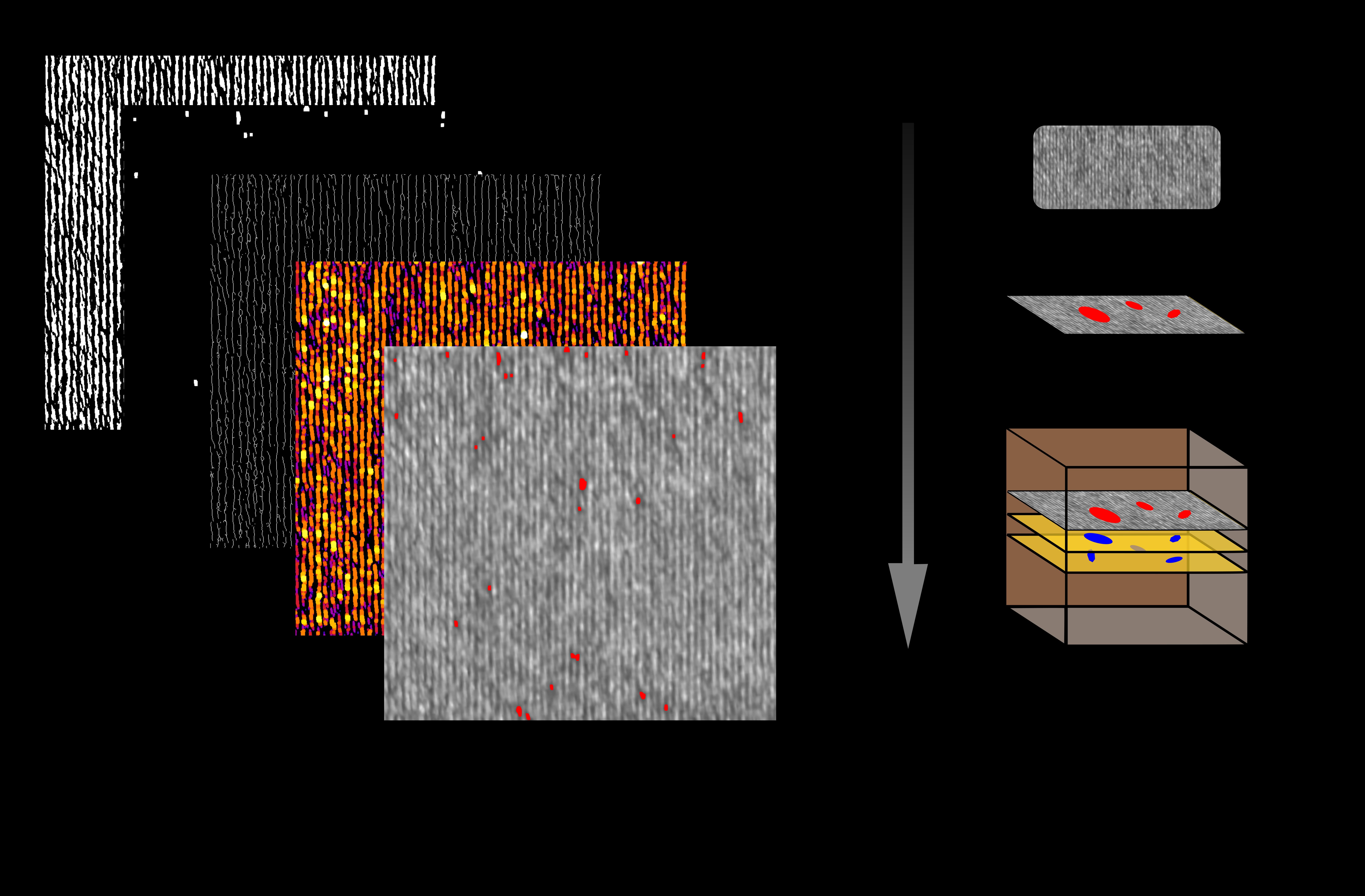
Additive Assurance reports that a top household-name aerospace original equipment manufacturer (OEM) is using its AMiRIS in-process quality assurance solution to move past monitoring and onward to “decision-ready evidence” that’s able to scale across a manufacturing ecosystem. By adopting AMiRIS and its machine-agnostic approach for in-situ QA, the OEM can improve confidence in metal AM. An OEM spokesperson said this approach allows for a more consistent method of in-process data collection and interpretation across various supply chain partners and powder bed fusion platforms. As build volumes get bigger, traditional inspection can become a bottleneck, especially when you’re dealing with complex geometries that are expensive and difficult to inspect once they’re off the printer. The OEM says that in-situ systems shouldn’t be sold as “defect detectors,” but instead as tools that are able to reliably find process anomalies that could lead to defects. According to Additive Assurance managing director Marten Jurg, aerospace teams, like this OEM, “need evidence that can be trusted, reviewed, and retained,” without turning every build into an investigation.”
“As an aerospace business, we don’t just qualify parts on one machine family. If we’re serious about scaling AM, we need an approach we can apply across our supply chain without rewriting the playbook every time we change platform. The attraction of AMiRIS is that it gives us a common analysis layer, rather than forcing us to live inside each OEM’s proprietary algorithms,” explained a senior engineer at the OEM.
“We’re careful with language. In most cases you’re not ‘detecting a defect’ in-situ, you’re detecting a process anomaly that may cause a defect. What matters is correlation, what does the thermal signal say, and what does the CT, cut-up, or other non-destructive evaluation (NDE) say? If you can’t tie those together, you’re not productionising anything.”
University of Waterloo Researchers 3D Printing Patient-Specific Contact Lenses
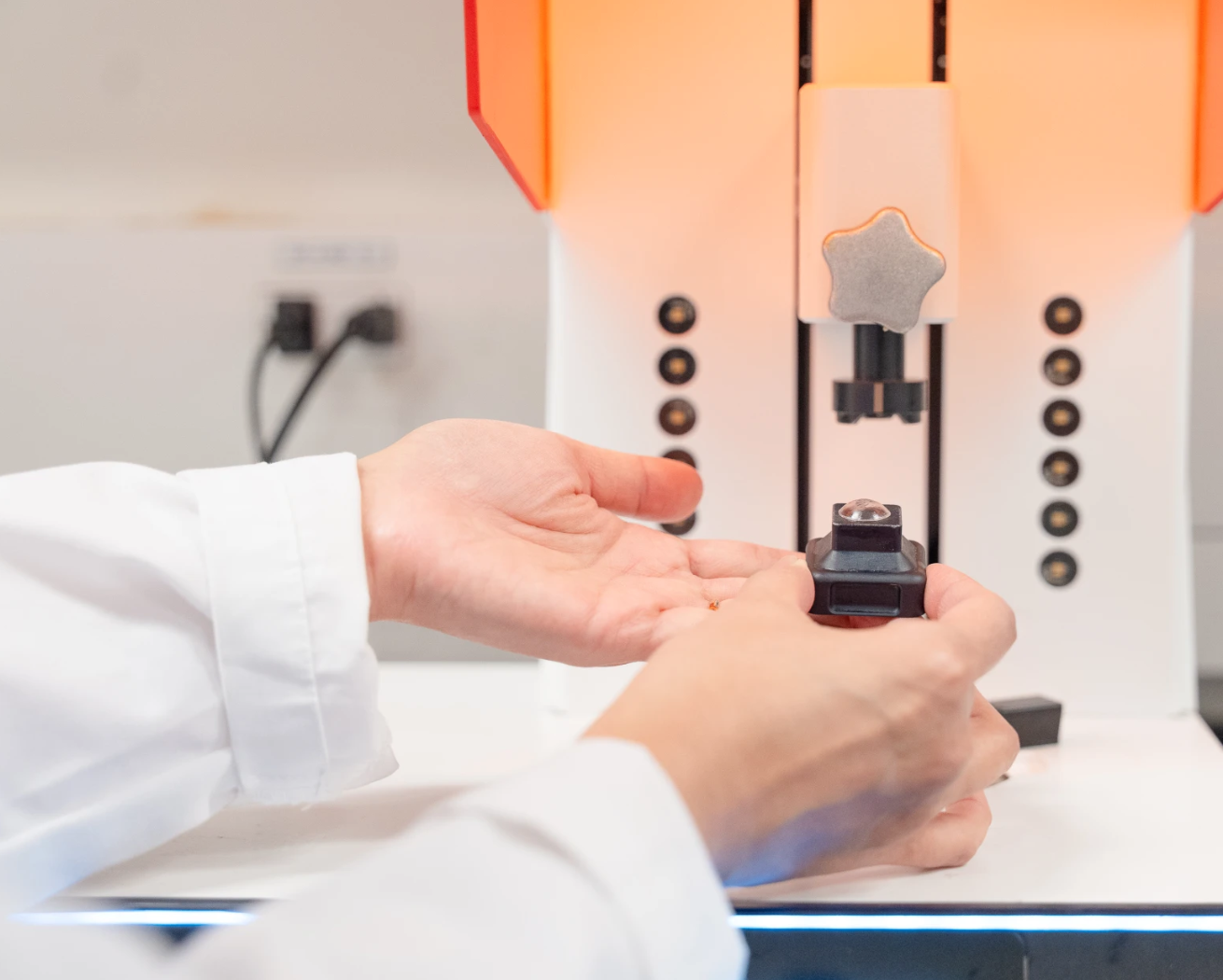
One of the custom 3D printed contact lenses on the printing platform at the University of Waterloo’s Tang Nanotechnology Lab. Image: Jay Mielke/University of Waterloo
Instead of being custom-made for each patient, most contact lenses are only manufactured in a limited range of shapes and sizes. This is especially difficult for patients with irregularly shaped corneas, who need rigid lenses rather than soft lenses. It can take weeks or even months to find the right fit and function. Researchers in the University of Waterloo‘s Department of Chemistry came up with a digital manufacturing platform that uses advanced 3D printing and new silicone materials to fabricate patient-specific lenses in as little as 20 minutes, meaning less trips to the optometrist. While conventional silicones aren’t always compatible with AM technology, the material is great for contact lenses because it’s biocompatible and highly oxygen permeable. So the team created a new hydrophilic silicone formulation specifically for 3D printing. They also developed an ultra-thin, non-contact coating process to smooth the surface of the 3D printed lenses without compromising their optical performance or changing their custom shape. After positive laboratory testing, the researchers are preparing for in vivo studies, and filed a provisional patent for their hydrophilic silicone.
“Our software designs a lens with an inner surface that precisely matches the patient’s cornea and an outer surface that provides the required vision correction. The novel hydrophilic silicone material we created, combined with our manufacturing process, produces smooth, transparent lenses that are comfortable to wear,” said Dr. Sayan Ganguly, Chemistry research associate at Waterloo.
The project recently won a gold medal at the 2026 Shanghai International Exhibition of Inventions. Additionally, the research team is working with the Centre for Vision and Eye Research (CEVR) to advance their solution towards commercialization.
ZHA & Nagami Launch Echo Chair, 3D Printed from Recycled Plastic

The Echo Chair comes in four color variations. Photography courtesy of Maria Docam Studio.
Architecture studio ZHA, formerly Zaha Hadid Architects, collaborated once again with Spanish brand Nagami to design the sculptural 3D printed Echo Chair. Nagami is a specialist in 3D printing recycled plastics, and that’s just what the Echo Chair is made of. Using parametric design software, ZHA and Nagami created a chair with an arching backrest that extends all the way to the ground in one plane, while the seat of the chair scoops up at each side. These elements may at first seem separate, but they were actually printed as one continuous piece. The chairs were printed out of polyethylene terephthalate glycol (PET) made from recycled industrial waste, like single-use medical plastics, and feature a ribbed surface, due to the 3D printed layers. There are four colorways for the chair, informed by the colors you’d find in a natural landscape: black, white, a white-to-translucent gradient pattern, and a pleasing caramel made from a bio-based cork composite. ZHA says that the Echo Chair “dissolves the distinction between structure, surface and ergonomics.”
ZHA project design director Sebastian Andia explained, “Our ambition was to transform an abundant, overlooked resource into an object people genuinely want to live with, demonstrating that sustainability and desirability can go hand in hand.
“The chair’s textured finish also evokes the richness of stone and mineral surfaces, helping recycled plastic feel at home alongside natural materials in contemporary interiors.”
The Echo Chair was on display until this past week at The Truman Brewery as part of the London Creates architecture and design trade show that’s curated by ZHA.