
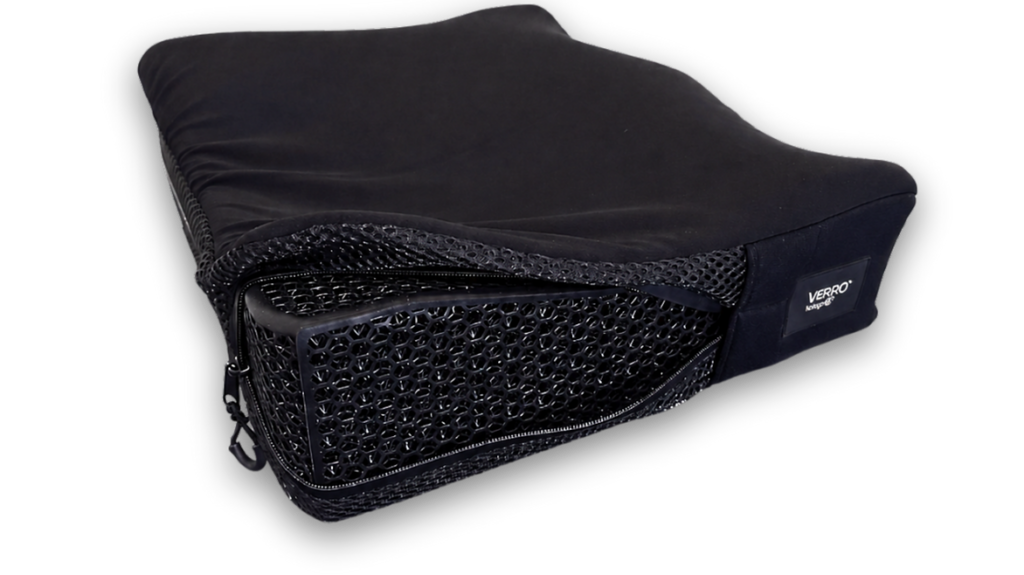
Kalogon has brought the Verro to market. This is a 3D printed wheelchair cushion, made with vat polymerization technology. Using a variable density lattice, it hopes to give wheelchair users more comfort. Kalogon makes regular wheelchair seats and seats for military aircraft in the US. The new cushion will come in two models: the Verro variable-density lattice, and the Verro dual-density foam, and both are Medicare coded (E2609). The company thinks that added benefits will come to those who have “windswept posture, pelvic obliquity, or asymmetry,” and that the cushion’s “precise, body-conforming fit” is key to its performance.
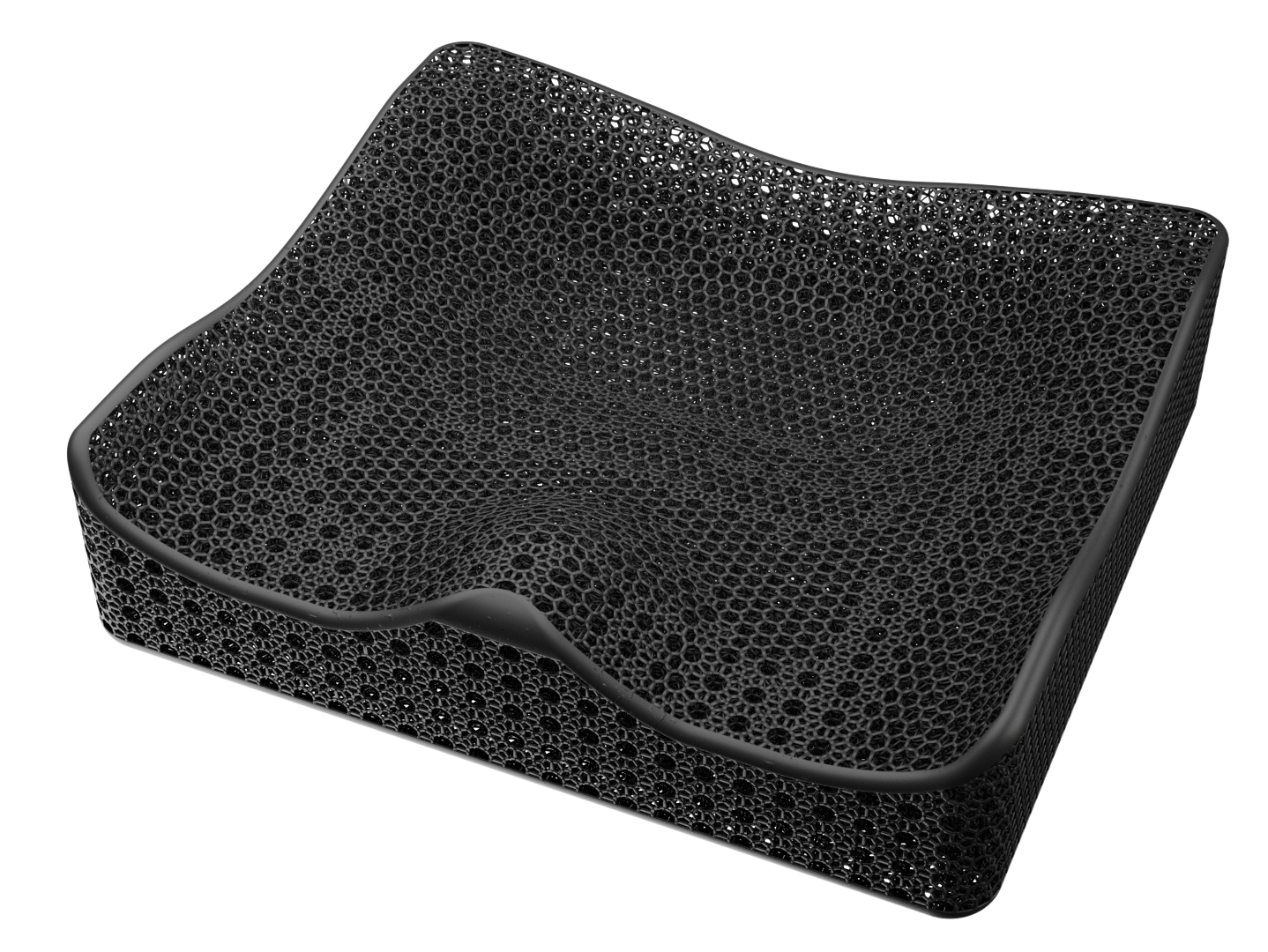
I love that this cushion is Medicare coded; that will greatly expand its utility and acceptance. Kalogon says that it is trying to patent its variable density lattice cushions. The company characterizes the Verro as a “3D-printed elastomer construction that varies firmness across the cushion surface: firmer where the body needs to be held in position, and softer where pressure needs to be diffused.” This to me is a bit weird, since I know that others have been working on these cushions for many years.
I wrote an article on variable density cushioning for wheelchairs and beyond in 2023. Glide has a variable density elastomeric 3D printed wheelchair cushion, the FX3D, on the market in the US, the FX3D. Etac has 3D printed variable density wheelchair cushions on the market already as well. Carbon is essentially applying variable density elastomeric lattices to everything, including wheelchair cushions. Scottish firm LCS brought a variable density wheelchair cushion to market in 2025. And there have been a bunch of good papers on how to do this, as of late. At the same time, this technology is becoming commonplace in applications like sockets. So I would find it very unjust and silly if this company was given a broad patent for using lattices for cushions. In 2021, I wrote an article warning people that companies will try to patent the essential building blocks of a 3D printed future. If you have something truly unique or a unique geometry, great. But, it would be asinine to let people patent essential geometry we all use. I can patent a peculiar hinge but I should not be able to patent the regular hinge.
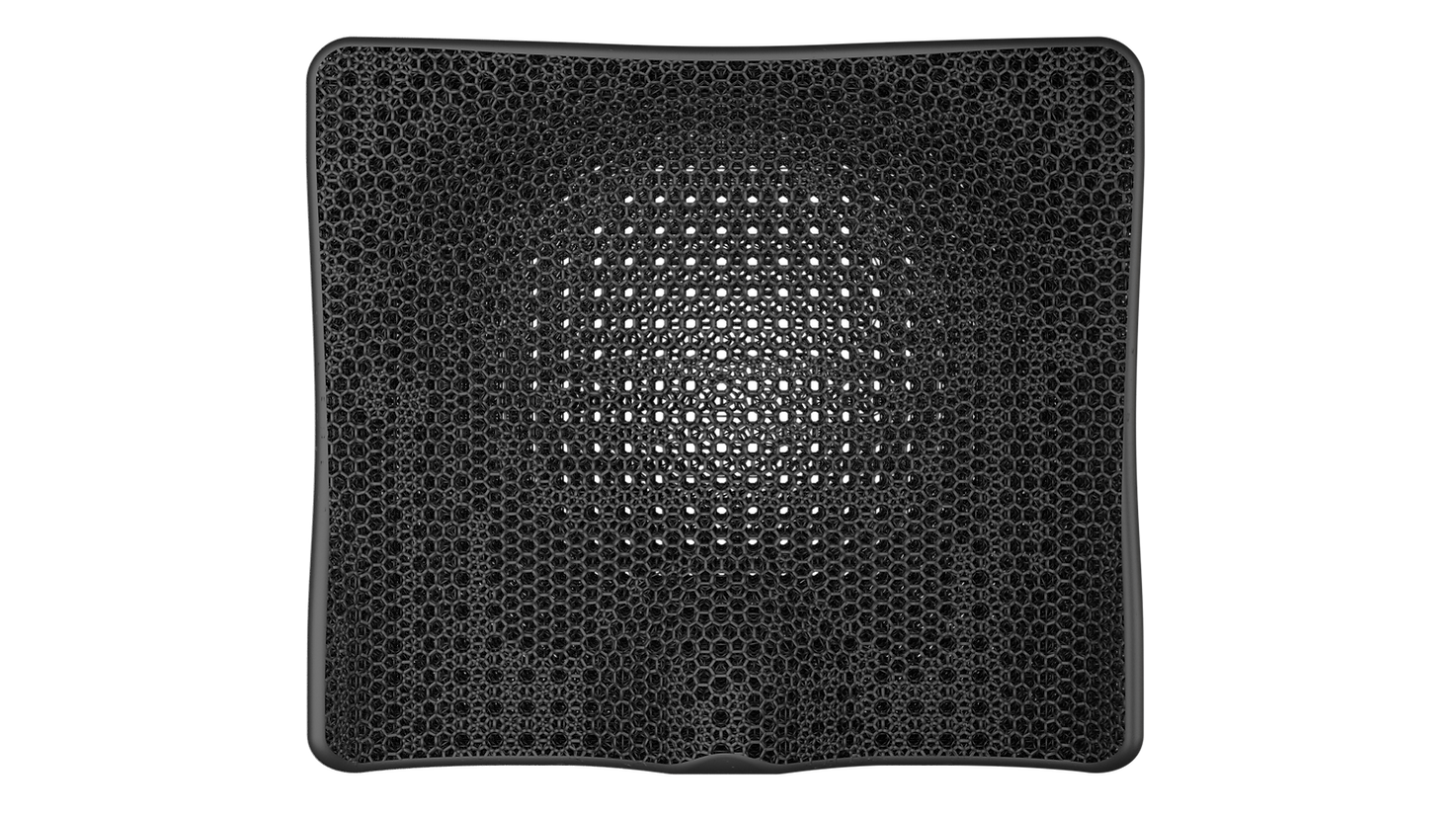
Let’s hope that the patent is a narrow one. Just like all the other cushions on the market today, the Verro varies its firmness depending on if pressure needs to be offloaded or supported. The cushion can be custom-made just like the LCS, Etac, and Glide cushions. The company also has a foam-based cushion with a topper that’s a dual density cushion.
Kalogon CEO Tim Balz said,
“We kept hearing from clinicians that their most complex patients were falling through the cracks, so we developed a technology that lets us 3D print the cushion with precise, localized control over where the body gets support and where it gets relief. With our variable-density lattice, we can create subtle variations across the surface and sides of the cushion that simply aren’t possible with traditional materials. The customization options are hyper-personalized to provide the best comfort, support and fit for every customer.”
According to Kalogon advisor Kelly Waugh,
“Every client is different, and seating specialists need options that reflect that. Verro gives us more ways to match the right solution to each unique person based on their postural support needs, personal preferences and desire for in-field modification. That flexibility will allow Kalogon to serve a much wider population of people with complex seating needs than before.”
The company again says that it uses a “lightweight elastomer material, in a proprietary variable-density lattice that varies firmness across the surface.” Kalogon says the lightweight cushion, which has an outer cover, can be cleaned in the dishwasher, which is important. You can configure the cushion online through a configurator, which takes a 3D scan from a mold. You can also enter in measurements without using the scan. The cushion will be delivered in two weeks.
So I like this product. We know that variable density cushions are more comfortable and breathable, and that users value them. The reason we know this is the extensive amount of research that has gone into 3D printed elastomeric variable density cushions. This research has been stoked by many customers of 3D printed variable density lattice cushions over many years. But I really worry that the company could be given far too broad a patent, which would stifle innovation. Given how late Kalogon is to the market, how closely their cushion resembles many in existence today and mimics 3D printed cushions currently used by patients, and how it relies on very similar geometry, it would be feel very unjust for them to get a broad patent here. Let’s hope that they are doing something innovative after all, and will get a narrow patent on some real improvement.