
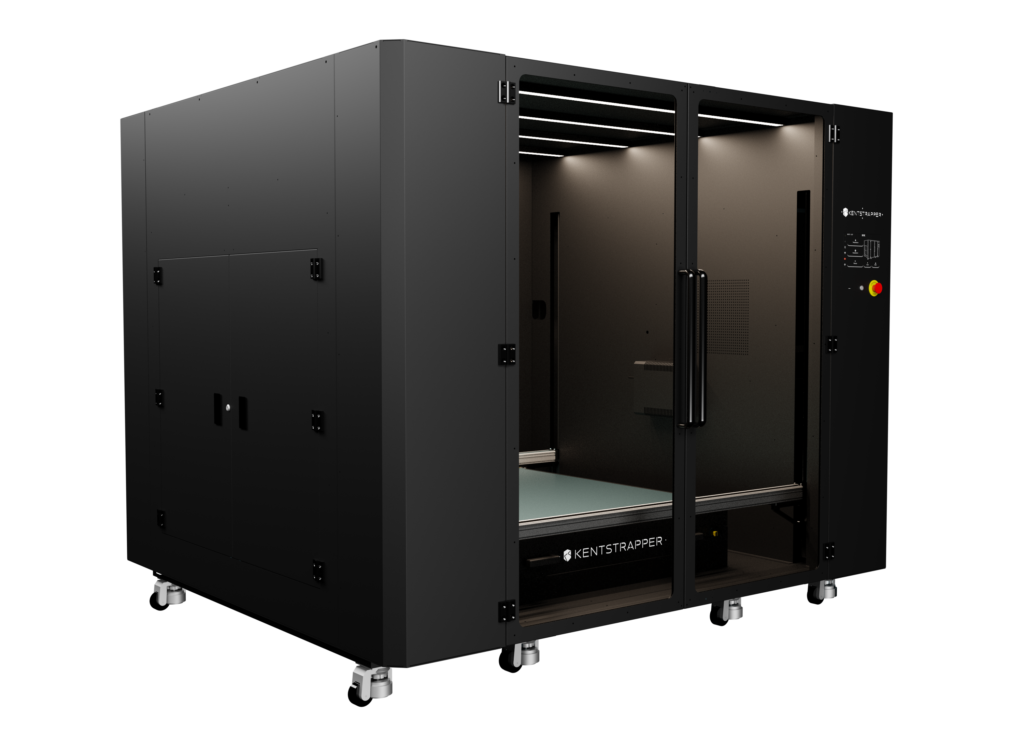
Kentstrapper makes Material Extrusion systems in Italy. Now the firm has released the 1,000 × 1,000 × 1,000 mm build volume Mille system. The one-cubic-meter build volume is actively heated by six independent pads across the build floor. You can slide out the print bed to remove parts. The build chamber temperature can reach 60°C while the bed can be heated to 120°C. The Magnetic Extrusion System means that you can swap toolheads quickly without any tools at all. Layer height is 0.1 to 1.2 mm, and nozzle sizes are from 0.4 to 1.4 mm. The printer has two Mantis extruders, and if one is blocked, the other can take over. The printer has been tested with PLA, PETG, ASA, ASA-CF, ABS, TPU, PA GF, PA CF, and PPS CF materials. The company sure has come a long way since we covered their plywood Galileo system in 2014.
The printer has a remote monitoring tool and protected remote access. Rather uniquely, the printer has a Telegram bot which sends you notifications and updates. There’s also an AI assistant called Clara. This bot has been trained on maintenance and support tickets handled by the firm. You can query it to solve issues, or it can notify you if it spots something unusual. The firmware is Klipper, slicing is via OrcaSlicer, and the firm is targeting tooling, automotive, defense, and marine with the Mille printer.
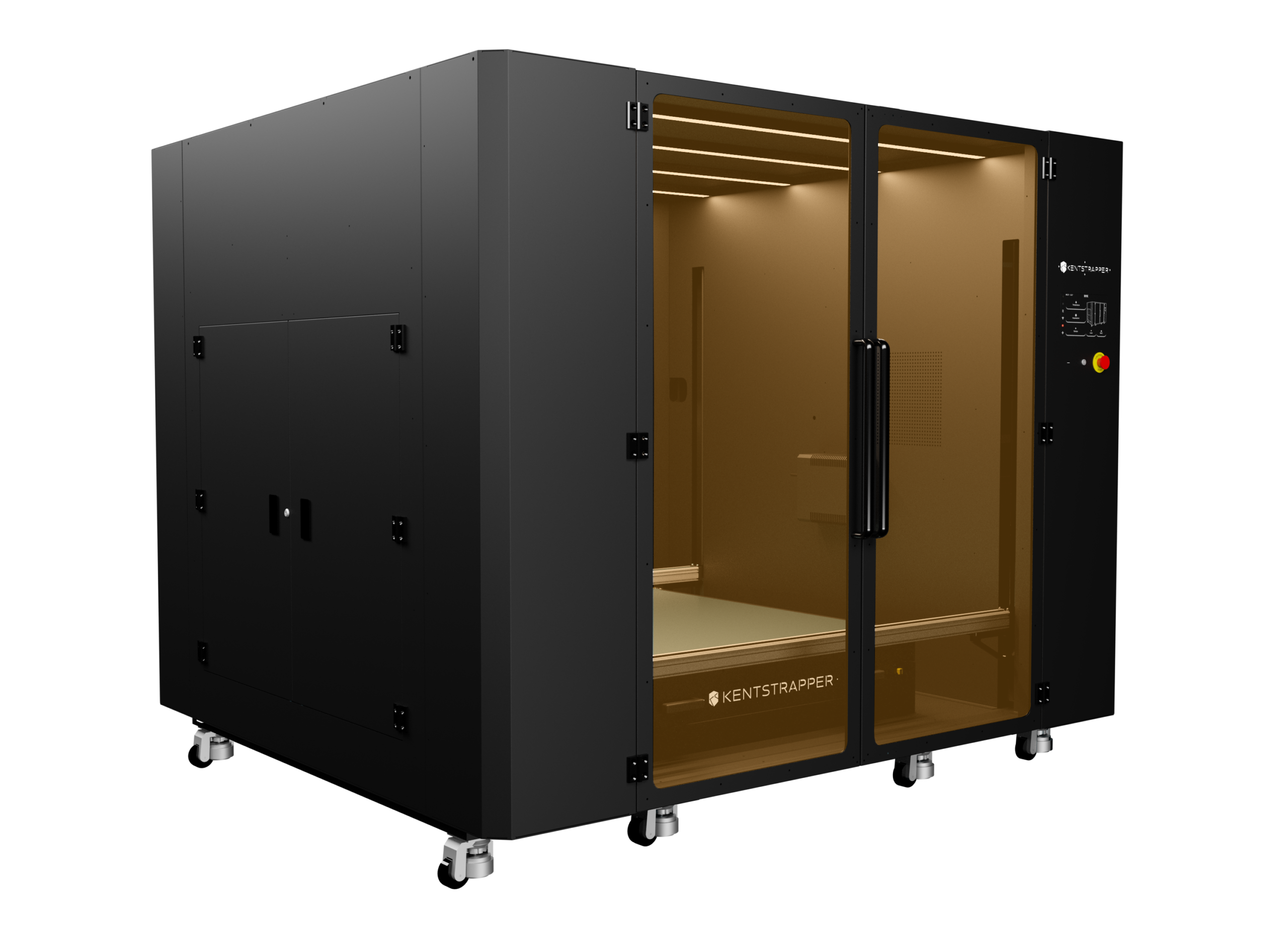
The price for the made-in-Italy machine is a very reasonable-sounding €40,000 (ex-VAT). In business for over 10 years, the company has sold over 2,500 systems. Kentstrapper is known as a good-value machine builder. The Florence-based firm makes five distinct Material Extrusion systems. One is meant for tall objects, and there’s also a 700×500×500 mm system; everything seems well made. What’s more, the features that these systems have are all very useful ones. It’s just the kind of no-nonsense stuff that you’d like to have if you just want to print.
Good monitoring and easy model extraction are important for very large parts. The automatic nozzle changeover feature seems like a great idea. Multi-day or overnight prints could really benefit if the printer could resolve a clog while you sleep. At the same time, a lot of desktop systems are great until you have to do maintenance. Nozzle exchanges or toolhead changes on a Bambu, for example, are often needlessly complicated and time-intensive. By making it a tool-less, super-quick process, this printer respects the operator’s time. If you have a farm with 500 P2Ss, you can just switch to another one and repair it later at your leisure. But, with bigger systems you won’t have so many. And even if you had a few of them, typically you’d have them loaded up with different materials. I’m always going to be skeptical of AI tools, but the things they’re trying to do here seem useful.
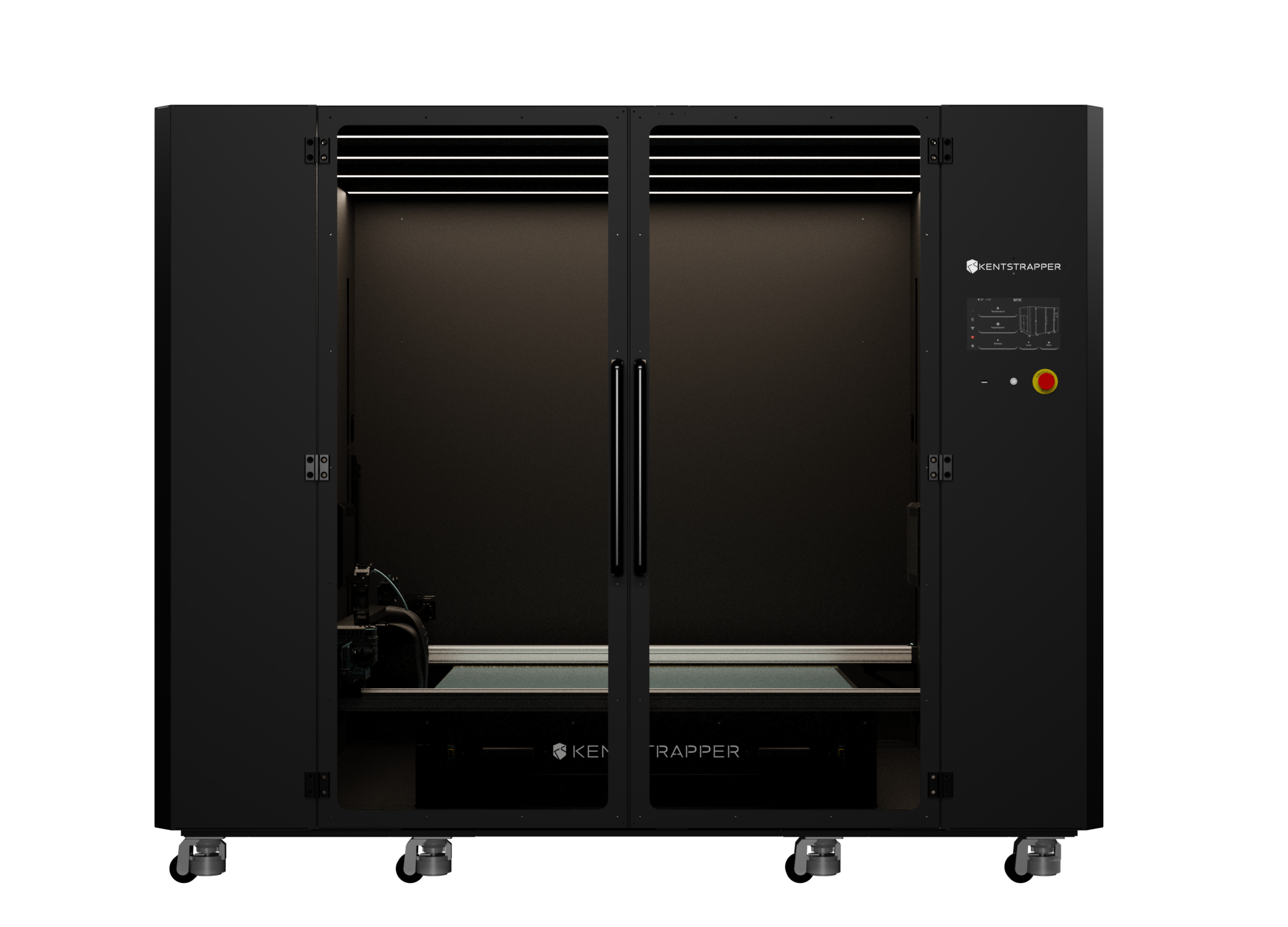
One major use case for this printer and much larger units, such as the Caracol robotic arm polymer printers, is marine. Marine furniture is often low-volume, with clients doing a lot of custom design or being able to choose from different layouts. Things like cabinets, tables, recesses, storage units, and more can be printed and upholstered, doing duty in the boats. All sorts of housing products for electronics, storage, and more can be printed too. In automotive, rail, and defense, large tooling is often very expensive when using CNC and other processes. Companies have used 3D printers sold for hundreds of thousands of dollars to make these, often gluing parts together. For a lot of these applications, you can now make the entire tool on this affordable printer in one go. Some of these tools will typically cost more than the printer. For the hand lay-up and carbon fiber industry, large tools are also often used, and this machine may be useful there too.
I really hope that you can physically unplug all of that AI and networking stuff because that will help the adoption of this system in aerospace and defense. In medium-format, we’re seeing real competition in pricing. Slow, inaccurate systems are still being sold on the low end, and big, expensive tools are also being sold. For a lot of things, the really expensive stuff is what you need. But, there is a new segment emerging. This segment avoids the long post-processing and machining that you would need to do on parts made by much larger printers. For some tools, these systems can make them straight out of the machine. And the new systems tend to be faster than cheap laggards on the low end. This is leading to a lot of competition around the 1 cubic meter build volume level.
We’re now, as a market, delivering a lot of value there. For large tools, ROI can be realized in a number of months. The machine can simply chug along, delivering on value and parts while you do something else. With higher speeds, lower machine costs, and smoother parts, these tooling printers are starting to permeate more industrial and manufacturing sites. They’re an excellent choice, and we should see growth from this segment and companies such as Kentstrapper.