
We’re starting this 4th of July 3D Printing News Briefs with some AMUG news, and then moving on to business with DSH Technologies and materials with Markforged. We’ll end with some interesting 6G research and 3D printed coral reefs in India.
AMUG Announces Board of Directors for 2026-2027 Term
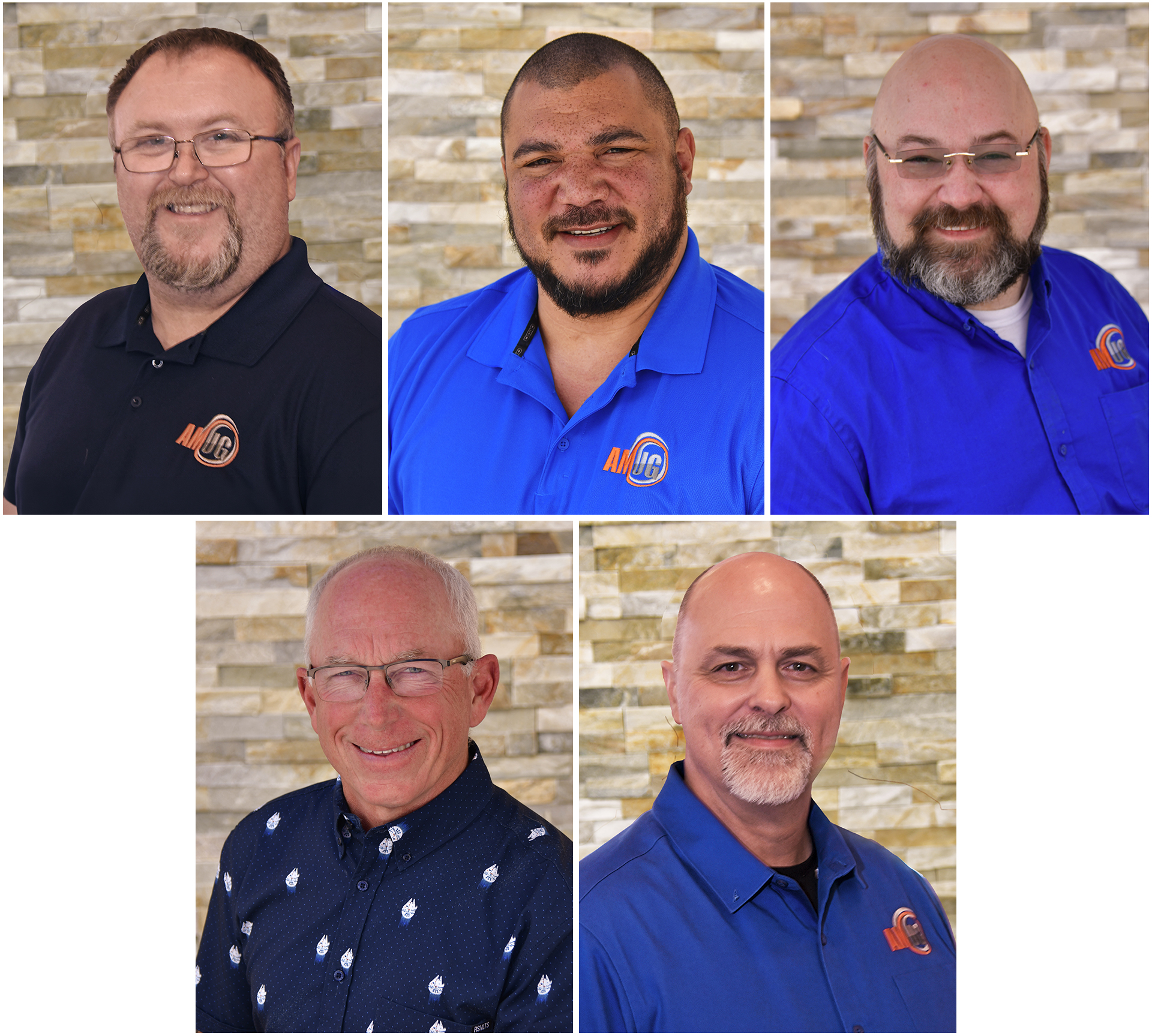
AMUG’s newly elected and appointed board members: Top row (from left)—Dallas Martin, Daniel Landgraf, and Daniel Braley; bottom row (from left)—David Leigh and Bruce LeMaster.
The Additive Manufacturing Users Group (AMUG) announced the results of the recent board elections and appointments for the 2026-2027 term. After three years of service, current AMUG President Shannon VanDeren and Treasurer Robin Van Bragt will assume ex officio roles on the board, as Immediate Past President and Immediate Past Treasurer, respectively. William “Dallas” Martin was elected President, Daniel Landgraf was elected Vice President, and Daniel Braley was elected Director of Membership, while the board appointed David Leigh as Treasurer and Bruce LeMaster as Director at Large. All five have received the AMUG Distinguished INnovator Operator (DINO) Award, and their multi-year terms began this week. Martin is a Senior Engineer in AM at Toyota, while Landgraf is Vice President Global Sales, Marketing & Business Development at 3D Spark. Braley is Senior Manager – Engineering & Depot Solutions for V2X Modernization & Sustainment, Leigh is Director of the Center for Additive Manufacturing & Design Innovation at The University of Texas at Austin, and LeMaster operates as an independent contractor.
The other AMUG Board Members for 2026-2027 are:
- Secretary: Heather Natal, GoEngineer
- Director of Education & Conference: Alex Roschli, Oak Ridge National Laboratory
- Director of Marketing & Events: Kim Killoran, Stratasys
- Director of Sponsors & Exhibitors: Thomas Murphy, New Jersey Innovation Institute
DSH Technologies Transforming Powder Metallurgy with Membership Program

DSH Technologies, the international authority on debinding and sintering services, is increasing its commitment to powder metallurgy production with its new membership program, DSH Advantage. Meant for MIM and sinter-based AM shops, OEM captive parts makers, and industrial manufacturers, the DSH Advantage program offers proactive, structured guidance, troubleshooting help, and access to laboratory services to help improve yield and eliminate production downtime. Participants will enroll in a monthly program led by the company’s Chief Metallurgist, Bryan Sherman, to get access to expert support and process control for metal parts manufacturing. DSH Advantage is technology-agnostic, designed for quick ramp-up, and should integrate right into any metals operation. The company says the program results in “higher first-pass yields and reduce rework” for better cost savings in production.
“DSH Advantage was built to solve the real, day-to-day challenges that MIM and sinter-based additive manufacturers face when moving from prototypes to production. By marrying deep metallurgical expertise with powerful instrumentation and process, we’re helping customers make better parts faster, and protect their margins while doing it,” said DSH Technologies President Stefan Joens.
Markforged Brings Functional Color & Industrial Strength to Factory Floor
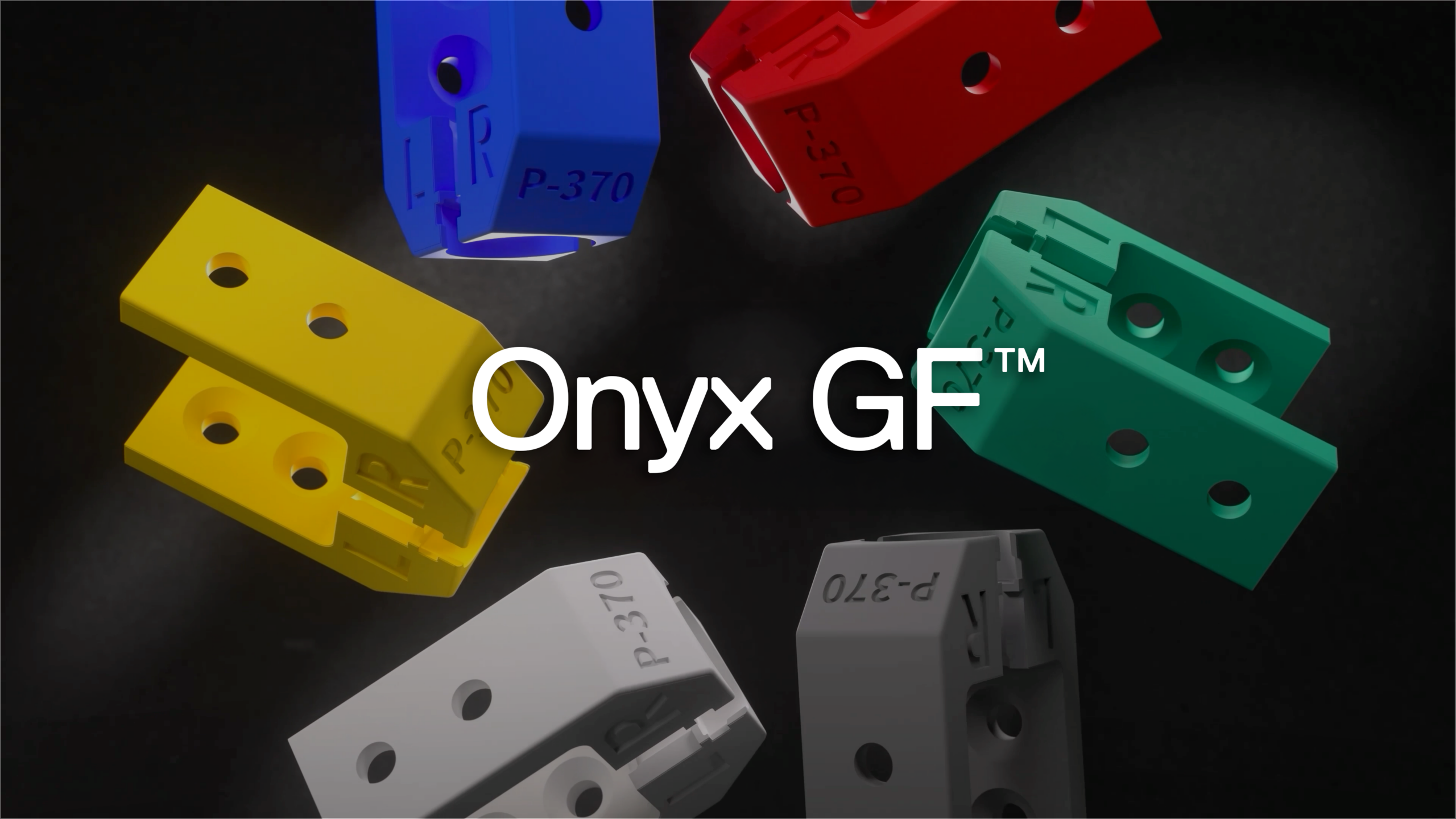
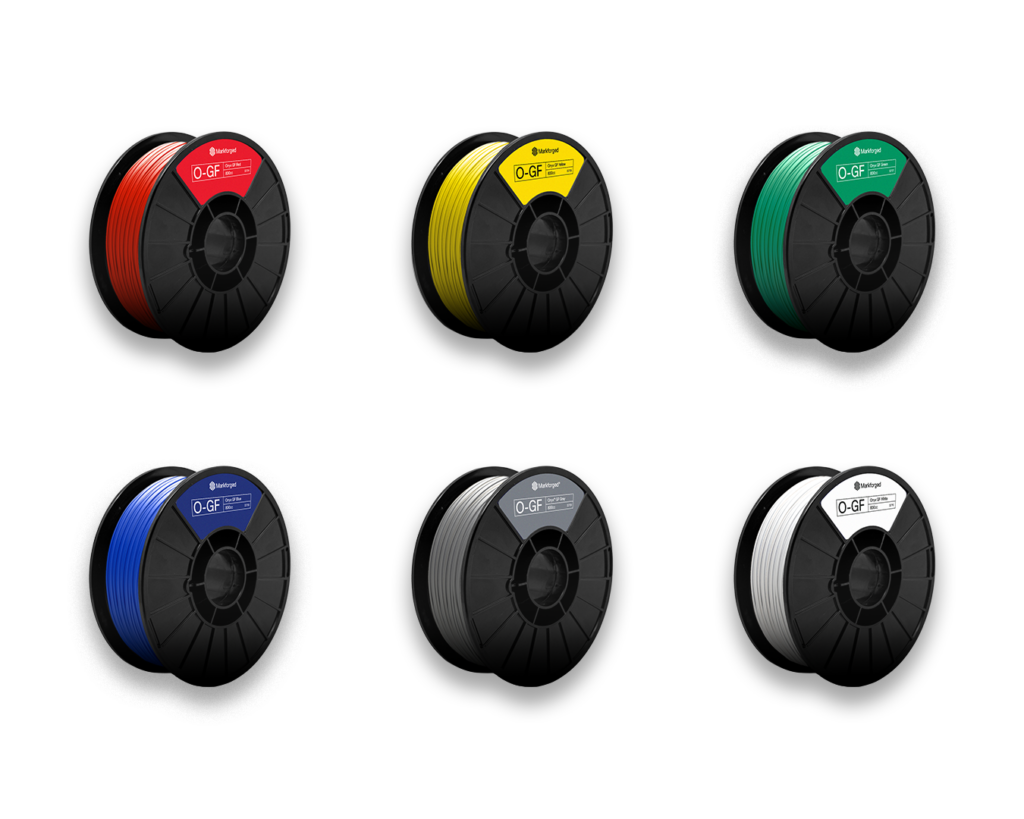
Markforged recently announced the release of Onyx GF for its FX-series industrial printing platforms. This is a chopped glass fiber-filled nylon material that pairs the trusted stiffness and strength of the Onyx material family with functional color for manufacturing environments. Color is one of the fastest, most reliable visual signals in fast-paced manufacturing facilities for communicating critical operational information, like part classification and hazard warnings. With Onyx GF, which is available in six highly visible colors, operators can deploy color-coded tooling, safety indicators, and error-proofing fixtures on the factory floor. The color is embedded within the material formulation, so you don’t need to do any secondary painting, label applications, or related post-processing. Additionally, the excellent tensile strength, surface finish, stiffness, print reliability, and dimensional accuracy from the Onyx family have been carried over to Onyx GF. It’s naturally non-conductive, which makes it great for applications that need strong electrical isolation, and can be reinforced with Continuous Carbon Fiber using the CFR process for advanced structural jobs.
“Bringing color to the factory floor is about far more than aesthetics; it is about unlocking a new level of operational velocity, safety, and error-proofing for our customers. Until now, manufacturers often had to choose between the industrial-grade performance of materials like Onyx or the use of brittle, weaker materials like ABS or PLA. With Onyx GF, we are removing that compromise entirely. We are delivering the same trusted mechanical foundation our users rely on every day, but with the immediate communication benefits that functional color provides. This allows teams to scale visual management seamlessly across their entire enterprise,” said Jon Bond, General Manager of FFF at Markforged.
Researchers Make 3D Printed Metacrystal Panels to Guide Wireless Signals
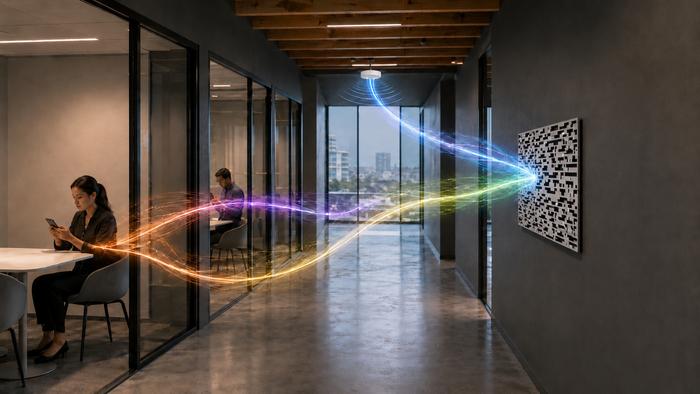
A passive 3D printed metacrystal panel redirects radio waves around obstacles and toward users, offering a low-cost way to improve indoor/outdoor wireless coverage without adding base stations, wiring or powered electronics. Illustration: Aalto University / Mahdi Asgari
Normally when you have a weak Wi-Fi or mobile signal in places like basements or large buildings, people just throw more electronics at the problem. But as we get closer to a 6G mobile network, this can be costly and unsustainable. The higher-frequency channels of 6G should add much more data bandwidth than 5G, but they’re blocked more easily by obstacles like walls. Researchers at Aalto University have come up with a fairly low-tech solution: passive, 3D printed smart panels of metacrystals that can guide wireless signals and radio waves around these barriers without using a power supply, electronics, or active tuning. These panels have several potential advantages: they could handle multiple incoming waves at the same time, operate simultaneously over different frequency bands, be installed on furniture, ceilings, or walls, and even fully absorb unwanted signals. Most reconfigurable intelligent surfaces need complicated control circuits and tuneable elements, but 3D printing metacrystals enables the fabrication of custom panels for specific environments.
“When a room is too dark, you can bring in more lamps – or use simple mirrors to guide the already available light. This is what these metacrystals do, but with radio waves. Unlike previously proposed single-layer intelligent surfaces, these volumetric metacrystals can be designed to control multiple incoming signals or frequency bands independently — a key requirement for realistic wireless communication,” explained doctoral researcher Mahdi Asgari.
You can learn more about their work in the published paper.
India’s “First” 3D Printed Artificial Coral Reef Modules Deployed
In the coastal waters off Ramanathapuram, an ambitious marine habitat restoration initiative is underway. Last month, what’s reported to be the first 3D printed artificial reef modules in India were sunk in the Gulf of Mannar. It was the last leg of a project, carried out over 213 artificial reef sites in Tamil Nadu, that was funded by both the state government and the Visakhapatnam Regional Centre of the Indian Council of Agricultural Research’s (ICAR) Central Marine Fisheries Research Institute. The concrete 3D printed modules each weigh about 1 tonne, and were created by the Visakhapatnam Regional Centre and Indian automation firm Tvasta. They have multiple folds, crevices, and attachment surfaces to help enhance biodiversity. While they were fabricated with no iron reinforcement, the modules do feature material innovations meant to increase porosity and create substrates specifically for marine organisms. Traditional fishing communities in nearby districts cooperated with the implementation of the program, which will help scientists evaluate the ecological performance and durability of the modules.
“The objective so far has been fish habitat restoration and strengthening the resilience of coastal communities,” explained Dr Joe K Kizhakudan, who leads the Visakhapatnam Regional Centre. “These new-generation modules provide immense possibilities because they allow greater structural complexity, higher surface area, and species-specific habitat design.”