
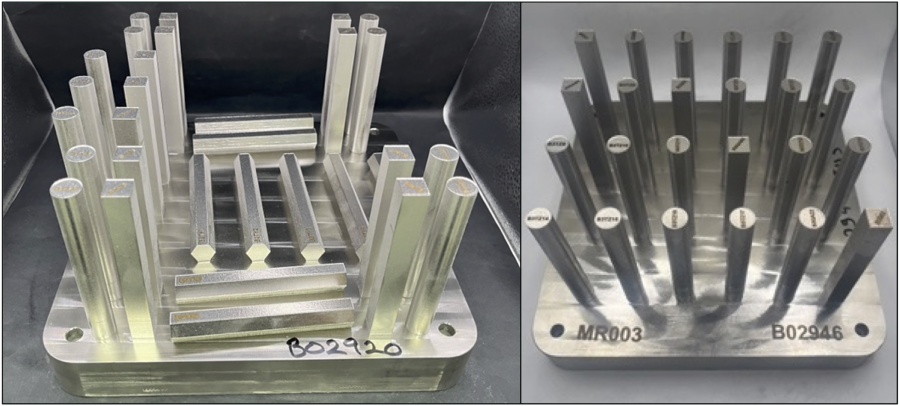
The energy industry doesn’t have much room for failure. Components used in power generation often operate under extreme temperatures and pressures, sometimes for decades at a time. That’s one reason why qualification has become one of the most important challenges for the additive manufacturing (AM) industry today.
The Electric Power Research Institute (EPRI), working closely with America Makes and industry partners, has spent years working on that problem, helping bridge the gap between AM innovation and real-world deployment. The organization recently earned Best Paper honors from the American Society of Mechanical Engineers (ASME) Manufacturing, Materials, and Metallurgy Committee for its paper, “Learnings in the Qualification of ABD®900AM for Turbine, Aerospace, and Energy Applications.”
At the center of the research is ABD®-900AM, a nickel-based superalloy developed by Alloyed specifically for AM. The paper focuses on lessons learned while qualifying the material for turbine, aerospace, and energy applications. Unlike many qualification efforts, the project involved multiple organizations, manufacturing sites, and AM systems, helping establish a broader foundation for future deployment.
What’s more, that recognition points to a growing focus on qualification, an area many in the industry see as one of the biggest barriers to wider adoption of additive manufacturing in critical applications.

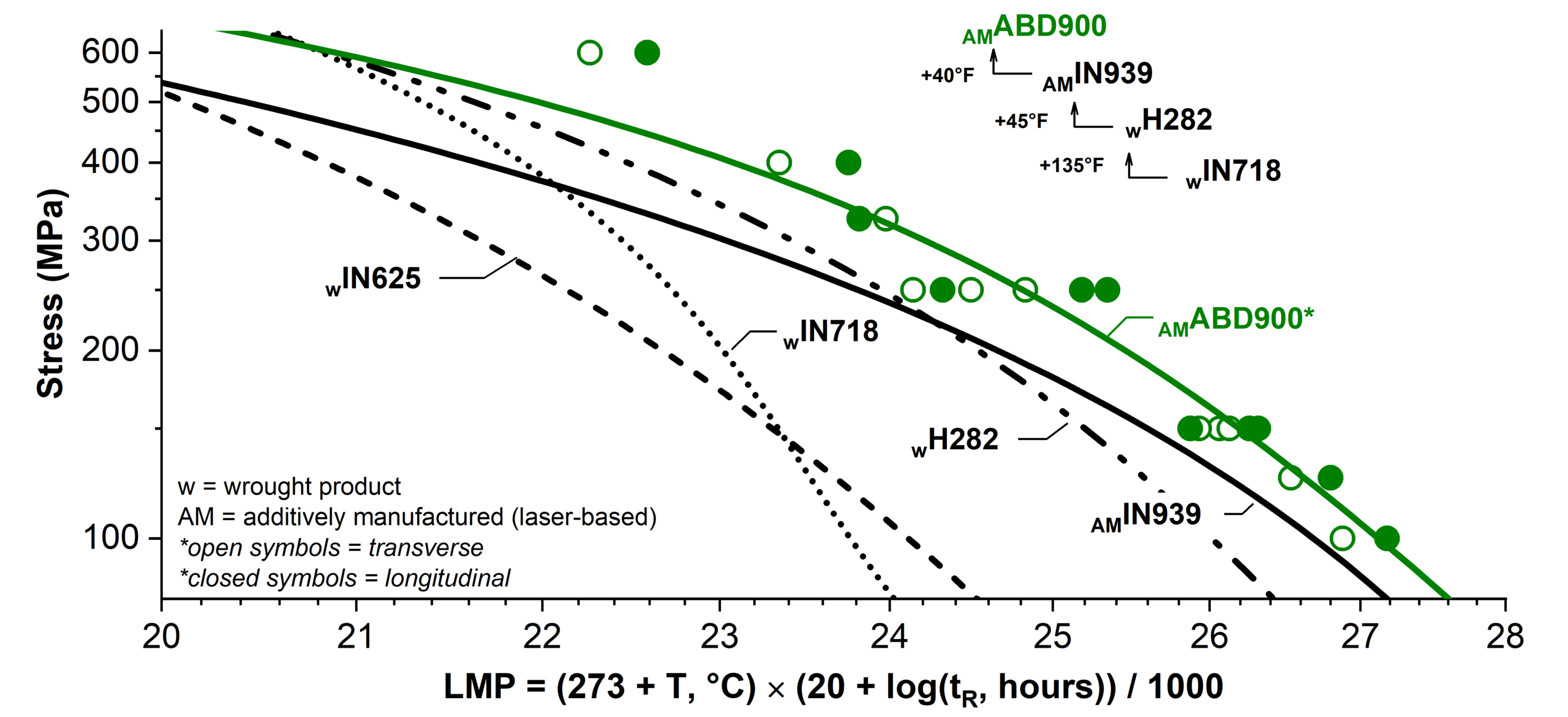
Plot showing the improved temperature capability of superalloy ABD®900-AM compared to traditional materials such as alloy 718. Image courtesy of America Makes/EPRI.
Moving Beyond Demonstration Parts
The energy industry has long been interested in AM’s potential to shorten supply chains, reduce lead times, and enable the production of complex components that can be difficult to manufacture conventionally. However, printing a part is only one step in the process.
For critical applications, it isn’t enough to just print a part. Companies also need to prove that they will perform as expected every time. That means a lot of testing, data collection, and validation before a component can be put into service.
EPRI’s work has also been built around collaboration. Working with America Makes and industry partners, the organization has sought ways to apply aerospace and defense qualification practices to energy, while sharing what it has learned with other sectors. And the result is a more coordinated approach to qualification, with companies and organizations building on each other’s work instead of starting from scratch.
Building the Foundation for Energy Innovation
Qualification work may not attract the same attention as a new printer or material, but it often determines whether a technology ever reaches real-world use. That’s one reason EPRI launched its Advanced Manufacturing Methods and Materials (AM3) initiative in 2022. The program brings together utilities, manufacturers, national laboratories, and other partners to share data, develop standards, and help move advanced manufacturing technologies closer to deployment.
The work is particularly important for emerging energy technologies, including advanced nuclear reactors and modernized grid infrastructure, which may rely on new materials and manufacturing methods in the years ahead.

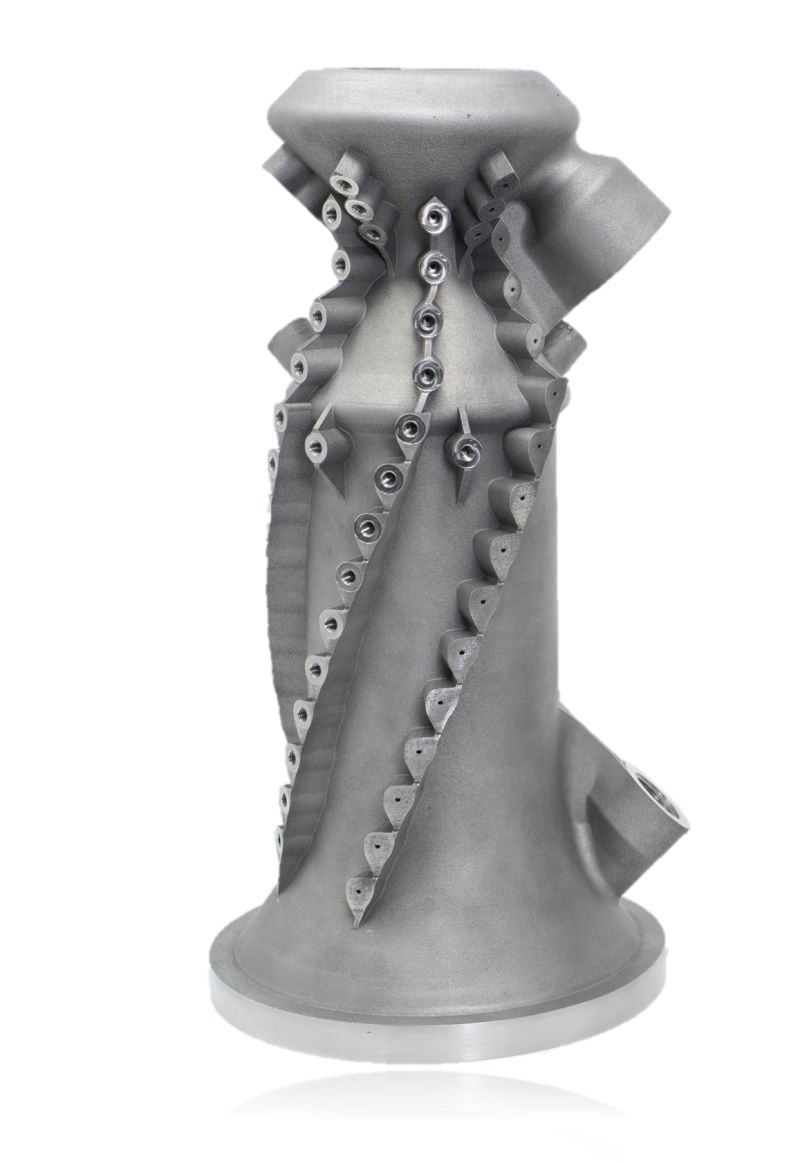
Alloyed ABD-900AM used to make a combustion chamber. Image courtesy of Alloyed.
But EPRI isn’t only focused on qualification. The organization has also been studying how AM could be used to produce larger parts for the energy industry. To that end, earlier this year, EPRI highlighted its work on large-area directed energy deposition (DED), a process that could help manufacturers produce large metal components that are often difficult to obtain through traditional supply chains. In some cases, those efforts focus on replacement parts for aging infrastructure where original suppliers may no longer exist or lead times have become impractical.
The project is one example of how EPRI is approaching advanced manufacturing. Instead of looking at materials, manufacturing processes, and qualification separately, the organization has been working across all three areas at the same time.
Timing is also important. Utilities and manufacturers are under pressure to secure critical components more quickly while reducing their dependence on long, sometimes unpredictable supply chains.
The Push Toward Deployment
The AM industry has reached a point where technical capability alone is no longer enough. In fact, printing the part is only half the battle. For industries like energy, aerospace, and defense, the real test is proving that a part will perform reliably once it’s in service. That’s why qualification has become such an important part of the AM conversation.
For the energy industry, that work could have implications well beyond AM. Faster access to critical parts, stronger supply chains, and new manufacturing options are all becoming super important as utilities prepare for the next generation of energy infrastructure.
Through its work with organizations such as America Makes, EPRI is helping build the framework that could allow additive manufacturing to play a much larger role in the next generation of energy infrastructure.