
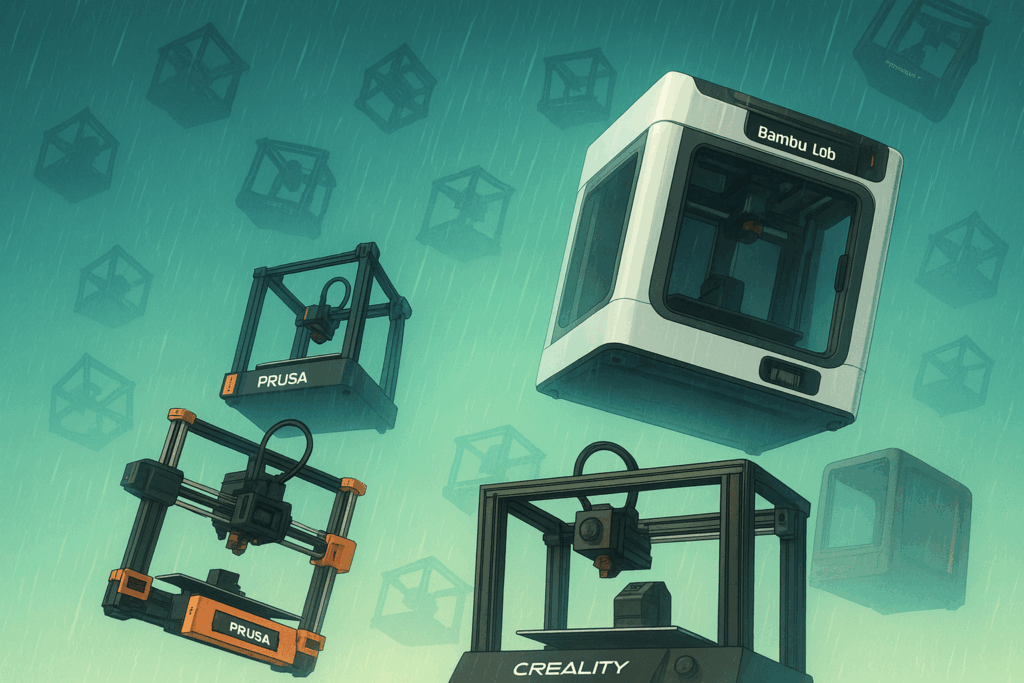
China’s consumer 3D printer industry seems to be reaching a new level of global dominance.
According to Chinese state media outlet China Global Television Network (CGTN), China exported 2.46 million 3D printers during the first four months of 2026, a 44.7% increase from the same period last year. The report also cited industry data indicating that Chinese manufacturers now account for roughly 90% of the global consumer-grade 3D printer market.
While that number may seem incredibly high, other data points to a similar trend. Market intelligence firm CONTEXT reported that Chinese manufacturers accounted for more than 90% of global entry-level 3D printer shipments in 2025. In fact, in some quarters, their share climbed to 95%. The firm recently compared China’s rise in consumer 3D printing to Japan’s dominance of consumer electronics in the 1980s. And it is undeniable that companies like Bambu Lab, Creality, Elegoo, Anycubic, Flashforge, and QIDI are driving much of the industry’s growth.
If the estimate is accurate, it stresses just how dramatically the desktop 3D printing industry has changed over the past decade. What was once a market with major players in the United States and Europe is now increasingly driven by Chinese manufacturers, particularly in the consumer segment.
But this trend has been building for years. Many of the world’s most popular desktop printers are now designed and manufactured in China, especially in Shenzhen, which has emerged as the industry’s main hub. The city gives these companies direct access to a dense network of suppliers, electronics manufacturers, logistics providers, and engineering talent, allowing them to develop and launch products at a much faster pace, one that the competition in other regions cannot match. In fact, the latest export figures suggest that the demand is still strong despite the global economic uncertainty and ongoing trade tensions in several markets.

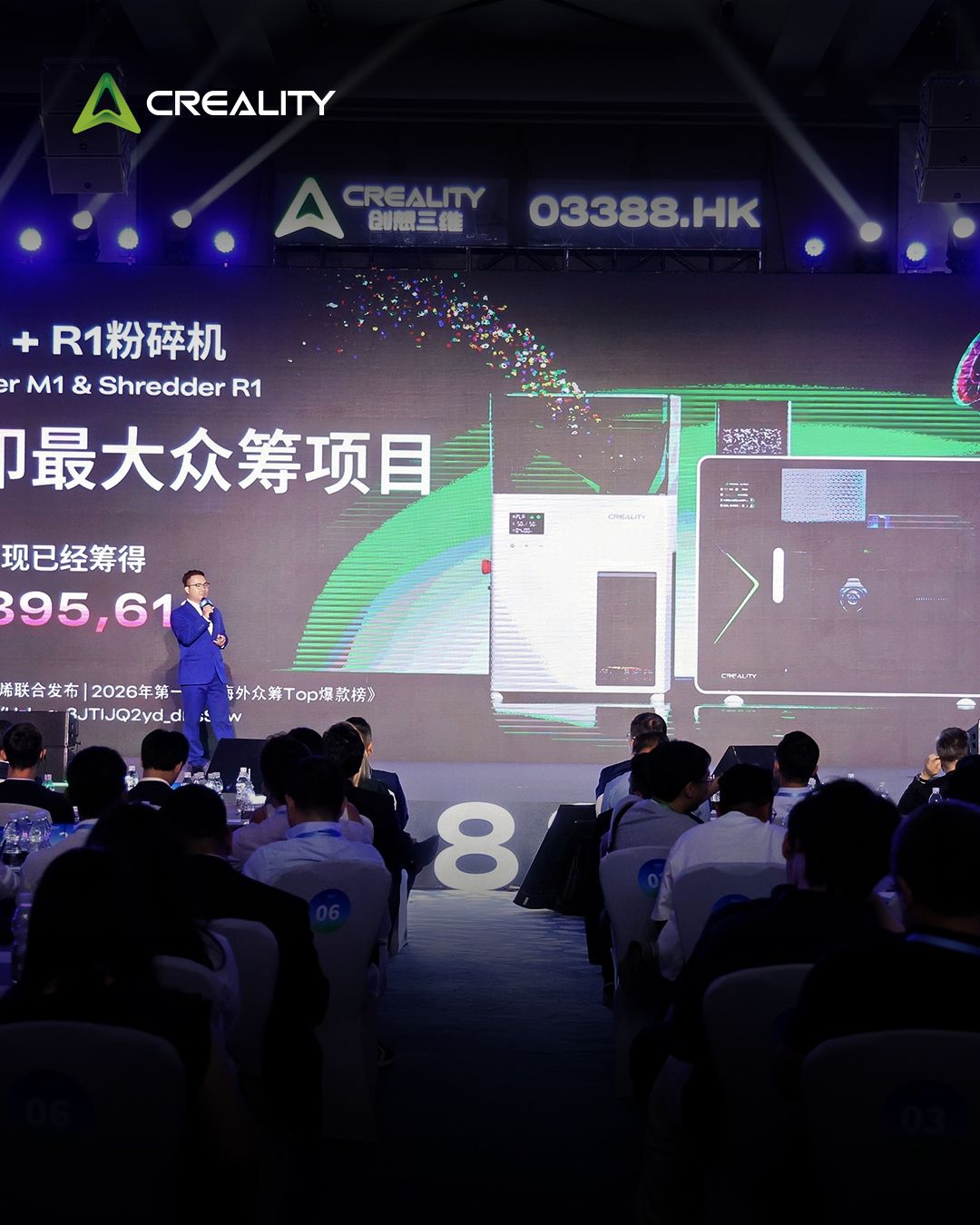
Creality’s IPO. Image courtesy of Creality via LinkedIn.
One company attracting particular attention is Creality, which just a week ago went public on the Hong Kong Stock Exchange, a move that gave investors a chance to buy shares in one of the sector’s best-known brands. According to IPO documents, Creality sells products in more than 140 countries and generates roughly 90% of its revenue outside Asia. The filings also show gross profit reached nearly RMB 708 million ($99 million) in 2024. The company is also one of the largest players in the market, with a global market share of nearly 28% between 2020 and 2024.
Bambu Lab is another company that has benefited from the boom in consumer 3D printing. Founded in 2020, the company went from a newcomer to the market leader in just a few years. By 2025, Bambu Lab had overtaken Creality as the world’s largest entry-level 3D printer brand, capturing a 37% market share and ending Creality’s long run at the top of the category.

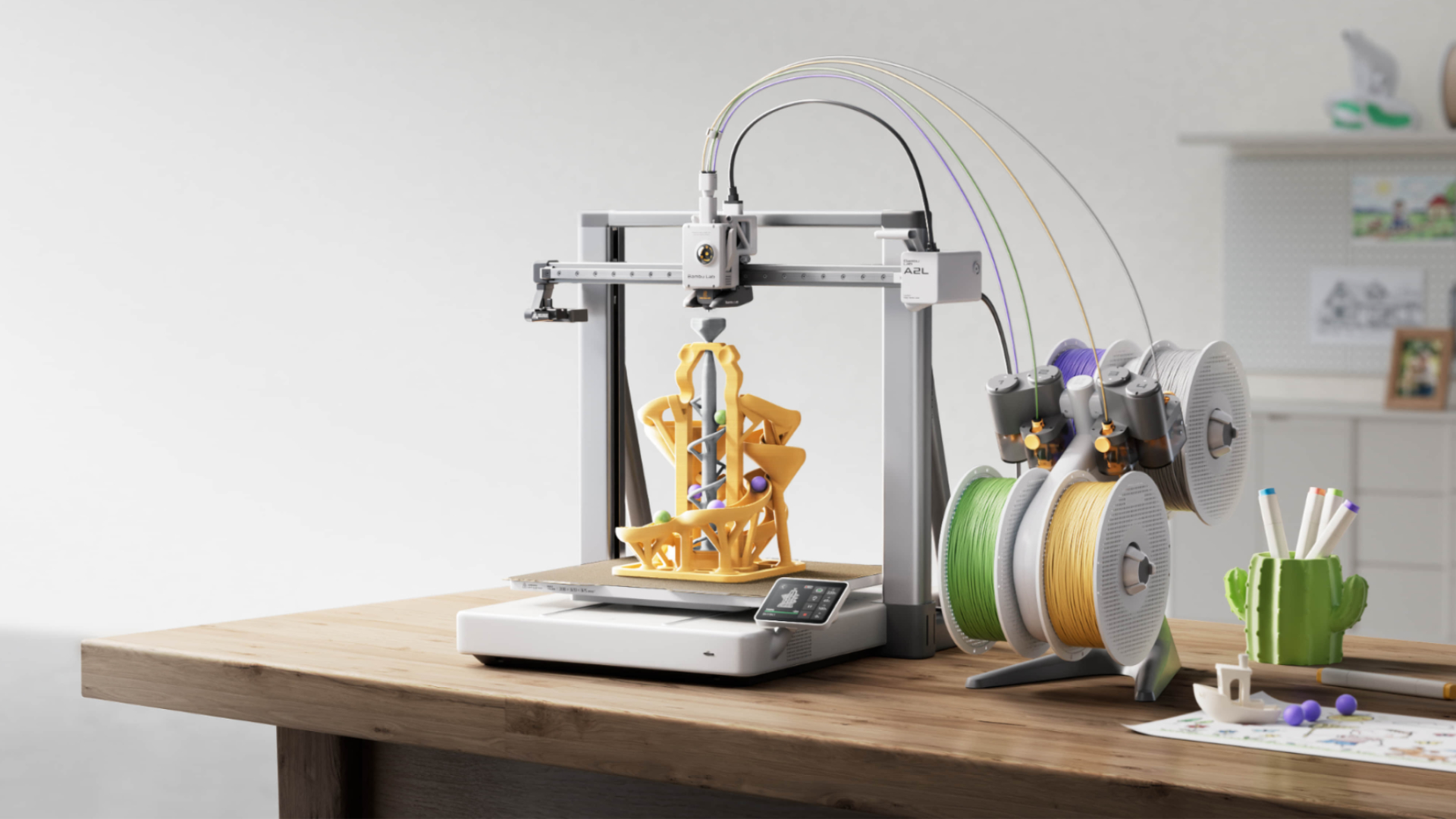
The A2L. Image courtesy of Bambu Lab.
The result is a market that looks very different from a decade ago. During the early years of desktop 3D printing, many of the industry’s best-known brands were based in the United States and Europe, including MakerBot, Ultimaker, and Prusa Research, as well as a number of smaller manufacturers. Today, the center of gravity has moved to China.
That change is very similar to what has happened in other technology sectors. Chinese companies have already proven they have strong positions in industries such as drones, electric vehicles, batteries, and solar energy. In many cases, Chinese firms are no longer known simply for making cheaper products. Consumer 3D printing appears to be another example, with Chinese manufacturers now leading much of this market.
Of course, consumer 3D printers are only a small portion of the overall additive manufacturing market. But they are a really important one, as they often introduce new users to the technology. For many users, a desktop printer is their first experience with additive manufacturing, making this segment an important source of future customers and talent.
The industry’s rise has been incredibly fast, especially when you consider that some of its biggest companies did not even exist until the 2020s. And today, these manufacturers are exporting millions of machines every year and competing for market share on a global scale. The question is no longer whether China has become a major player in consumer 3D printing, but how long competitors can keep up.