
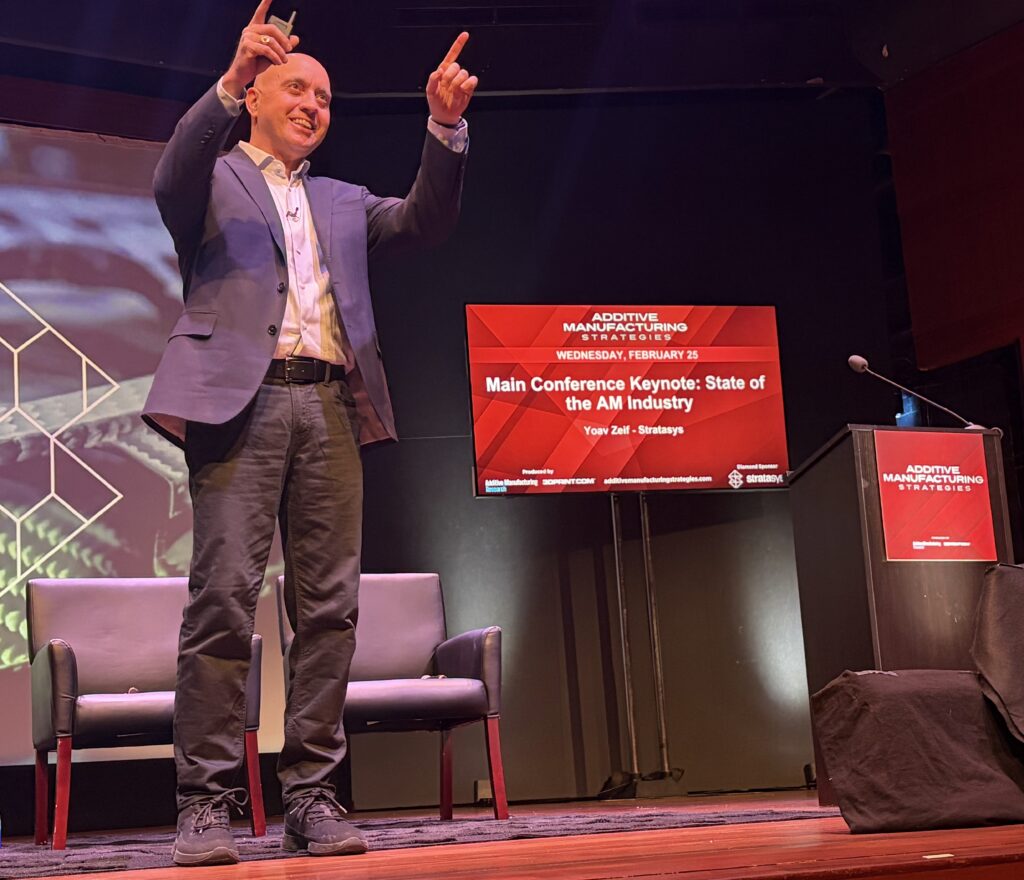
When Stratasys announced plans to acquire Markforged, the immediate focus was on the deal. Markforged is one of the most recognizable names in additive manufacturing (AM), known for its continuous carbon fiber technology and metal printing systems. The acquisition also comes after a turbulent few years for the company, which was valued at more than $2 billion during the SPAC boom before being acquired by Nano Dimension and then sold again.
But according to Stratasys CEO Yoav Zeif, the bigger story is not the transaction. Instead, he believes the AM industry is moving into a new phase, one where reliability, workflow integration, and scalability matter just as much as new hardware. That doesn’t mean innovation is no longer important. Rather, Zeif argues that manufacturers increasingly want reliable workflows, repeatable results, manufacturing standards, and systems that can be integrated into existing production environments.
In fact, Zeif believes that Markforged’s technology fits directly into that strategy.
“We have been following them for a long time and have a lot of appreciation and respect for their technologies,” Zeif told 3DPrint.com. “Markforged is by far the leader in continuous carbon fiber.”
For Stratasys, acquiring those capabilities was not simply about adding another machine platform. Zeif said the company sees an opportunity to combine Markforged’s technology with Stratasys’ established position in industrial FDM.
“The combination is practically a huge contribution to our customers. We are bringing together the unmatched reliability and FDM knowledge that Stratasys has. No one has better, stronger industrial parts in FDM. Now that we put them together, we can really transform the value proposition of FDM in industrial applications.”

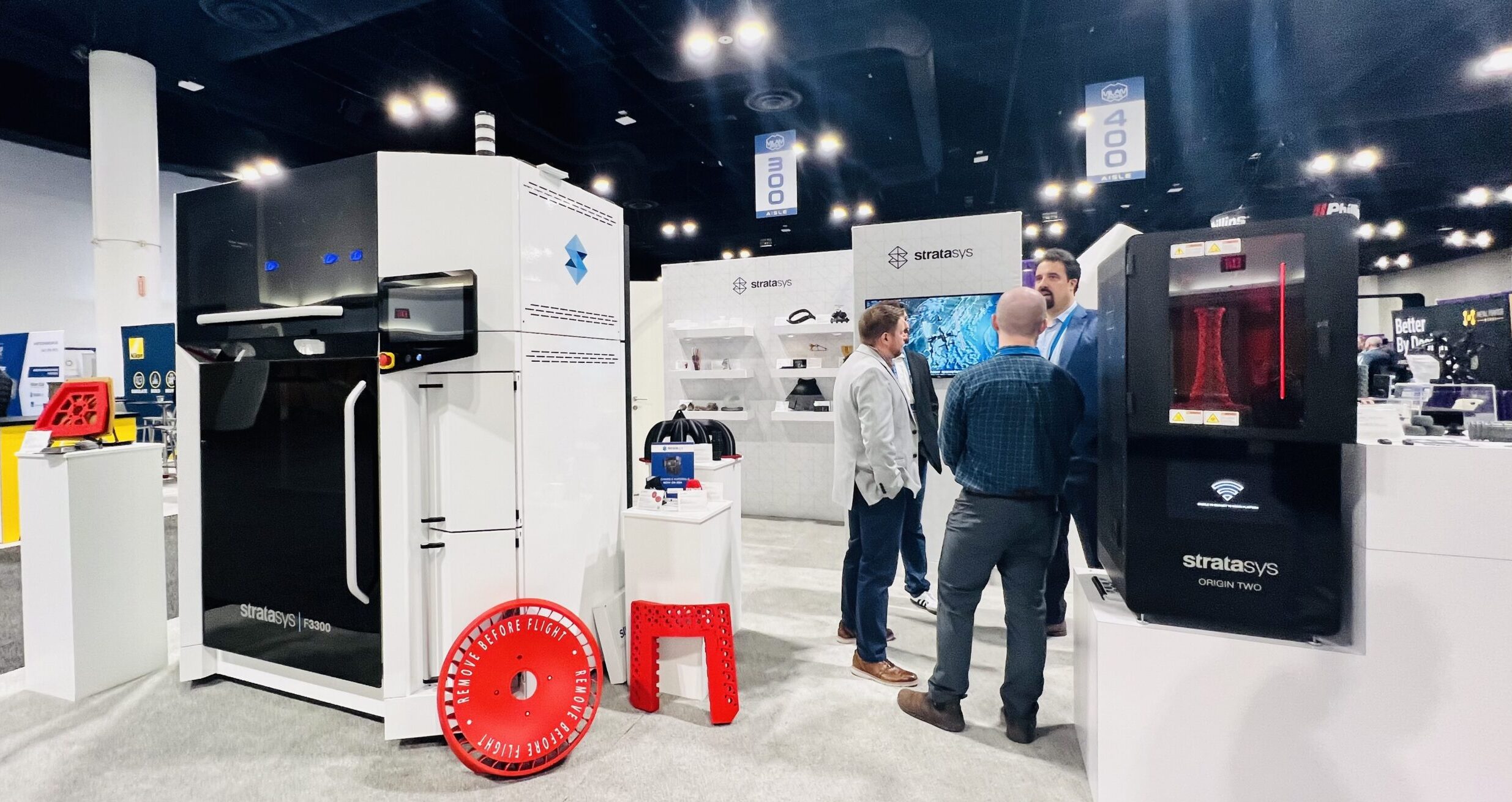
Stratasys booth at MILAM 2026. Image courtesy of 3DPrint.com.
More Than a Consolidation Play
The timing of the acquisition is also interesting. Just a few years ago, Markforged was one of the hottest companies in AM, reaching a valuation of more than $2 billion. Today, Stratasys is acquiring the company for a fraction of that amount. Zeif sees that “not as a reflection of the technology itself and more as a sign of a market finding its balance.”
“The $2.5 billion valuation was an overshooting, and today’s valuation is also an overshooting,” he said. “There is value because customers ask for it. There is demand, there is growth, there is need in the market. It’s not two and a half billion dollars, and it’s probably not the lower valuation we see now. So it’s somewhere in the middle.”
The deal has also drawn attention because of what it says about the broader AM market. In his analysis of the transaction, 3DPrint.com’s Matt Kremenetsky described it as a potentially best-case outcome for Markforged after years of industry consolidation. He reported that Stratasys gains a leading continuous carbon fiber platform and installed customer base, while Markforged gains access to the scale, customer network, and global reach of one of the industry’s largest AM companies.

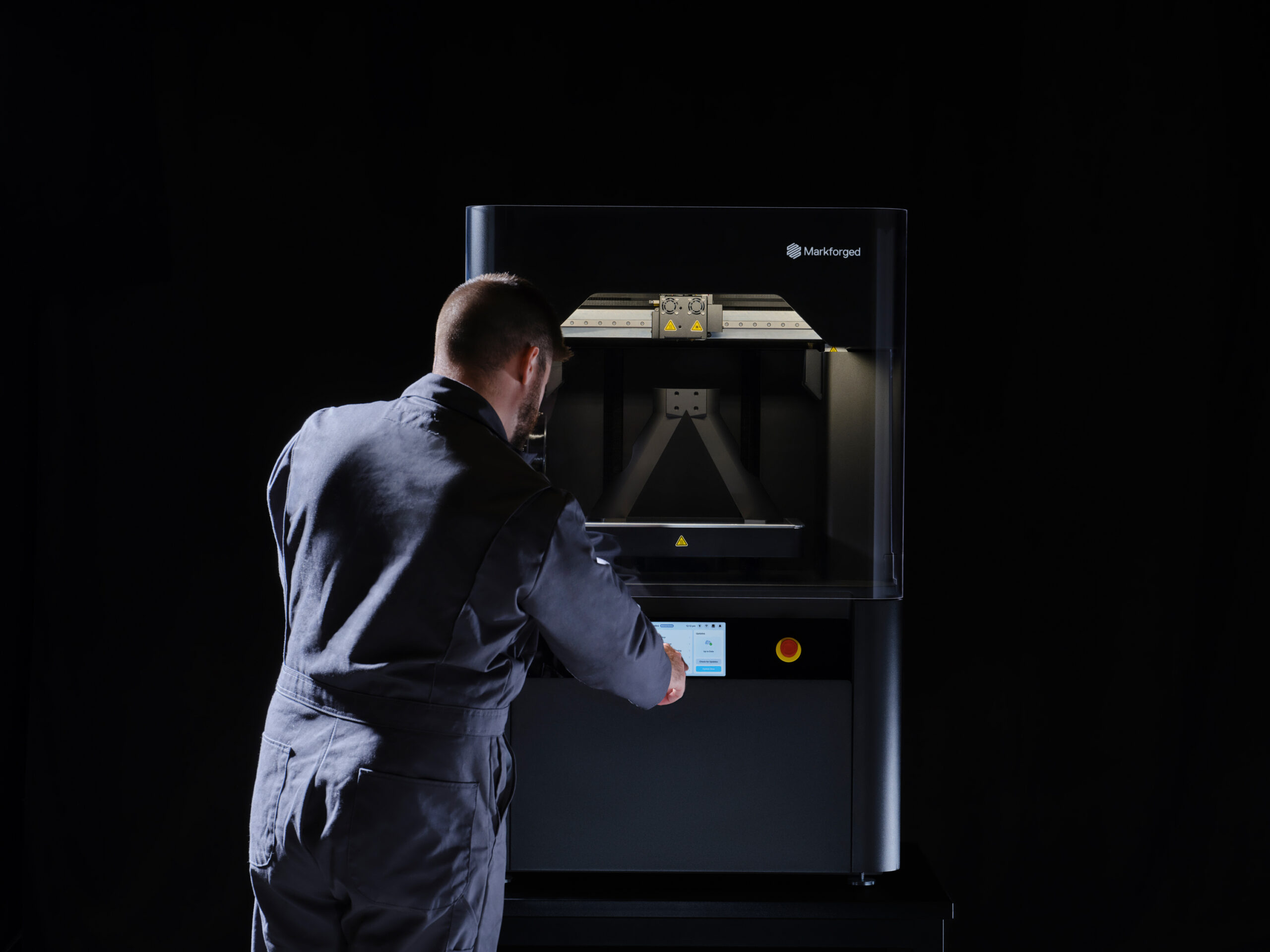
Markforged’s FX10. Image courtesy of Markforged.
Rather than seeing the Markforged deal as another example of industry consolidation, Zeif describes it as a strategic move to add capabilities that fit Stratasys’ long-term plans.
“As far as consolidation goes, I don’t perceive it as practical consolidation. This is what I call targeted capability acquisition, because we have a clear vision and strategy at Stratasys. That strategy is centered on building a portfolio of technologies, software, materials, and services that work together to strengthen end-to-end manufacturing workflows and help customers move additive manufacturing into production environments.”
Zeif said many of those decisions are influenced by direct feedback from customers: “Over the last several years, Stratasys has assembled Customer Advisory Boards for both healthcare and industrial that include additive manufacturing leaders from companies such as Boeing, Airbus, Toyota, General Motors, Northrop Grumman, General Atomics, and others.”
Interestingly, Zeif said many of those discussions have not centered on the next breakthrough technology.
“One of the things that was really surprising was when I asked them what the main barrier to scale is,” he explained. “They told me, ‘Innovation is secondary. We need the workflow to work and the integration with our systems.’ In other words, if you bring a new machine that is innovative but not reliable or repeatable, and the overall equipment efficiency is not good enough, they cannot adopt it. They need standards.”
Today, Zeif says the challenge for large manufacturers is often not whether a printer can produce a part but whether that technology can fit into existing production systems, deliver consistent results, and meet manufacturing requirements at scale.
“A machine may offer impressive capabilities, but if it cannot be integrated into existing processes or consistently produce parts at the required quality level, adoption becomes much more difficult. Companies are no longer evaluating a printer on its specifications alone. For us, that is where Markforged complements Stratasys’ broader vision. They are focusing not on prototyping but on tooling and on end-use parts. And this is where we want to create this unique leading platform that we are building.”
Why Defense Is Leading Adoption
For Zeif, defense is one of the clearest examples of where additive manufacturing is gaining traction.
“By far, number one is defense,” he said. “What wins wars is logistics. The fact that you have great aircraft, great weapons, innovation, and everything doesn’t do anything if you cannot deliver the right part in the right place. This is unfortunately an opportunity for additive because this is the industry that can deliver the right part in the right place. Only last year, Stratasys directly printed more than 100,000 parts for defense, and continuous carbon fiber reinforcement is becoming critical for aerospace components, sustainment, logistics, and drones. This is a signal that the demand is coming.”
Zeif told me defense organizations are increasingly adopting AM to support logistics, sustainment, and distributed production. The ability to produce parts closer to where they are needed can reduce supply chain constraints and improve operational readiness, particularly in aerospace and defense applications. He also sees growing demand for carbon fiber-reinforced components used in drones, aircraft, and other mission-critical systems.

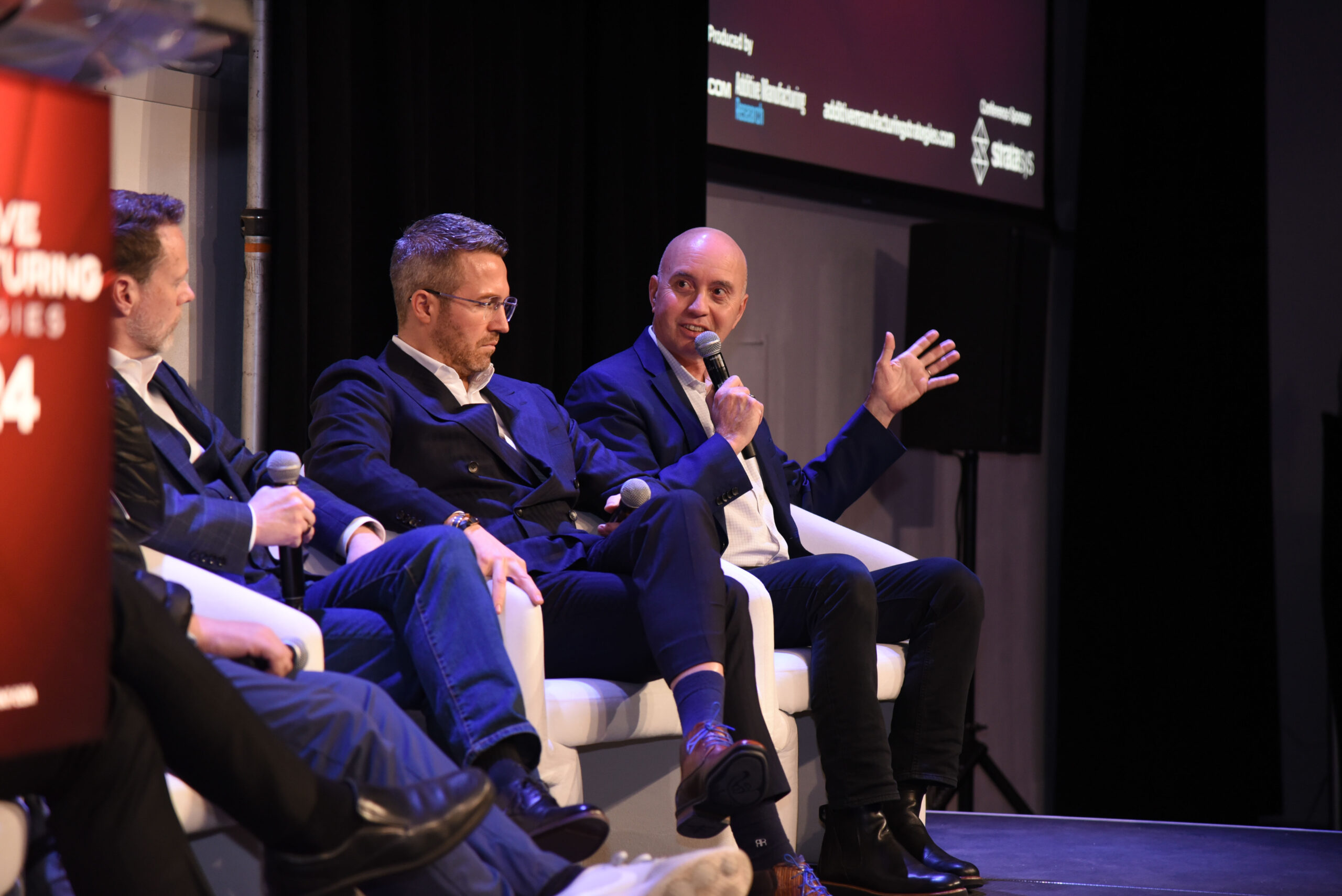
AMS 2024 CEO Panel’s Yoav Zeif. Image courtesy of 3DPrint.com.
In Zeif’s view, the deal is less about getting bigger and more about strengthening Stratasys’ ability to serve production applications. The acquisition adds technologies that the company believes can help customers move beyond prototyping and into production.
As manufacturers increasingly focus on reliability, workflow integration, and scalability, Zeif believes the combination of Stratasys and Markforged can help address some of the biggest barriers to broader adoption of AM.
Zeif is also scheduled to return to the stage at next year’s Additive Manufacturing Strategies (AMS) conference, taking place February 23-25, 2027, in New York City. After headlining AMS 2026, he is expected to once again share his perspective on the state of the AM industry and the challenges and opportunities facing manufacturers as additive technologies continue to mature.