
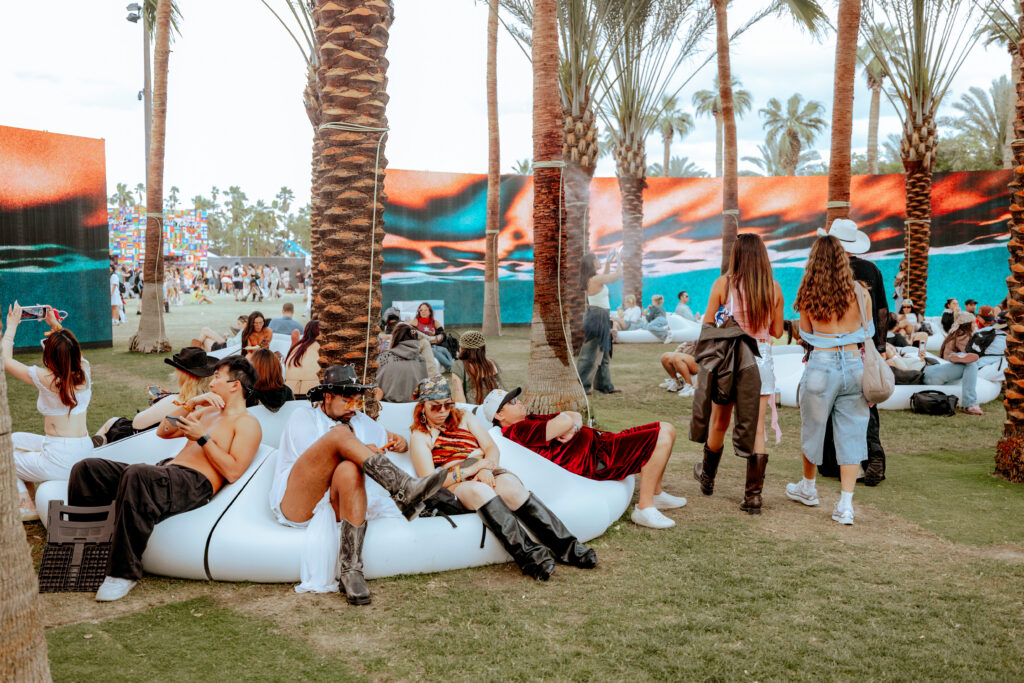
There’s a version of Coachella most people never see. Not the stage. Not the crowd. Not even the music. It’s everything built around it: the spaces where artists host, brands activate, and experiences are designed down to the smallest detail. Looking back at this year’s festival, one of the most interesting examples of 3D printing going mainstream wasn’t on one of the stages. It was inside SKYLRK OASIS, an invite-only installation created by Justin Bieber’s brand SKYLRK, where visitors gathered around 30 large-scale 3D printed benches.


The project was led by New Jersey-based design and production studio Decibel Made in collaboration with Italian robotic manufacturing company Caracol. While Decibel has already attracted attention for its work in retail, architecture, and experiential design, including large-scale seating installations for Lululemon, the SKYLRK collaboration project pushes things further, into entertainment, celebrity branding, and temporary architecture.
According to Decibel co-founder Adam Hecht, the timeline alone says a lot about why 3D printing is becoming a practical solution for projects like this.
“We started the design process and prototyping in early March. And over the following two and a half weeks, we ran 30 of these,” he told 3DPrint.com. “That kind of turnaround would be nearly impossible with traditional fabrication methods like fiberglass or concrete, especially for something fully custom.”
Just as important, Hecht said, was the fact that conventional manufacturing simply would not have worked within the project’s timeframe.
Interestingly, Hecht told me that if the SKYLRK team couldn’t get the bespoke seating produced in time for Coachella, the alternative wasn’t choosing another supplier or a more conventional design.
“They’d rather have nothing than something generic that doesn’t represent the brand,” he explained.

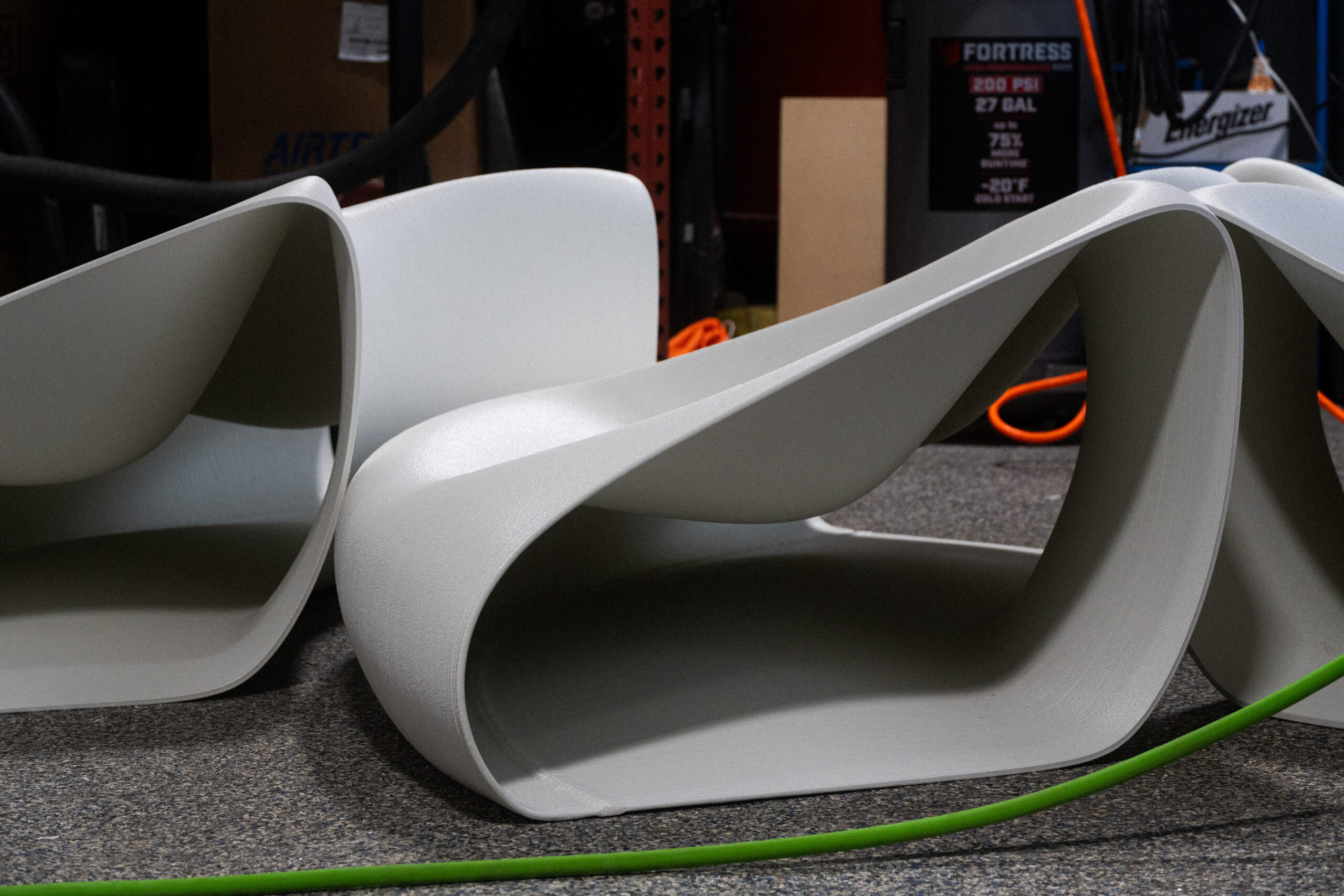
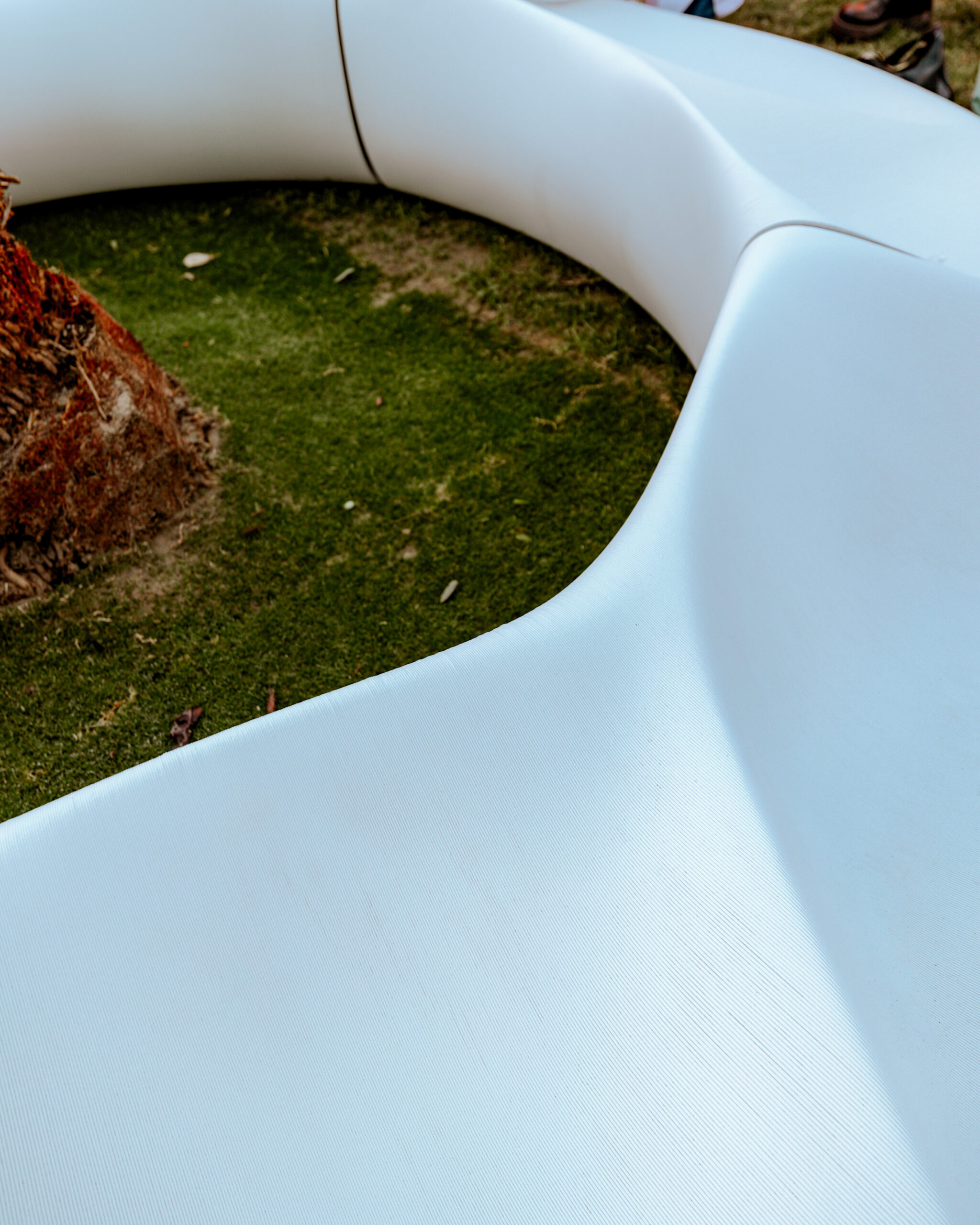
One of the 3D printed benches produced by Decibel Made for the SKYLRK OASIS installation at Coachella.
Today, more than ever, that point matters. Because this isn’t just about making furniture faster. It’s about fostering something that previously didn’t exist at all.
Designed by the SKYLRK team and engineered by Decibel, the installation featured 30 benches measuring nearly seven feet long. Arranged in circular groupings nearly 13 feet in diameter around palm trees, they created gathering spaces inside an immersive environment surrounded by a 360-degree electronic screen. Rather than looking like conventional outdoor furniture, the benches formed a continuous sculptural landscape that blended into the installation’s overall design language, explained Hecht.

Decibel Made’s 3D printed benches at the SKYLRK OASIS installation during Coachella 2026.
A Different Kind of 3D Printing Story
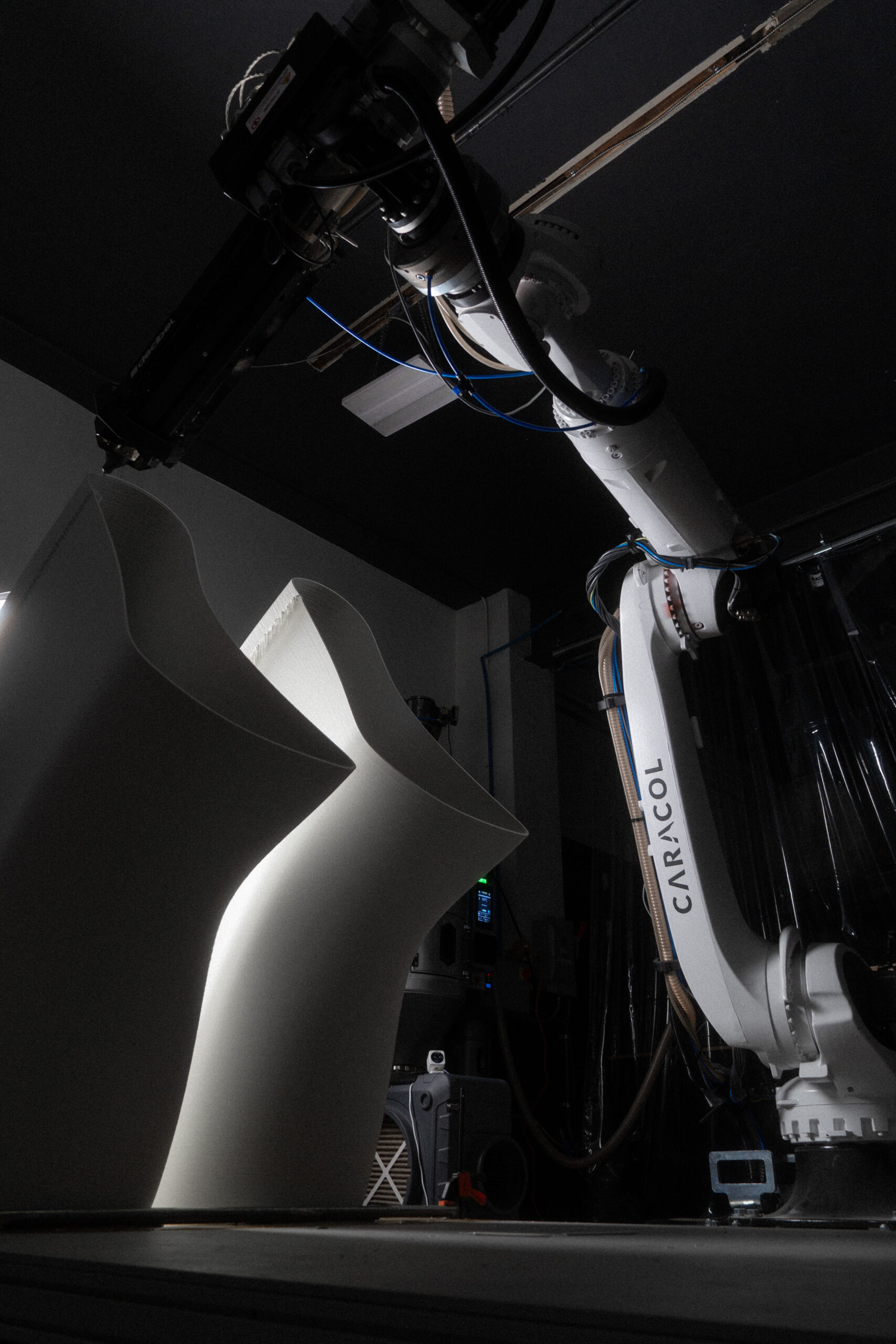
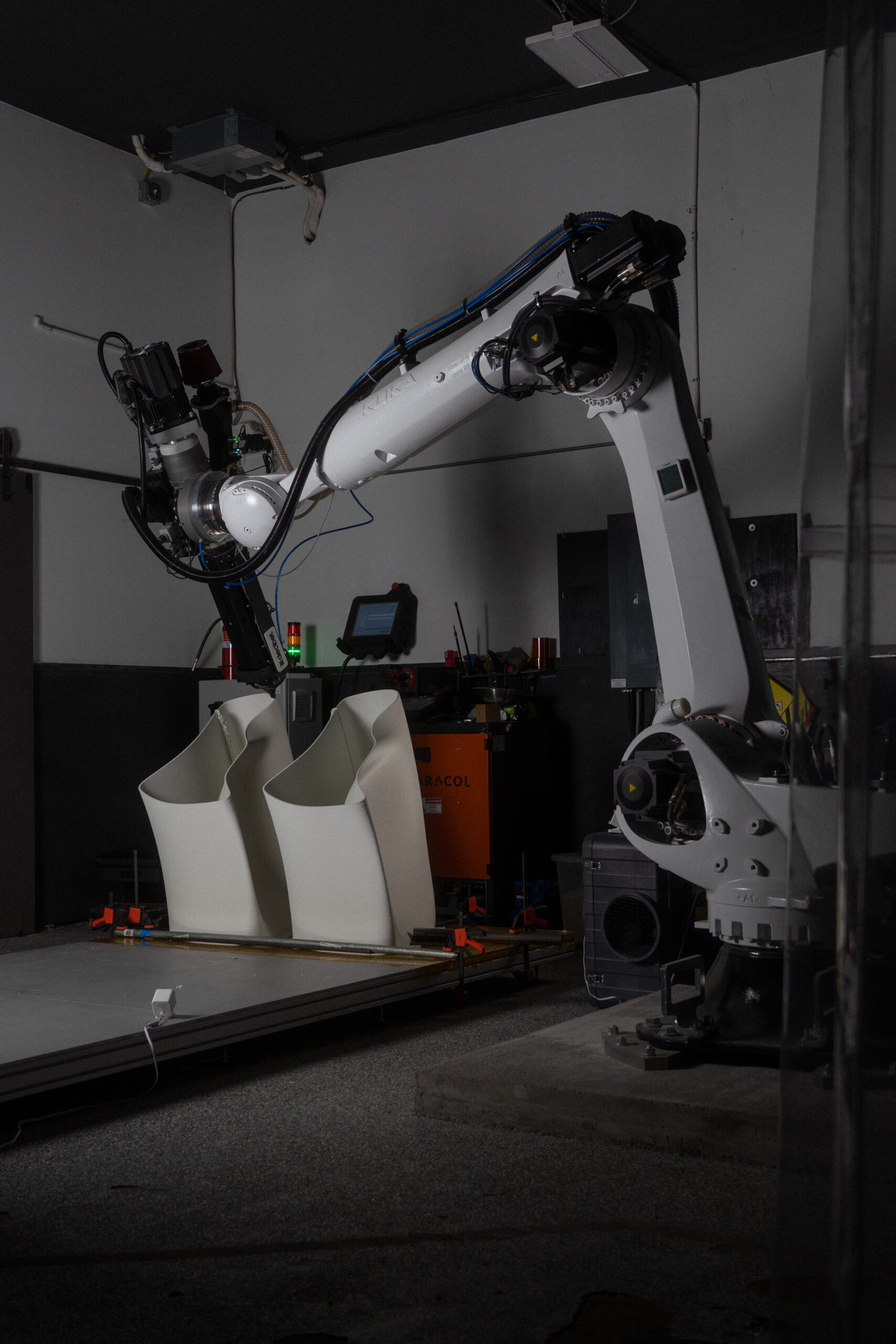
The benches were produced using robotic large-format additive manufacturing (AM), letting Decibel and Caracol fabricate complex organic geometries that would have been difficult and expensive to make using molds or traditional fabrication techniques. Although hollow and lightweight, the structures were “engineered to withstand long-term outdoor use and heavy pedestrian traffic.”
Meeting Coachella’s deadline also demanded a different manufacturing strategy. Instead of producing everything in one location, Decibel split production with Caracol, manufacturing half of the benches in New Jersey and the other half in Texas before bringing everything together for installation in California.
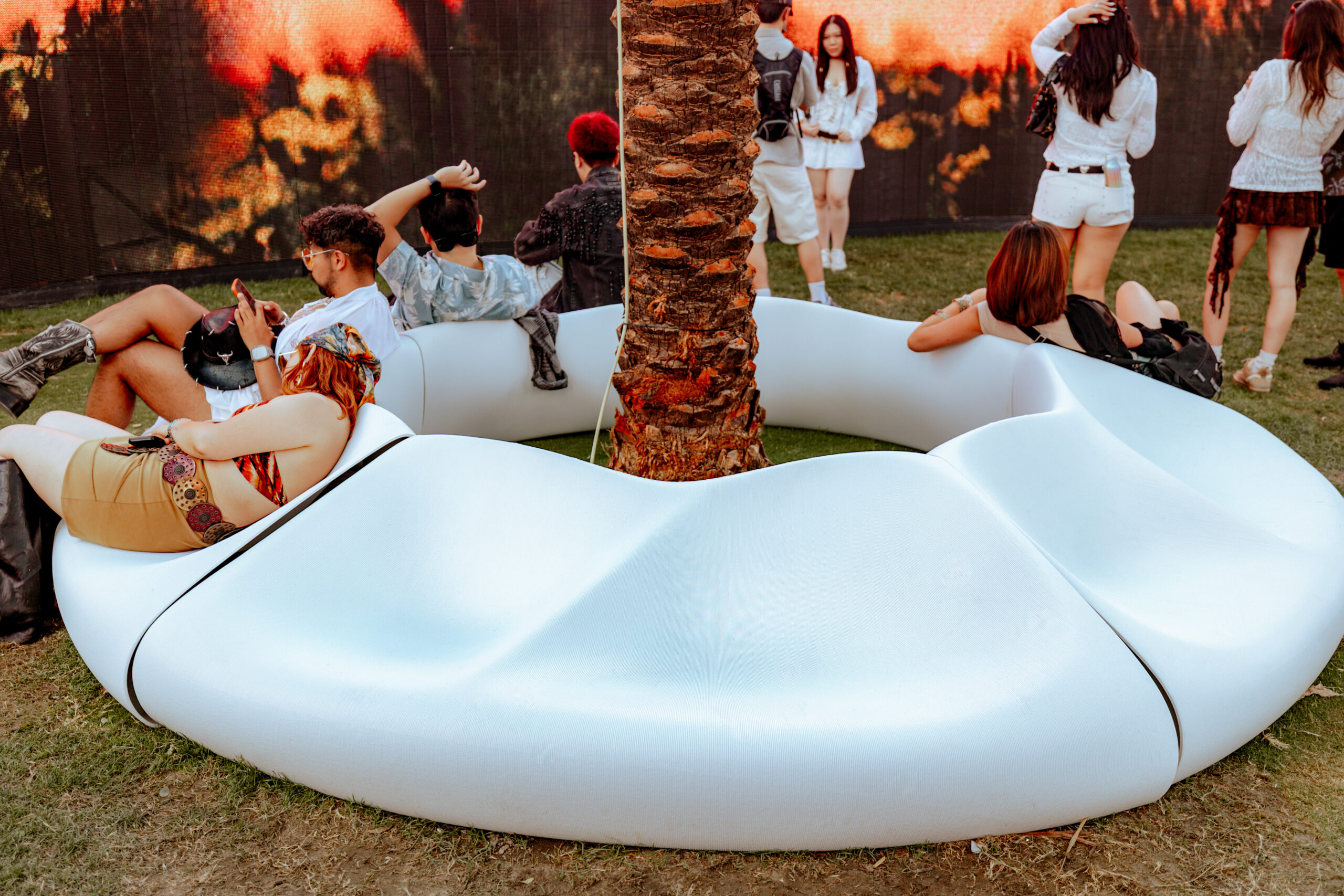
Decibel Made’s 3D printed benches at the SKYLRK OASIS installation during Coachella 2026.
For Hecht, that became one of the project’s biggest takeaways. Instead of shipping tooling or relocating production, he said the digital design moved while manufacturing happened simultaneously in two different facilities. It’s a great example of distributed manufacturing, where production happens closer to where it’s needed instead of in a single centralized factory.
“What made this project truly remarkable was the distributed manufacturing model we deployed: 30 geometrically complex, custom benches produced across New Jersey and Texas in just a few weeks, under demanding timelines,” noted Francesco De Stefano, CEO and Co-founder of Caracol AM. “Coachella is where music, design and culture collide at the highest level. There is no better stage to show how robotic large-format additive manufacturing is redefining what the creative industry can build — with full geometric freedom, on demand, at scale.”
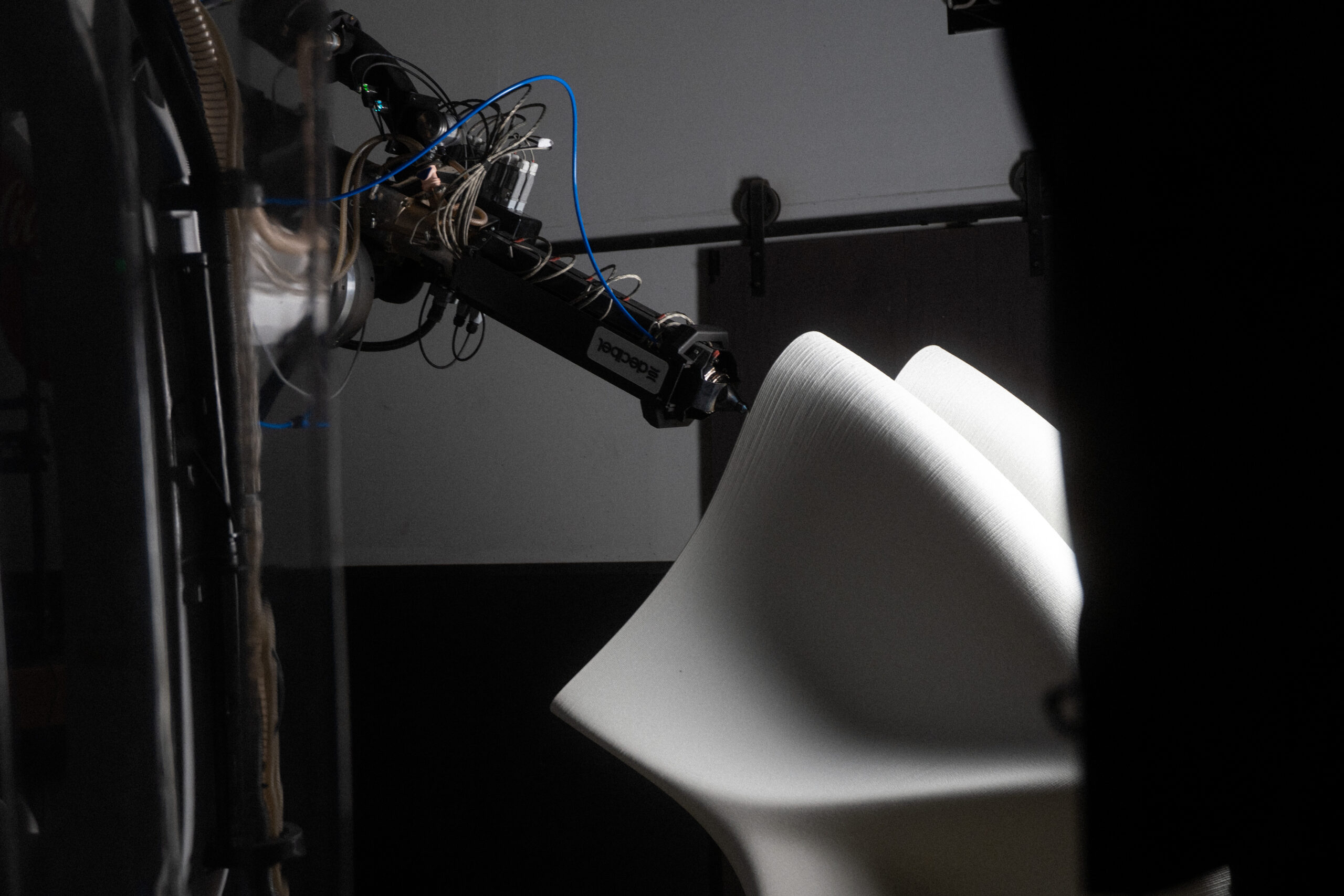
A close-up of one of the custom benches being produced through robotic large-format 3D printing.
The project also shows how brands are using physical spaces in new ways. Like many artists today, Bieber has expanded beyond music into fashion, product design, and branded experiences through SKYLRK. The Coachella installation became another way the brand connected with people.
“Justin Bieber, like many of our other clients, has their own product brand, their own designers,” Hecht explained. “We take that, modify it, make it printable, and get it into production.”
Additionally, the SKYLRK project was designed to be seen, photographed, and experienced by thousands of visitors, stated Hecht: “We’re creating things that are meant to be seen. The built environment is the perfect example of that. Instead of focusing on hidden components, Decibel is targeting spaces people interact with directly, like retail stores, installations, and now festivals.”
One of 3D printing’s biggest advantages is that the design can keep evolving throughout the project. Instead of finalizing the design early, the team could keep making changes along the way.
“We print a new version every day, refine it, tweak it,” Hecht added. “At a certain point, they say, ‘This is good enough,’ and we run production. That workflow is fundamentally different from traditional manufacturing, where design decisions are often locked in early due to tooling costs.”
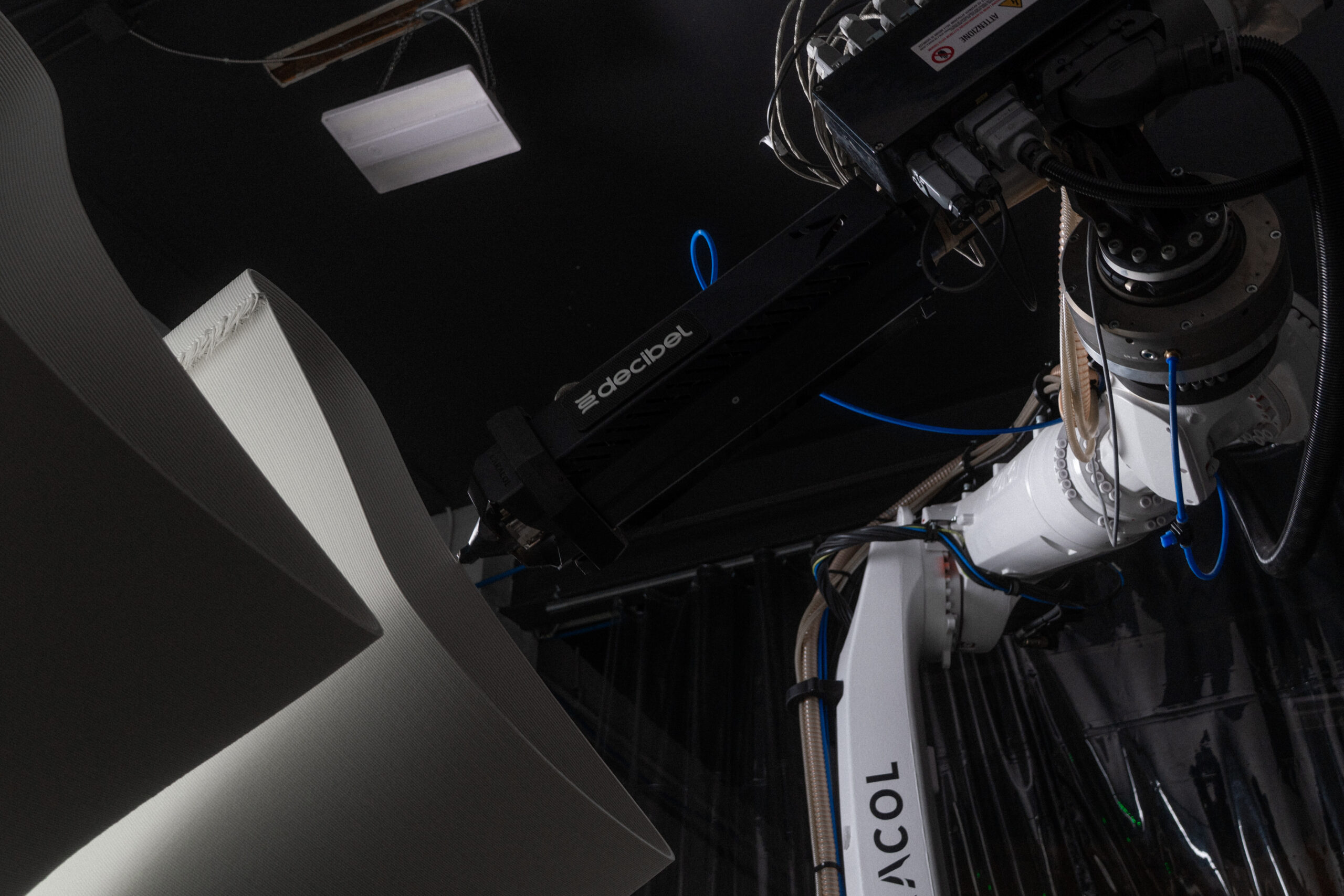
A robotic arm prints one of the large-format benches designed for SKYLRK OASIS.
Sustainability was also super important here since the benches were printed using Airtech‘s recycled PETG GF, a material reclaimed from industrial waste streams. According to Decibel, the pieces are UV-stable, weather-resistant, and fully circular, meaning they can eventually be shredded and reprinted into new products rather than discarded.
The project also builds directly on ideas Decibel first explored with PORTAL, its installation during Milan Design Week 2025, where the company printed chairs live inside an abandoned factory to demonstrate localized production, circular materials, and distributed manufacturing.
“PORTAL was where we first explored this idea publicly, printing chairs live in an abandoned factory during Milan Design Week, but this project put it into practice,” Hecht explained. “The SKYLRK team had a clear vision for the benches, and there really wasn’t much room for delay. Being able to split production across two sites gave us the speed we needed while still preserving the design intent.”
The Coachella installation may have been temporary, but the manufacturing approach behind it seems to be here to stay. As brands continue looking for custom spaces that can be built quickly, projects like this show where large-format 3D printing can offer something traditional manufacturing cannot.
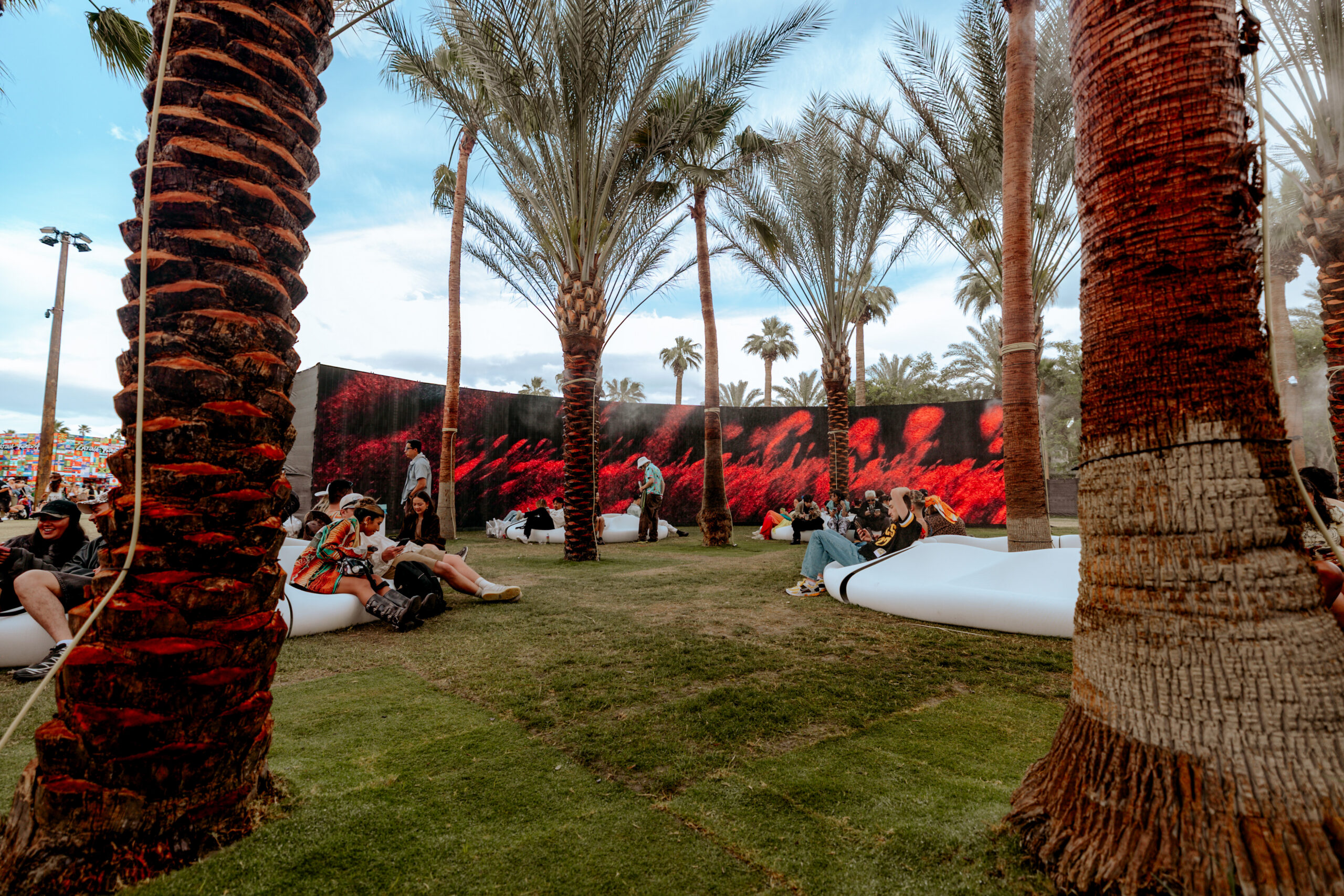
Attendees sit on Decibel Made’s 3D printed benches at the SKYLRK OASIS installation during Coachella 2026. Image courtesy of Decibel Made.
Images courtesy of SKYLRK and Decibel Made