
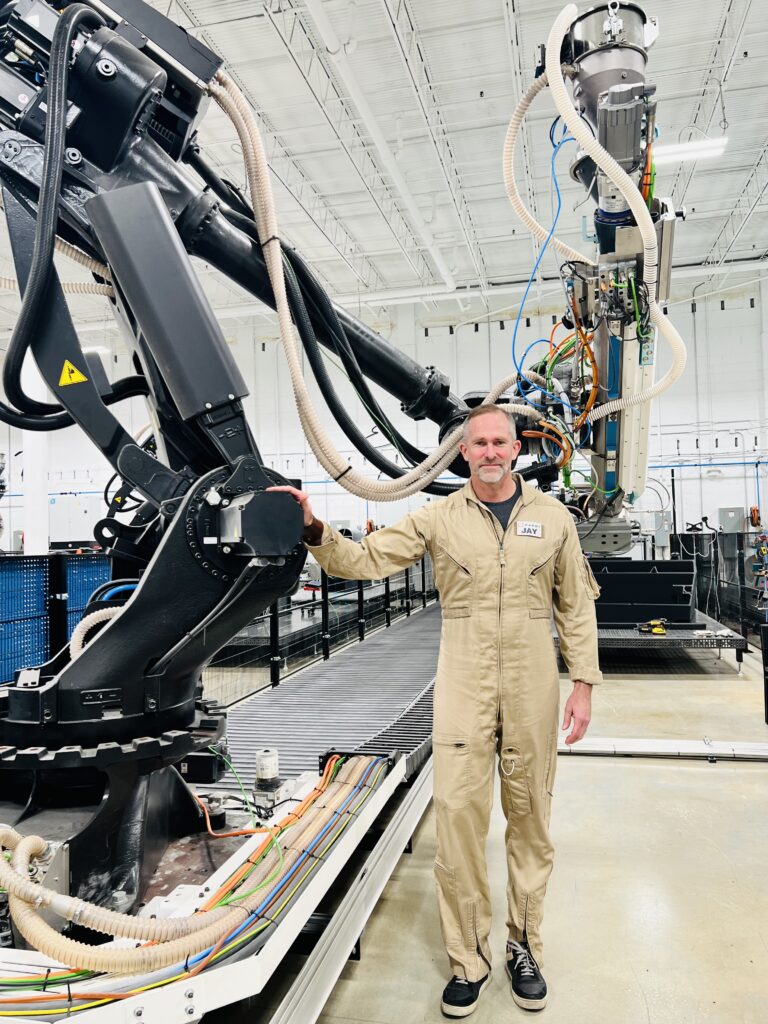
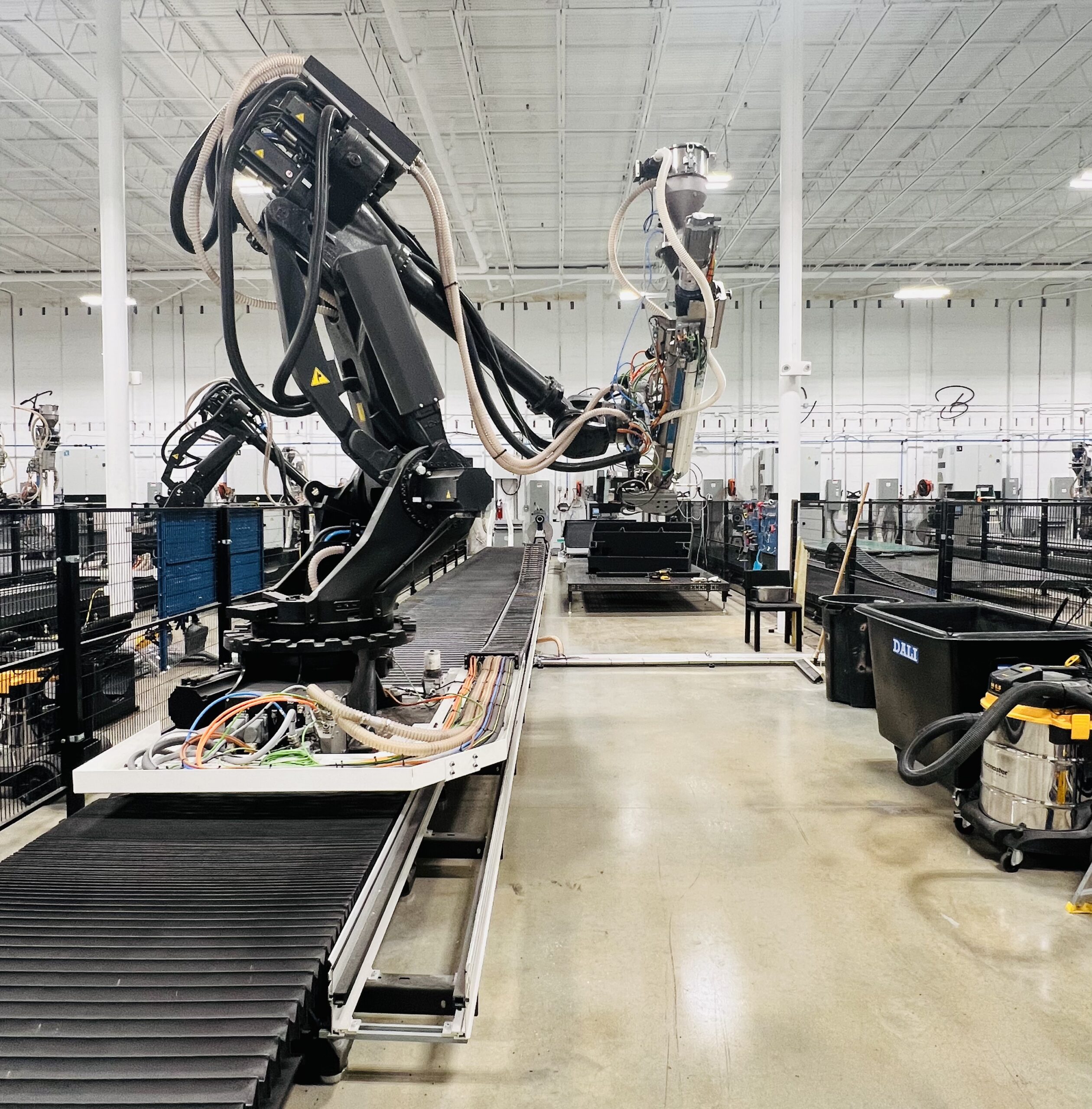
A warehouse from the outside, but step inside Haddy and it shifts quickly: finished pieces up front, clean and minimal, furniture you can touch and sit on. Walking through the factory, the machines take over — they are massive, loud, constant — robots stretching across the room, printing objects that don’t look like they should exist in one piece. That’s where Haddy really comes into focus, not just in the furniture, but in how everything is made.
That became clear when I visited Haddy in St. Petersburg, Florida. The focus here is production, getting parts made reliably and on time. That came through in my conversation with founder and CEO Jay Rogers, who explained that the company was built with one goal in mind: to produce large products at a commercial level, reliably and on time.
“Haddy was created to print big things at an industrial or commercial scale,” he said. Just as important, he is not interested in stopping at prototypes. The goal is finished parts.
That may sound simple, but it gets at one of the biggest shifts happening in additive manufacturing right now. For years, 3D printing was often treated as a way to make mockups, one-off concepts, or early design versions. Rogers believes that stage is over.

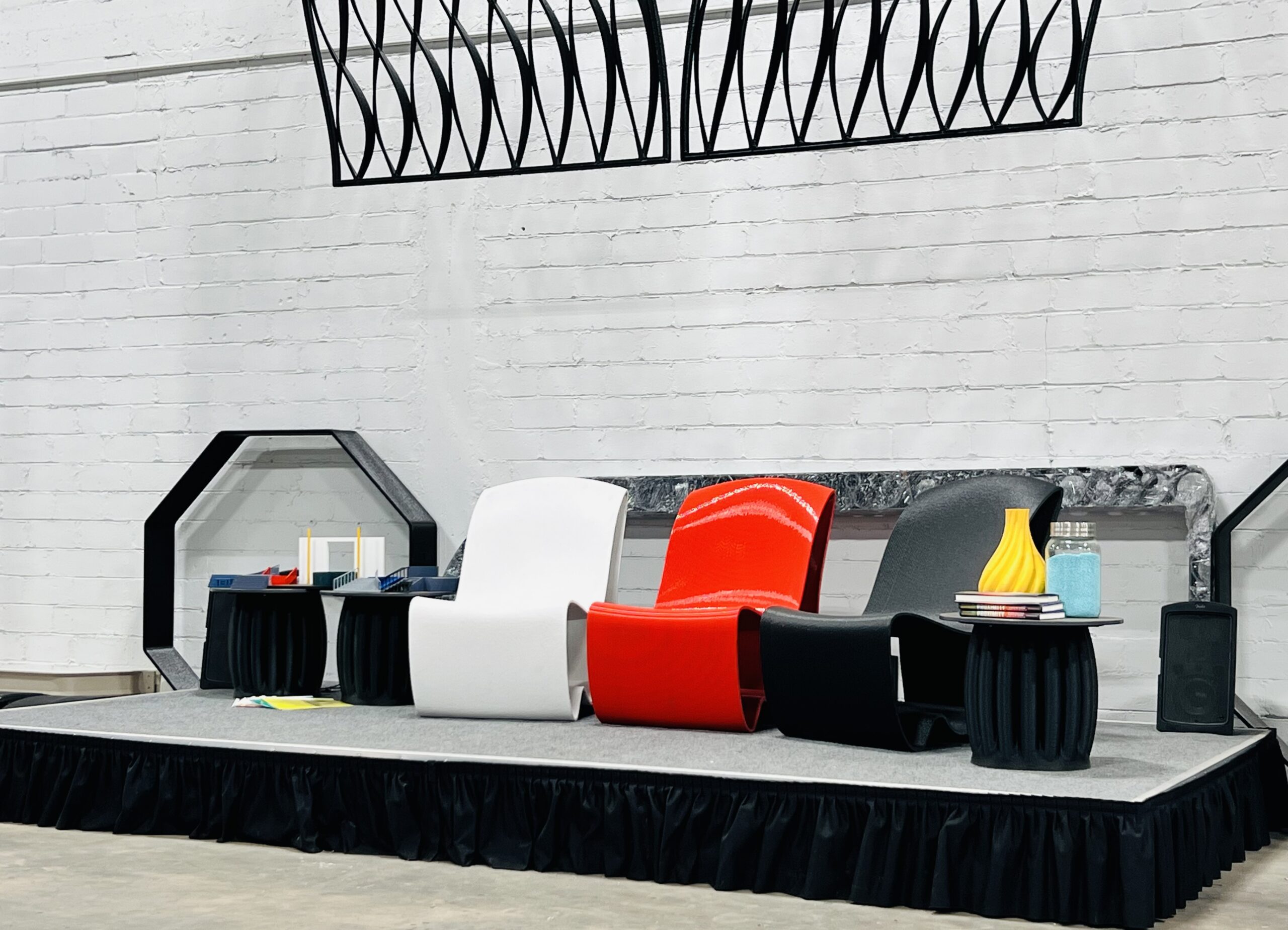
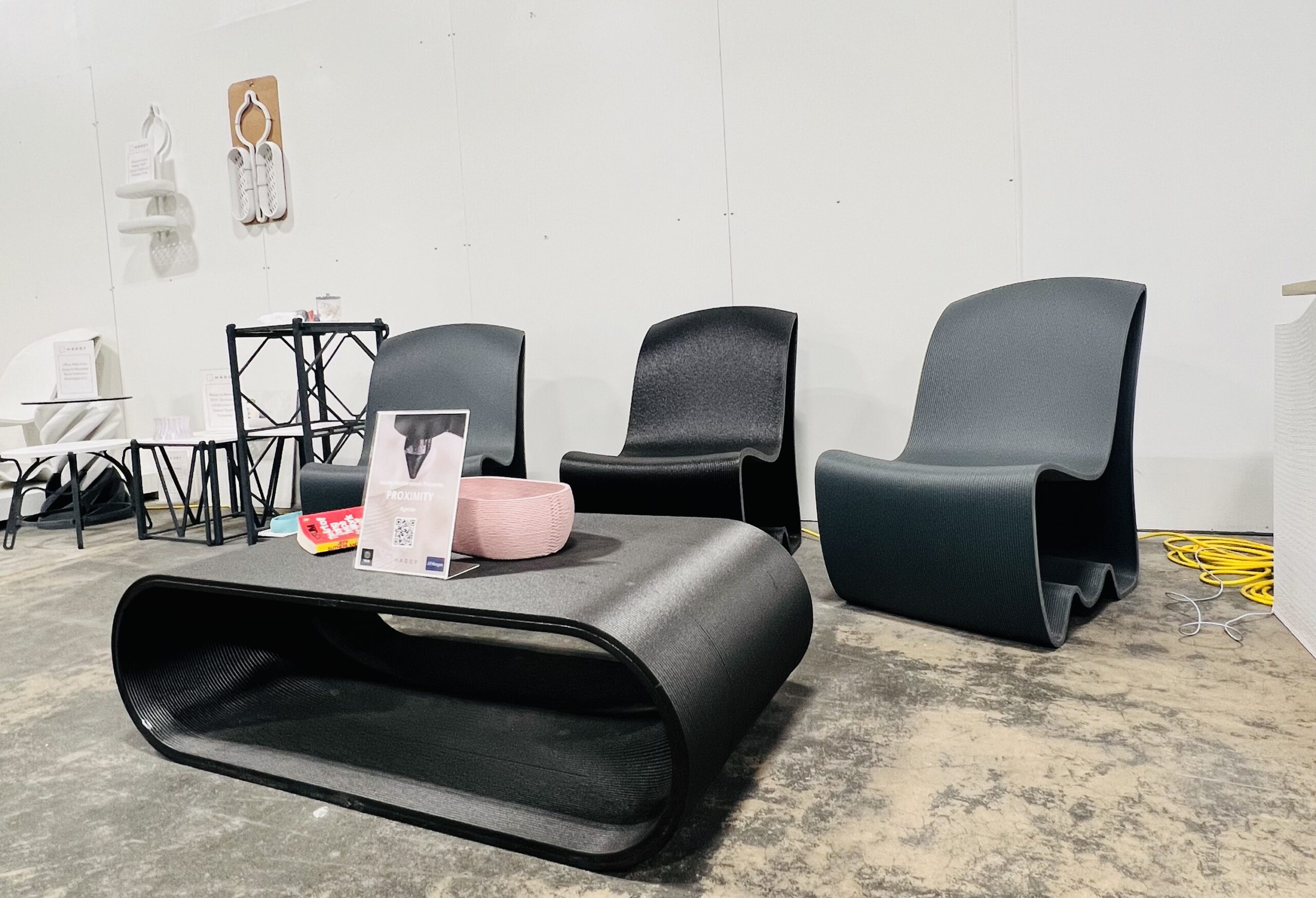
Haddy’s 3D printed seating and side tables, showcasing the range of forms possible with robotic extrusion printing.
“We’re long past the day when printing something is just cool or when we can rely on doing a prototype where people don’t need to do it in production. Our end result is to take something that we can print and then take it into production.”
That line may be the clearest way to understand both Haddy and Rogers himself. He is not talking about 3D printing as a novelty. He is talking about it as a manufacturing method.
That way of thinking goes back to his earlier work at Local Motors, the company he founded before Haddy. Local Motors became known for its microfactory model and work in large-scale 3D printing, including vehicles like the Strati and the Olli autonomous shuttle, both built using polymer-based additive manufacturing.
But Rogers said his motivation was never just cars, and it was never just 3D printing for its own sake.
“I didn’t do it because I love vehicles. I didn’t do it because I love 3D printing. I did it because there was a need, and 3D printing offered a great opportunity to solve that,” he explained.
That same logic now drives Haddy.
At first glance, the company may look like a furniture business. Rogers talks a lot about furniture, fixtures, and equipment, and the company’s work fits naturally into those categories. But he said that is only the entry point.
“We’re not just building furniture. We’re building things fit for the age of robotic production. We’re building a capability to make things better than they were done before, a way to produce things that matches how machines work today,” Rogers noted, comparing Haddy’s approach to how Amazon started with books but was really building a broader capability to sell and distribute products differently, better than the way they were done before.

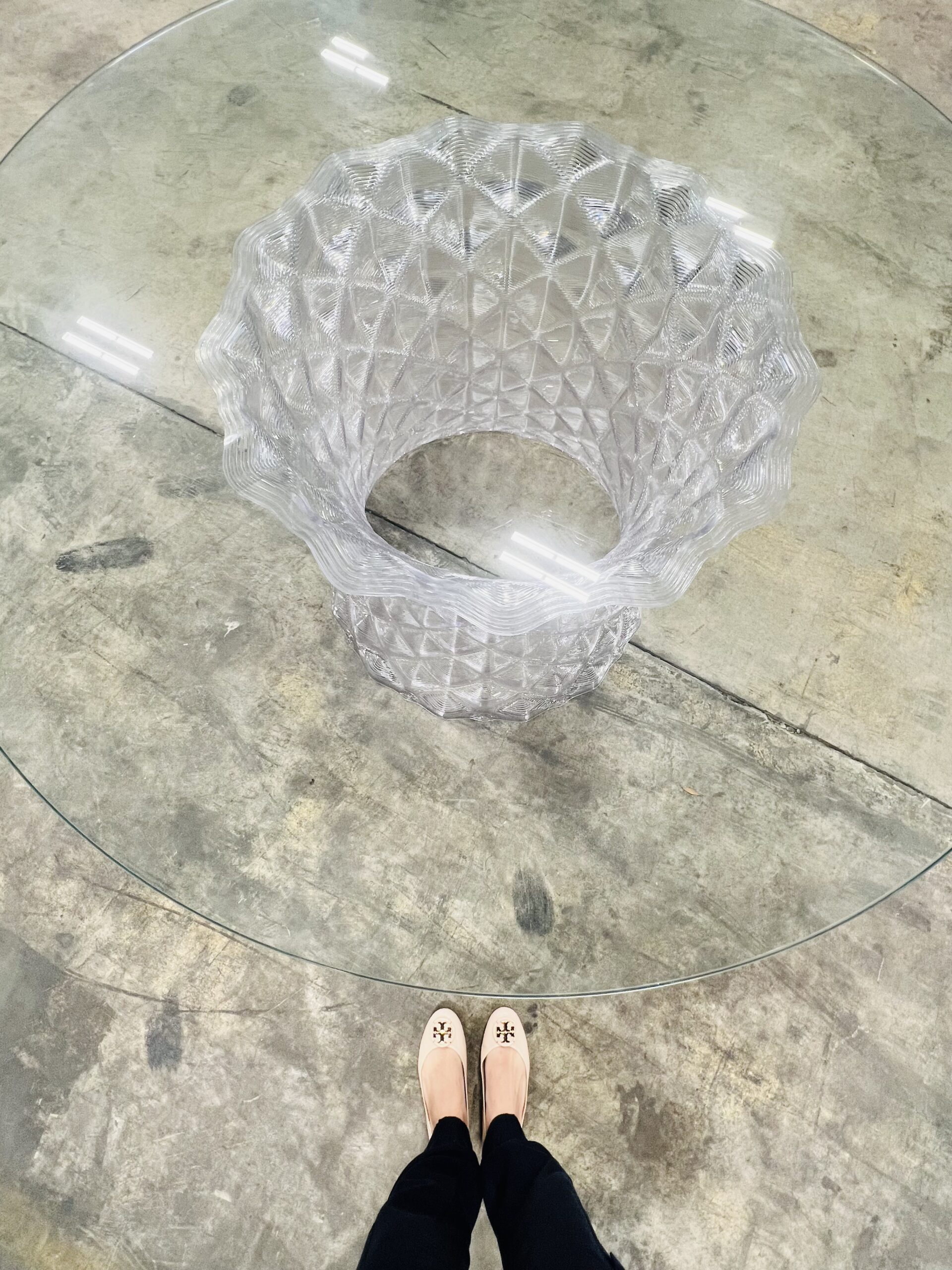
That is a smart distinction. Rogers is not presenting furniture as the final destination. He is presenting it as a practical market where Haddy can scale. In his view, furniture is large, global, and relatively unregulated compared to aerospace or medical products. That makes it a good place to prove a model.
He even put a number on it, saying the global furniture market is around $700 billion, roughly the same size as the aircraft parts maintenance and repair (MRO) market, but “much easier to enter because it is not burdened by the same level of regulation.”
That helps explain why Haddy did not begin with aircraft parts or medical implants, even though those are the areas that tend to get the most attention in 3D printing. Those applications are complex, highly regulated, and slow to scale. Rogers sees it differently. Many engineers are drawn to the most advanced or impressive use cases first. Meanwhile, his approach is more practical: “Start where the need is big, where it’s easier to get to market, and where you can actually build a business.”
The company’s other big idea is local production. Rogers spent much of our conversation talking about how manufacturing moved over the decades to wherever labor was cheapest.
“In America and in other countries, we have relied on low labor rates to make things. Furniture is a clear example where production has shifted across regions and countries over time as costs changed. You would see furniture move from the U.K. to North America, then to the Midwest, then to the South, then to Taiwan, then to China, then to Vietnam,” he said, describing how production has shifted over decades as companies chased lower costs. “Now, that model is reaching its limits.”
Haddy’s answer is to bring manufacturing closer to the customer.
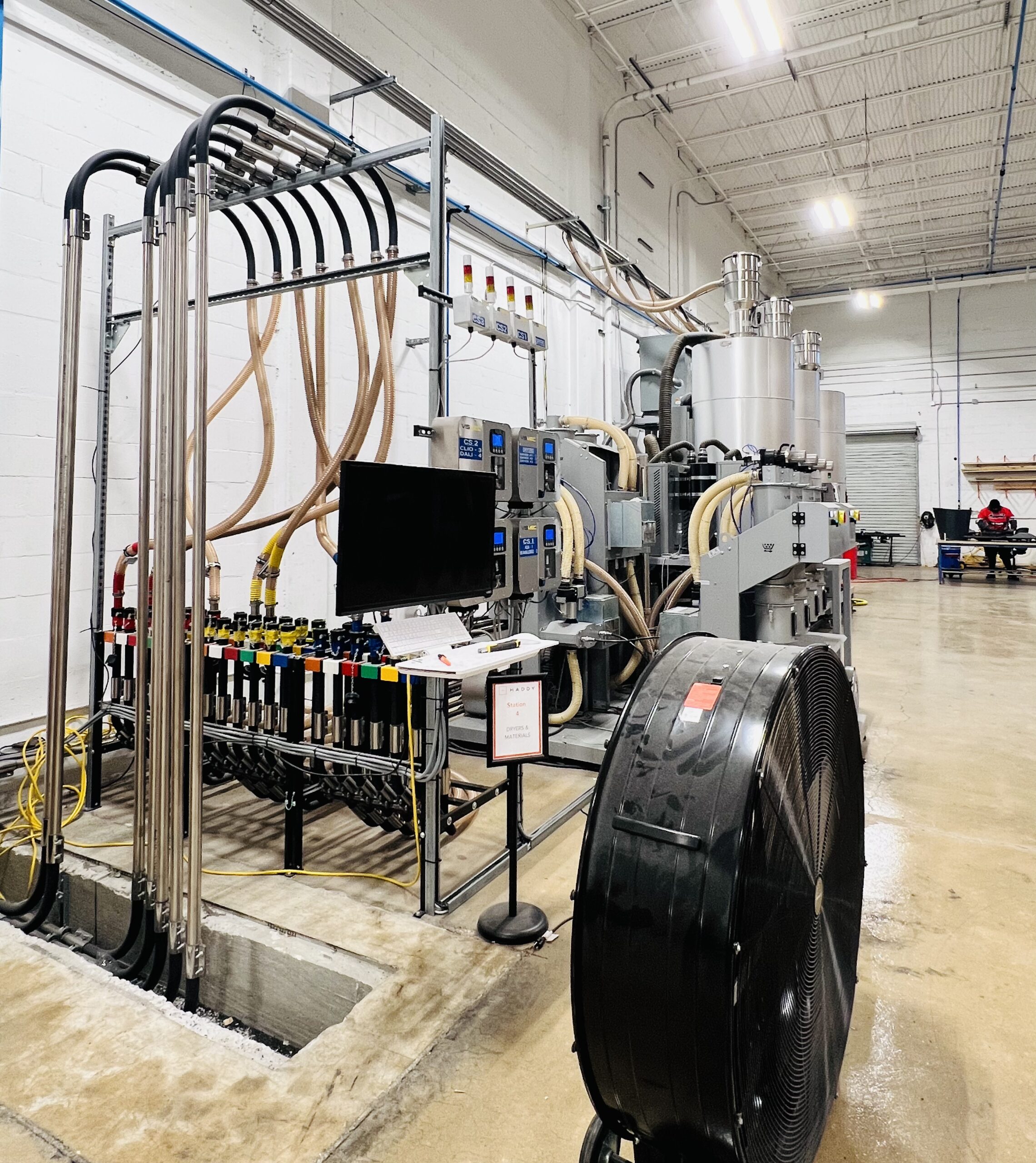
That thinking is visible on the factory floor. During my visit, I learned that the company has eight robots. One of the original robots is used for research and development. As Rogers showed me, materials are dried and then moved through enclosed channels under the floor, feeding directly into the robotic systems. Some jobs can run continuously without a person standing there the whole time. The team showed me large print beds, heated systems, molds in production, and examples of large-format output, including projects measured in feet, not inches.

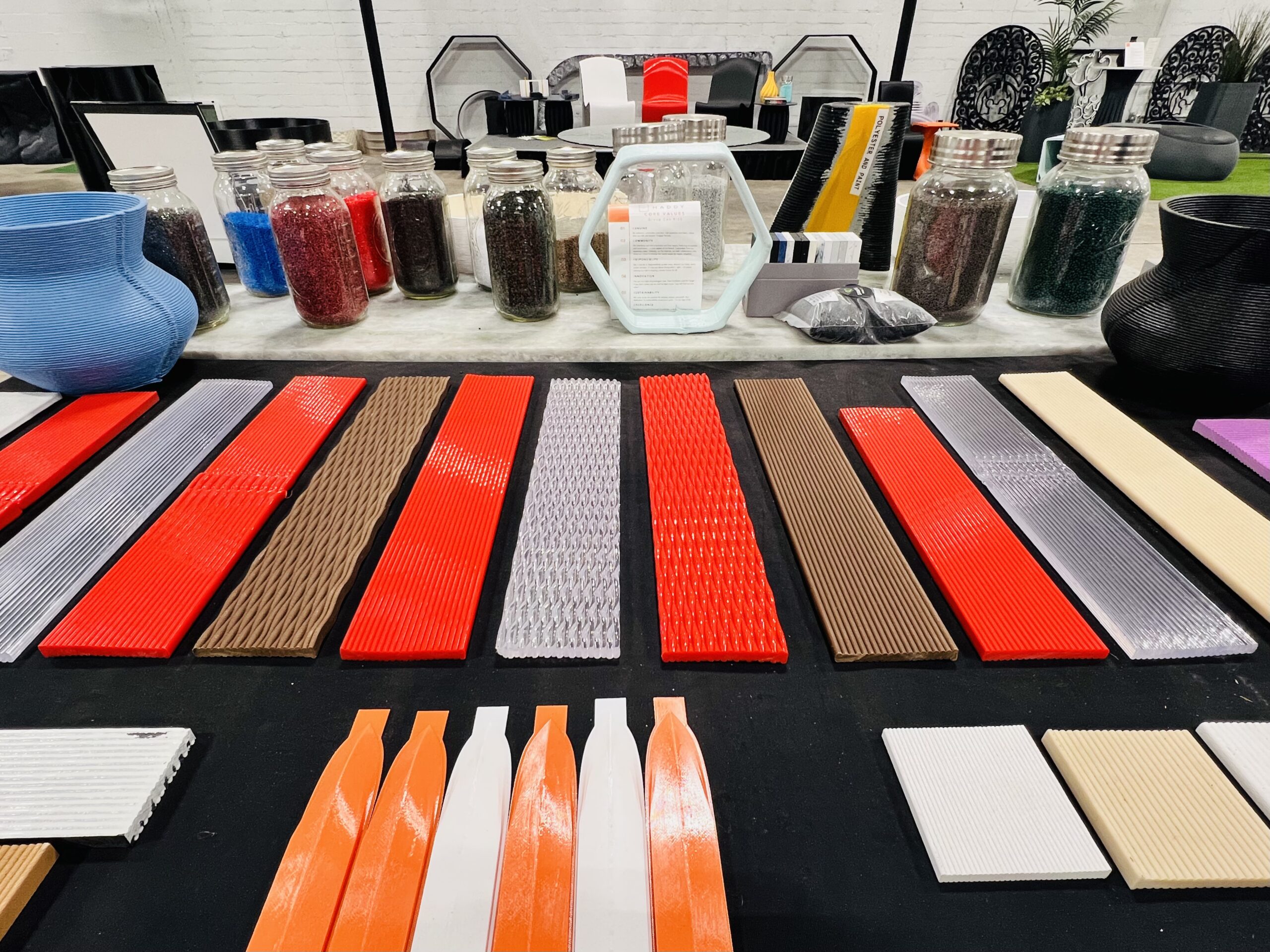
Haddy’s material library includes a variety of recycled plastic feedstocks, colors, textures, and surface finishes.
Clearly, this is not desktop printing scaled up a little; this is manufacturing infrastructure.
Rogers also emphasized that Haddy chooses to use polymer composites. People regularly ask whether the company prints in metal, ceramic, concrete, or other materials. But he said polymer composites open the broadest commercial opportunities and make more sense for the kinds of large-scale production Haddy is targeting, including work with partners like The Walt Disney Company.
“Other materials are often harder to control at scale, especially when heat, warping, and processing issues become more severe. For example, printing metal is not as useful as printing polymer composite, it’s higher heat, it has a lot more of a thermal gradient, so it tends to warp a lot more, and it’s harder to process control.”
That choice points to how Haddy is trying to build a practical system rather than chase every possible printing category.
And the same applies to automation. Rogers said the robot arm itself is not Haddy’s invention. The company buys robot arms and uses them as a foundation. What Haddy builds is the larger system around them, including the process automation and control needed to make the machines perform the same way every time.
That consistency matters because, as he explained, there’s no point talking about AI if the machine can’t first do the same thing the same way every time. Today’s 3D printers often just follow instructions. If something goes wrong, they don’t always catch it. Haddy is working to change that.
He also believes progress has not come just from better machines, but also from better sensors and controls. With simple vision systems and better data, machines can spot problems, like material building up on a nozzle, and react at the right time, instead of following fixed routines whether they need to or not.
“That same practical thinking shapes how we plan to grow. Instead of building one large, centralized factory, the idea is to expand closer to where things are made and used, closer to customers, partners, and local markets,” noted Rogers. “That matters for speed, but also for sustainability. Everything Haddy makes is recyclable, but once a product is shipped across the world, it becomes much harder to bring it back and reuse it. If you put your product 17,000 miles away, you will never recycle it.”
That last thought gets at something larger. Haddy is not just selling a product. It is trying to build a manufacturing model. One where design, production, delivery, and even reuse happen much closer together.

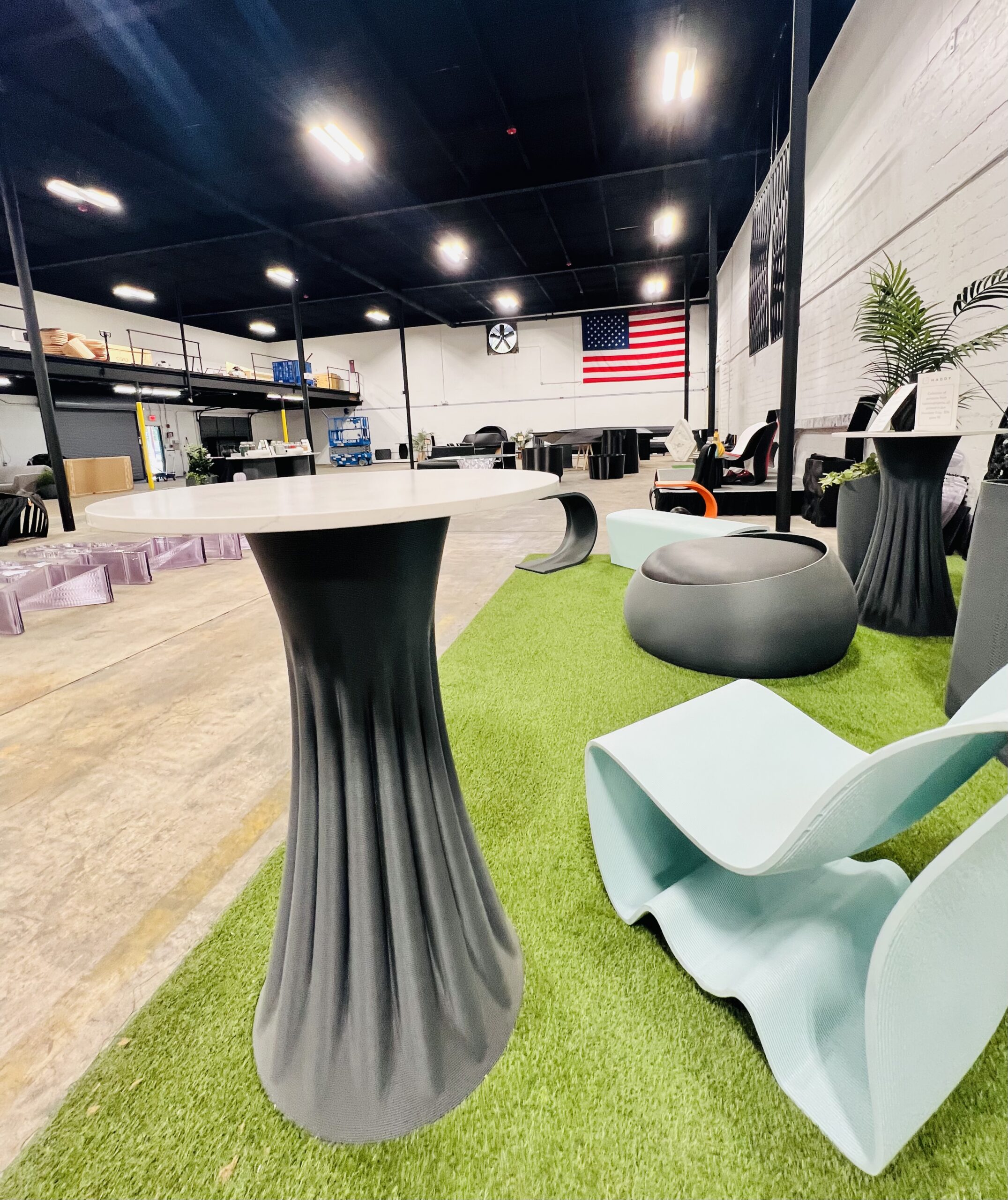
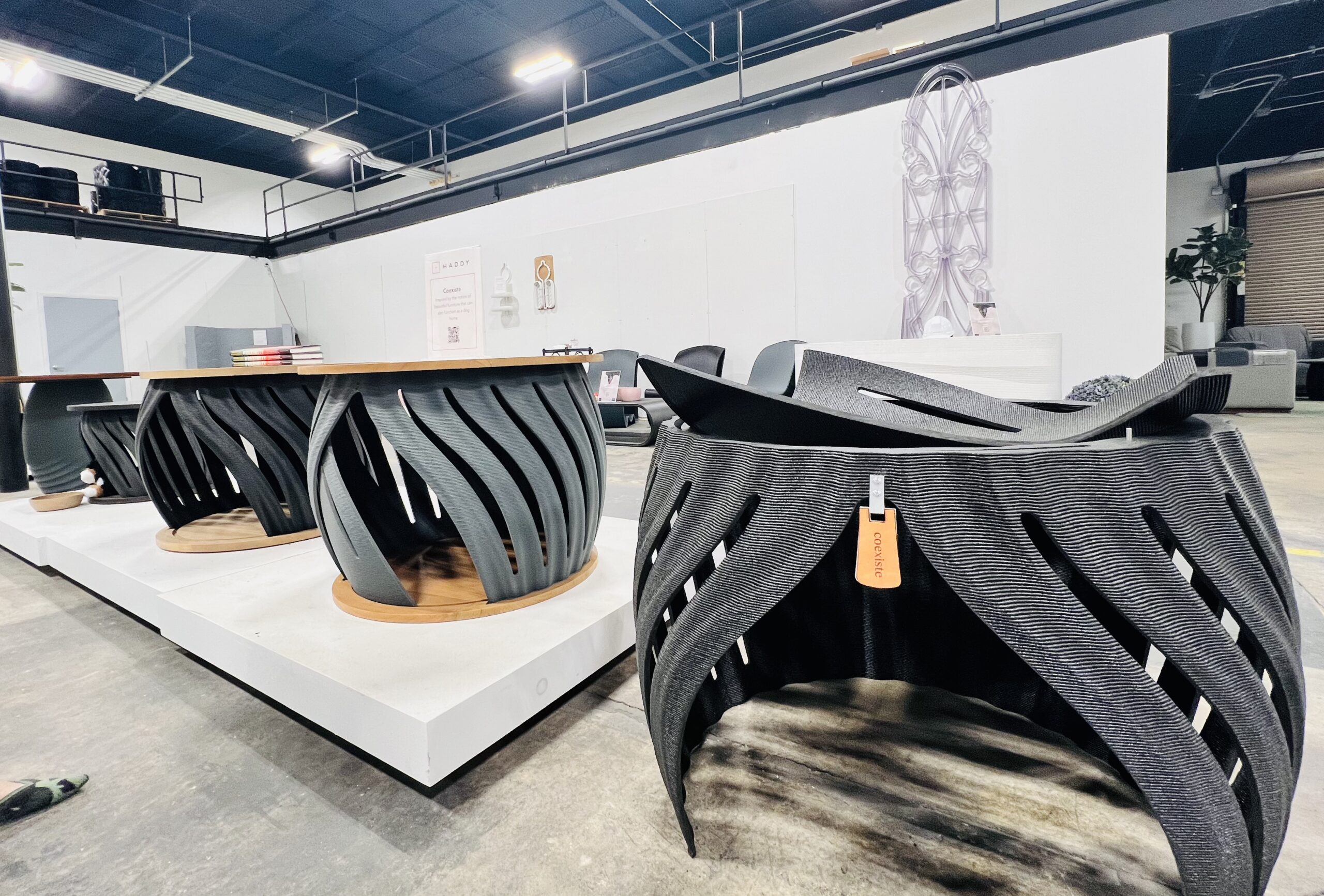
3D printed tables, seating, and architectural elements produced by Haddy using recycled polymer materials.
It’s an ambition that may sound big, but after visiting the site in St. Petersburg, it no longer felt like just an idea. What stood out most was not just the machinery, which, let’s face it, is pretty impressive in and of itself. It was the clarity. Rogers has a very specific view of what 3D printing should do next. He is not arguing for hype. He is arguing for production. He is arguing for local capacity. And he is arguing that additive manufacturing works best when it solves real commercial problems.
Haddy stands as one of the clearest examples yet of what happens when large-format 3D printing grows up, far beyond a furniture startup or a robotics story.

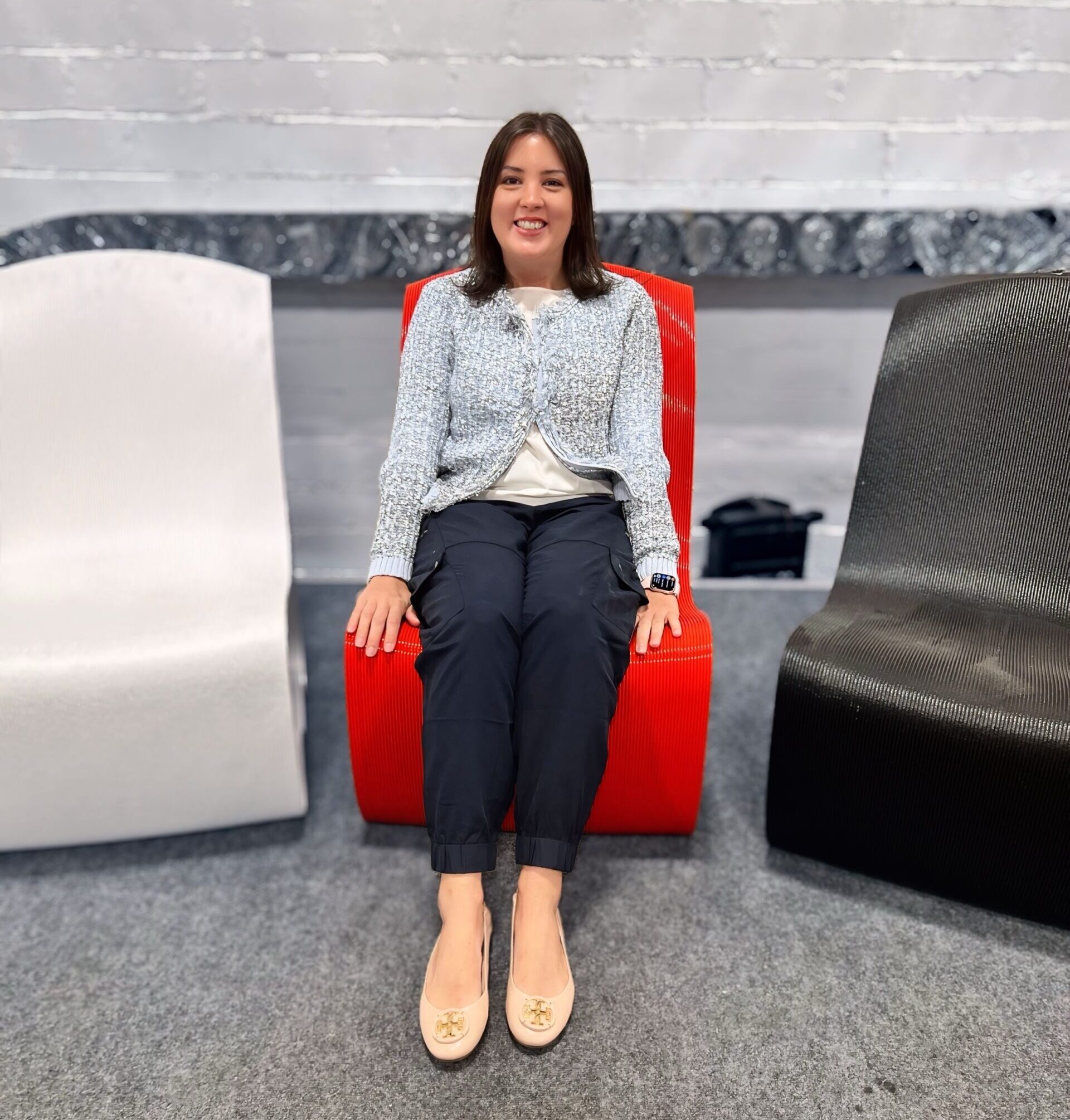
3DPrint.com’s Vanesa Listek sits in one of Haddy’s large-format 3D printed chairs during a visit to the company’s headquarters.
All images courtesy of Vanesa Listek/3DPrint.com