

Compared to other industries, the construction sector is known for its lower margins, largely due to the nature of projects and the competitive bidding process it undertakes to acquire them.

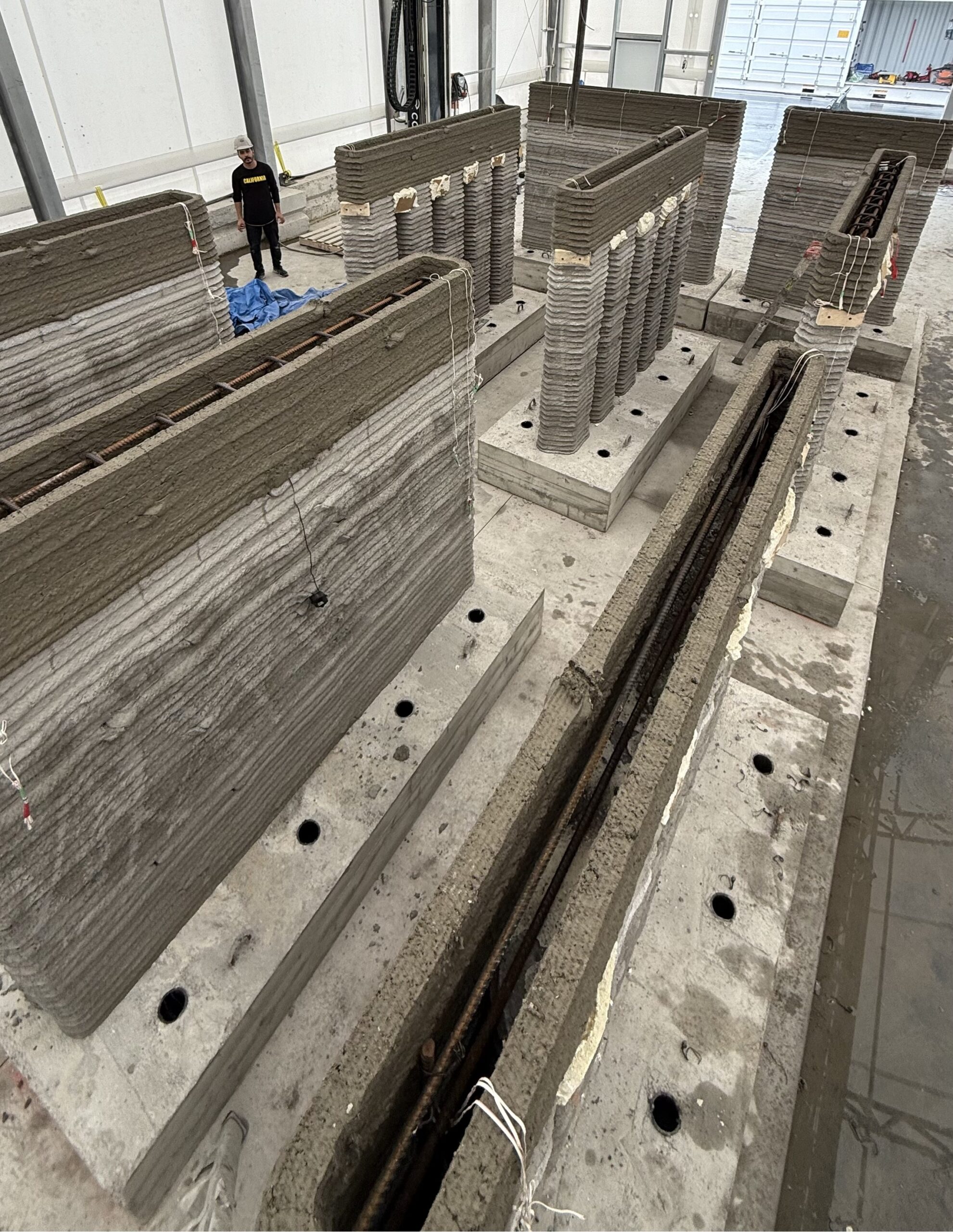
3D printed wall specimens will be used for Seismic testing. Image courtesy of Printerra.
Sector challenges, including increasing demand, labour shortages, supply chain issues, lead times, environmental impact, and project dynamics driven by market instability and delayed payments, only fuel the complexity of profitability. A pinnacle example is Petrofac’s recent filing for administration after its client TenneT terminated a $14 billion framework project agreement. Petrofac’s filing affects $25 billion in active projects and bids under evaluation in the MENA region.
It should then come as no surprise when pitching Additive Construction to general contractors and developers as an innovative tool for the industry, that one of the first questions asked is “How much will it cost?”
Upfront investment as a prerequisite for Additive Construction adoption, or any construction digitalization solution, is not the only path available for innovative tool assessment and adoption.

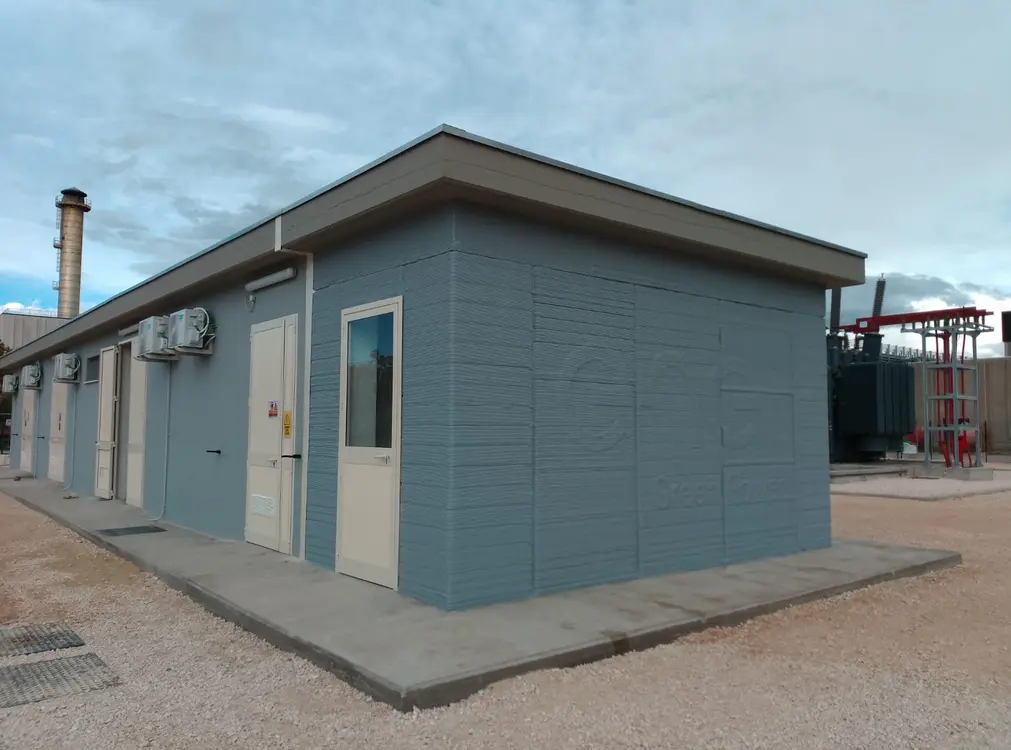
First earthquake-resistant building in Italy made with 3D concrete printing. Image courtesy of Heidelberg Materials.
Existing business models can be adopted to determine solution viability and facilitate tool integration while mitigating risk and minimizing financial commitments.
These viable business models are well established in the construction sector and are already integrated into the modus operandi structure. These models could also serve as a transitional approach to a new line of business or service offering.
Short-term contracts / PoCs: In its simplest form. This business approach could be project-based and scope-specific. The main benefits of this model to a General Contractor or Developer include:
- The ability to explore innovative solutions with minimal financial risk. In most cases, the PoC is part of a larger existing traditional construction project, and an Additive Construction approach is explored under a subcontractor’s agreement. The PoC is also subsidized by the project owner/client and not directly by the general contractor.
- Nominal liability, as the projects consist of small scopes of work and are characterized as non-structural elements (urban furniture, infrastructure, or non-residential structures such as electrical pocket substations, for example).
- The cost is Service Deliverable Specific, with no overhead costs for equipment, insurance, labor, and training.
- Specific KPIs are identified to determine Additive Construction’s viability.
- Contractual, deliverable, warranty, and risk obligations related to the Additive Construction scope of work are back-to-back and the responsibility of the technology or service provider.
- The contractor and client have no commitments to the service or technology provider regarding post-project deliverables, especially if the working relationship, not the concept, proves to be a challenge, and where providers might end up being “blacklisted” as a result.
- The freedom to explore other providers, technologies, materials, and concepts for similar or other opportunities and sectors (example: civil, heavy civil, mechanical, and energy industries).

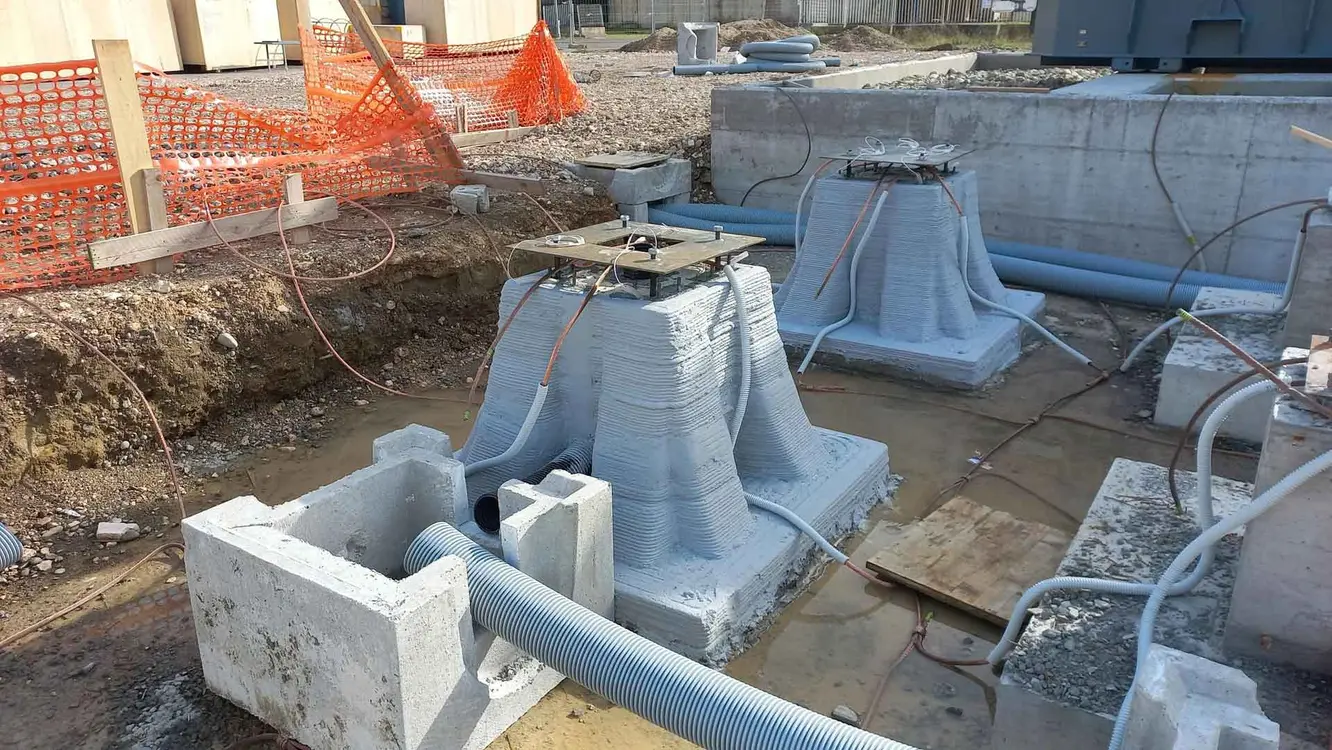
Pocket substations in Italy made with 3D concrete printing. Image courtesy of Heidelberg Materials.
Long-term contracts / preferred vendor: Normally, post PoC, this phase of adoption triggers a long-term vision and commitment by the contractor to implement Additive Construction as an integral component to address project deliverables. Key activities include:
- Establishing long-term collaborative business models to enable the integration and scaling of Additive Construction services, leading to new market segments and industry exposure for all stakeholders involved.
- Aligning Additive Construction offerings per project-specific requirements (based on industry, material, and geography) and grounded by a vetted list of approved and preferred providers.
- Exploring the commercial viability, applicability, and scalability of Additive Construction adoption without the need to invest in setting up in-house operations. This is especially important for buy-in, a critical component for a sound strategy in Additive Construction adoption. Buy-in not just from management, but from all those directly involved in the everyday operations of the projects.
- Firsthand exposure to various and latest Additive Construction tools, materials, and applications.
- Generating and vetting the hard data needed to validate a new service offering and identify a market niche.
Business integration / new service offering: In many cases, long-term contracts may be a comfortable business approach for Additive Construction adoption, specifically due to their low financial and liability commitments. However, integrating Additive Construction operations as a new business offering does have its advantages.
- Collaborating with a vetted stakeholder and integrating their offerings as an extension of existing operations through a mutually beneficial business model.
- Remaining attuned with a growing and fast-changing innovative industry while solidifying and ensuring the service offering is always relevant and competitive.
- Ability to co-develop Intellectual Property and Patents to address the targeted market segment niche.
- Increase prospects of delivering projects more safely and efficiently while diversifying operations in new market segments made possible by Additive Construction adoption as a common tool in the industry.

Stephan Mansour

Understanding Additive Construction, having clear implementation strategies, and addressing real project needs using existing business models are key components for the successful adoption of construction digitalization solutions by general contractors and developers. The staunchest critics will likely come from within the organizations; however, the invaluable insights gained from a collaborative approach involving all internal and external stakeholders will result in a solid approach that has no choice but to succeed.
About the Author:
Stephan Mansour is an Additive Construction (AC) Specialist and Advisor with deep expertise in advancing 3D printing for the built environment. He serves as Chair of the ASTM F42.07.07 Subcommittee on Additive Construction, Co-Convenor of the ISO TC 261/JG 80 group on Additive Construction, Technical Lead for ISO/ASTM 52939:2023, and Member of the Standards Council of Canada (SCC) – ISO/TC 261 on Additive Manufacturing. Stephan also collaborates with Printerra Inc., helping shape the global framework for additive construction technologies and standards development.