


Qrons, headquartered in New York, is now going further with their innovative research after they announced an agreement with Dartmouth College, in New Hampshire, for an exclusive worldwide license to develop innovative 3D printable biocompatible materials to treat penetrating brain injuries, and more.


Chenfeng Ke
Chenfeng Ke is currently leading the Ke Functional Materials Group Lab at Dartmouth, which focuses on syntheses and applications of polymeric materials for storage/separation and 3D printing applications. According to the lab, the research scheme overlaps organic synthesis, crystal engineering, polymer synthesis, materials characterization, and 3D printing, with an emphasis on the design of polymeric materials that are noncovalently assembled.
“We are excited to partner with Qrons and continue the development of smart hydrogels with 3D printing capability for the treatment of traumatic brain injuries,” stated Ke, who is also a member of Qrons Scientific Advisory Board.
Today, current treatments to help patients regain function after a TBI focus on reducing secondary injuries, mainly rehabilitation in a hospital or specialized therapy center. It usually involves a physical therapist and occupational specialist to help patients relearn how to walk, talk, and carry out other everyday tasks. Qrons claims that this treatment can partially reduce further damage but do little or nothing to heal the brain.
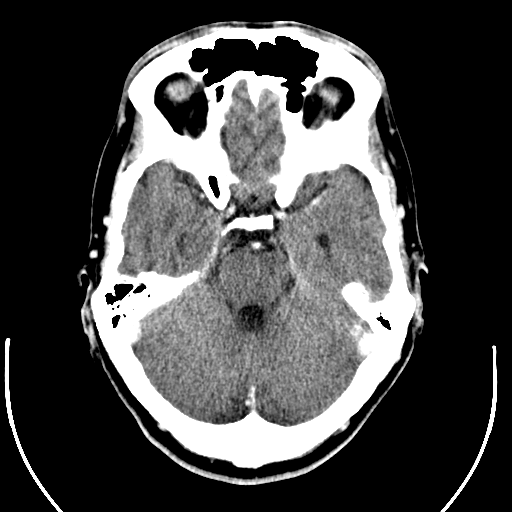
Qrons already has two product candidates for treating TBIs, both integrating proprietary, modified MSCs and smart synthetic material. The QS100, an injury specific, 3D printable, implantable MSCs-synthetic hydrogel, to treat penetrating brain injuries, and QS200, an injectable MSCs-synthetic hydrogel for the treatment of diffused injuries commonly referred to as concussions.

The exclusive worldwide license for 3D printable materials in the fields of human and animal health will enhance the company’s research, leading to further innovations in a niche field.
“The intellectual property covered by this license has been instrumental in helping us advance our research on the treatment of penetrating brain injuries,” commented Ido Merfeld, Qrons Co-founder and Head of Product. “We believe combining Qrons’ proprietary hydrogel with customizable 3D printing capabilities is an innovative approach to treating traumatic brain injuries, for which there are limited treatments.”
One of 111 bioprinting companies in the world, Qrons is moving fast to research novel techniques for promoting neural recovery. Throughout the last three years, they have entered into research agreements with Ariel University, based in Israel to develop and commercialize products for neuronal tissue regeneration and repair, completed the first in vivo animal experiments for the QS100 and are close to beginning pre-clinical experiments for the QS200.
Jonah Meer
Jonah Meer, also co-founder and CEO, said that “there is a great need for our promising treatments, and this technology is an integral part of our work to develop innovative 3D printable, biocompatible advanced materials.”

As the widespread impact of TBI continues to grow, solutions like the ones proposed by Qrons could mean a different lifestyle for survivors.
[Images: Qrons and Dartmouth College]