

We’ve got lots of material news for you in today’s 3D Printing News Briefs, starting with a Material Development Kit from RPS. Polymaker and Covestro are releasing three new materials and EOS has introduced a new TPU material for industrial 3D printing. Moving on, CASTOR and Stanley Black & Decker used EOS 3D printing to reduce costs and lead time, and Velo3D is partnering with PWR to make high performance heat exchangers.
RPS Introduces Material Development Kit for NEO800
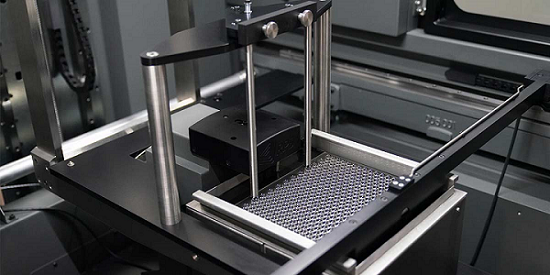
“This NEO Material Development Kit now opens the door for large industrial chemical companies such as BASF, DSM and Heinkel to push the boundaries of UV photopolymers,” said David Storey, the Director of RPS. “The industry is looking for a quantum jump in materials to print end-user production parts from the stereolithography process.”
New Polycarbonate-Based Materials by Polymaker and Covestro

The first is PC-ABS, a polycarbonate and ABS blend which uses Covestro’s Bayblend family as its base material. Due to its high impact and heat resistance, this material is specialized for surface finishings such as metallization and electroplating, so it’s good for post-processing work. Polymaker PC-PBT, which blends the toughness and strength of polycarbonate with PBT’s high chemical resistance, is created from Covestro’s Makroblend family and performs well under extreme circumstances, whether it’s subzero temperatures or coming into contact with hydrocarbon-based chemicals. Finally, PolyMax PC-FR is a flame retardant material that’s based in Covestro’s Makrolon family and has a good balance between safety and mechanical performance – perfect for applications in aerospace motor mounts and battery housings.
EOS Offers New Flexible TPU Material

“The EOS TPU 1301 offers a great resilience after deformation, very good shock absorption, and very high process stability, at the same time providing a smooth surface of the 3D printed part,” said Tim Rüttermann, the Senior Vice President for Polymer Systems & Materials at EOS. “As such the material is particularly suited for applications in footwear, lifestyle and automotive – such as cushioning elements, protective gears, and shoe soles.”
You can see application examples for TPU 1301 at the EOS booth D31, hall 11.1, at formnext in Frankfurt next month, and the material will also be featured by the company at K Fair in Dusseldorf next week.
CASTOR, Stanley Black & Decker, and EOS Reduce Costs and Lead Time

“They have a very cool software in which we can just upload the part of the assembly CAD file, and within a matter of minutes, it can automatically analyze the part, and give us the feasibility of whether the part is suitable for additive manufacturing or not. And in case it is not suitable, it can also let us know why it is not suitable, and what needs to be changed. It can also tell us what is the approximate cost, which material and printer we can use,” said Moses Pezarkar, a Manufacturing Engineer at Stanley’s Smart Factory, in the video.
To learn more, check out the case study, or watch the video below:

PWR and Velo3D Collaborating on 3D Printed Heat Exchangers
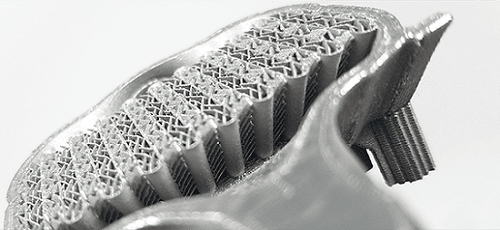
“PWR chose Velo3D after extensive testing. The Velo3D Sapphire printer demonstrated the ability to produce class-leading thin-wall capabilities and high-quality surfaces with zero porosity. Velo3D and PWR share a passion for pushing the limits of technology to deliver truly disruptive, class-leading, products. We are a natural fit and look forward to building a strong partnership going forward,” said Matthew Bryson, the General Manager of Engineering for PWR.
“Heat exchanger weight and pressure-drop characteristics have a huge impact on performance and are significant factors in all motorsport categories. Using additive manufacturing to print lightweight structures, enhancing performance with freedom-of-design, we have the ability to further optimize these characteristics to the customer’s requirements whilst providing the necessary cooling. The broad design capabilities and extremely high print accuracy of the Velo3D Sapphire 3D metal printer will help us optimize these various performance attributes.”
Discuss these stories and other 3D printing topics at 3DPrintBoard.com or share your thoughts in the comments below.