
Recently, the platform launched the Docubot Challenge to help inaugurate the first Distributed Hardware Hackathon in the world. The global open source community was charged with finding a hardware solution for an issue that every maker faces – documentation.

This is a very prevalent issue in the maker community in terms of open knowledge for the purposes of digital fabrication. Documentation makes it possible for community members to gain the necessary knowledge and skills to further contribute to an ever-growing base of information. But just because it’s useful doesn’t mean it’s easy – while documenting fabrication methods may be a necessary evil, it can be a painstaking and tedious process that can slip through the cracks if you’re not meticulous about updating your work.
“Every product developer faces the task of having to document their work, but it’s a painful process. When your hands are full with what you are doing, it’s hard to take a step back and jot down the steps. That’s why documentation is often written after the process has already been completed, so there will always be missing photos or information,” the challenge states.
“We should strive to make the process of documentation easier, because Documentation in itself is an amazing thing. As a resource, it helps a broader community learn the skills and acquire the knowledge to contribute to a growing open source knowledge base.”
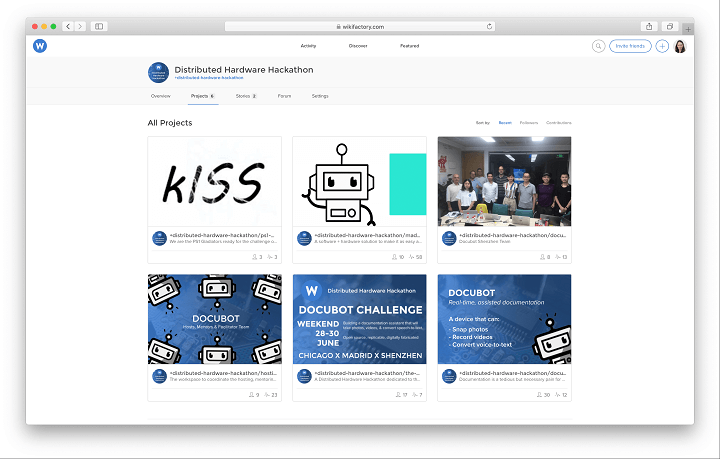
The Wikifactory team really wanted to turn the first edition of its Docubot Challenge into a distributed event; it is, after all, tagged as being “designed for makers, by makers.” Due to support from makerspaces around the world – specifically Pumping Station One in Chicago, Makerspace Madrid, and TroubleMaker in Shenzhen, China – this hope became a reality. Wikifactory is a great tool when organizing maker community events like workshops and hackathons, as it makes it simple to bring teams together online so they can contribute before, and even after, the event.

“With a hardware solution, doing documentation can be made into a more interactive, assisted process which can help accelerate engagement and collaboration in open source design and hardware,” the challenge stated.
The Docubot Challenge was originally instigated by Wikifactory members Gianluca Pugliese and Kevin Cheng. The participants were connected through Wikifactory to host project events in their own cities, engage with other teams around the world, and accept feedback and advice from other problem solvers. While it was definitely a learning experience, Docubot is now officially an open source hardware initiative, and great progress has already been made.
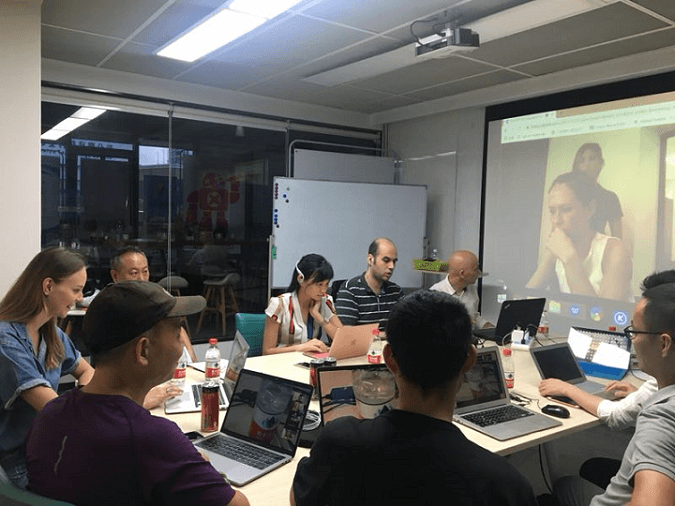
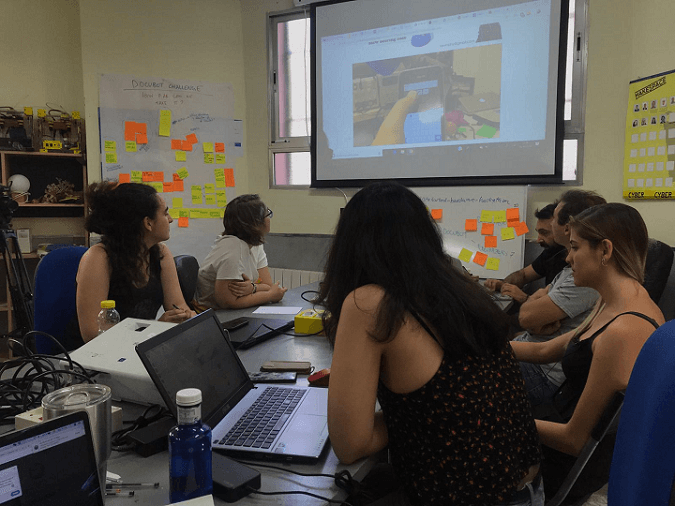
“The Shenzhen Team developed an app that converts speech to text, the Madrid Team created a fun game that helps makers beat laziness and get documenting, and the Chicago Team created a button that signals a phone to start recording voice messages as well as pictures,” Wikifactory wrote.
The worldwide maker community is invited to get involved and contribute to the Docubot initiative. Whether you’re working on design ideas, developing the app and OS, or the hardware integration, the collaborative project needs your help in further extending the ideas by the team members who originally started it.
“With interactive and intercity sessions, participants will get to build relationships with creative problem solvers from around the world. It is an opportunity to apply skills in digital fabrication machines like 3D printing, hardware, electronics, programming and robotics for a relevant cause.”
Learn more about the Docubot Challenge here.
Discuss this and other 3D printing topics at 3DPrintBoard.com or share your thoughts in the comments below.
[Images: Wikifactory]