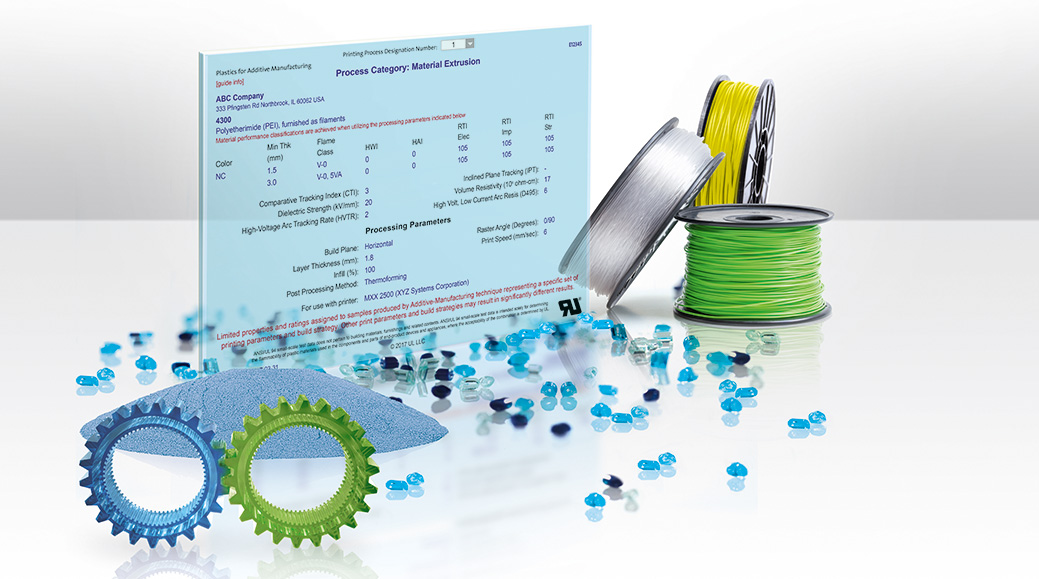
Safety and compliance company Underwriters Laboratories (UL) has done a lot of work with additive manufacturing, from setting up centers of excellence to researching emissions to offering training courses and more. Now UL is offering what it is calling the Plastics for Additive Manufacturing Program, or Blue Card Program. This is a service that enables customers to have published data that facilitates pre-selection of 3D printed materials and components for use in various end products. It defines the requirements necessary to recognize plastics intended for 3D printing, proving the safety, integrity and usefulness of materials.

The Blue Card Program can be applied when the material has been processed using one of several 3D printing technologies, including material extrusion, powder bed fusion systems, VAT polymerization, material jetting, binder jetting, sheet lamination and direct energy deposition. The Blue Card also includes, according to UL:
- information about the 3D print technology used to process the material
- the 3D printer model designation
- test specimen build parameters specific to the technology (e.g. build plane, raster angle, air gap, etc. for material extrusion technology)
- multiple safety and performance-related property ratings tested to appropriate standards
A Blue Card is automatically issued when a material intended for 3D printing receives a UL Recognized Component Mark. Certified materials are added to the UL iQ and UL’s Prospector databases.
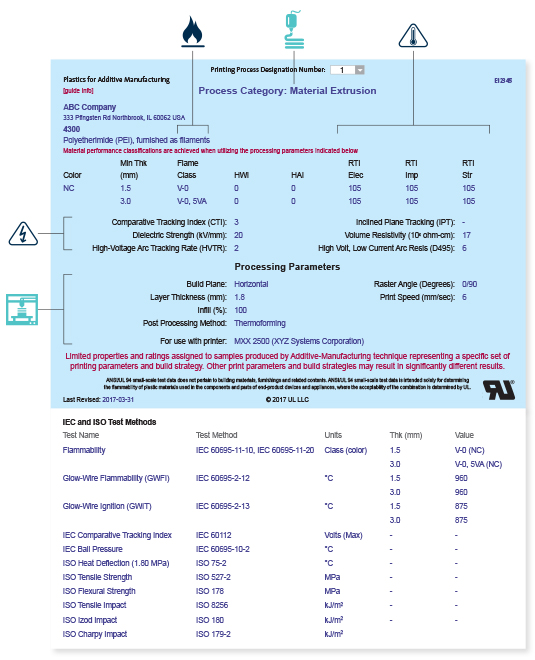
The Blue Card also benefits end product manufacturers that are interested in using tested and certified 3D printed parts and components in their applications. By using UL Certified plastics, these manufacturers can save time and money in the process of seeking certification for end products or systems. UL Certified plastics are also covered under UL’s Follow-up Services, which are products’ ongoing certification assessments that help that products continue to meet UL standards of safety and performance.
UL also offers a White Card, which is an extension of a Blue Card. This card relates to international standards and allows manufacturers to promote their product’s performance credentials to the global markets, helping them add value by increasing coverage and boosting product discoverability. It is precisely this kind of certificatio process that will make 3D printing safer for all users and we applaud developments such as the UL Blue Card.
Discuss this and other 3D printing topics at 3DPrintBoard.com or share your thoughts below.