
In March, Materialise became the first company to receive FDA clearance for diagnostic use of its 3D printed anatomical model software. The company then launched an FDA-approved certification program that allows 3D printer manufacturers to have their products tested and validated for use with Materialise’s Mimics inPrint software, which converts medical images into 3D print-ready files.
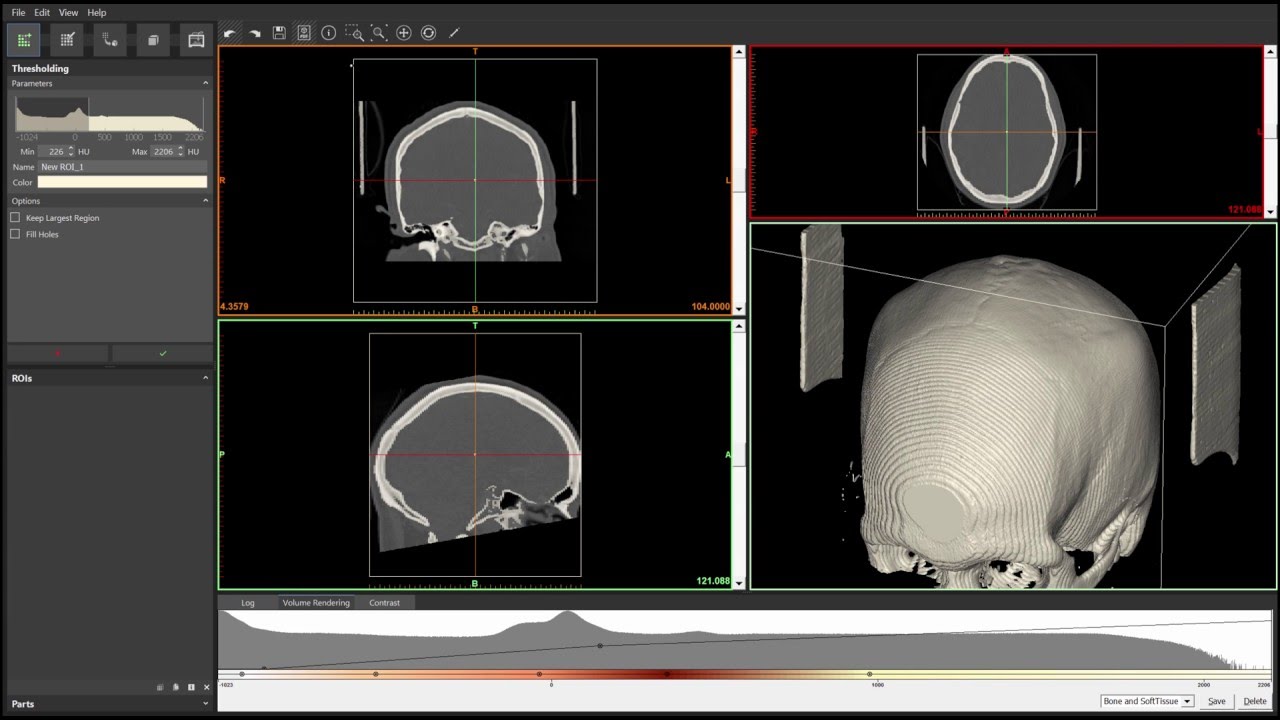
The certification process is based on the expertise that Materialise has developed – and the company certainly has expertise, as one of the foremost medical 3D printing companies in the world.
“It’s reproducibility testing and geometric accuracy testing, ensuring that the file coming into the printer will be accurately manufactured,” explained Todd Pietila, Global Business Development Manager for Hospital 3D Printing at Materialise.
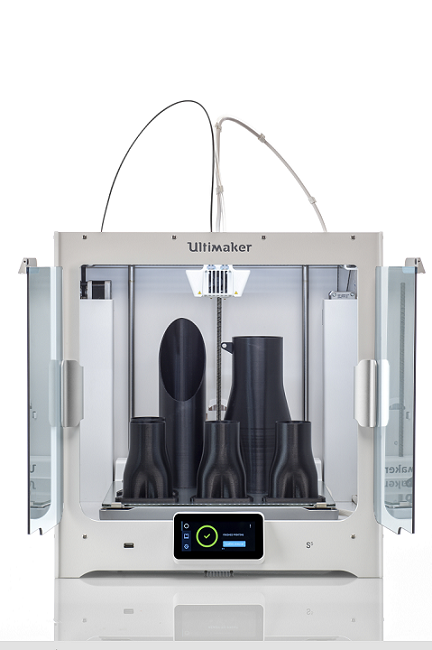
Ultimaker S5
At the recent 2018 RSNA annual meeting, Materialise announced the two 3D printing companies that most recently had their products certified: Stratasys and Ultimaker. Stratasys’s J750/J735, Object30 Prime and Connex 2 500 3D printers are now on Materialise’s list of 3D printers that are suitable for orthopedic, cranio-maxillofacial and cardiovascular anatomical models, as is Ultimaker’s S5 3D printer along with several materials. These join the Formlabs Form 2 3D printer on the certification list.
The FDA does not have oversight when it comes to the practice of medicine, but if a hospital or clinic is marketing its 3D printing services, it must use FDA-cleared products.
“Other than just the peace of mind of using a cleared solution, it gives a higher level of trust and makes the decision-making much simpler when hospitals are starting 3D printing,” Pietila said. “They don’t have to go out and talk to three or four different vendors, buy separate components, try to piece them together, make sure they all work together. It’s a pre-vetted system of software, hardware and materials. And it just the reduces the overhead and burden for them.”
According to Michael Gaisford, Director of Healthcare Solutions at Stratays, the certification process is a big step forward for 3D printing in healthcare. Facilities will now have easier access to solutions that will allow them to perform faster, less invasive procedures, lowering costs and offering better care for patients.
“You want to be ahead of the curve when it comes to the FDA,” Gaisford said. “The hospitals want to see this as well because they’re making some pretty critical decisions when it comes to patient care…Those who are involved in the space are already asking for it.”
Discuss this and other 3D printing topics at 3DPrintBoard.com or share your thoughts below.