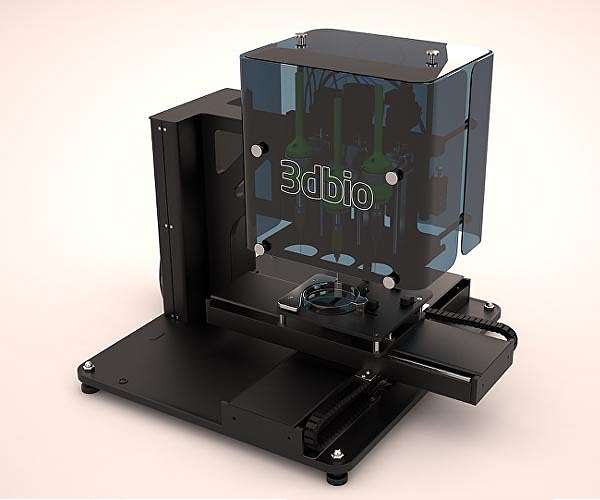
“The bioprinter was in the habitation module, which jettisoned from the escape capsule of the Soyuz MS-10 spacecraft and fully burnt,” a source told Sputnik.
Two new members of the ISS crew, Russian cosmonaut Alexey Ovchinin and NASA astronaut Nick Hague, were also aboard the spacecraft, but they safely returned to Earth in a jettisoned escape capsule. The exact cause of the incident has not yet been announced, and is being investigated by a special commission of Russia’s space agency Roscosmos. All manned launches from Baikonur Cosmodrome have been suspended until the commission can figure out the cause of the failure. Incidents like this don’t happen every day – in fact, this was the first time in modern Russian history that a manned space launch failed.

“Organ.Aut and cosmonauts have a duplicate [of the printer], it will be ready to fly to the ISS in the near future,” said Yousef Hesuani, Co-Founder and Managing Partner of 3D Bioprinting Solutions. “We will work out a separate cycle graph of the experiment for preparing the flight at the Progress spacecraft. “The current crew has already confirmed its readiness for undergoing the remote training, so we will be ready to send the scientific equipment in any case.”
The delivery of the first 3D bioprinter to the International Space Station may have hit a snag, but it’s not really more than that: a snag. Besides the second bioprinter being provided by 3D Bioprinting Solutions, there are several other bioprinters being developed for the purposes of bioprinting in outer space. It may seem odd that so many are focused on bioprinting in space, when, after all, 3D printed organs are going to be needed here on Earth, but bioprinting is actually easier in zero gravity.
Thick, viscous liquids and large nozzles must be used to bioprint on Earth, but take away gravity and it’s possible to use much thinner inks and nozzles, allowing for much more precision. While some amazing bioprinting breakthroughs have happened here on Earth, there’s a whole world of possibility that may open up once we start using the technology in space. Advanced bioprinting has already taken place in zero gravity conditions, and another bioprinter is scheduled for delivery to the ISS early next year. Still another is set to go up shortly, as well.
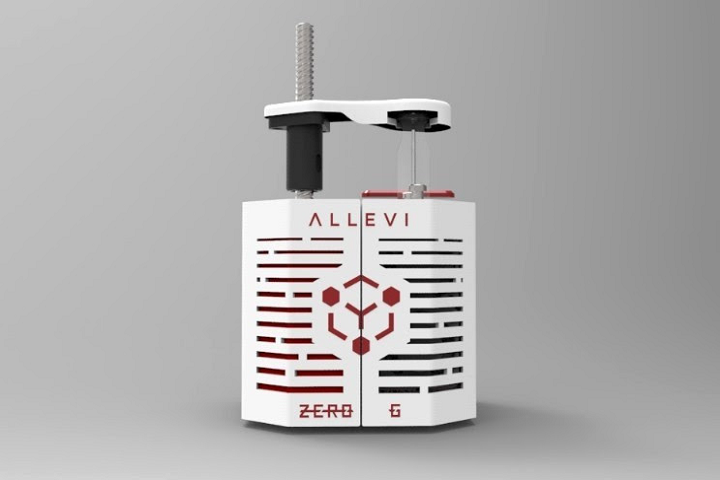
The Allevi Zero-G is another space-bound bioprinter. [Image: Allevi]
Discuss this story and other 3D printing topics at 3DPrintBoard.com or share your thoughts in the comments below.