

The project objective is to “assess the areas where AM can have a positive impact on defence capabilities and to demonstrate its feasibility.” The project, named the Additive Manufacturing Feasibility Study & Technology Demonstration, was initiated within the EDA Research and Technology (R&T) domain, under the Capability Technology, or CapTech, group Materials and Structures, and will look at how the rise of additive manufacturing technologies has created all sorts of potential benefits for the defense community. Utilizing the technology in defense-specific areas can only happen once awareness has been raised, and a deeper understanding of the application of additive manufacturing is promoted through different military contexts.


This project “represents a clear example of how cross-fertilization of ideas from different domains, from R&T to operations, will enhance defence capabilities, especially when supporting deployed missions.” The overarching goal is to show how R&T can contribute in terms of strengthening European cooperation and defense, specifically the European Defence Technological and Industrial Base (EDTIB). It is fundamental to the European Security and Defence Policy that a strong EDTIB is maintained – this is key to helping the EDA achieve its mission of improving the European Union’s (EU) defense capabilities. The EDTIB is a valuable economic asset, and supplies the majority of the equipment that Europe’s armed forces use. So it’s no wonder that the EDA wants to study how additive manufacturing can make a positive impact on Europe’s defense and security.

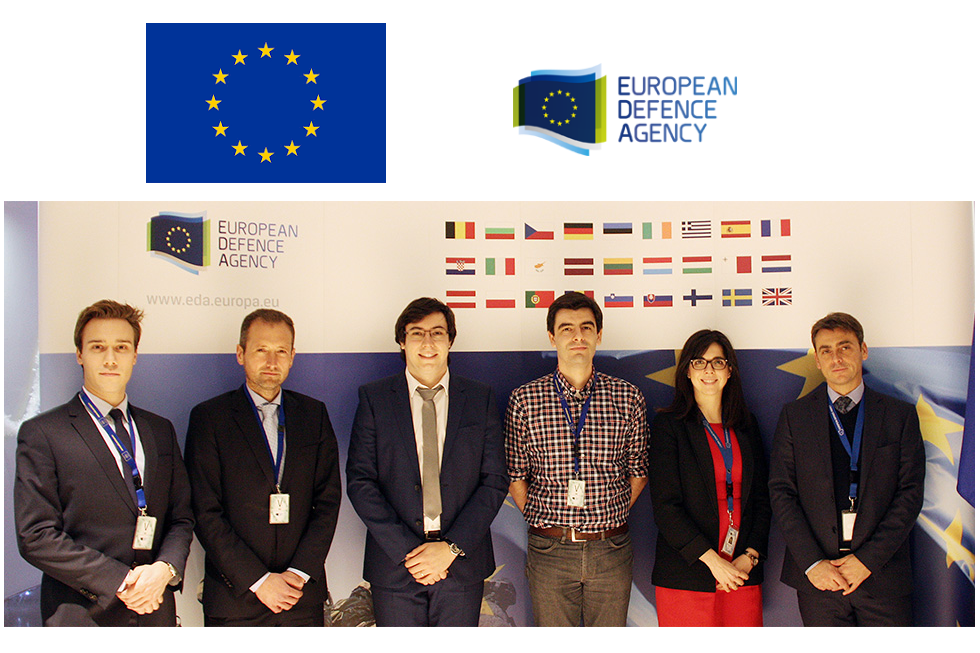
EDA’s project kick-off meeting
Once the project is complete, the results will be presented in exhibition form, with equipment and demonstrations, to high-ranking military staff, in an effort to continue raising awareness on the potential impact of additive manufacturing in the defense sector. The contractors that the EDA is using for the study, defense industry MBDA France and research center Fundación Prodintec, will work to support the project’s activities, and “help to create the synergies that will strengthen the links between research activities, industrial development, and the Armed Forces.” The meeting was attended not only by EDA staff, but also the European Commission, which notably gave €3.3 million in project funding earlier this year to the MESO-Brain consortium, which is focused on researching and developing 3D human neural networks that can interrogate real brain-like activity. Discuss in the AM Defense Study forum at 3DPB.com.
[Source: EDA]