The first battles were fought primarily by the music industry, although television and movie companies were right alongside them. The industries put a tremendous amount of effort and money into stopping the illegal distribution of their products over the internet, but decades later all they have to show for it is a lot of out-of-date copy protection software and a bad taste left in the mouths of their customers. Frankly, the media companies lost the war over illegal downloading of their content. While they still often fight those same battles, they do so far less vigorously, and have been forced to adapt their businesses to find alternative sources of revenue. And that has led to some revolutionary technologies that have been wildly popular for consumers, including digital streaming services and multiple, legal, methods of consuming media.

As a proof of concept of sorts, Source3 entered into an agreement with global branding and licensing company Epic Rights to 3D print recreations of the iconic cover art from classic rock albums like Journey’s Escape and Styx’ Paradise Theatre. Each of the cover recreations is a three-dimensional piece of artwork that has been 3D printed using 3D Systems ColorJet Printing technology by Source3 manufacturing partner ZVerse. The beautiful full-color replicas (seriously, that Journey cover) are being sold exclusively on Amazon and are going to be promoted throughout the summer during several Journey and Styx tour dates.
“Epic Rights is always looking for innovative ways to license premium quality merchandise for our bands’ passionate fans. We are excited about the unique products and merchandising opportunities that 3D printing technologies unlock” says Meghan Mernin, Director Licensing for Epic Rights.
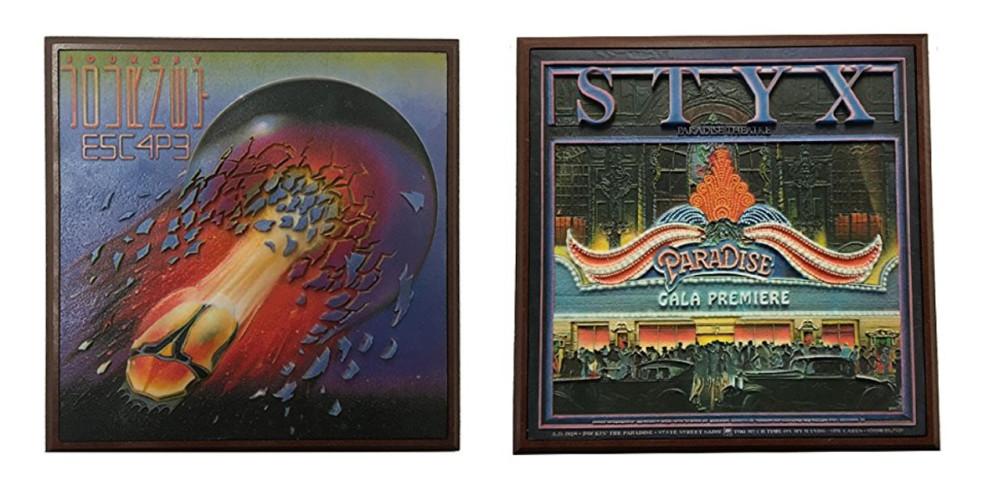
3D printed recreations of Journey and Styx album covers.
“Source3 is proud to partner with Epic Rights to a create first-of-its kind product in 3D album art. We’re thrilled to start with iconic albums from Journey and Styx, two of the most celebrated American rock bands of all time” says Scott Sellwood Co-Founder and Head of Partnerships for Source3.
The goal of a company like Source3 is obviously to avoid the wasted time and money lost during the battle against digital media piracy. Why spend money on lawyers to endlessly scour the internet looking for unauthorized user-created products when companies can simply create easy “micro-licensing” options that make it simple and monetarily beneficial to creators of fan-generated content to use? Obviously this isn’t the answer to all of the legal woes yet to be faced by IP owners from 3D printing, but for many creators it is a great way to protect intellectual property without alienating fans.
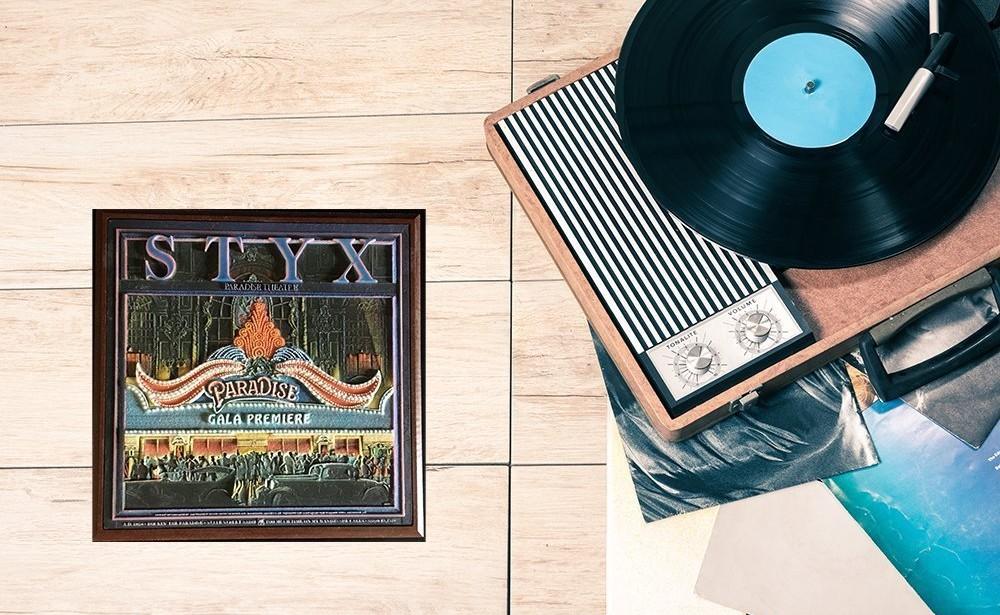
Styx Paradise Theatre.
In the case of these 3D printed album covers, each is priced at $199, which sounds like a high price until you try to take that same album artwork to a 3D printing services provider. If the company will even do it, the cost of turning the artwork into a 3D model and then printing it using a high-quality, full-color 3D printer is going to at least cost the same, but probably more than the cost of the licensed versions available on Amazon. Not to mention the turnaround time, which will be considerably faster. The final quality also needs to be factored in, presumably Epic Rights was able to secure very high-quality versions of the album artwork for ZVerse to work with, which is naturally going to result in a better final product.
The bottom line is, the content that we all enjoy doesn’t just magically appear, creatives and artists and writers don’t just make it for fun, they do it because it is a passion and a skill that they have spent years developing and honing. They deserve to be paid for their work, and that includes the hundreds, even thousands of people who contribute to the creation of digital media like music and movies. The justifications given for pirating music and movies often includes the suggestion that musicians and famous actors are wealthy and won’t miss a few cents here and there. But that is ignoring all of the very much not wealthy people who work to help create that content. If it is less profitable to make a movie or an album, then all of those supporting creators will either be out of jobs or forced to work for less money.
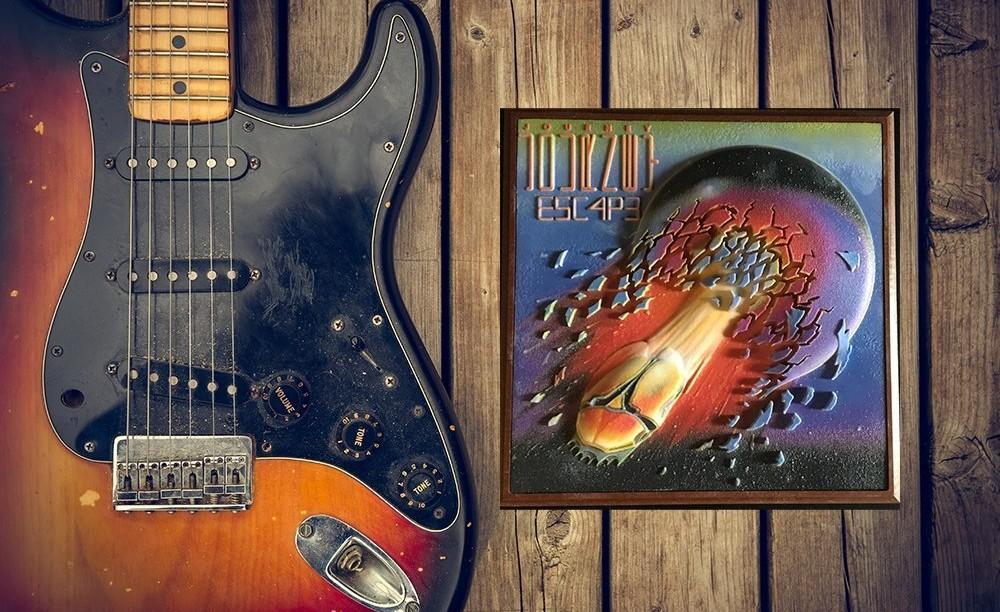
Journey Escape.
Micro-licensing deals like the one reached between Source3 and Epic Rights are potentially a win/win/win scenario. Not only do IP owners protect their property, independent or fan creators can also legally sell products made using that protected IP to fans who have proven time and again that they will typically choose legal sources for those products over illicit ones if they are made readily available. The success of companies like Spotify and Netflix prove that consumers will pay for easier to use, more reliable and higher-quality legal alternatives. While Source3 is the first company to apply this concept to 3D printed media, it very well could be the best bet to avoid the mistakes of the past and prevent trademark and copyright issues from placing roadblocks in the path of the still developing 3D printing industry. Discuss in the Source3 3D Prints Iconic Rock Album Art forum over at 3DPB.com.