
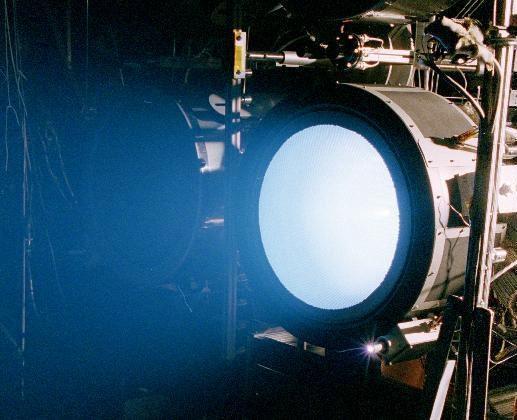
A real ion thruster used on satellites.
While it may sound like something that Captain Kirk asks Sulu to set to maximum, an ion thruster is not science fiction but actually a working technology that is available today. Ion thrusters are used on long-range spacecraft and on satellites to control their orientation and position in orbit. They work by generating beams of ions to create thrust that, in the vacuum of space, can actually allow spacecraft to reach some pretty impressive speeds using a very small amount of power. In space, ion drives are generally powered by solar panels, or for long-range spacecraft, nuclear power. However, it is possible to make an ion drive in Earth’s atmosphere, and while you won’t be able to fly anything with it, it is still a great way to demonstrate the science behind them.
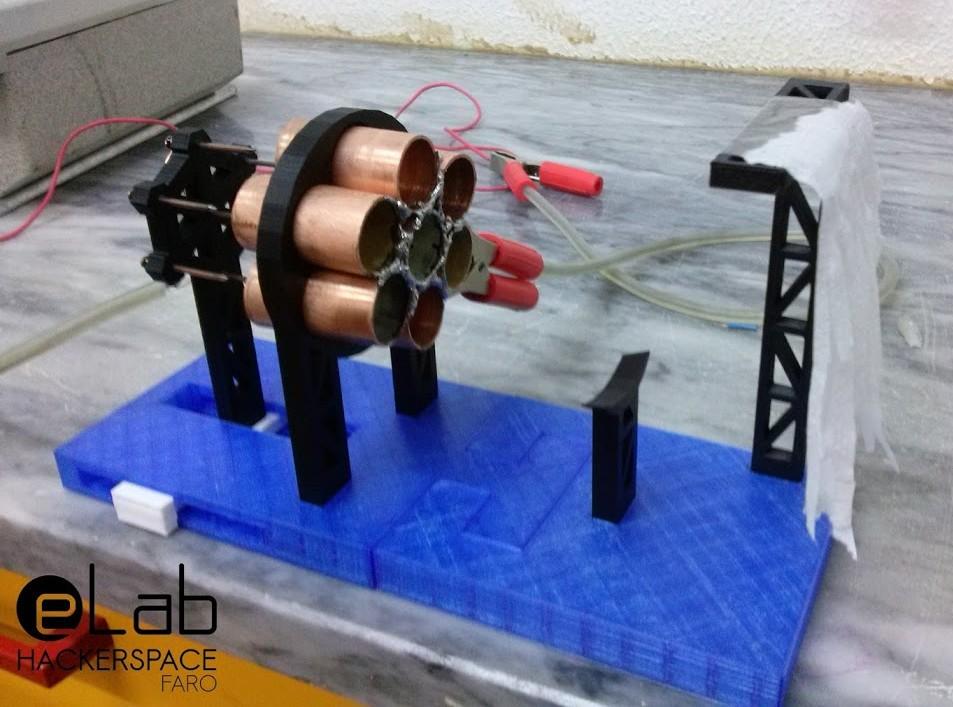
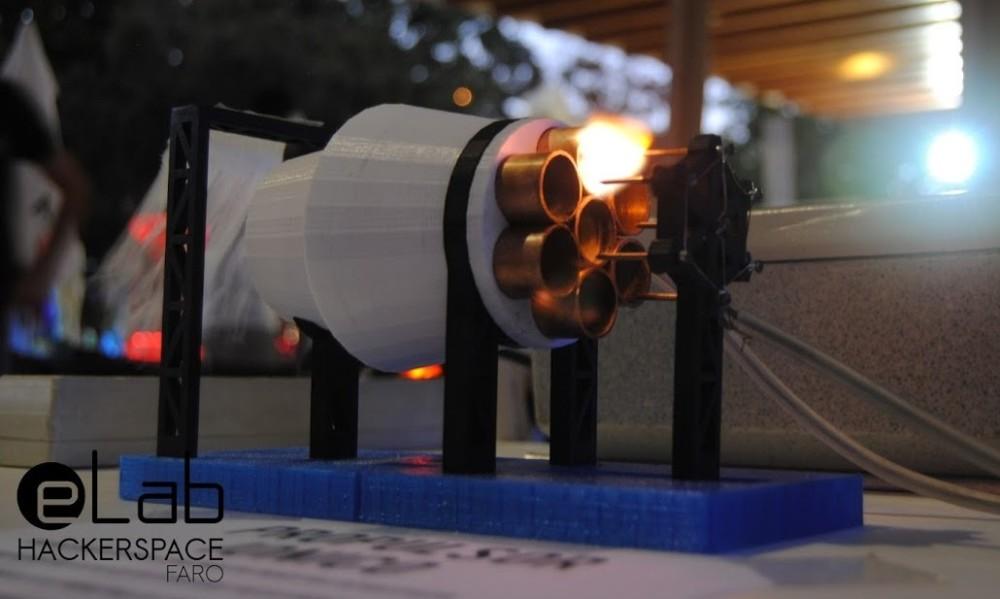
Testing the ion thruster.
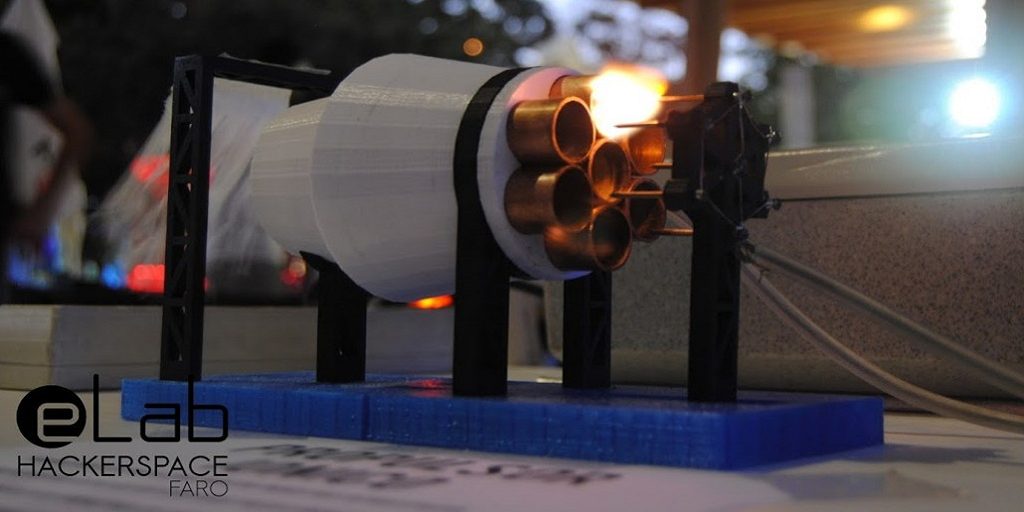
A Portuguese engineer named João Duarte was browsing the internet when he stumbled on a demonstration of the working principles behind ion thrusters and decided that he wanted to build his own. As one of the founders of his local makerspace, eLab Hackerspace, he had access to everything that he would need, and was actually looking for a project to take with him to Lisbon Maker Faire. Because it is always cool to see a flow of air without any moving parts, he thought that a simplified version of this complex technology would be a great project to demonstrate for the show’s visitors. And not only did it just sound like a fun project, building his own ion thruster was a project right up Duarte’s alley.
“First of all, I love space! So, everything related to space is always attractive to me. Another thing I love is to work with high voltage! As an electrical and electronics engineer I’m always involved in interesting projects, but high voltage usually tops everything else. And finally there’s 3D printing, which is relatively new to me, even though I had a previous success with my DNA Lamp. I thought I could use my new learned skills to make it even more special looking, by creating some kind of launching platform looking or engine testing facility, using 3D printed parts,” Duarte told me via email.

The way that Duarte’s thruster works is actually remarkably simple. The copper plated nails and the copper tubing will serve as opposing electrodes. They need to be placed apart very carefully, with the distance of the tip of the nail and the surface of the tubes required to be exactly the same. Once powered, the electric field that surrounds the nails will electrically charge the air around them, which in turn is attracted to the electrode opposite of it, the copper tubes. This results in tiny beams of plasma, so small that they are barely visible, reaching out for the tubes. As the ions travel from the nails to the tubes, they will bring any neutral particles along with them, which results in a steady flow of air that requires no moving parts.
You can see some video of the ion engine in action, including some arcs of charged ions between the copper parts here:
“There are several things that have influence on the efficiency of the system, for example, the voltage applied to the electrodes, the precision of the placement of the nails on the center of the tubes, making sure all distances between them are the same, perfect cut tubes, having the surface perpendicular to the nails, and of course the distance between the electrodes, which must be put right before it starts creating an electric arc,” explains Duarte.
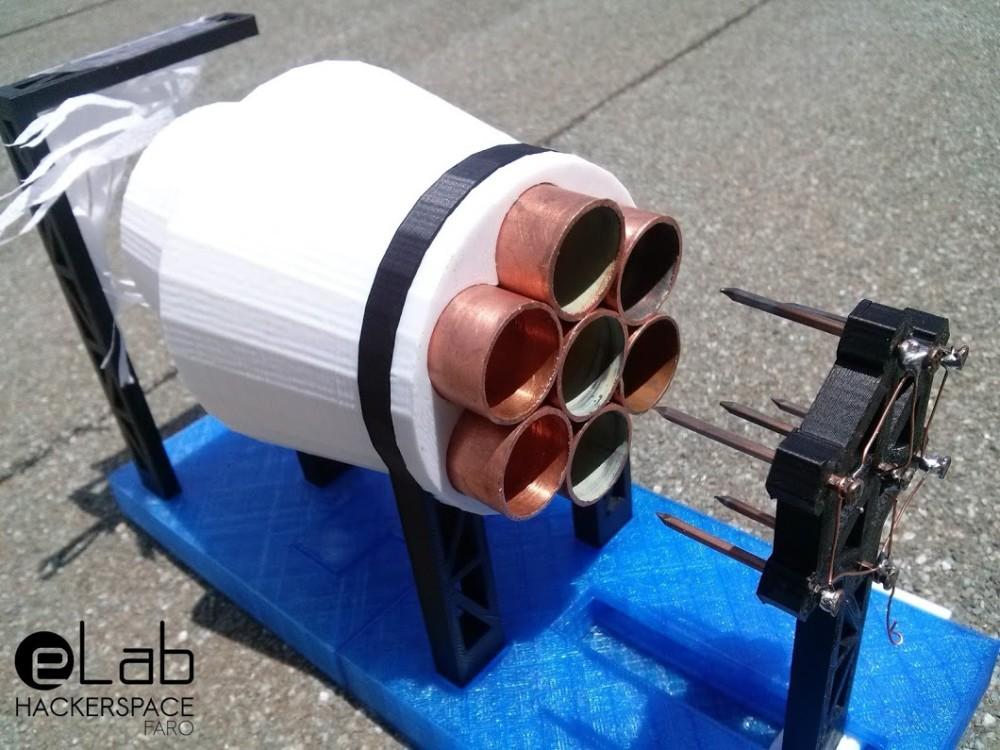
For the power supply, Duarte happened to have an extra Neon Sign Transformer (NST) laying around from a previous project that worked perfectly for this project. However if anyone plans on building their own thruster, be careful, the power needed to make it work would be sufficient to really hurt anyone who doesn’t know exactly what they’re doing. The thruster is controlled with a bright red emergency button that will fire up the transformer when held down, so if anything happens the button just needs to be released.
Have you 3D printed this little gadget? Let us know in the 3D Printed Ion Thruster Spacecraft forum thread on 3DPB.com.