
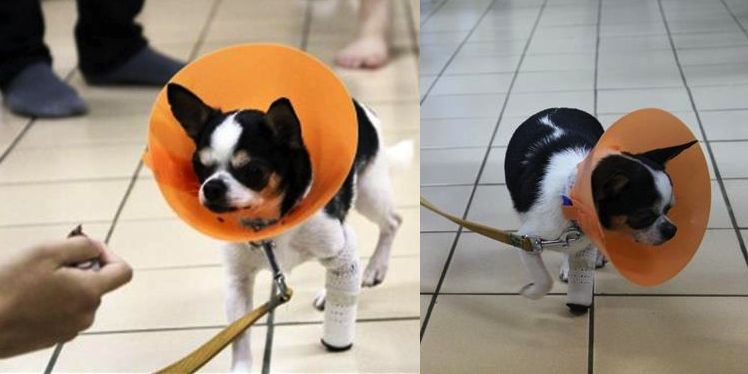

One shining example is the National Pingtung University of Science and Veterinary Medicine Department (NPUST). They now are developing the first domestic animal rehabilitation center which relies on 3D printing.
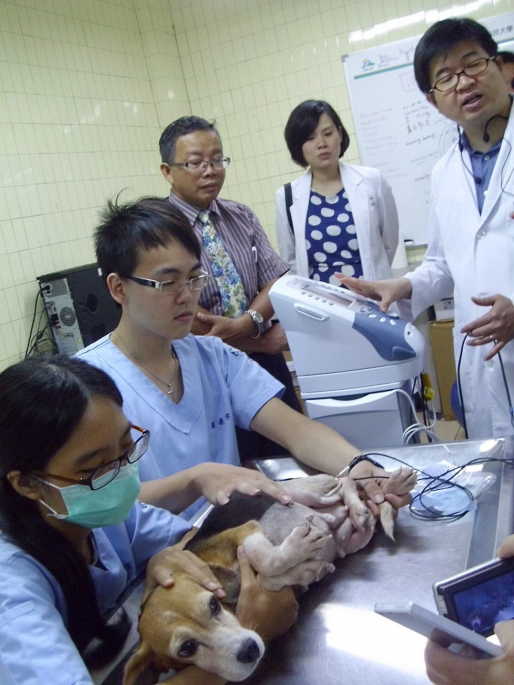
“3D printing is quite popular in recent years,” said Principal of NPUST, Daichang Xian. “The animal hospital, with high-tech developments uses 3D printing technology in animal health in addition to high-resolution computer tomography (CT) equipment. This allows for the construction 3D bone structures.”
The bone structures which Xian refers to are basically medical models that help the students better construct prostheses for animals. At the same time though, this 3D printing technology that the university uses, doesn’t stop here. In fact, they are also 3D printing actual prosthetics for various animals.

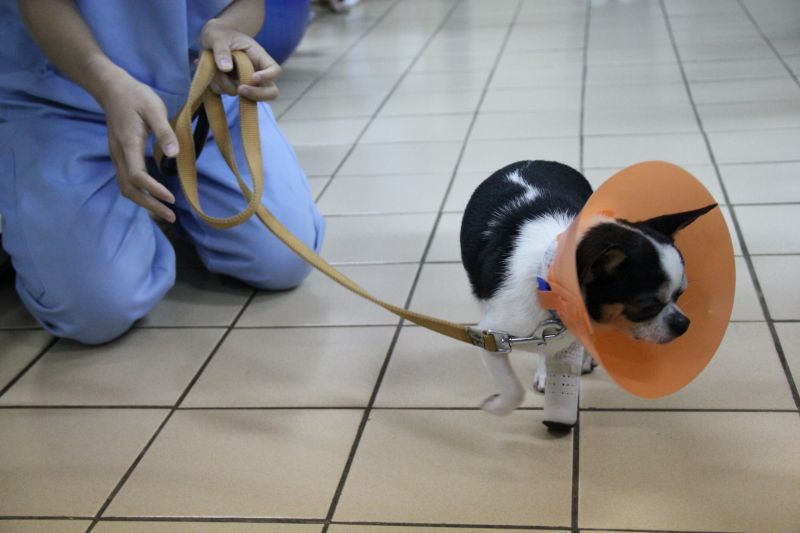
One example is a dog who was brought in with a severely disabled leg (pictured above. Using desktop 3D printers, the University was able to 3D print a working prosthetic leg for the dog, allowing him to walk almost completely normal again. This is just one shining example of what the school is able to do using affordable 3D printers that many of us have in our homes. The cost to produce this type of prosthetic leg, compared to legs created via other more traditional techniques is just 1/30th?
The University is also using these affordable 3D printers to print out molds which can then be used to create prosthetics with more suitable materials other than the traditional PLA plastic available on the machines. This allows them to save an extraordinary amount of money over having more traditional molds made. While this has been taking place in various veterinarian hospital in Europe, the U.S. and Japan, NPUST department director, Lin Lixuan says that much of the successes in these other countries have been due the fact that they can afford much higher quality industrial level machines that can print in metal and metal alloys.
Currently NPUST is preparing to apply for a patent for some of their technology in hopes of raising additional funding in the future to expand their project further. The school is also extensively using other forms of technology ,such as ultrasound, electrical stimulation and lasers in order to provide other forms of physical therapy to their animals.
It’s truly great to see animals being given a second chance at life, thanks in part to 3D printing technology and people like this who are willing to go the extra mile in developing the technology further. What do you think about the future of 3D printing for animal prostheses? Discuss in the 3D Printing Animal Prostheses forum thread on 3DPB.com.