
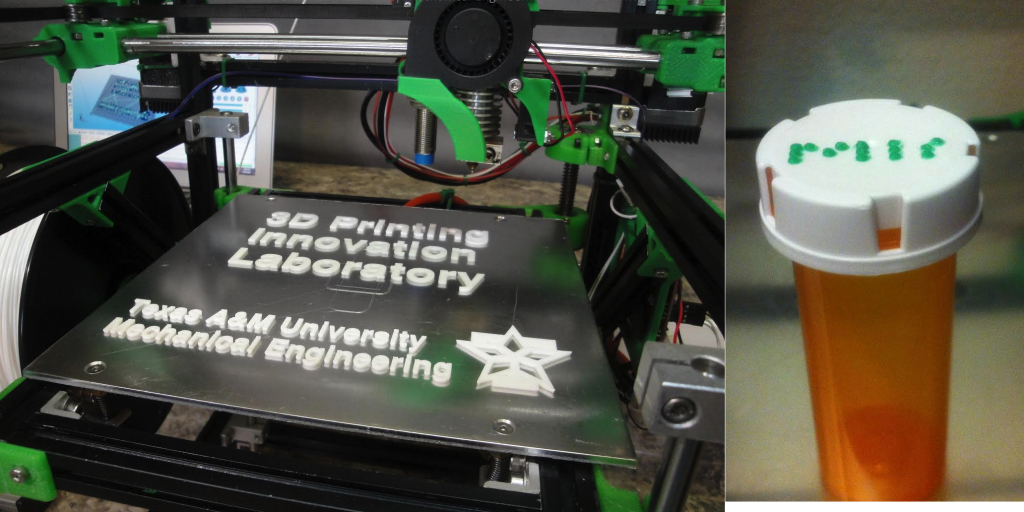

Braille printing on a a polycarbonate (PC) based common CD case
As technology improves, so do the lives of those individuals living with disabilities all around the world. 3D printing has become one of those technologies aiding in creating custom devices, prostheses, and more for individuals who previously would have been left with fewer reliable options. The visually impaired have found the technology of 3D printing to be quite beneficial in the fabrication of various sensory objects. We’ve seen a blind expectant mother get to touch a 3D printed replica of her unborn child back in May, and we have seen 3D printing used in the creation of various Braille tools over the past several months as well.
For a group of researchers at Texas A&M University, they wanted to take things a few steps further in utilizing 3D printing to create tools for the visually impaired. What they came up with was a 3D printer that is capable of printing Braille characters on any kind of plastic packaging used in common consumer products. Unlike other 3D printers, which are only capable of printing on flat surfaces, this machine is able to print on products regardless of the extent of existing surface curvature.
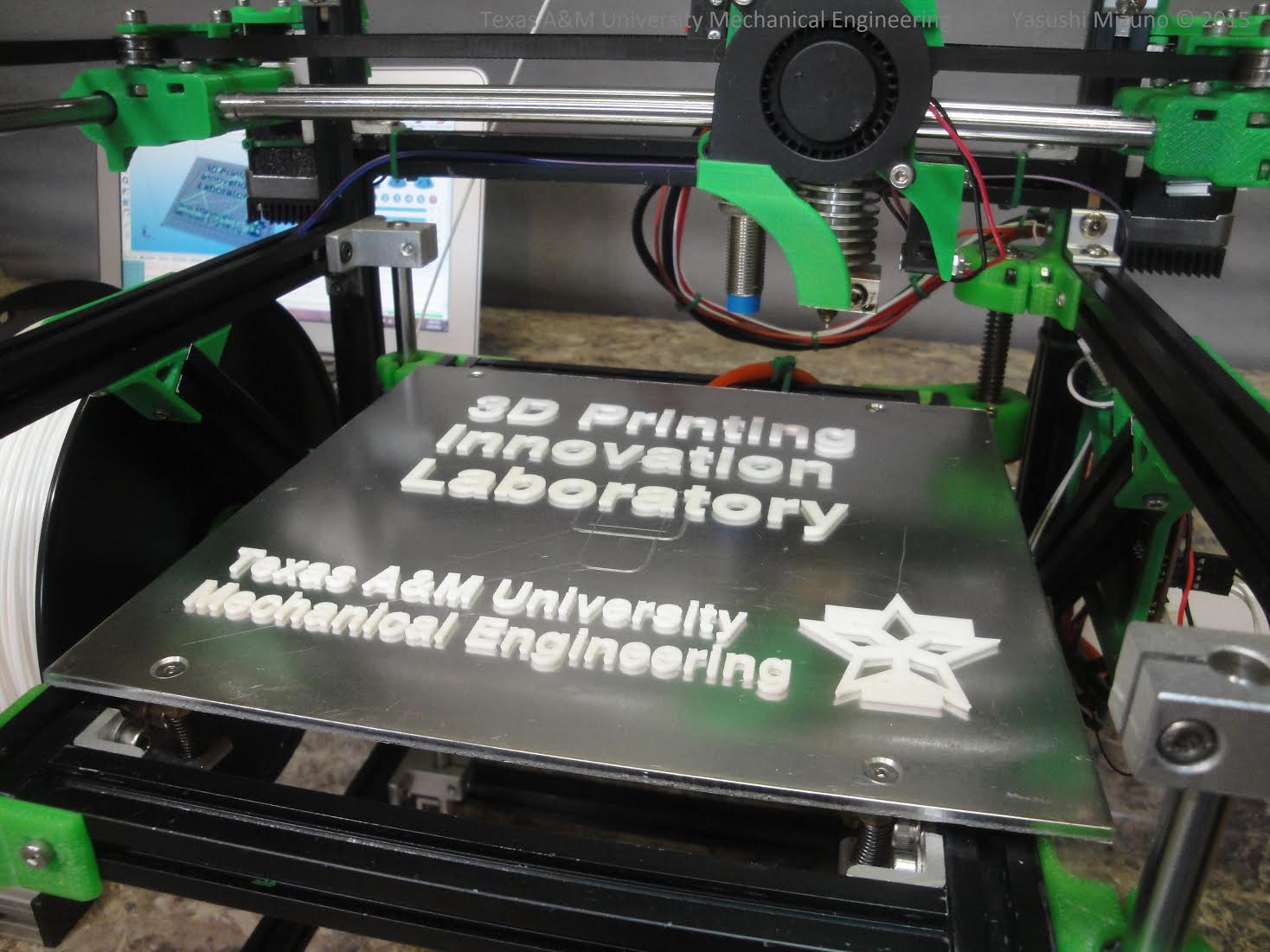
TAMU’s Braille printer
Created by the Texas A&M ‘3D Printeers’ team, under the supervision of Dr. Tanil Ozkan, TAMU Mechanical Engineering Professor, the printer is currently patent pending.
“[We hope to increase] the awareness of the 3D Printing community about the doability of [this 3D printer] on any kind of plastic packaging and ultimately help convince online or store-based retailers to also include Braille differentiated products in their product portfolio with very affordable secondary processing costs,” Dr. Tanil Ozkan tells 3DPrint.com.
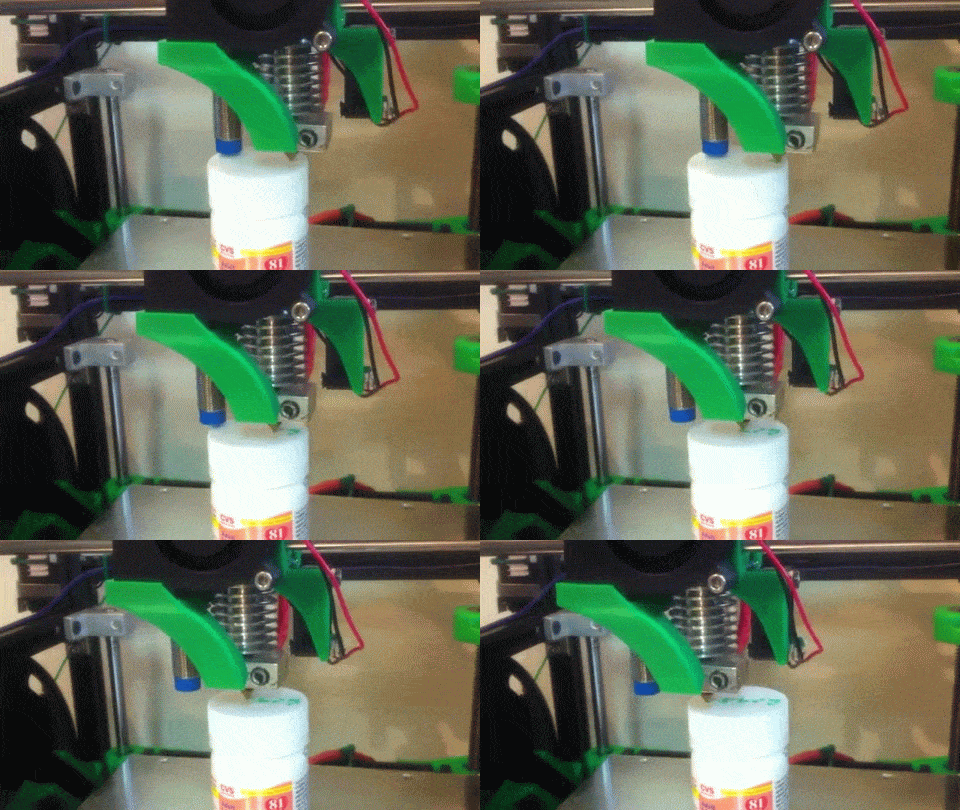
The material properties that this printer is capable of printing with ensures that the Braille characters that are printed onto objects stay there, don’t peel off, and are resistant to normal wear and tear. In order for the printer itself to accomplish printing on various curved surfaces, it was designed in such a way that it can recognize the curvature of polymeric surfaces on various consumer product packaging. It uses a non-contact sensor to determine the curvature of the object to be printed on.
“Flat or curved polymeric surfaces, whose topography data are collected via the non‐contact sensor are reconstructed automatically in the design software and used as the reference surface to calculate the x, y and z offsets through spline fitting before generating the additive manufacturing process code sequence for the actual 3D printing of Braille characters,” Ozkan and the rest of the team at Texas A&M tells us.

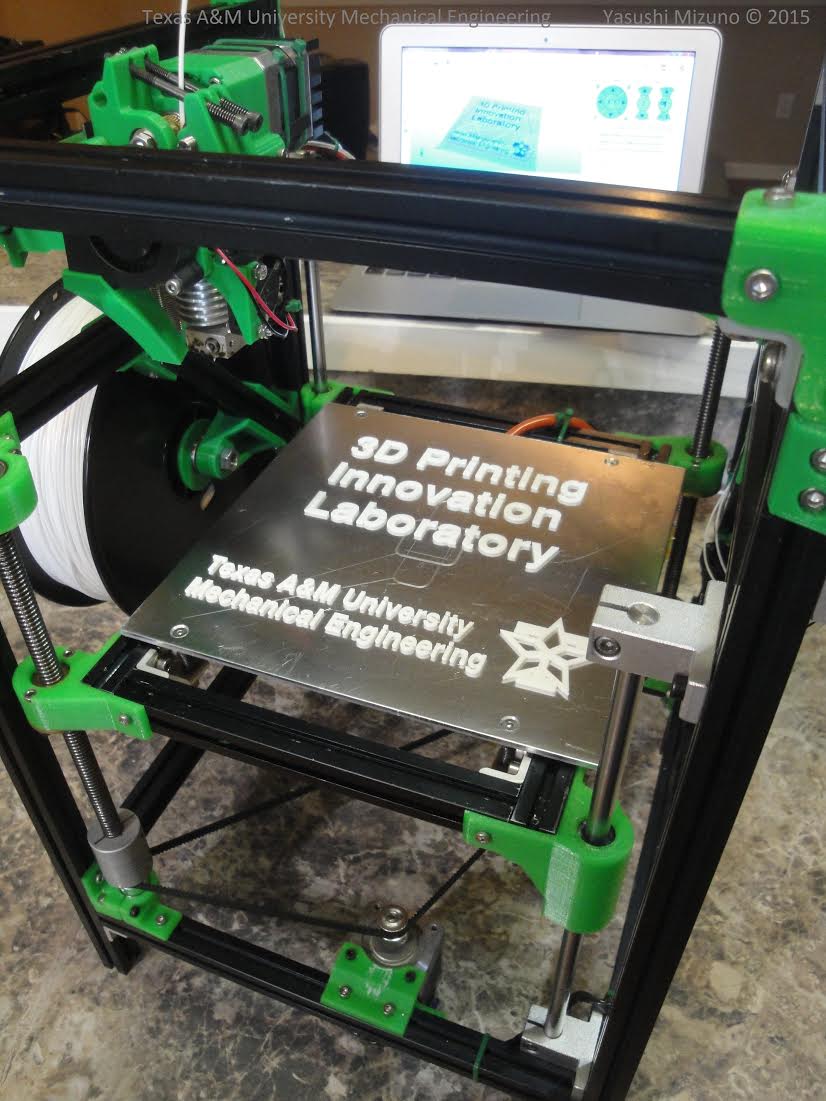
Texas A&M has also entered this design into the NASA Tech Briefs Create the Future Design Contest, under the ‘Consumer Products’ category.
What do you think about this unique 3D Braille printer? Discuss in the TAMU 3D Braille Printer forum thread on 3DPB.com. Check out the Braille printer in action below.