
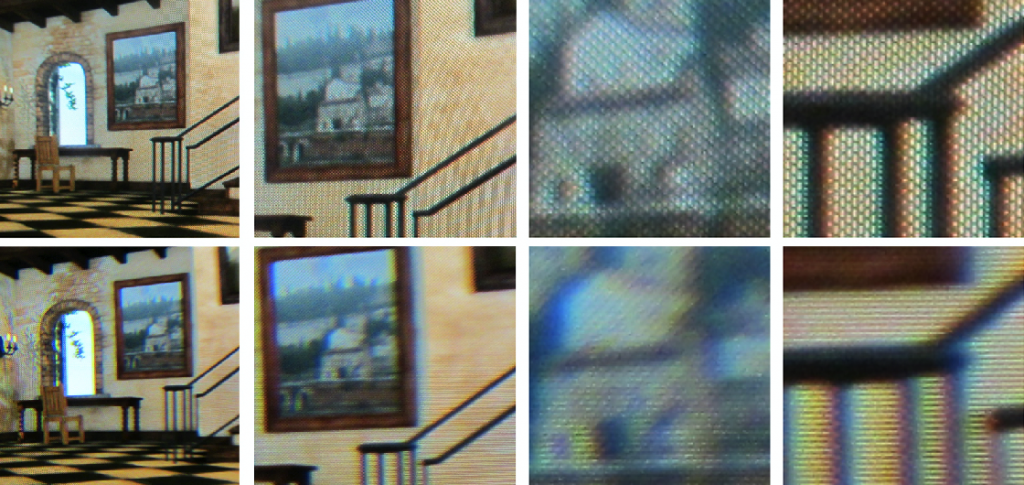
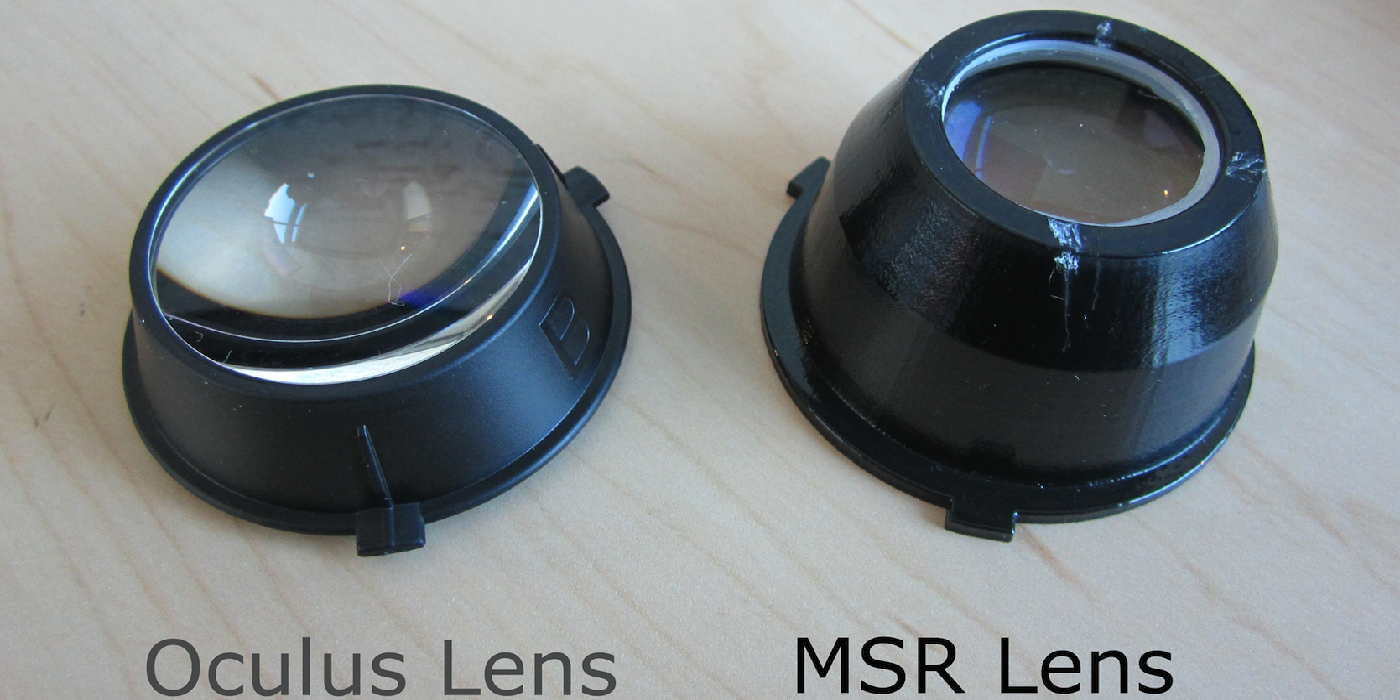
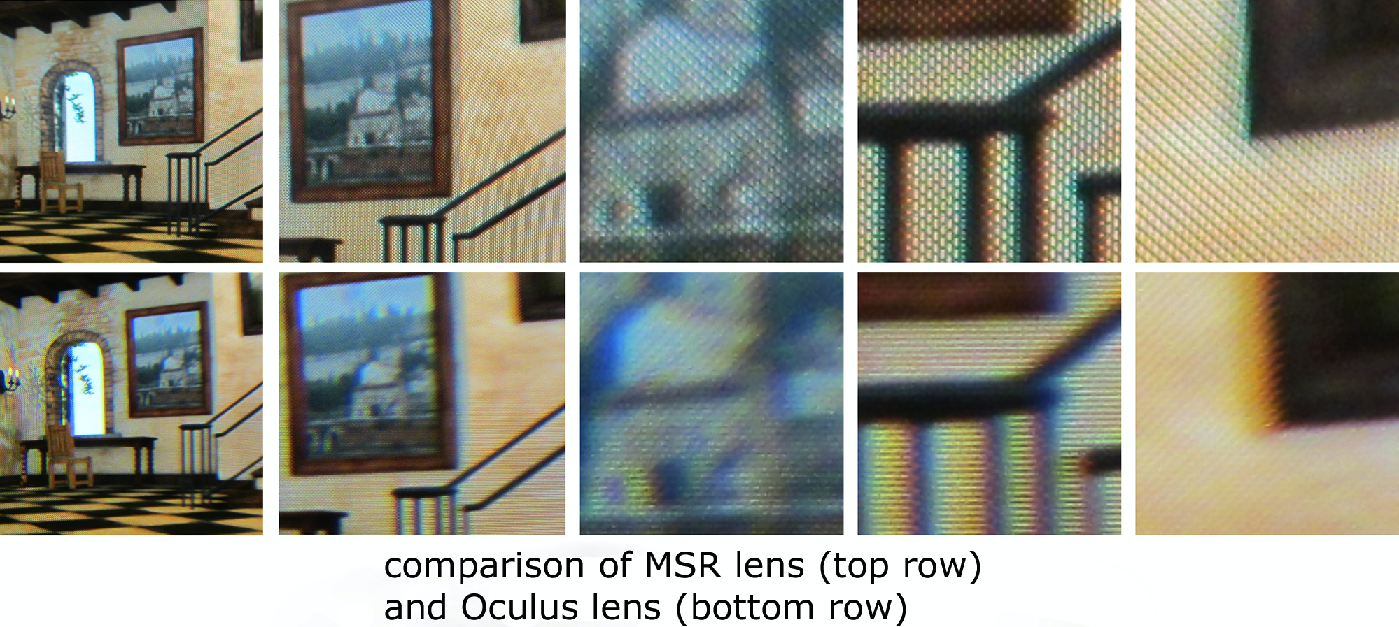
Confused? We are too, at least a little bit. Apparently those working at Microsoft Research decided that the current lenses used within the Oculus Rift developers kit didn’t meet their virtual reality loving standards. They’ve therefore gone on to created a 3D printed version of the lenses which they claim produce a sharper image, and have uploaded the 3D printable CAD file online for anyone to download at no cost.
“This lens was automatically designed by a lens design system developed at Microsoft Research,” states the readme file. “It is a higher quality replacement for the stock lenses that come with the Oculus Rift Dk2 virtual reality headset. The field of view is slightly smaller than the stock lens but it is sharper across the field and has far less chromatic aberration.”
The creation of the replacement lenses are a two step process. First the user must download the .STL file mentioned above and print it out on a high quality 3D printer. Microsoft states that they used a Stratasys Objet Eden 260, a polyjetting 3D printer which has a price that’s likely out of the range of most individuals. They used a Vero Black material and set the printer to the finest resolution possible. With that said, a typical desktop FDM printer may be able to be used, but Microsoft does warn users about this, stating, “We haven’t tested any other printer but you may have issues with hobbyist FDM printers because the thin crush ribs that hold the lens elements in place may not print properly.”
Once the housing is printed, it’s time to add in the actual lenses. Microsoft recommends using lenses such as the Edmund Optics 30mm Dia. x 125mm FL, MgF2 Coated, Achromatic Doublet Lens. They also point out that it is extremely 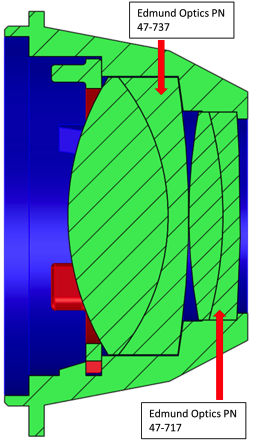
Additionally, Microsoft has also added an .STP file for users who wish to modify the housing prior to printing it out. Microsoft Research plans to publish a paper titled ‘Lens Lego: Automatic Lens Generation Using Off-the-shelf Components,’ which they ask anyone using these lenses for research to cite.
As for the economics of printing and adding these lenses to your headset, it’s not going to be cheap. Those on Reddit have estimated that it could cost as much as $200 per eye. With that said, if you have access to a quality 3D printer, enjoy DIY projects, and want to improve the optical quality of your Oculus Rift, this may be just the project for you. If you’ve gone through with this project please let us know how the lenses work in relation to those which come with the headset. Discuss in the Microsoft’s New Oculus Lens forum thread on 3DPB.com.