The common door hinge may well have been around for more than 5000 years, and there’s existing evidence that they were made from everything from wood and stone to bronze and various other metals. Societies from the Akkadians to the Hittites built massive palaces and gates which featured enormous, load-bearing metal hinges.
Once the industrial revolution began to take hold, complex hinges and a raft of innovations became the order of the day, but they were expensive and labor intensive to produce.
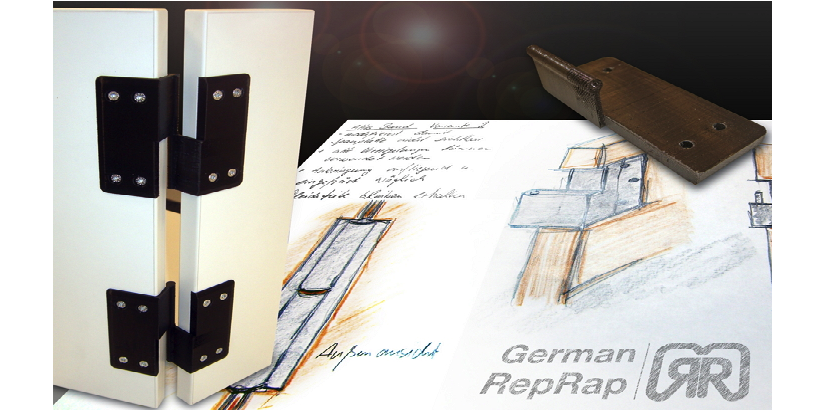
Now The Popp Group, based in Forchheim, Germany, has used 3D printed door hinges to aid a customer intent on reducing the overall cost of medical cabinets.
“Our aim was to reduce production costs by producing an adjustable hinge for which many identical parts can be used,” says Holger Ried, a technical product designer for the Popp Group. “Compared to 3D printing, laser sintering or CNC cutting is very expensive. We had also tried printing in plaster, but stopped using this method on account of the relatively high maintenance costs of the printer.”
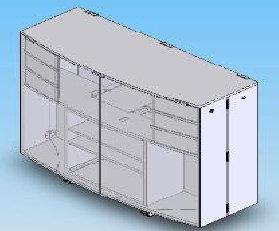
Each of the resultant designs – several functional models of each were printed as prototypes – were handed over to the customer for testing and so that they could be evaluated for aesthetics as display models.
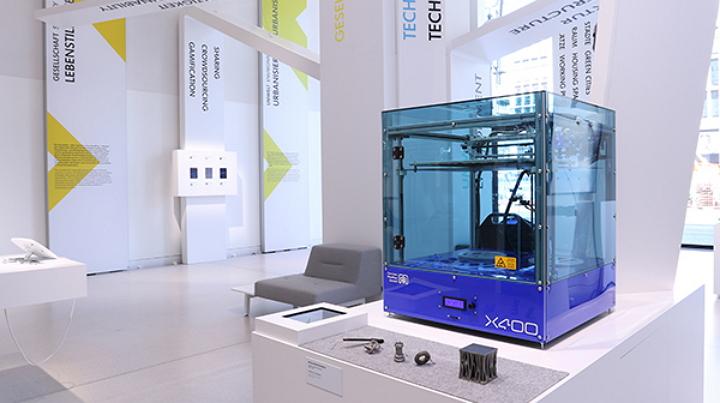
The hinges were printed using an X400 3D printer from German RepRap. As the X400 has a print volume of 390 x 400 x 330 mm – several prototypes were printed at the same time to cut down on lead time and cost.
“3D printing enables any modifications required to be implemented quickly, and new models can be presented to the customer in the shortest possible time. Previously, it took often a week before a prototype could be supplied, only to then discover that the design had to be changed again,” Ried said. “Depending on the model, the time required for prototype production today has fallen from one week to eight hours. The customers also appreciate the possibility of quickly being able to hold prototypes in their hands.”
Ried says he’s always been an advocate for 3D printing, and he says using the X400 was chosen as the preferred solution due to the price versus performance ratio the machine represents. He added that the X400 in his shop has now been running continuously for approximately six months.