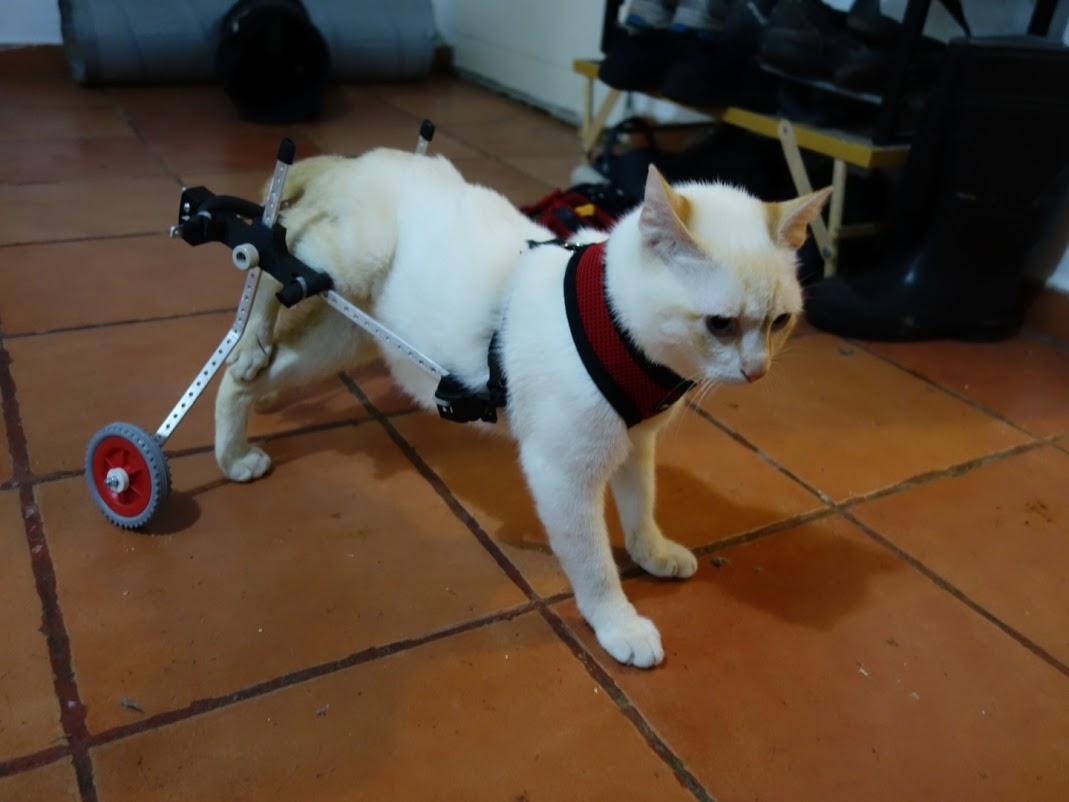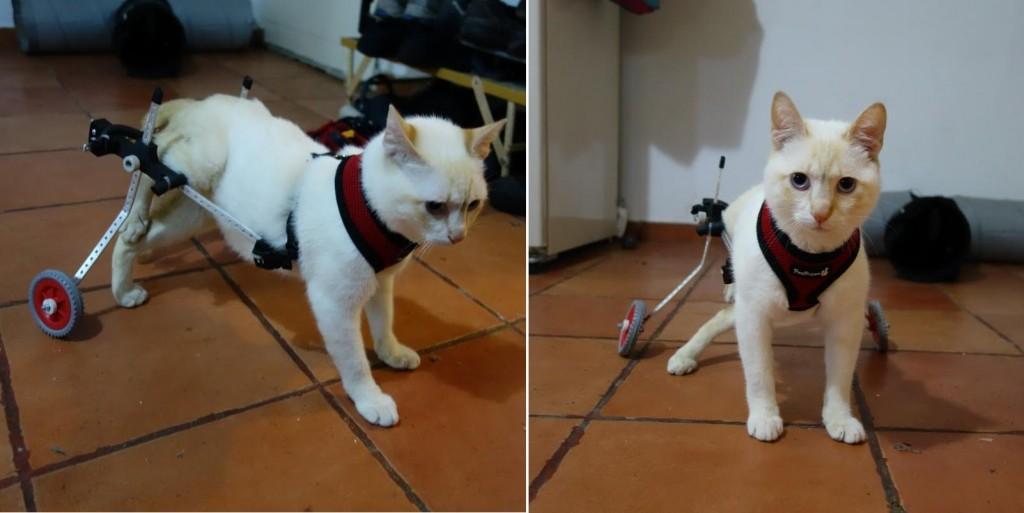
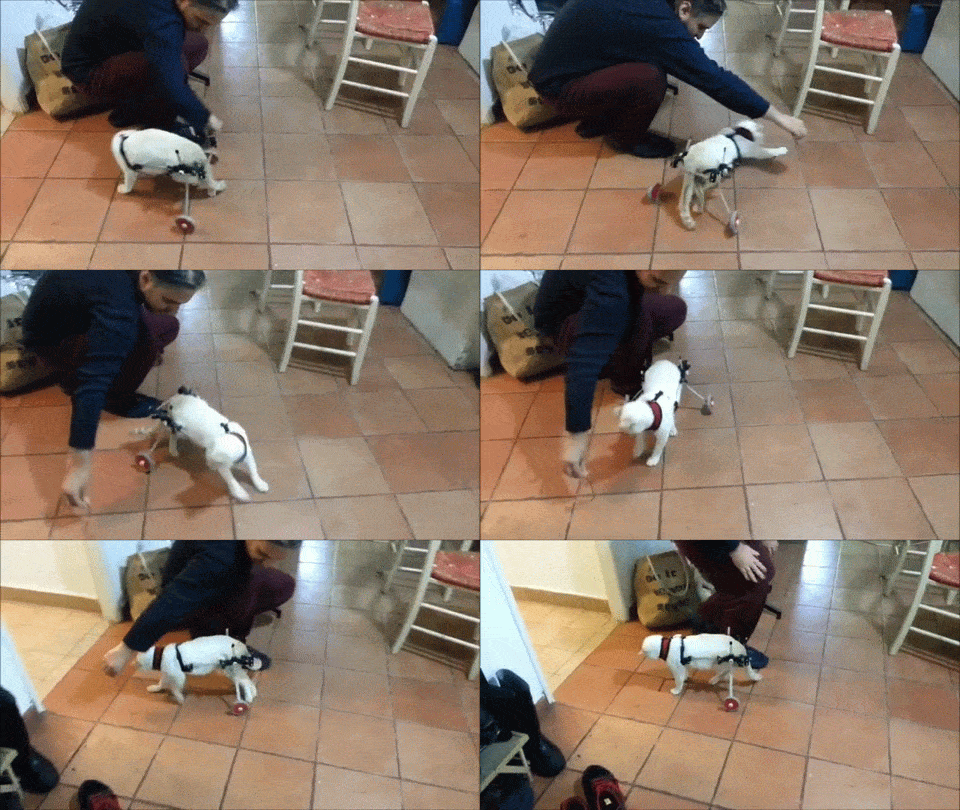
During our time covering numerous stories surrounding our canine friends and how 3D printing has come to their aid, we’ve often been questioned by cat lovers, as to why we do so many stories concerning dogs, but rarely any about cats. After all, the internet seems to have a love affair with cats, right? Truth be told, the answer is a simple one — there just hasn’t been any good stories that we have been made aware of concerning our feline friends. That is until today!
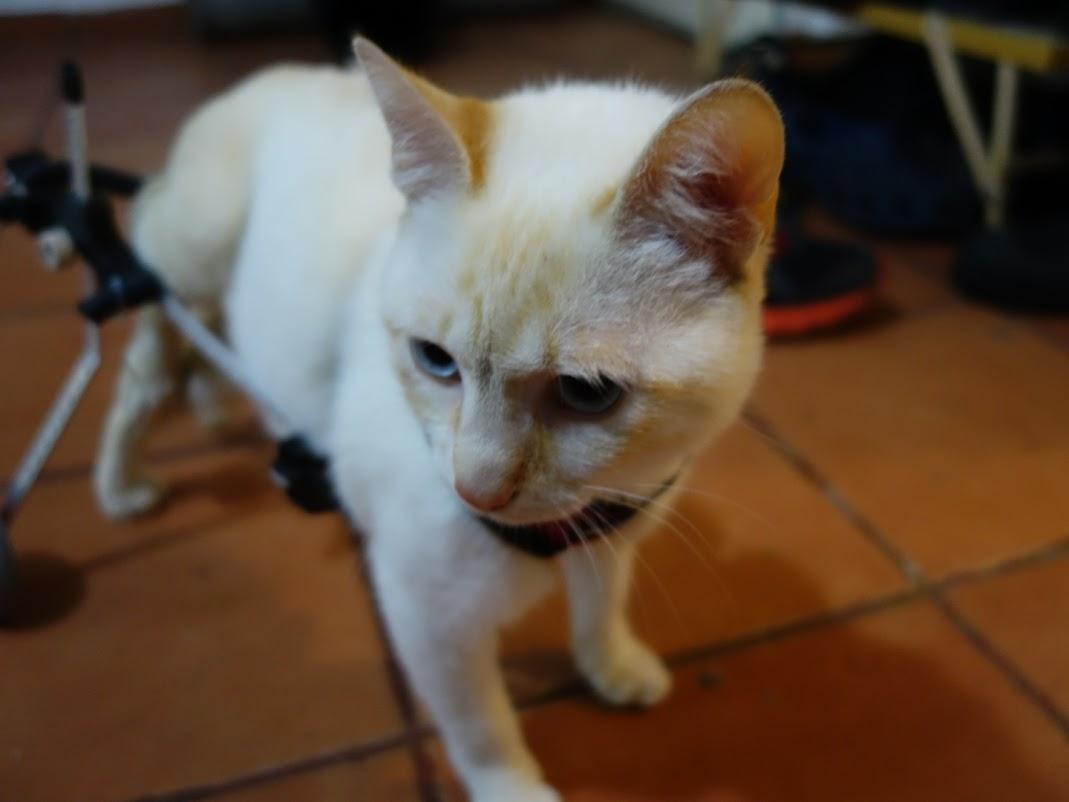
Benji the cat
We introduce you to a man named Tamir Lousky, the CTO of a startup that is developing automation technologies for the customization of various products from 3D scans. He recently came across a 7-month old cat named Benji, who unfortunately suddenly became paralyzed.
“Benji was found together with his brother and sister under my friend Sivan’s building,” Lousky tells 3DPrint.com. “Sivan found homes for Benji’s siblings, and hoped to find a loving home for him too. But one day, for unknown reasons, he became paralyzed from the waist down. It’s still a mystery and no vet could give us the precise reason for his sudden disability.”
Benji isn’t completely immobile though, as he can drag himself around with his front legs, and according to Lousky, “can move quite quickly when it’s dinner time”. However, he is at a disadvantage when it comes to mobility and Lousky wanted to to help out in finding a solution.
“Sivan worked hard for several months to find a home for Benji, and started fundraising to buy him a commercial wheelchair, as these can get pretty expensive (typically between $250-500),” Lousky tells us. “When I saw her plea for help on Facebook, I really wanted to help her and the poor little fella.”
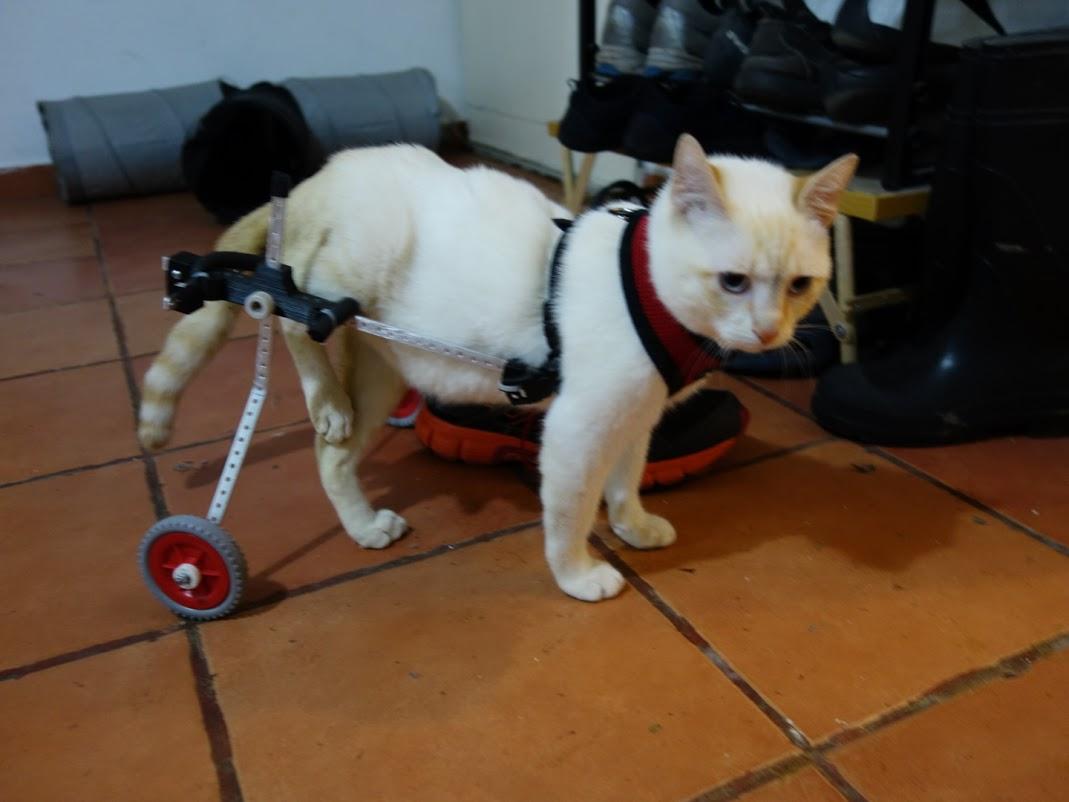
“Modeling was the easy part, but the mechanical design proved to be much more complicated than I initially expected, especially since I wanted the entire chair to be adjustable (wheel height, width, and the position of the wheel adapters and buckle adapters for length),” Lousky tells us. “I ended up doing 3 iterations of the design, and making a shift from round profile pipes to bars and changing the adapter design several times until I was happy with the strength and overall usability.”
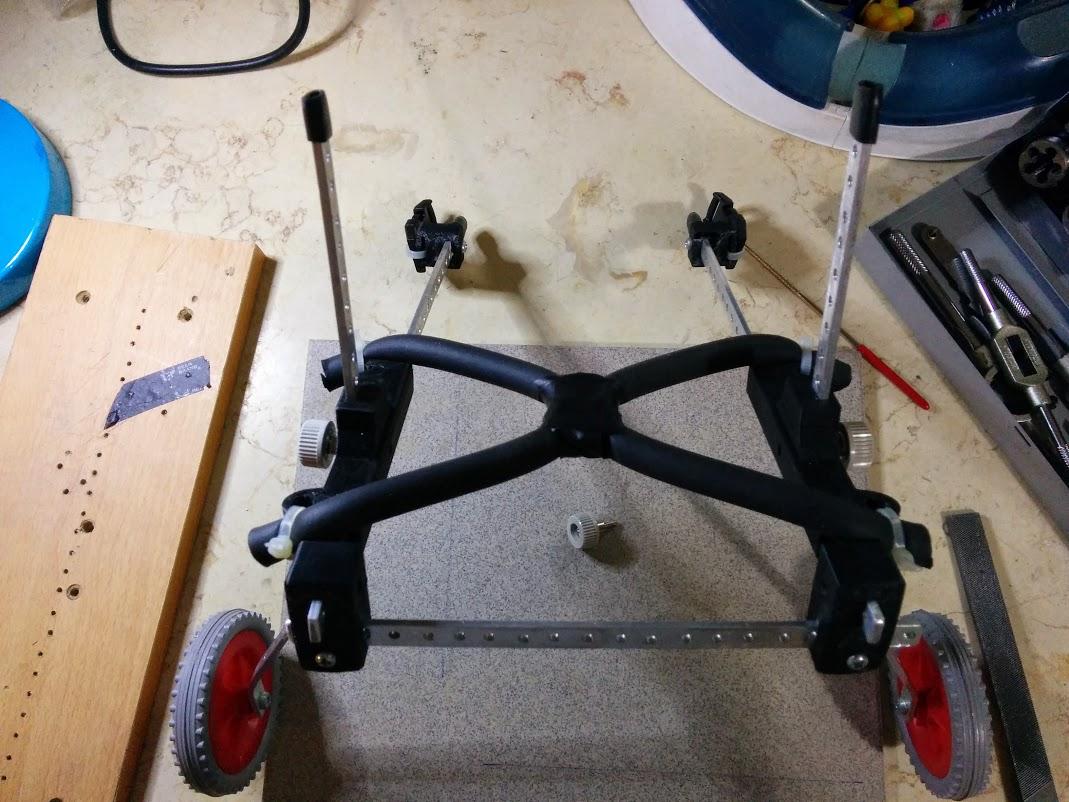
As for Benji, he is slowly adjusting to a more mobile lifestyle, thanks to 3D printing and a man who wanted to improve the life of his four-legged friend.
“Since Benji is a cat, he doesn’t like the process of being strapped to the chair very much,” Lousky explains. “He actually hates the harness most, and seems to forget how to move once it’s on (without the chair attached), and sits with an almost comical puzzled look on his face. Once the chair is attached and is well adjusted to his size, he runs and plays and completely enjoys himself.”
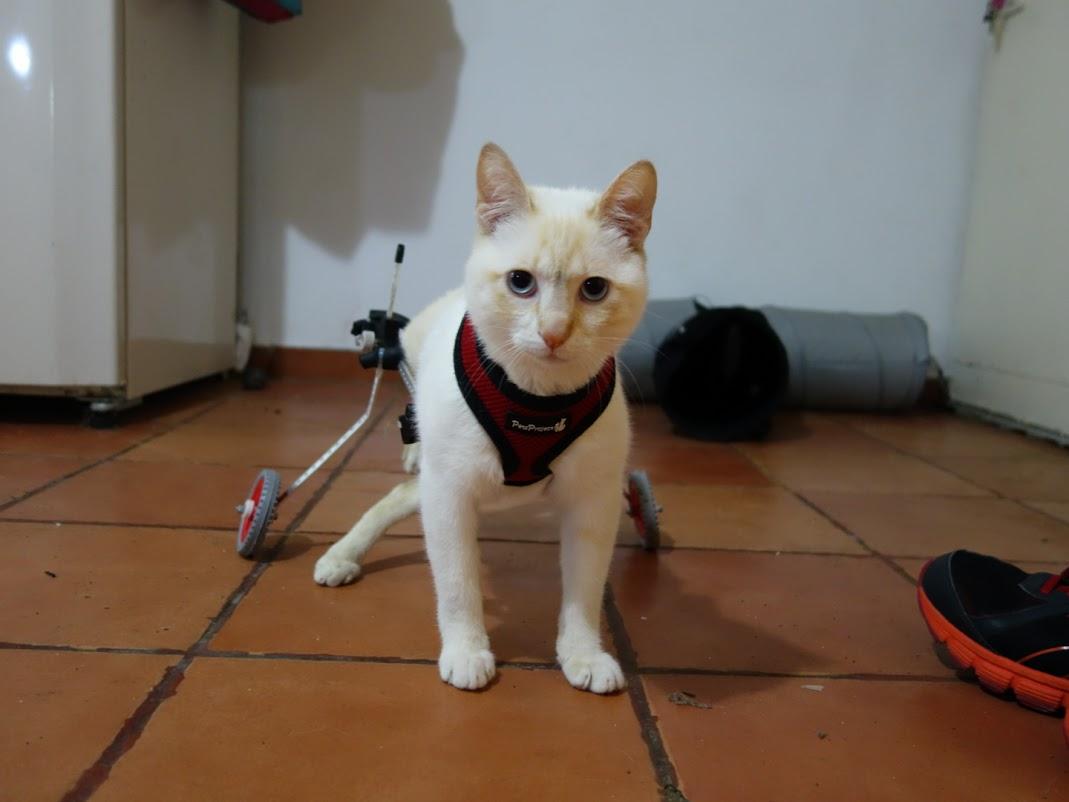
Lousky has also made the 3D printable files available for free download for those interested in creating a harness for their own disabled pet. He says it should work fine for disabled dogs and other animals as well. In fact, he already has another cat and two dogs waiting in line for one of these amazing wheelchairs.