Man against nature is definitely one of the areas where self-sustainability is most necessary, but it must be done in a strategic way when it comes to packing and carrying any item from water to food to first aid. Everything must be as small and lightweight as possible to make room for larger items like gear, bedding, tents, lighting, and more.
The issue of preventive medicine for backpackers climbing to higher altitudes in isolated regions is one that must be seriously considered. Backpacking and camping are supposed to be adventurous — but fun — and it’s not an activity anyone wants to see spiral into a life-or-death situation. That’s why being prepared is the number one top priority.
While a number of different procedures are put into place when a patient comes into a hospital or emergency room with hypothermia, setting up an IV is first on the list. The students were well aware that it’s not a lifesaving device solely on its own, but it’s meant to assist in keeping a climber as stable as possible by warming up their core temperature and providing nutrients until they can arrive safely into the care of medical professionals.
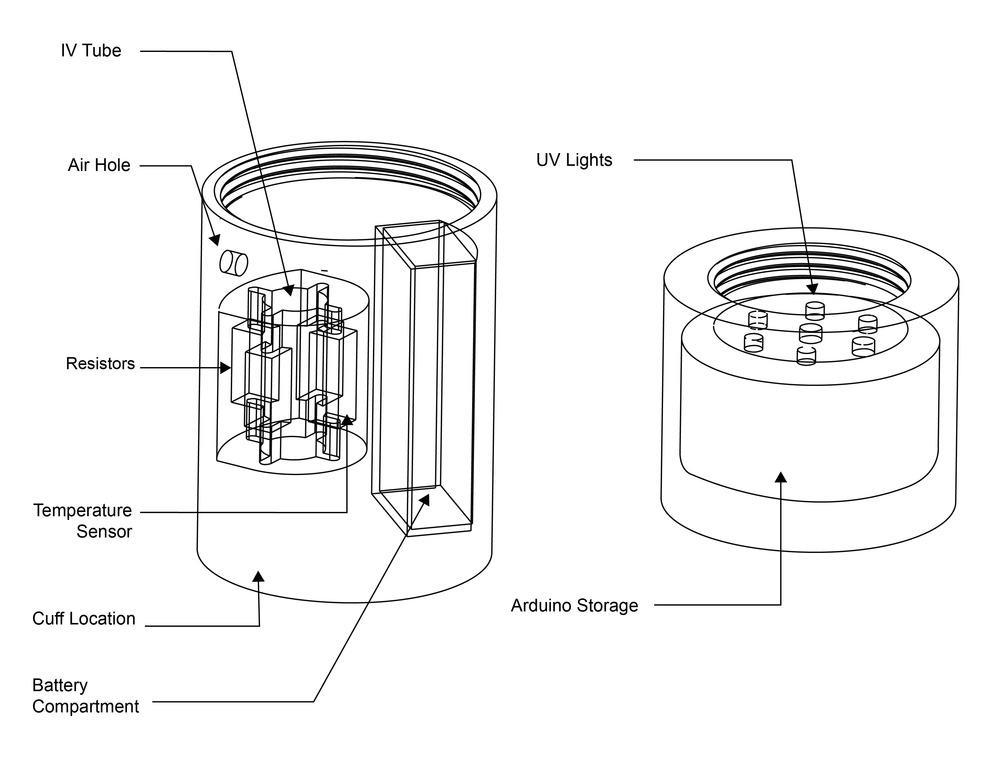
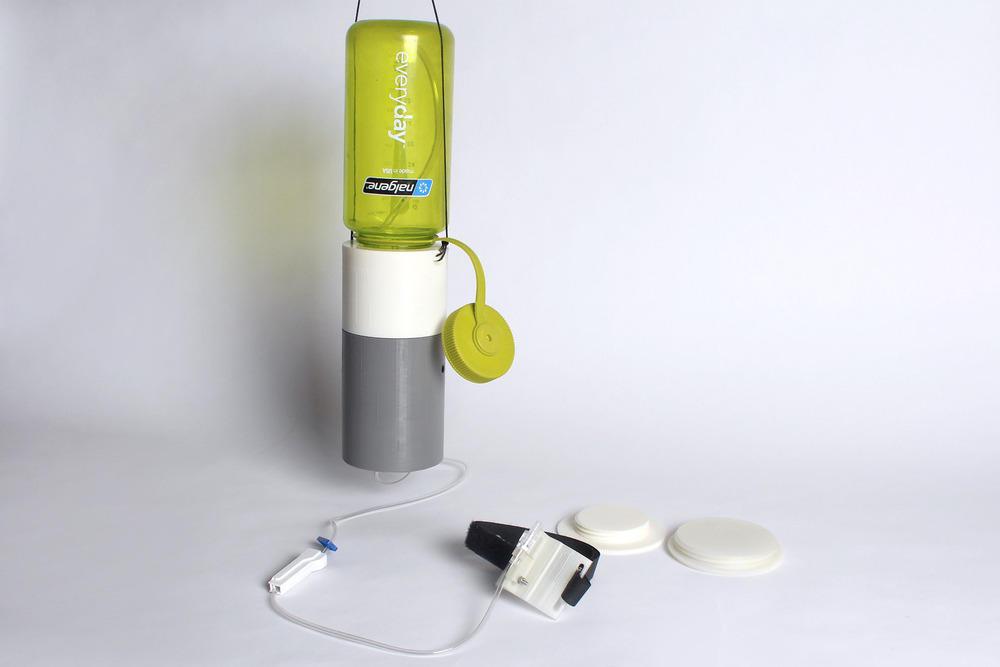
The Backcountry IV is a well thought-out device as the fluids are purified through UV lighting built into the 3D printed small cap which is a module that connects to another compartment for heating between 104 and 106 degrees.
“This process began by simply hooking a 3.9 ohm resistor up to the Arduino and attaching the resistor up to the temperature sensor in order to read the heat that the resistor was giving off. Initially there was not enough power to make the resistor heat up to the optimal heat. Many alterations were then made over a span of three days,” stated the team in their project summary. “The result was four resistors soldered in series hooked up to an 11 volt lithium polymer battery. This battery provided the correct amount of power in order to heat the resistors up to the correct temperature.”
Using a MakerGear 3D printer, the students actually 3D printed every part of this device with the exception of the actual IV and electronic panel for the Arduino Micro situated under the top compartment of the Backcountry IV. The device is a compact, streamlined design but it took numerous iterations for the students to refine it into a fully-functioning IV unit.
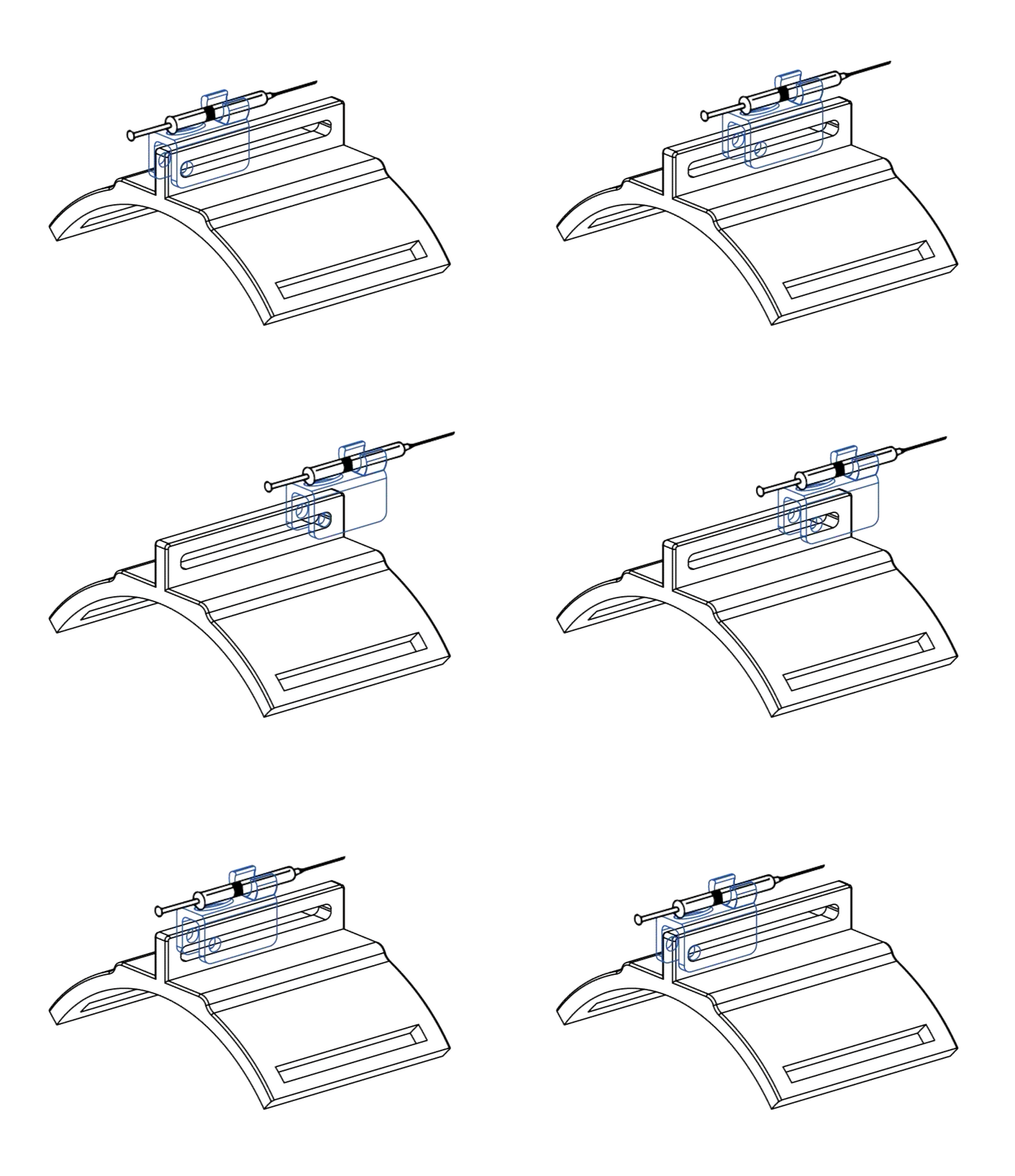
The compartments had to be redesigned to make room for the Arduino, the size and design of the cuff had to be readjusted, and the container had to be redesigned for use of a larger battery pack.
Students involved in the project were:

- Max Dadagian
- Laurel Sullivan
- Devin Lewtan
- Oliver Geller
- Sydney Brown
- Jordana Conti
They were led by coaches Mahek Shah, Andrew Todd Marcus, and David Wang.
A great deal of design work and engineering went into the small device that tucks into a backpack in the hopes that one never needs it — but if you do, it could be a true lifesaver.
Is this a device you or someone you know could benefit from or would have benefited from in a previous situation with hypothermia? What do you think of the end design the students presented? Tell us your thoughts in the 3D Printed IV Device forum thread over at 3DPB.com.